Things to Do in Athens, Greece: Walking Guide
Things to Do in Athens: Ancient Sites, Museums and Modern City Life
The best things to do in Athens range from exploring the Acropolis and its archaeological sites to visiting museums, historic neighborhoods and viewpoints across the capital. Athens is a city where ancient sanctuaries, Ottoman-era buildings, modern Greek culture and lively urban life share the same streets. Neywo’s free audio guide for Athens covers 81 narrated places, helping you understand the city as you explore it.
What to See in Athens
The Acropolis Museum
The Acropolis Museum brings together discoveries from the Acropolis and presents them in a modern building founded in 2003 and opened to the public in 2009. Its collections span the Greek Bronze Age through Roman and Byzantine Greece.
More than 4,250 objects are displayed across 14,000 square metres, including bas-reliefs, statues and ceramics from monuments and excavations on the Acropolis. Glass floors and walkways reveal archaeological remains beneath the building, while large windows and openings face the Acropolis itself.
The Acropolis and Eleusinion
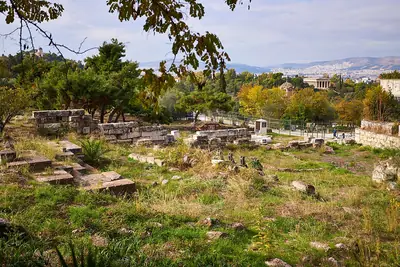
The Acropolis remains central to any visit to Athens, but the ancient landscape extends beyond its most famous monuments. On its northern slope, the Eleusinion was a sanctuary dedicated to Demeter and Kore, also known as Persephone. It was connected with the Eleusinian Mysteries and marked the beginning of the annual procession to Eleusis in northwestern Attica.
Religious activity at the site dates from the 7th century BC and continued through the late Archaic, Classical, Hellenistic and Roman periods. Only the western part has been excavated, revealing three terraces, a small temple for the hero Triptolemus, an outer gateway and a South Stoa.
The Panathenaic Stadium
The Panathenaic Stadium is one of Athens’ most distinctive landmarks: a major stadium built entirely of white marble. Its history began around 330 BC, when a stadium was constructed on the site of an earlier racecourse for the Panathenaic Games, dedicated to Athena.
Herodes Atticus rebuilt it in marble in 144 AD, and it could accommodate up to 50,000 spectators. After centuries of disuse, the stadium was excavated in 1869 and hosted the Zappas Olympics in 1870 and 1875. Its refurbishment made it the setting for the opening and closing ceremonies of the first modern Olympics in 1896.
The National Archaeological Museum of Athens
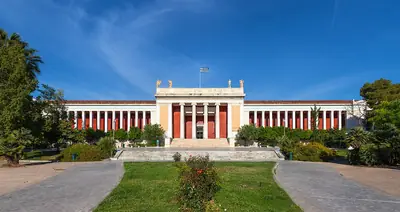
The National Archaeological Museum of Athens is regarded as Greece’s most important archaeological museum. Located on Patission Street beside the historic buildings of the National Technical University of Athens, it brings together more than 20,000 objects from across Greece, from prehistory to the end of Antiquity.
The collections are arranged around five broad themes: prehistoric works, sculptures, ceramics, bronzes, and Egyptian and Near Eastern collections. Highlights include Minoan wall paintings from Akrotiri and the object known as Agamemnon’s death mask, found in Mycenae.
Mount Lycabettus
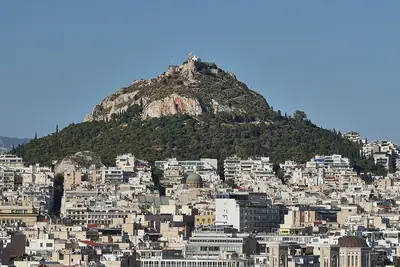
Mount Lycabettus rises above Athens as a limestone hill and offers panoramic views from its summit. You can reach the top by the Lycabettus Funicular from Aristippou Street in Kolonaki, or follow one of the trails on foot.
At the two peaks are the 19th-century Chapel of St. George, a theatre and a restaurant. The chapel stands on the site of an older Byzantine church dedicated to the Prophet Elijah. Ancient lore connects the hill’s name with a story in which Athena dropped a colossal rock intended as building material.
Benaki Museum
The Benaki Museum was established in Athens in 1930 by Antónis Benákis in memory of his father, Emmanouíl Benákis, and was donated to the Greek state. Its main museum occupies the Benaki family mansion in Kolonaki, on Vasilíssis Sofías Street.
The museum’s collections include Greek works of art from prehistoric times to the modern era, as well as an extensive collection of Asian art. Following the reorganization of its collections from 2000 onward, the main museum focused more closely on Greek culture, while specialized collections helped create satellite museums. Across its locations, the institution houses more than 100,000 artifacts.
The Ilias Lalaounis Jewelry Museum
The Ilias Lalaounis Jewelry Museum explores the history and art of jewelry making. It contains 50 collections with more than 4,000 jewels and small ornaments.
Its permanent exhibition includes more than 3,000 pieces designed between 1940 and 1992. The museum opened to the public in 1994 and offers a different perspective on Athens’ decorative arts and creative heritage.
Fethiye Mosque
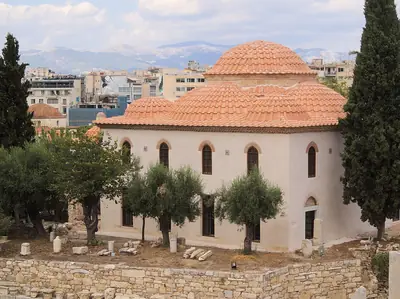
Near the Roman Agora and the Tower of the Winds, the Fethiye Mosque is one of Athens’ reminders of the Ottoman period. It was built between 1668 and 1670 on the ruins of an earlier three-aisled basilica from the mid-Byzantine period.
During Ottoman rule, it was known as the mosque of the Old Market or the wheatmarket mosque because of its position near a market. After Greek independence, the building became a military bakery from 1834 and was later used mainly as archaeological storage space. Its architecture incorporates elements from Classical and Byzantine periods.
Beth Shalom Synagogue
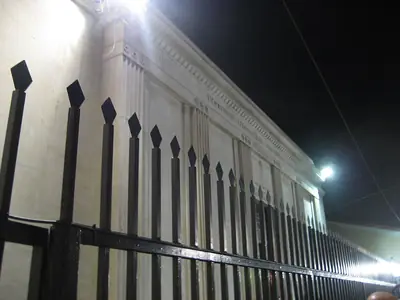
Beth Shalom Synagogue, meaning “House of Peace,” is one of Athens’ principal places of Jewish worship. Designed by Emmanuel Lazaridis and completed in 1935, the building is made of white Pentelic marble and follows an austere Greek Revival style.
It was renovated in 1975. The same building also housed the Jewish Museum of Greece from its creation in 1977 until 1984, connecting the synagogue with the preservation and teaching of Jewish heritage in Greece.
The National Theatre of Greece
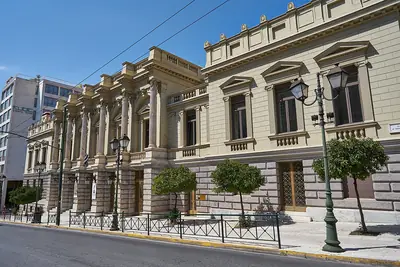
The National Theatre of Greece, often called the Ziller Building, is one of Athens’ major theatre landmarks. It adds a modern cultural dimension to a city more commonly associated with ancient performance spaces such as the Theatre of Dionysus.
Athens’ Modern History
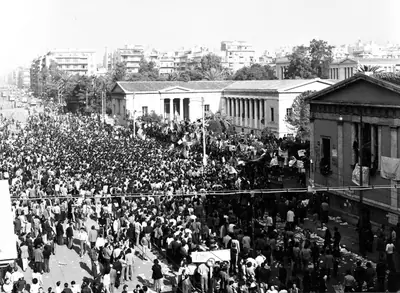
Athens’ history is not limited to antiquity. The Athens Polytechnic uprising began on 14 November 1973, when students and trainees occupied the National Technical University of Athens during the Greek military junta. The protest grew into a wider revolt, joined by citizens and protesting farmers.
The uprising was suppressed in the early morning of 17 November. A tank entered the Polytechnic grounds, and at least 24 people died through direct or indirect actions by the Greek army and police, according to a 2004 study by the National Hellenic Research Foundation.
Explore Athens with a Self-Guided Audio Tour
An Athens self-guided walking tour lets you discover the city without joining a group or following a fixed departure time. Neywo has six walking tours and one bus route in Athens, with 81 narrated places in total. Narration is available in 11 languages, and each story plays as you reach the place, at your own pace.
The walks include:
- The Acropolis and its slopes: 1.7 km, 101 minutes and 12 stops.
- Plaka and the Panathenaic Stadium: 2.22 km, 109 minutes and 12 stops.
- Philopappou hill, the Pnyx and the Benaki: 5.35 km, 132 minutes and 7 stops.
- Syntagma, the Trilogy and the central market: 2.66 km, 112 minutes and 12 stops.
- Monastiraki and the Ancient Agora: 2.02 km, 72 minutes and 8 stops.
- The Ultimate Athens: Syntagma, Plaka, the Acropolis, the stadium: 4.76 km, 200 minutes and 15 stops.
- Bus 227: Hadrian’s Arch to the Flea Market: 4.1 km, 18 minutes and 6 stops.
The routes connect major archaeological sites with museums, churches, theatres, markets and historic neighborhoods. The app tells the story of each place as you reach it, so you can pause, continue or explore at your own pace—with no group and no schedule.
Download Neywo and Explore Athens at Your Own Pace
Download Neywo’s free Athens audio guide and choose the route that suits your day. Walk from the Acropolis to its slopes, explore Plaka and the Panathenaic Stadium, follow the route through Monastiraki and the Ancient Agora, or use the bus route from Hadrian’s Arch to the Flea Market.
Athens is the capital of Greece, in the region of Attica. If you are extending your trip, Piraeus is another nearby city to explore.
Places with an audio guide in Athens
8 places in Athens with a Neywo audio guide. Each one starts telling its story as you reach it.
Self-guided tours in Athens
6 tours in Athens, free in the Neywo app. Each stop tells its story as you reach it.
- Bus ride
Bus 227: Hadrian's Arch to the Flea Market
A local OASA bus that threads central Athens from the Arch of Hadrian beside the Temple of Olympian Zeus, up neoclassical Panepistimiou Avenue and into the old market quarter. Hop off at the Catholic cathedral, the meat-and-fish halls of Varvakeios, Monastiraki's flea market and the white marble Beth Shalom synagogue. A cheap way to see the working city between the ancient sites.
Arch of Hadrian · Cathedral Basilica of St. Dionysius the Areopagite · Varvakeios market · Monastiraki Square · Beth Shalom Synagogue
Open this tour: Bus 227: Hadrian's Arch to the Flea Market - Walk
The Acropolis and its slopes
Up the rock and back down. The Parthenon, the Erechtheion and the temple of Athena Nike on top; the theatre of Dionysus where Greek drama began and the Odeon of Herodes Atticus on the way; and the Acropolis Museum below holding what was taken off the hill.
Acropolis Museum · Museum of the Center for the Acropolis Studies · Theatre of Dionysus · Odeon of Herodes Atticus · Temple of Athena Nike · Eleusinion …
Open this tour: The Acropolis and its slopes - Walk
Plaka and the Panathenaic Stadium
From the marble stadium of the first modern Olympics through the Zappeion gardens into Plaka, where the Ottoman mosque, the byzantine churches and two seventeenth-century mansions sit in the same few streets under the Acropolis.
Panathenaic Stadium · Zappeion · Jewish Museum of Greece · Aggelike Chatzimichali house · Metropolitan Cathedral of Athens · Benizelos mansion …
Open this tour: Plaka and the Panathenaic Stadium - Walk
Syntagma, the Trilogy and the central market
Nineteenth-century Athens, built to look like the ancient one. Parliament in the old royal palace, the neoclassical Academy-University-Library set on Panepistimiou, and at the end the Varvakeios meat and fish market, which is not neoclassical at all.
Hellenic Parliament · Syntagma Square · Cathedral Basilica of St. Dionysius the Areopagite · City of Athens Cultural Center · Building of the National Kapodistrian University of Athens · Academy of Athens …
Open this tour: Syntagma, the Trilogy and the central market - Walk
Monastiraki and the Ancient Agora
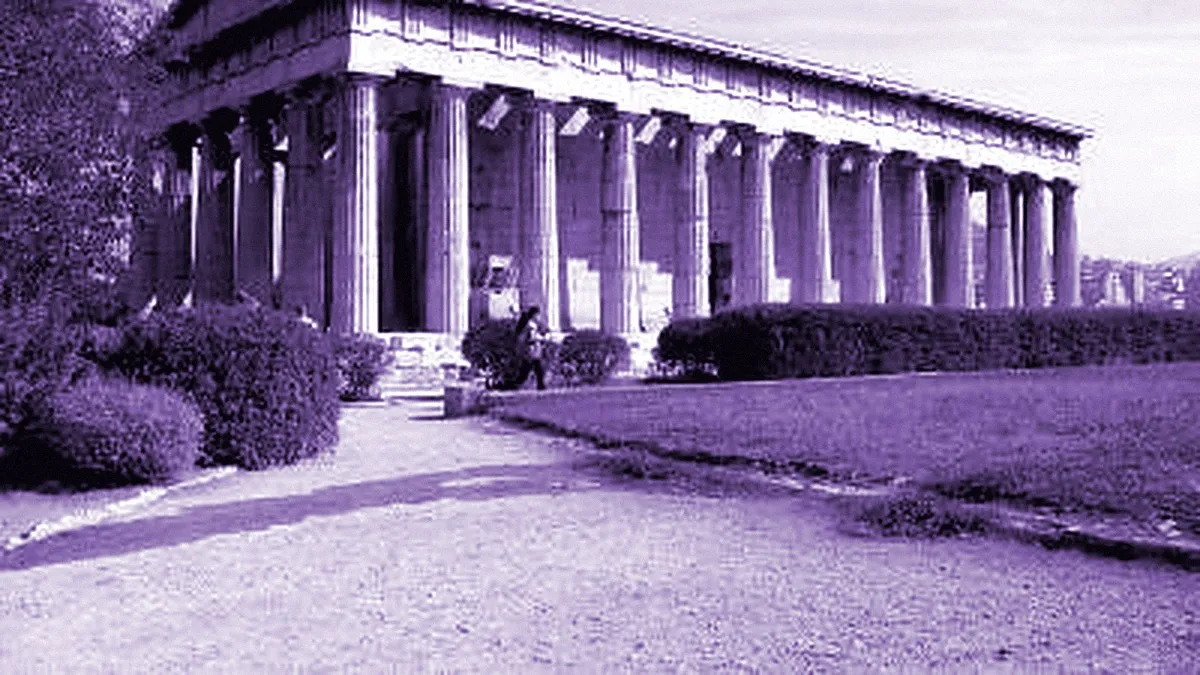
The flea-market end of the centre: Hadrian's library, the Ottoman mosque on the square, and the Agora itself, where the temple of Hephaestus is the best-preserved Greek temple anywhere and the church of the Holy Apostles sits in the ruins.
Strategeion · Beth Shalom Synagogue · Temple of Hephaestus · Ancient Agora of Athens · Church of the Holy Apostles · Odeon of Agrippa …
Open this tour: Monastiraki and the Ancient Agora - Walk
The Ultimate Athens: Syntagma, Plaka, the Acropolis, the stadium
The whole ancient and modern centre in one line — parliament, the Plaka churches, the Acropolis Museum, the rock itself and the Panathenaic Stadium. Nearly five kilometres with a serious climb in the middle.
Panathenaic Stadium · Acropolis Museum · Eleusinion · Ilias Lalaounis Jewelry Museum · Fethiye Mosque, Athens · Syntagma Square …
Open this tour: The Ultimate Athens: Syntagma, Plaka, the Acropolis, the stadium
Walk Athens with Neywo
Neywo turns Athens into a self-guided audio tour. Stories arrive as you reach the place they belong to, and the route reshapes when you wander off it.

