What to See in Mykonos, Greece: Free Audio Guide
Things to Do in Mykonos: Historic Churches, Ancient Sites and Aegean Landscapes
Mykonos combines whitewashed Cycladic architecture, historic churches, museums, archaeological sites and beaches in a compact island setting. From the narrow streets of Mykonos Town to the ancient remains of Delos and the quieter villages inland, there is much more to discover than nightlife. Neywo offers a free audio guide for Mykonos with 19 narrated places, so you can explore while hearing the story of each site.
What to See in Mykonos
Panagia Paraportiani
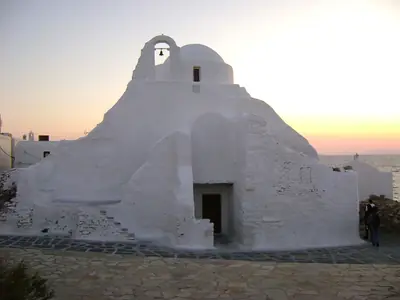
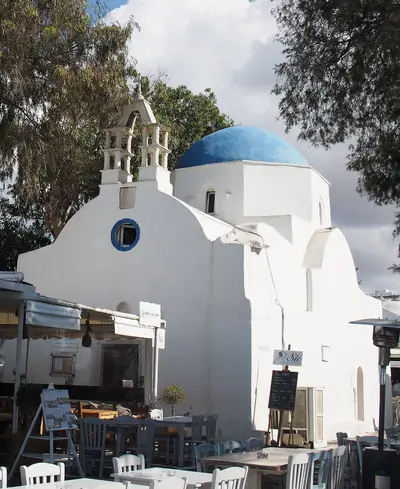
In the old Kastro neighborhood of Mykonos Town, Panagia Paraportiani is one of the island’s most recognizable churches. Its rounded white forms stand close to the sea and the old port.
The building is actually a cluster of five churches. Four were built at ground level over several centuries, while the fifth, dedicated to the Virgin Mary, rises above them. The oldest part, the Church of the Holy Anargyroi, dates from around the late fourteenth or early fifteenth century. The remaining churches were added during the sixteenth and seventeenth centuries, and the upper church was completed in the seventeenth century. A small arch at the eastern end serves as the bell tower.
Little Venice
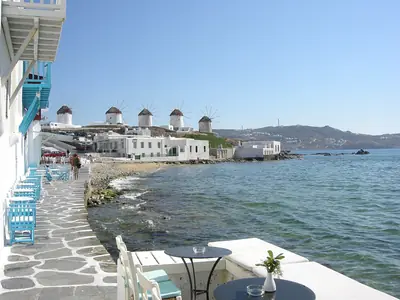
Known locally as Alefkandra, Little Venice is one of Mykonos Town’s most photogenic waterfront neighborhoods. Its colorful houses sit at the edge of the Aegean, with wooden balconies and arched windows extending toward the sea.
The architecture differs from the island’s familiar white-and-blue palette, reflecting the area’s Venetian character. In the thirteenth century, Mykonos stood on a major Venetian trade route, and this waterfront welcomed sailors looking for food, rest and entertainment. Today, cafés and boutique shops are active during the day, while bars and clubs bring a livelier atmosphere at night.
Mykonos windmills
The windmills are among the defining sights of Mykonos and feature on Neywo’s walking route through the town. They form part of the island’s best-known Cycladic landscape, alongside the waterfront houses of Little Venice and the white churches of Chora.
Agios Nikolaos Church and the Old Port
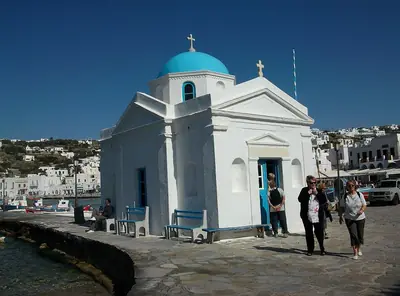
Agios Nikolaos Church is one of the smaller historic landmarks around Mykonos’s Old Port. Also known as the Church of Saint Nicholas, it stands among the shops, restaurants and narrow alleys of the old waterfront.
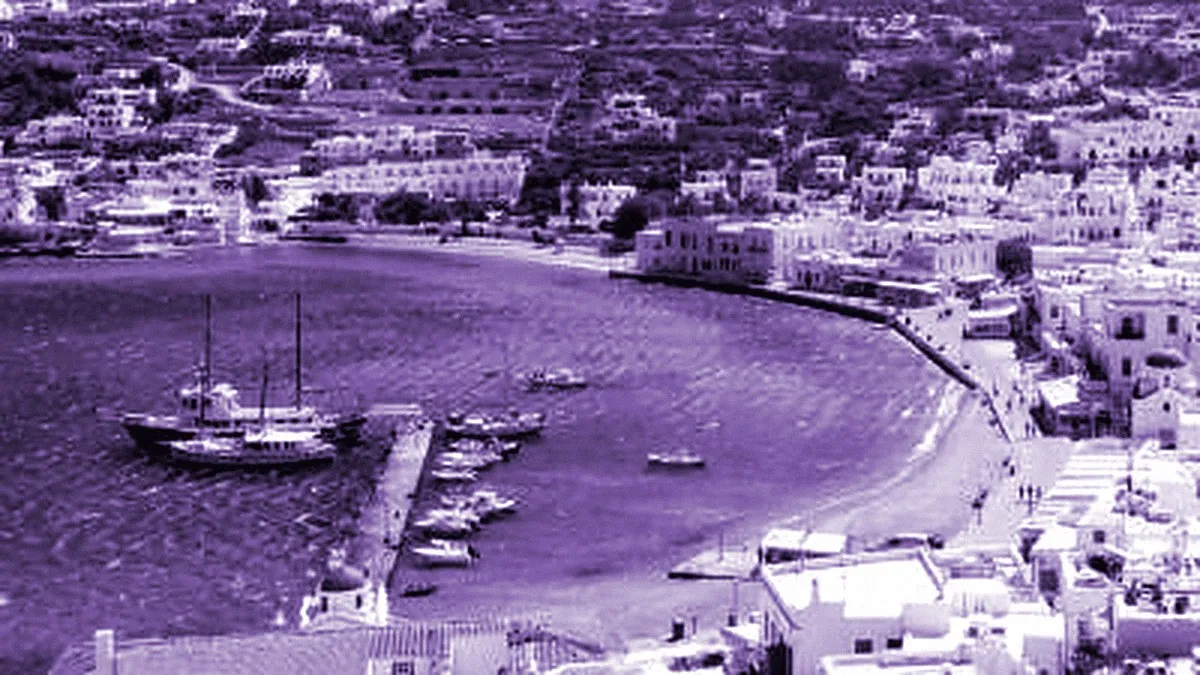
The Old Port, or Venetian Port, is a crescent-shaped harbor built under Venetian rule in the sixteenth century. It later became an important stopping place for merchant ships traveling between Europe, Asia and the Middle East.
Catholic Church of Mykonos
The Catholic Church of Mykonos is another place of worship within the historic center. Its position among the town’s compact streets makes it a natural stop while exploring Mykonos Town on foot.
Mykonos Folklore Museum
The Mykonos Folklore Museum occupies an eighteenth-century sea captain’s residence and focuses on the island’s everyday life. Since opening in 1958, it has preserved traditional objects including embroidery, antique furniture, household tools, musical instruments, religious offerings, ceramics, oil lamps and vintage keys.
Recreated nineteenth-century rooms make the collection especially easy to imagine. The museum includes a bedroom and kitchen, as well as Venetian cabinets, old vessel engravings and Cycladic stone sculptures. Its courtyard offers a quiet pause from the streets of Chora.
House of Lena
Lena’s House is a small folk museum in a nineteenth-century Mykonian townhouse and one of the annexes of the Museum of Mykonian Folklore. Its rooms are arranged as a traditional home, including a living room, two bedrooms, a kitchen and a front porch.
Antique Viennese furniture, carved woodwork, hand-painted crockery, decorative plates, mirrors, tapestries and French engravings reveal the tastes of the household. The whitewashed building also includes small courtyards and a traditional pigeon house. It once belonged to an estate owned by Captain Nikolaos Sourmelis and later took its name from Lena Skrivanou, its last private owner.
Archaeological Museum of Mykonos
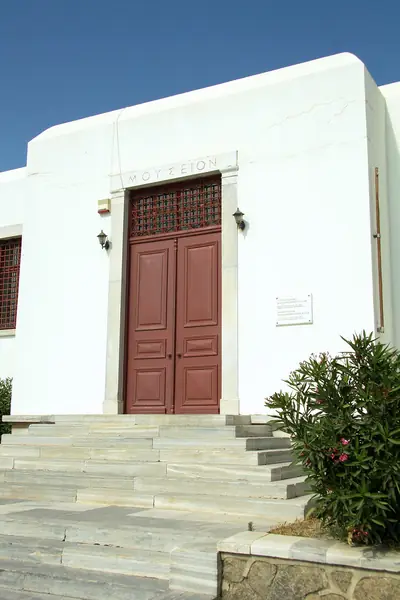
Near the seafront, just north of Mykonos Town, the Archaeological Museum of Mykonos offers a quieter view of the island’s ancient past. It was created to house finds from nearby Rheneia, including objects discovered in 1898 at a site known as the Putrefaction Pit.
The collection ranges from prehistoric times to the Hellenistic period and includes ancient vases, grave markers, statues and other discoveries. The museum’s most dramatic object is a large pithos, or storage jar, decorated with scenes from the fall of Troy. Found in 1961, it turns a practical ceramic vessel into a detailed narrative of myth and conflict.
Aegean Maritime Museum
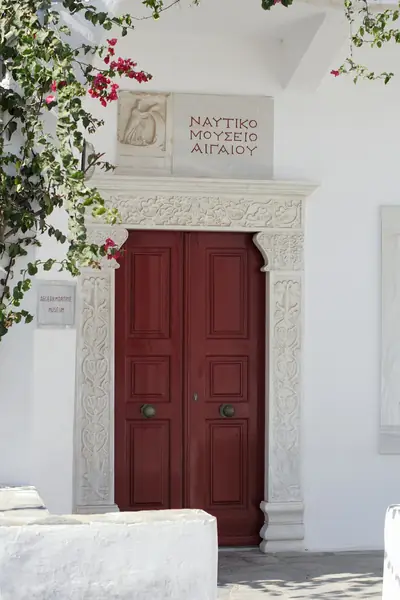
Housed in a traditional nineteenth-century building in the center of Mykonos Town, the Aegean Maritime Museum explores the long maritime history of the Aegean. It was founded in 1983 and opened to the public in 1985.
The museum adds context to Mykonos’s location among the islands and sea routes of the Aegean, making it a useful stop alongside the Old Port and its maritime history.
Delos
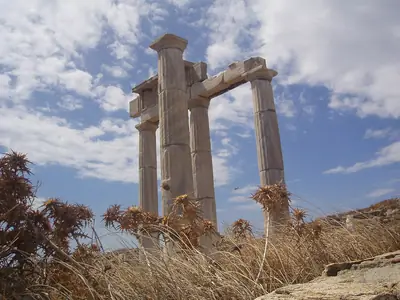
Delos lies at the heart of the Cyclades and is one of Greece’s most important archaeological sites. Its ruins preserve a sanctuary dedicated to Apollo and Artemis, as well as the remains of an ancient city. In antiquity, Delos was both a city and a city-state, a major panhellenic religious center whose influence also extended into commerce and politics.
The island reached the height of its prominence in the sixth century BC and has been a UNESCO World Heritage Site since 1990. The archaeological site is divided broadly between a religious center in the north and residential and commercial districts in the south. Among the remains are the Temple of Apollo, agoras, stoas, richly decorated private houses, the dry Sacred Lake and the statues on the Terrace of the Lions.
The Delos Synagogue is another intriguing part of the archaeological landscape. Its identification remains debated, although the building certainly existed before 88 BCE and may date from as early as the second century BCE. Inscriptions referring to Theos Hypsistos, or Highest God, and the word proseukhe have contributed to its interpretation as a synagogue.
Tourliani Monastery
In the village of Ano Mera, Tourliani Monastery is regarded as Mykonos’s most significant monastery. It is dedicated to the Dormition of the Mother of God and was founded in 1542 by monks from Paros. Its present form developed between 1757 and 1767.
The church has three aisles and a striking Baroque-style iconostasis. The monastery takes its name from an icon of the Virgin Mary discovered in the area of Tourlos. The icon is considered the protector of the island and is displayed at the monastery during summer, while in winter it is kept in Mykonos Town.
Paleokastro Monastery
Paleokastro Monastery is an eighteenth-century nunnery near Ano Mera, in one of the greener parts of Mykonos. Its name means “Old Castle”, referring to the nearby hill and the ruins of Gyzi Castle above it.
The monastery’s courtyard follows Cycladic architectural traditions, with white buildings, light blue churches, stone paths and gardens. The nunnery contains painted icons and an altar, while a small museum on the second floor displays church relics and artifacts. Nearby are two stone buildings once used by castle guards, a large granite rock believed to be a prehistoric tomb or ancient symbol of worship, and the small Church of Saint Vlasis.
Elia Beach
Elia Beach is a long stretch of fine golden sand framed by rocky cliffs and is the largest beach on Mykonos’s south coast. Its clear, shallow water is inviting for swimming, while organized areas with sunbeds and umbrellas provide a comfortable base by the shore.
Nearby coves offer a quieter alternative. Elia has a relaxed yet lively atmosphere and is nude friendly, with a separate nudist area nearby.
Ftelia Archaeological Site
Above Ftelia Beach, the Ftelia Archaeological Site preserves traces of the oldest known settlement on Mykonos. It was occupied between about 5100 and 4500 BCE and developed through four phases across roughly half a hectare.
The remains include a megaron, or large rectangular building, with sections of stone wall still standing about one and a half metres high. Archaeologists also found pottery, clay figurines, obsidian tools and arrowheads. A tomb at the site was traditionally regarded as the burial place of Ajax the Locrian, whose body was said to have drifted to Mykonos after he drowned.
Explore Mykonos with Neywo
Neywo’s free Mykonos audio guide includes 19 narrated places and one walking tour. The route, “Windmills, Little Venice and the Church of Five”, covers 1.88 km in about 73 minutes and has 9 narrated stops, including the windmills, Little Venice, Panagia Paraportiani, the Catholic Church of Mykonos, the Mykonos Folklore Museum, Agios Nikolaos Church, the Aegean Maritime Museum, House of Lena and the Archaeological Museum of Mykonos.
Download Neywo and explore with the Mykonos self-guided walking tour at your own pace. The app tells the story of each place as you reach it, with no group and no schedule. Narration is available in 11 languages. Mykonos is part of the South Aegean region of Greece.
Places with an audio guide in Mykonos
8 places in Mykonos with a Neywo audio guide. Each one starts telling its story as you reach it.
Self-guided tours in Mykonos
1 tour in Mykonos, free in the Neywo app. Each stop tells its story as you reach it.
- Walk
Windmills, Little Venice and the Church of Five
Start at the windmills of Kato Mili above the sea, then follow the whitewashed lanes of Chora through Little Venice's balconies, the five-in-one church of Paraportiani and the Catholic church to the sea captains' houses of the Folklore Museum. Finish along the Venetian Old Port, the maritime museum, Lena's townhouse and the island's archaeological collection.
Mykonos windmills · Category:Little Venice in Mykonos · Paraportiani · Catholic Church of Mykonos · Mykonos Folklore Museum · Agios Nikolaos Church …
Open this tour: Windmills, Little Venice and the Church of Five
Walk Mykonos with Neywo
Neywo turns Mykonos into a self-guided audio tour. Stories arrive as you reach the place they belong to, and the route reshapes when you wander off it.

