Things to Do in Heraklion, Greece: Walking Guide
Things to Do in Heraklion: What to See in Crete’s Historic Capital
Looking for things to do in Heraklion? Crete’s capital combines Minoan archaeology, Venetian landmarks, museums, churches, and a lively historic centre connected to the sea. It is a rewarding base for discovering the island’s past, from the Palace of Knossos to the defensive walls of the former Candia.
Neywo has a free audio guide for Heraklion with 12 narrated places, available in 11 languages. It lets you explore the city while its stories play as you arrive at each landmark.
What to See in Heraklion
The city’s main sights are concentrated around the historic centre, harbour, and archaeological museum. These are some of the most important places to include in a visit.
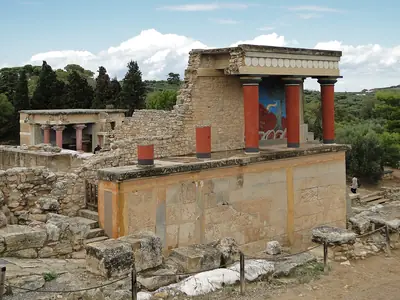
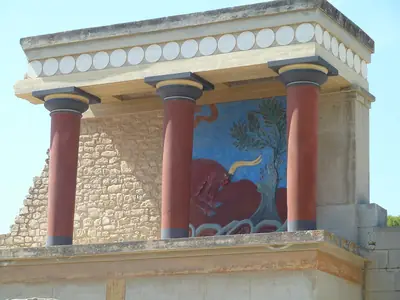
Palace of Knossos
Just outside the city, the Palace of Knossos is one of Crete’s most important ancient sites and the place where the Minoan world comes into focus. The monumental Palace of Minos is generally understood as an administrative, economic, religious, and ceremonial centre, although its role as a royal residence remains debated.
The first palace was built around 1900 BC on a hill that had already been occupied for several millennia. After a major destruction around 1700 BC, it was rebuilt and expanded, remaining the central monument of Knossos until its final destruction in the Late Bronze Age, usually dated to about 1350 BC.
Knossos is also closely connected with the myths of Minos, Pasiphaë, Ariadne, Theseus, Daedalus, Icarus, and the Minotaur. Its complex layout helped inspire the later Greek tradition of the Labyrinth. Inside the site, the Grand Staircase in the east wing is one of the most striking structures, leading towards residential quarters and important reception rooms.
The Palace of Knossos is also significant for the pottery found there. Kamares ware, Marine Style, and Floral Style pieces helped researchers establish a relative chronology for Minoan culture. The finds include vessels, terracotta figurines, ceramic models, and other objects connected with daily and ceremonial life.
Heraklion Archaeological Museum
The Heraklion Archaeological Museum is one of the essential places to visit for an understanding of Minoan culture. Its collections cover around 5,500 years, from the Neolithic period through Roman times, with Minoan art at the centre.
The museum contains finds from all periods of Crete’s prehistory and history, including many of the best-known works of Minoan art. Its exhibition rooms are arranged chronologically across two floors, making it easier to follow the development of the island’s cultures. The building also includes laboratories, a library, and a Scientific Collection department dedicated to storing and conserving recent discoveries.
Lions Square and the Morosini Fountain
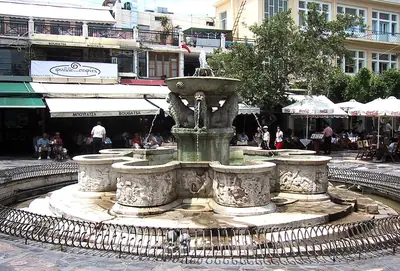
Eleftheriou Venizelou Square, better known as Lions Square, is one of the best starting points for exploring central Heraklion. The square dates from the Venetian era and takes its popular name from the Morosini Fountain at its centre.
Completed in 1628 under the supervision of Francesco Morosini, the fountain was built to help meet the city’s water needs. Its circular basin has eight lobes, allowing several people to draw water at once. At the centre, four lions support an octagonal pedestal, while carved reliefs depict Tritons, dolphins, and nymphs.
The fountain was altered during the Turkish period, including the addition of marble columns for ritual washing. A restoration by the Municipal Council in 1900 returned it to its original form. Today, the Morosini Fountain remains one of Heraklion’s most recognisable Venetian landmarks.
Cathedral of Saint Titus
The Cathedral of Saint Titus stands in Lions Square and is dedicated to Saint Titus, regarded as the first bishop of Crete. The building began as the Yeni Cami, or “New Mosque”, before becoming an Orthodox cathedral.
Built in 1869 to a design by architect Athanasios Moussis, it has a square plan crowned by a large dome. Its exterior includes strong vertical elements and a carved stone apse. After Crete became part of Greece, and during the population exchanges between the Balkans and Anatolia, the building was converted from a mosque into an Orthodox cathedral.
25th of August Street
25th of August Street connects Heraklion with the harbour. Today, this paved pedestrian thoroughfare is lined with neoclassical buildings containing banks, travel bureaus, and tourist shops. The Church of Saint Titus, the Loggia, and the Basilica of St. Mark are among the landmarks along the route.
Many of the façades were built after the street was destroyed during the events of 25 August 1898. The name commemorates that tragic outbreak, which took place during the feast of Saint Titus and led to many deaths, including 17 British soldiers and the British Consul Lysimachos Kalokairinos. The incident prompted international intervention and eventually contributed to Crete’s union with Greece in 1913.
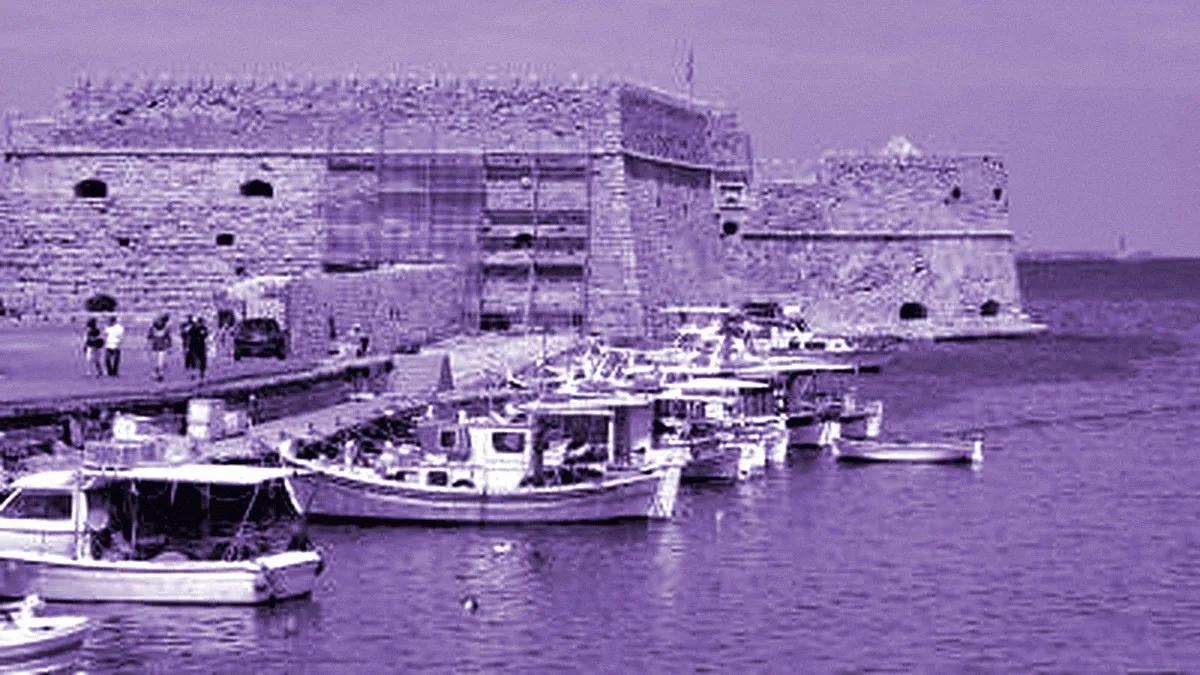
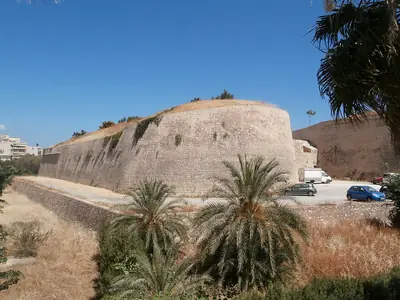
Fortifications of Heraklion
The fortifications reveal Heraklion’s former strategic importance. The defensive system protected the city, then known as Candia, and withstood a 21-year siege before the city fell to the Ottomans in 1669.
The Venetian walls form a triangular outline. The northern, sea-facing side forms the base, while the Martinego bastion marks the southern point. The sea-facing walls extend for about 2.7 kilometres, while the complete system is about 7 kilometres long. Seven bastions stand along the landward sides, with Martinego the largest.
The fortifications also include gates named Saint George, Jesus, Martinego, Bethlehem, Pantocrator, Saint Andrew, Dermata, and the Port or Mole. Walking along the walls offers a way to understand the scale of the city’s historic defences.
Saint Peter of the Dominicans
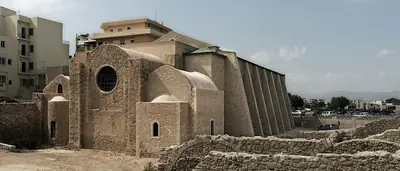
Saint Peter of the Dominicans stands near the waterfront, close to the old Venetian port and sea wall. The building was the Catholic church of the Dominican monastery in Heraklion.
Construction began around 1248–1253, during Venetian rule. It was first a Cistercian monastery church before passing to the Dominicans, and it became one of the city’s largest Catholic churches. During the Ottoman period, it was converted into the Sultan Ibrahim mosque.
The church has the form of a large single-nave basilica with a wooden roof, while the sanctuary and chapels have cross vaults. Wall paintings survive in one of the chapels, and Venetian sources identify the church as a burial place for prominent Venetians.
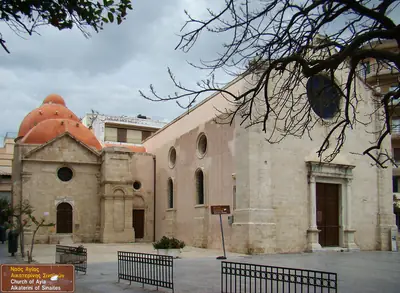
Agia Aikaterini
Agia Aikaterini, also known as the Church and Museum of Saint Catherine of Sinai, gives its square a lively character, surrounded by cafés and everyday city life. The stone Venetian church was originally a dependency of the Monastery of Sinaites.
Its origins go back to the 10th century, although the existing building is believed to date from the 16th century. Between the mid-16th and mid-17th centuries, the Monastery of Saint Catherine of Sinaites operated as a university school, attracting scholars, philosophers, theologians, artists, and other notable members of the local community.
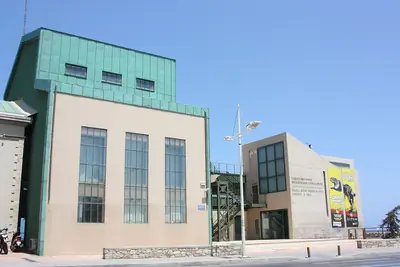
Natural History Museum of Crete
The Natural History Museum of Crete explores the natural world of the Eastern Mediterranean. Founded in December 1980 through a presidential decree, it forms part of the School of Physical Sciences of the University of Crete.
The museum occupies a restored industrial building that once served as an electricity power plant. Its exhibitions extend across four levels and include dinosaur displays, interactive earthquake simulations, dioramas, and technology presentations.
Heraklion Museum of Ancient Greek Technology Kostas Kotsanas
This museum is housed in the historic Venetian Palazzo d’Ittar and focuses on the inventive side of ancient Greek technology. Its main exhibition, “Ancient Greece – The Origins of Technologies”, presents around 75 objects.
Among the most notable inventions are the automatic servant, often described as the world’s first robot, the automatic theatre of Philon, the hydraulic clock of Ktesibios, and the Antikythera Mechanism, frequently called the world’s first computer.
Inadiye Fortress
Άγιος Ευμένιος, also known as Inadiye fortress, is another historic site in Heraklion. Its connection with the city’s fortifications adds another layer to the story of Heraklion’s defensive past.
Explore Heraklion with Neywo
Neywo offers two walking tours in Heraklion. The first covers 1.76 km in 62 minutes and includes 6 narrated stops. The second covers 2.92 km in 89 minutes and includes 8 narrated stops.
Together, the walks include places such as the Heraklion Archaeological Museum, Lions Square, the Morosini Fountain, Agia Aikaterini, Saint Peter of the Dominicans, the Fortifications of Heraklion, the Natural History Museum of Crete, and the Heraklion Museum of Ancient Greek Technology Kostas Kotsanas.
Download Neywo and explore with a self-guided walking tour at your own pace. The app tells the story of each place as you reach it, with no group and no schedule. Heraklion is part of Crete, in Greece, and you can continue discovering the island with a visit to Rethymno or Chania.
Places with an audio guide in Heraklion
8 places in Heraklion with a Neywo audio guide. Each one starts telling its story as you reach it.
Self-guided tours in Heraklion
1 tour in Heraklion, free in the Neywo app. Each stop tells its story as you reach it.
- Walk
Lions Square and the Archaeological Museum
Under two kilometres through the Venetian centre — the Morosini fountain with its four lions, the Dominican church of St Peter, St Catherine's icons — ending at the archaeological museum, which holds everything found at Knossos.
Fortifications of Heraklion · Agia Aikaterini · Morosini Fountain · Heraklion Archaeological Museum · Heraklion Museum of Ancient Greek Technology Kostas Kotsanas · Lions Square …
Open this tour: Lions Square and the Archaeological Museum
Walk Heraklion with Neywo
Neywo turns Heraklion into a self-guided audio tour. Stories arrive as you reach the place they belong to, and the route reshapes when you wander off it.

