What to See in Naxos, Greece: Free Audio Guide
Things to Do in Naxos: Ancient Sites, Mountain Villages and Chora
The best things to do in Naxos range from exploring the historic streets of Chora to visiting ancient marble sanctuaries, Byzantine monasteries and traditional mountain villages. The largest island in the Cyclades, Naxos combines a mountainous interior with villages, bays, beaches and archaeological sites shaped by a long Aegean history. Neywo offers a free audio guide for Naxos with 59 narrated places, available in 11 languages.
What to See in Naxos
Chora and the Kastro
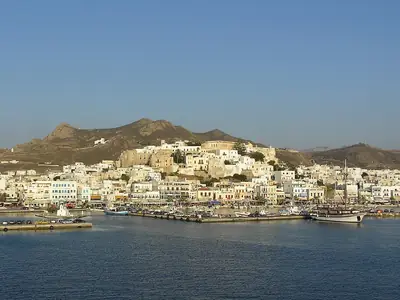
Chora, also known as Naxos City, is the island’s main town and a natural starting point for exploring Naxos. Its historic centre includes the Kastro, the old castle quarter, where Venetian walls, towers and historic buildings reflect the island’s medieval past.
The Archaeological Museum of Naxos occupies a Venetian building constructed in stages between about 1600 and 1800. Built against the castle walls, the five-storey structure incorporates two castle towers. It first housed a Jesuit school established in 1700, later became a commercial school and eventually was converted into a museum.
Inside, the collection traces the history of Naxos and nearby Cycladic sites from the Early Cycladic period through later centuries. Highlights include figurines from Naxos, Kato Kouphonisi and Keros, Late Mycenaean grave goods, objects from the Geometric period and sculpture from different periods of the island’s history.
The Kastro also contains the Orthodox Cathedral of Naxos, the Church of the Presentation of the Lord and the Venetian Museum. Together, these sites make the old quarter one of the most rewarding places for anyone looking for what to see in Chora Naxos.
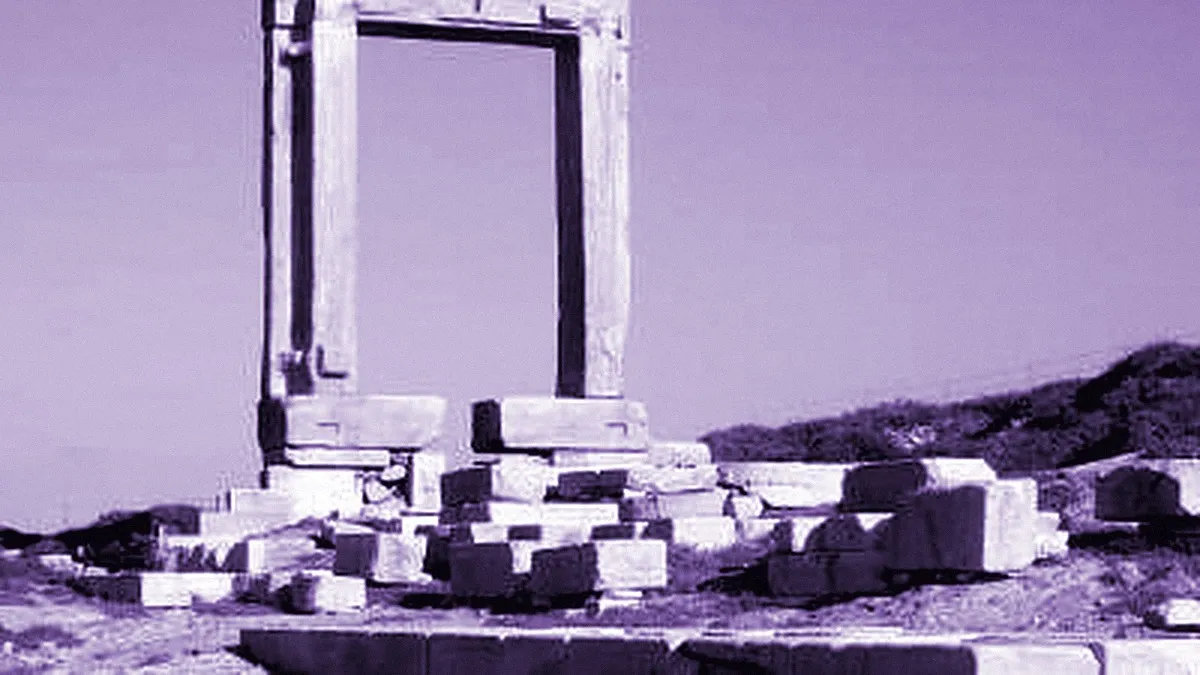
The Portara
The Portara stands at the harbour on a small island connected to Chora. This monumental marble gateway belonged to the unfinished Temple of Apollo and has become Naxos’s defining landmark.
The structure recalls the island’s importance during the ancient Cycladic and classical periods. Naxos was an important centre of Bronze Age Cycladic culture and later of the Ancient Greek Archaic Period, making the Portara a fitting introduction to the island’s archaeological heritage.
The Temple of Demeter and Agios Ioannis in Gyroulas
Near Ano Sangri, the Temple of Sangri, also known as the Temple of Demeter, dates to around 530 BC. The late Archaic monument was dedicated to Demeter and Kore and is considered one of the earliest Ionic temples.
Its most distinctive feature is its material: the temple was built entirely from Naxian marble. The site is also associated with the Church of Agios Ioannis in Gyroulas, another historic building in the area.
Apeiranthos and its Archaeological Collection
Apeiranthos is one of Naxos’s principal villages and a useful base for discovering the island’s mountain heritage. Its Archaeological Collection occupies a building on the eastern side of the village and brings together discoveries from Apeiranthos and the surrounding area.
Established in 1960, the collection began with objects from the private collection of Michalis Bogdanis. It later expanded through archaeological excavations and discoveries made by private individuals.
Panagia Drosiani
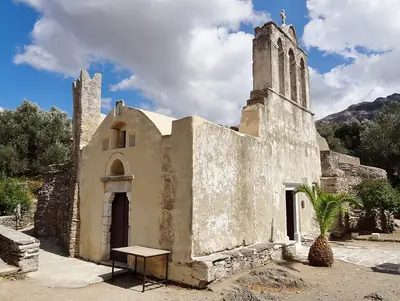
South of Moni, at the northern edge of the Drymalia valley, Panagia Drosiani is a historic Byzantine monastery beside the community cemetery. The decorated monastic church gives the site particular artistic and religious importance.
The cemetery is considered one of the oldest in the Balkans, with origins dating from either the fourth or the sixth century. Panagia Drosiani is one of the key stops in the Tragea area, known for its Byzantine churches and olive-growing landscape.
The Villages and Churches of the Tragea Valley
The countryside around Halki and the Tragea valley offers a different side of Naxos from the waterfront and Chora. Among the sites in this landscape are Panagia Rachioditissa, Taxiarchis Church, Saint George Diasoritis, Agioi Apostoloi Church, Agia Triada and Panagia Damiotissa.
Halki is also home to the Kitron Naxou distillery and Vallindras Museum. Together, these villages, churches and local heritage sites make the valley a strong choice for travellers interested in rural Naxos and Byzantine architecture.
Fotodoti Monastery
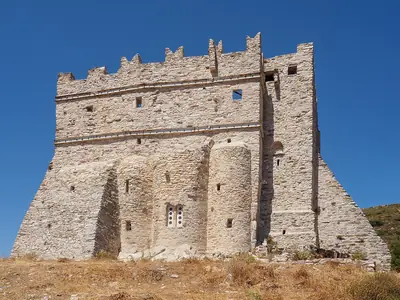
Near Danakos, Fotodoti Monastery rises on a hill in the form of a fortified tower. Dedicated to the Transfiguration of Christ, it combines the character of a sacred building with that of a defensive stronghold.
The monastery measures about thirty by twenty metres and reaches fifteen metres in height. Its two-storey walls are reinforced by large buttresses and end in defensive turrets. It appears to have been established on the site of a sixth-century basilica, and fragments of non-figurative wall paintings associated with the period of Iconoclasm survive inside the church.
The Kouroi of Flerio
Near Melanes, the Kouroi of Flerio are unfinished-looking marble statues that reveal the scale of ancient Naxian stoneworking. One statue lies in a village garden and measures 4.7 metres in length. A second similar statue remains in a quarry near Melanes.
Both are carved from white Naxian marble, and each weighs between five and seven tonnes. Their unfinished state offers a direct glimpse into the process of ancient sculpture.
Yria Archaeological Collection
The Archaeological Collection of Yria is a small display devoted to finds from the ancient sanctuary of Yria. It offers a concise introduction to the sanctuary and its archaeological remains.
Monasteries Around Chora and the Coast
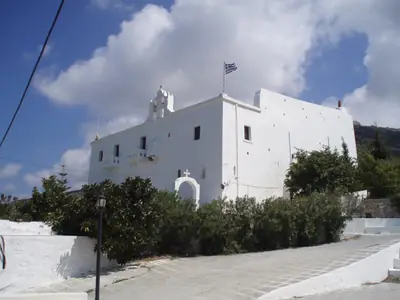
Several monasteries add further depth to Naxos’s religious and architectural heritage. Moni Chrysostomou, or the Monastery of Saint John Chrysostom, stands on a hill above Grotta Beach just beyond Chora.
The Monastery of Faneromeni rises almost above the sea as a fortified Venetian tower overlooking the bay of the same name. Dedicated to the Dormition of the Virgin Mary, it dates back to the fourteenth century, although its exact foundation date is unknown. Its church contains two aisles, each with a carved and gilded iconostasis.
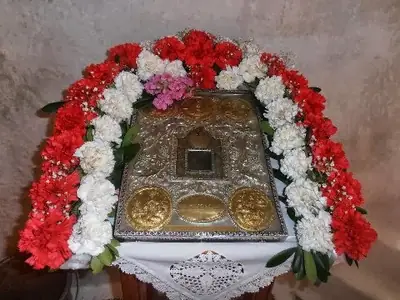
Panagia Argokiliotissa, also known as Agia Anna, is another Naxos monastery whose identity is closely linked to an icon bearing the same name.
Castles and Remote Cycladic Islands
Apano Kastro is a Venetian castle in the Cyclades and one of the island’s historic fortifications. The Castle of Herakleia is another medieval castle in the Municipality of Naxos and Lesser Cyclades.
The wider island group can also be appreciated through sites such as Keros and Donoussa. Keros, southeast of Naxos in the Small Cyclades, is an uninhabited archaeological site associated with the Cycladic civilisation, which flourished around 2500 BC. Landing is forbidden, so its significance is experienced from a distance. Donoussa, also known as Denousa or Donousa in ancient references, is one of the easternmost islands of the Cyclades.
Explore Naxos with a Free Audio Guide
A Naxos self-guided walking tour lets you discover the island’s history without joining a group or following a fixed timetable. Neywo’s free audio guide tells the story of each place as you reach it, at your own pace, with no group and no schedule.
The app currently offers two walking tours in Naxos:
- Chora: From Apollo’s Doorway to the Venetian Castle — 1.72 km, 71 minutes and 9 narrated stops, including the Portara, Grotta, the Orthodox Cathedral of Naxos, the Kastro, the Venetian Museum and the Archaeological Museum of Naxos.
- Halki and the Tragea: Byzantine Churches of the Olive Valley — 5.24 km, 115 minutes and 8 narrated stops, including Panagia Drosiani, Halki, the Kitron Naxou distillery and Vallindras Museum, Saint George Diasoritis and other Byzantine churches.
Download Neywo and explore Naxos with its free audio guide, following the stories as you walk through Chora, the Kastro, Halki and the Tragea valley. Naxos is part of the South Aegean region in Greece.
Places with an audio guide in Naxos
8 places in Naxos with a Neywo audio guide. Each one starts telling its story as you reach it.
Self-guided tours in Naxos
2 tours in Naxos, free in the Neywo app. Each stop tells its story as you reach it.
- Walk
Naxos Town: From Apollo's Doorway to the Venetian Castle
Start at the Portara, the marble gateway of a temple that was never finished, then follow the waterfront past the statue of Petros Protopapadakis and climb through the whitewashed Grotta quarter into Kastro, the walled town founded by a Venetian duke in 1207. Along the way you pass an Orthodox cathedral, a Catholic cathedral, a medieval tower with two family crests and a museum built into the castle walls.
Statue of Petros Protopapadakis, Naxos · Grotta · Magkaki-Aaron Mansion · Orthodox Cathedral of Naxos · Kastro · Church of Presentation of the Lord …
Open this tour: Naxos Town: From Apollo's Doorway to the Venetian Castle - Walk
Halki and the Tragea: Byzantine Churches of the Olive Valley
Walk the green heart of Naxos between the ancient cemetery of Panagia Drosiani and the village of Halki. Pass Byzantine chapels such as Taxiarchis and Saint George Diasoritis, the old Vallindras citron distillery and the 19th-century parish church of Kaloxylos, all among olive groves.
Panagia Drosiani · Panagia Rachioditissa · Taxiarchis Church · Saint George Diasoritis, Naxos · Kitron Naxou distillery (Vallindras Museum) in Chalkio · Agioi Apostoloi Church …
Open this tour: Halki and the Tragea: Byzantine Churches of the Olive Valley
Walk Naxos with Neywo
Neywo turns Naxos into a self-guided audio tour. Stories arrive as you reach the place they belong to, and the route reshapes when you wander off it.

