What to See in Naousa, Greece: Free Audio Guide
Things to Do in Naousa: Churches, Museums and Local History
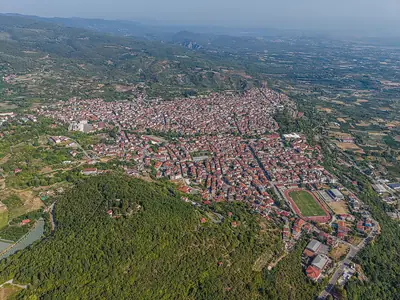
Looking for things to do in Naousa? This historic city in Central Macedonia combines the cold waters of the Arapitsa River with the foothills of Mount Vermio, creating a setting shaped by both mountain and water. Its churches, museums, industrial heritage and connections with the Greek Revolution make it worth exploring beyond its main streets. Neywo offers a free audio guide for Naousa with 25 narrated places.
Naousa is part of Greece, in the South Aegean region. It also stands near the remains of ancient Mieza, an archaeological site associated with Aristotle and Alexander the Great.
What to See in Naousa
The most interesting places to visit in Naousa reveal the city’s religious heritage, industrial past and history of rebuilding. They can be explored as individual stops or as part of a self-guided walking route.
Nimatourgeio Longou, Kyrtsi and Tourpali
This historic industrial complex dates from 1875 and was powered by the waters of the Arapitsa River. Built in limestone, it features Neoclassical details such as carved limestone and brick door surrounds, emphasized corners and roofs covered with Turkish tiles.
The buildings have different heights because they follow the slope of the ground. In 1986, the complex was officially declared a cultural monument, preserving an important example of Naousa’s industrial architecture.
Dormition of Mary Church
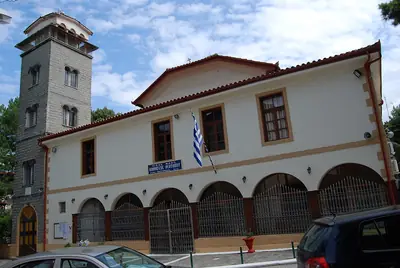
The Dormition of Mary Church, also known as Panagia, is one of Naousa’s most imposing Orthodox churches. It was built in 1833, eleven years after the devastation of the city and three years after permission was granted for Naousa to be resettled.
Its traditional three-aisled basilica has a wooden roof and no dome. The church remains a parish church within the Diocese of Veria, Naousa, and Kampania.
Saint George Church
At the northeastern entrance to Naousa, Saint George Church recalls the city’s destruction and subsequent rebuilding. The present church was completed in 1842 on the site of an older building destroyed in 1822. It is officially recognized as a cultural monument.
The nearby Saint George Gate was where the defenses of the besieged residents were breached during Easter week in 1822. Inside, the church preserves nineteenth-century portable icons, several with dedicatory inscriptions.
Saint John the Baptist Church
The Church of Saint John the Baptist, or Inner Prodromos, stands between the parish churches of Panagia and Saint Minas. It originally belonged to the Monastery of Saint John the Baptist northeast of the city, known as the Outer Prodromos.
The church is described as the only one to survive Naousa’s destruction in 1822. Today, it serves as a chapel of Saint Minas Church, but its survival gives the modest building an exceptional place in the city’s history.
Saint Menas Church
Saint Menas Church stands in the center of Naousa on the site of an older church destroyed during the Civil War on August 18, 1947. Construction took place between 1952 and 1972, and the completed church opened in 1981.
The building is a Byzantine cross-in-square church covering about 500 square metres. Its murals follow the Byzantine style, while the wooden iconostasis was carved in 1976. A cultural centre occupies the basement.
Holy Trinity Church
In the Batani area, the small Holy Trinity Church stands beside a little park on the right bank of the Arapitsa River. Its tree-filled courtyard covers a quiet setting of around fifty square metres, with a bell tower inside.
The white iconostasis and portable icons provide the main interior detail. Above them, a wooden ceiling contrasts with the tiled roof outside.
Presentation of Jesus at the Temple Church
The Presentation of Jesus at the Temple Church, or Ypapanti tou Christou, stands in the upper part of Naousa on the left bank of the Arapitsa. The present church was built in 1894, although local tradition connects the site with an earlier monastery dedicated to the Presentation.
The single-nave church has a vaulted ceiling, a small women’s gallery and walls built from local stone. Its altar is made from a fluted ancient column. Roman marble bases and column drums nearby are thought to have come from an earlier church or ancient temple.
Saint John the Apostle Church
On the hill of Saint John south of Naousa, Saint John the Apostle Church is also known as Saint John the Theologian. Local residents built it between 1822 and 1830, after the uprising, on the site of an older church.
The building began as a chapel dedicated to the Transfiguration of Christ. It is a three-aisled basilica without a dome, with a carved wooden iconostasis decorated with small icons.
Saint Elijah Church
Saint Elijah Church stands on the 350-metre hill of the same name immediately northwest of Naousa. The present building dates from 1936 and was funded by donations from local residents.
Its stone walls are 80 centimetres thick, and a narthex was added later. The church covers about 180 square metres and does not follow a specific architectural style.
Annunciation Church
South of the Arapitsa River, beside the Sixth Primary School, the Annunciation Church offers a more recent example of Naousa’s religious architecture. Built between 1991 and 1994 on the site of a small chapel and cemetery, it was financed through donations.
The church is a three-aisled basilica without a dome, covering about 350 square metres. Inside, blue frescoes stand out against a golden background. A plane tree outside was declared a protected monument in 2002.
Archangels Monastery
The Archangels Monastery, also known as Monastíri ton Taxiarchón or Moní ton Asomáton, is a former Orthodox monastery near Naousa. Today, the site is marked by a small chapel with the same name, belonging to the Diocese of Veria, Naousa, and Kampania.
Naousa’s Museums
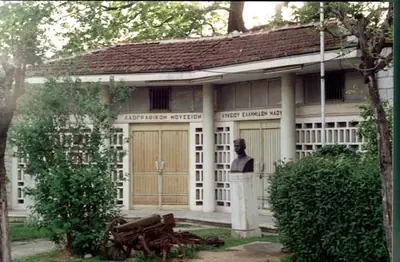
Naousa’s museums provide another way to understand the city and its traditions. The Folklore Museum of the Lyceum of Hellenic Women is dedicated to local cultural heritage, while the History and Folklore Museum of Naousa focuses on the city’s history and traditional culture. The latter is managed by the Municipal Cultural Organization of Naousa.
The city’s history is also reflected in the Church of Saint Demetrius, near Kamena Square. An earlier church on the site was destroyed during the suppression of the Naousa uprising in 1822. The present building contains icons of Saint Demetrius, including one from the eighteenth century, as well as an icon of Saint John the Theologian from the seventeenth century.
Mieza Archaeological Site
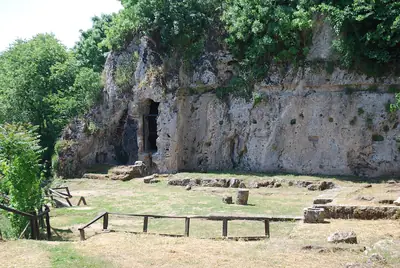
Near the modern village of Lefkadia, close to Naousa, the remains of ancient Mieza are linked to one of the most important educational episodes in ancient Macedon. Its Nymphaeum was the sanctuary where Aristotle taught Alexander the Great between 343 and 340 BC, according to Plutarch. Alexander studied with Aristotle for three years.
The site included stone seats and shaded walks, while the ancient city also had an agora north of its theatre. Excavations have investigated Mieza since the 1950s, and the surrounding necropolis includes the Anthemion Tomb and the Ki—
Explore Naousa with a Free Audio Guide
For a Naousa self-guided walking tour, download Neywo and follow the story as you move through the city. The app has one walking tour: “Rebuilt After 1822: Naousa’s Churches and Folklore,” covering 2.67 km in about 83 minutes, with 9 narrated stops.
The route includes Saint George Church, the Folklore Museum of the Lyceum of Hellenic Women, Saint John the Baptist Church, Dormition of Mary Church, Transfiguration of Jesus Church, Vlach Folklore Museum of Naousa, Holy Trinity Church, Presentation of Jesus at the Temple Church, and the History and Folklore Museum of Naousa.
Neywo’s free Naousa audio guide has 25 narrated places. Each story plays as you reach the place, at your own pace, with no group and no schedule. Narration is available in 11 languages. Download Neywo and explore Naousa on your own terms.
Places with an audio guide in Naousa
8 places in Naousa with a Neywo audio guide. Each one starts telling its story as you reach it.
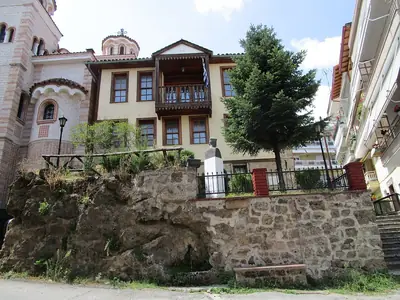
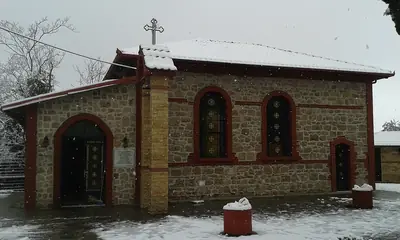
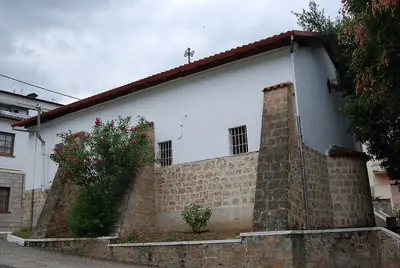
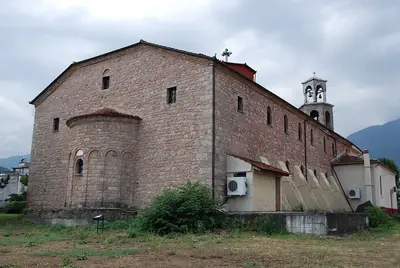
Self-guided tours in Naousa
1 tour in Naousa, free in the Neywo app. Each stop tells its story as you reach it.
- Walk
Rebuilt After 1822: Naousa's Churches and Folklore
In 1822 Ottoman troops destroyed Naousa, and almost everything you pass today was rebuilt afterwards. Walk from the old Saint George Gate through the churches that rose from the ashes, past the pines of Pouliana and the Arapitsa riverbank, and finish at the folklore museums that keep the town's memory.
Saint George Church, Naousa · Folklore Museum of the Lyceum of Hellenic Women · Saint John the Baptist Church, Naousa · Dormition of Mary Church, Naousa · Transfiguration of Jesus Church, Naousa · Vlach Folklore Museum of Naousa …
Open this tour: Rebuilt After 1822: Naousa's Churches and Folklore
Walk Naousa with Neywo
Neywo turns Naousa into a self-guided audio tour. Stories arrive as you reach the place they belong to, and the route reshapes when you wander off it.

