Visiting Ubud, Indonesia: Top Sights on Foot
Things to Do in Ubud: Art, Temples and Balinese Culture
Ubud is a town in Bali known for its art, Hindu temples, traditional architecture and setting among terraced rice fields and forested ravines. It is worth visiting for the way galleries, museums, palaces and sacred places are woven into the town’s cultural life. Neywo has a free audio guide for Ubud with 13 narrated places, available in 11 languages.
What to See in Ubud
The most interesting places to visit in Ubud range from historic royal buildings and temples to museums dedicated to Balinese painting, wood carving and contemporary design. The following sights offer a varied introduction to the town.
Ubud Palace
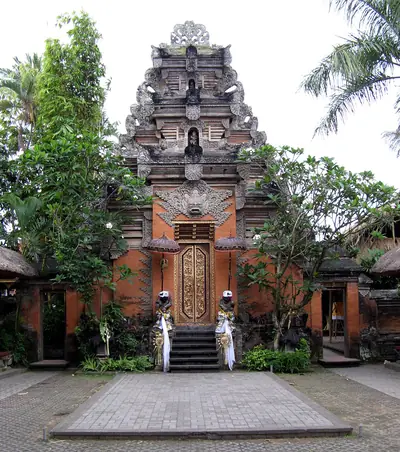
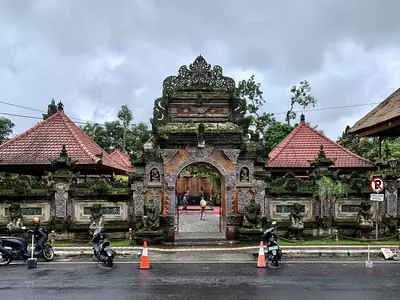
Ubud Palace, also known as Puri Saren Agung, is a historical building complex in the centre of Ubud. Its connection with the town’s royal heritage makes it an important place to include when exploring Ubud’s cultural landmarks.
Pura Taman Saraswati, the Water Palace
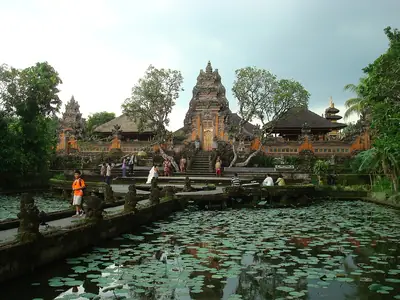
Pura Taman Saraswati is a Balinese Hindu temple dedicated to Sarasvati, the goddess of knowledge, music, art and learning. Also known as the Ubud Water Palace, it is especially recognizable for the lotus pond in front of the shrine, where the flowers float before the carved stone temple.
Pura Merajan Agung
Pura Merajan Agung is a temple located in Ubud. It is one of the religious sites included in Neywo’s walk from the Monkey Forest to the Water Palace, making it a natural stop between several of the town’s central cultural attractions.
Puri Lukisan Museum
Puri Lukisan Museum is Bali’s oldest art museum. Its collection includes traditional and modern Balinese paintings as well as intricate wood carvings, with works associated with the Sanur, Batuan, Ubud, Young Artist and Keliki schools.
The museum’s origins date to the formation of the Pitamaha artists’ association in 1936 by Raja Ubud Tjokorda Gde Agung Sukawati, Walter Spies and Rudolf Bonnet. The museum opened in 1956, with Bonnet as its first curator. Its name means “Palace of Paintings” in Balinese, and the collection includes traditional Kamasan-style paintings.
Museum Pendet
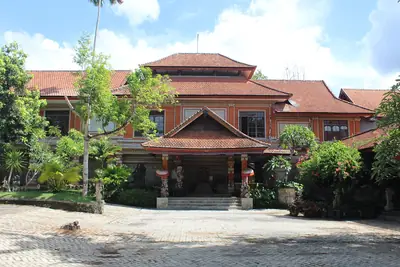
Museum Pendet is a small museum devoted to paintings and wood carvings by local Ubud artists. The building resembles a traditional Balinese house, giving the gallery an intimate setting for exploring the island’s living artistic traditions.
The collection began taking shape in the 1950s, while the museum opened to the public in 1998. Admission is free every day.
Agung Rai Museum of Art
The Agung Rai Museum of Art, commonly known as ARMA, brings together traditional Balinese art and modern Indonesian and foreign works. Founded by Anak Agung Gde Rai and managed by the Arma Foundation, the museum occupies a traditional Balinese-style complex on Jalan Pengosekan.
Among its collection are classic Kamasan paintings from the 1930s and 1940s by the artist Batuna. The museum offers a broader view of Ubud’s artistic scene, from local traditions to later developments in Indonesian and international art.
Museum Rudana
Museum Rudana is located in Peliatan, Ubud. Its collection includes paintings and sculptures by Balinese masters, as well as works by Indonesian and international artists who lived on the island.
The museum was established according to the Balinese humanist philosophy of Tri Hita Karana, which views art as a contribution to public wellbeing. It presents art not only as decoration, but also as part of the cultural and social life of Bali.
Neka Art Museum
Neka Art Museum combines painting with a collection of traditional keris daggers. Built in typical Balinese style, it houses around 300 paintings and keris from across the Indonesian archipelago.
The museum’s collection began in 1976, when Pande Wayan Suteja Neka started gathering works with advice from Rudolf Bonnet and Arie Smit. It opened in 1982 and was later renamed Museum Seni Neka in 1998. Highlights include Affandi’s Tari Barong & Rangda and Perahu Nelayan, as well as a large dancer painting by Bagong Kussudiardjo.
Blanco Renaissance Museum
The Blanco Renaissance Museum occupies a hilltop setting overlooking the Campuhan River. It is devoted to the paintings of Antonio Blanco, whose work reflects his artistic vision and his relationship with Bali.
The museum contains fewer than 300 of Blanco’s paintings. Its buildings and surrounding greenery create a quieter setting than the galleries in central Ubud, while the view towards the river adds a strong connection with the landscape.
Runa Museum and Design House
Runa Museum and Design House focuses on silver craft and jewelry. Its pieces combine carving traditions from Yogyakarta and Bali with an environmental sensibility, using curved, boxy and linear forms inspired by nature.
The museum was founded in 2001 by Sotjawaruni Kumala Palar, known as Runi Palar. In 2005, selections from the collection were exhibited at the Tropenmuseum in Amsterdam.
Pura Dalem Agung Padangtegal
Pura Dalem Agung Padangtegal is the main temple in the southwestern corner of Ubud’s Sacred Monkey Forest. Also called the Padangtegal Great Temple of Death, it is one of three temples forming the sacred complex and is dedicated to Hyang Widhi, the divine manifestation of Shiva.
The temple is believed to have been constructed around 1350. The open area in front of it is also part of the territory of one of the five groups of crab-eating macaques living in the Monkey Forest.
Museum of Marketing 3.0
The Museum of Marketing 3.0 presents the development of modern marketing through examples of companies using a holistic, value-driven approach. The museum includes a permanent exhibition hall and a small theatre within a 250-square-metre venue.
Opened in 2011, it is Indonesia’s first museum devoted to Marketing 3.0. Its admission is covered by the combined ticket for the nearby Puri Lukisan Museum.
Ubud’s Cultural Character
Ubud’s identity comes from the close relationship between art, spirituality and everyday life. Galleries are spread throughout the town, while traditional music and dance performances take place in different parts of Ubud. The town has attracted Western artists since the 1920s, including Walter Spies and Rudolf Bonnet, who were hosted by local royalty.
That artistic history remains visible in the museums, painting schools, wood carvings, jewelry and traditional buildings found across Ubud. Exploring on foot makes it possible to move between these different sides of the town instead of treating them as isolated attractions.
Explore Ubud with Neywo
Neywo offers two self-guided walking tours in Ubud:
- From the Monkey Forest to the Water Palace: 5.55 km, 117 minutes and 7 narrated stops. The route includes Pura Dalem Agung Padangtegal, Ubud Palace, Pura Merajan Agung, Pura Taman Saraswati, Puri Lukisan Museum, Blanco Renaissance Museum and Neka Art Museum.
- Ubud’s Palaces of Paintings: 5.03 km, 100 minutes and 5 narrated stops. The walk visits Museum Rudana, Agung Rai Museum of Art, Ubud Palace, Puri Lukisan Museum and Blanco Renaissance Museum.
Download Neywo and explore Ubud at your own pace. The app tells the story of each place as you reach it, with no group and no schedule. It is a free audio guide designed for walking independently through Ubud’s temples, palaces and museums.
Places with an audio guide in Ubud
8 places in Ubud with a Neywo audio guide. Each one starts telling its story as you reach it.
Self-guided tours in Ubud
1 tour in Ubud, free in the Neywo app. Each stop tells its story as you reach it.
- Walk
From the Monkey Forest to the Water Palace
Start under the banyans of the Sacred Monkey Forest at its 14th-century Temple of Death, then walk north into the royal heart of Ubud: the Puri Saren palace, the family temple of Merajan Agung and the lotus pond of Pura Taman Saraswati. End at Bali's oldest art museum the hilltop home of painter Antonio Blanco above the Campuhan river, and, a last stretch north along the road, the Neka Art Museum with its paintings and heirloom keris daggers.
Pura Dalem Agung Padangtegal · Ubud Palace · Pura Merajan Agung · Pura Taman Saraswati · Puri Lukisan Museum · Blanco Renaissance Museum …
Open this tour: From the Monkey Forest to the Water Palace
Walk Ubud with Neywo
Neywo turns Ubud into a self-guided audio tour. Stories arrive as you reach the place they belong to, and the route reshapes when you wander off it.

