Lloret de Mar, Spain: Self-Guided Walking Tour
Things to Do in Lloret de Mar: What to See Beyond the Beach
Lloret de Mar is a coastal town in Catalonia, Spain, known for its beaches but also rich in castles, churches, museums, monuments and archaeological remains. Its heritage reveals a town shaped by the sea, religious history and centuries of life along the Costa Brava. Neywo has a free audio guide for Lloret de Mar with 15 narrated places.
What to See in Lloret de Mar
Castell de Sant Joan
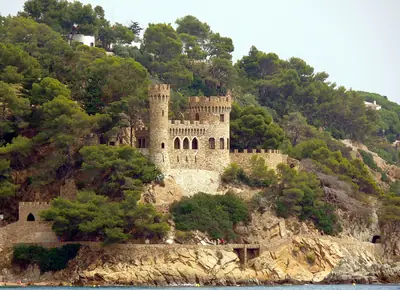
Perched on a cliff between Lloret and Fenals, Castell de Sant Joan is one of the town’s most striking landmarks. The fortress stands on Turó des Castell, about sixty metres above sea level, with views across Lloret and towards the Castell de Sant Joan de Blanes.
Its position beside the cliffs explains its defensive importance. The castle is a cultural property of national interest, and it can be reached on foot by following the path from Passeig Manuel i Bernat along the coast.
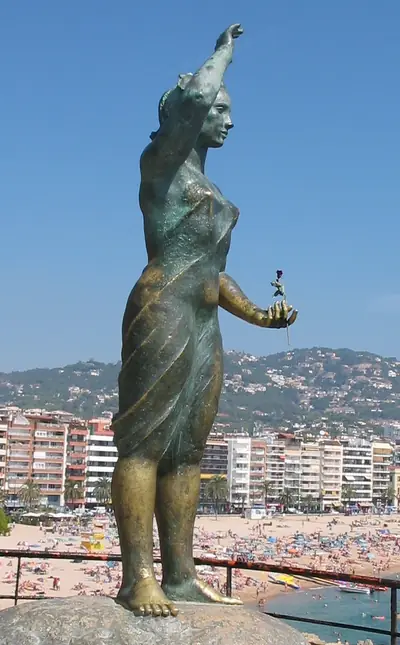
Venus de Lloret
The Venus de Lloret, also known as La Dona Marinera or the Fisherman’s Wife, is an open-air sculpture and one of Lloret de Mar’s notable landmarks. Its evocative name connects the monument with the town’s maritime identity.
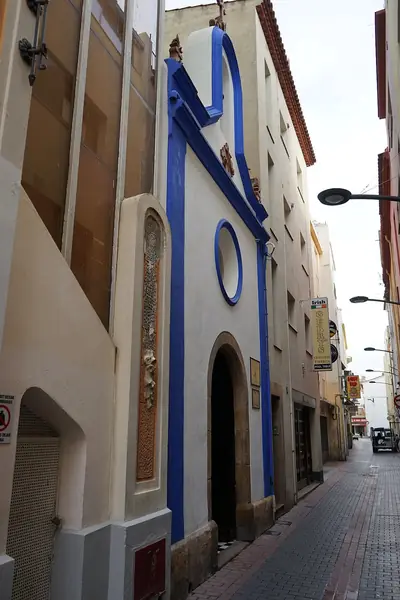
Capella dels Sants Metges
The Capella dels Sants Metges, meaning the Chapel of the Holy Doctors, offers a quieter point of interest within Lloret de Mar. The chapel is part of the town’s religious heritage.
Sant Romà
The colorful church of Sant Romà, also known as the Church of Saint Roman, is one of the most recognizable sights in Lloret’s old town and tourist centre. It stands together with the Chapel of the Blessed Sacrament.
The church was partly destroyed in 1936, during the burning and destruction of religious buildings in the context of the Spanish Civil War. That history adds another layer to the vivid landmark seen today.
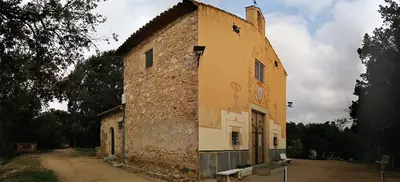
Can Saragossa
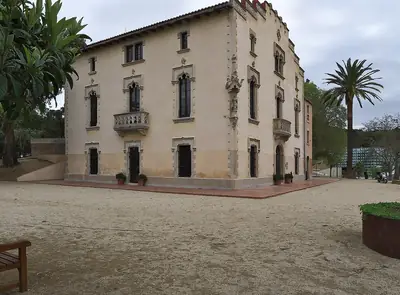
On a small hill along the Carretera de Tossa, Can Saragossa—also called Masia de Can Saragossa or Can Xardó—offers a quieter setting away from the centre. The former rural estate is surrounded by historic gardens and a holm oak forest.
The house still preserves the appearance of the palace built there in 1902. During the nineteenth century, Modernista renovations transformed Can Saragossa into a luxury summer residence. In 1954, it was adapted for use as a hotel. Today, it is also associated with archaeology and helps explain Lloret’s layered past.
Museo del Mar in Can Garriga
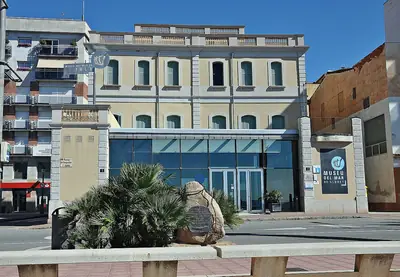
The Museo del Mar, or Museu del Mar, is housed in Can Garriga, an old indiano house. Its displays present Lloret de Mar’s maritime story through ships, images, paintings and models.
Among the collection is a model of Puig Castellet, an important Iberian settlement in the municipality. The museum therefore connects the town’s seafaring identity with its earlier history. Lloret de Mar’s town council acquired Can Garriga in 1981, and the building was restored and converted into a museum by the architects Martorell, Bohigas and Mackay, together with the designer Lluís Pau.
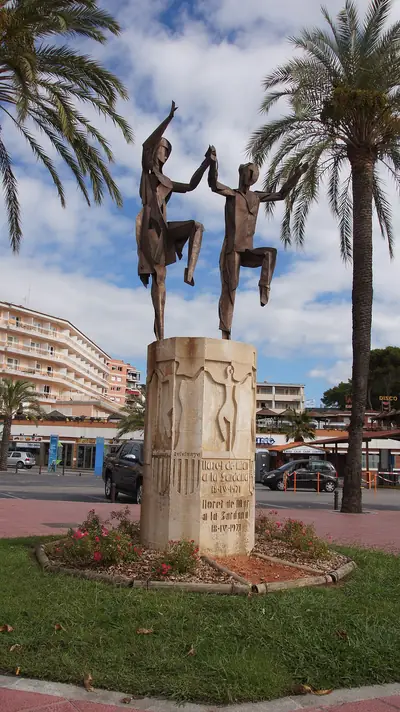
Monument a la Sardana
The Monument a la Sardana stands out because of the geometric mound built around it. The mound imitates a decagon, a figure with ten sides. The monument is included in the Architectural Heritage Inventory of Catalonia.
Castell d’en Plaja
At the northern side of Lloret’s main beach, near Turó Rodó, Castell d’en Plaja immediately catches the eye. This isolated, castle-shaped building has exceptional visibility and can be seen from across the beach.
Monument de l’Àngel
The Monument de l’Àngel, known simply as l’Àngel, is a sculptural group included in the Architectural Heritage Inventory of Catalonia. It stands on a circular terrace approached by open stairways at the four cardinal points, giving the monument a balanced setting visible from several directions.
The Roman burial site
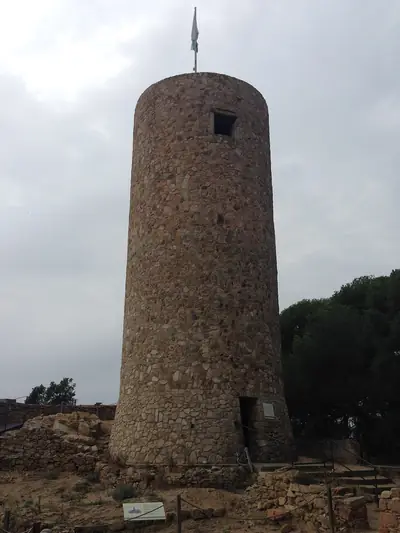
The Torre Sepulcral de Lloret de Mar, also known as the Torre Sepulcral dels Avellaners de can Sala or Torre dels Moros, is a Roman funerary monument in the northeastern part of the town. It dates from before the third century AD.
Its form resembles the Torre dels Escipions in Tarragona and the Torre Sepulcral de Vilablareix in the Gironès area. Excavations in 1971 uncovered a cremation area. The tower had been destroyed during construction work in late 1967 and was later rebuilt using existing descriptions and photographs.
The town’s churches and hermitages
Lloret’s religious heritage extends beyond the centre. The Santuari de la Mare de Déu de les Alegries was the town’s first parish, consecrated in 1079. It remained the parish church until 1522, when a new parish opened near the beach. Although few Romanesque elements survive after later renovations and a rebuilding in 1914, the sanctuary remains part of the Architectural Heritage Inventory of Catalonia.
The Ermita de Sant Quirze is a simple rural hermitage with roots reaching back before the eleventh century. Its restrained design follows the principles of traditional Catalan rural architecture.
Set on a hill overlooking Santa Cristina Beach, the Ermita de Santa Cristina is about three and a half kilometres from the town centre and is also included in the Inventory of the Architectural Heritage of Catalonia.
Further into the woodland of the Serra de Marina, the Santuari de Sant Pere del Bosc occupies the site of an ancient Benedictine monastery dating from the tenth century. Its forest setting is central to its character and explains its name, Saint Peter of the Forest.
Theater of Lloret de Mar
The Theater of Lloret de Mar, or Municipal Theater of Lloret de Mar, is located in Germinal Ros Square and is dedicated mainly to theater performances. It opened on November 26, 2011, with Marina, a three-act opera connected with nineteenth-century Lloret.
The opera was presented by the Orchestra of the Chamber of Catalonia and the Choir of Ramon Llull University. Its opening made a direct link between the modern venue and the town’s cultural history.
Explore Lloret de Mar with Neywo
A Lloret de Mar self-guided walking tour with Neywo lets you explore without joining a group or following a fixed schedule. The app tells the story of each place as you reach it, at your own pace, with narration available in 11 languages.
Neywo offers two walking tours in Lloret de Mar:
- From the Cliff Castle to the Beach Castle: 4.1 km, 104 minutes and 9 narrated stops, including Castell de Sant Joan de Lloret, Venus de Lloret, Sant Romà, Can Saragossa, Museo del Mar and Castell d’en Plaja.
- Hills, Hermitages and the Angel of Lloret: 5.9 km, 109 minutes and 5 narrated stops, including Monument de l’Àngel, the Santuari de la Mare de Déu de les Alegries and the Ermita de Sant Quirze.
Download the free Neywo audio guide and explore Lloret de Mar with its history unfolding around you—no group, no schedule, just the places and their stories at your own pace.
Places with an audio guide in Lloret de Mar
8 places in Lloret de Mar with a Neywo audio guide. Each one starts telling its story as you reach it.
Self-guided tours in Lloret de Mar
1 tour in Lloret de Mar, free in the Neywo app. Each stop tells its story as you reach it.
- Walk
Lloret de Mar: From the Cliff Castle to the Beach Castle
Lloret is more than its beach. Start on the clifftop at the Castell de Sant Joan, come down to the Fisherman's Wife and the old town's colourful church, then cross the Modernista gardens of Can Saragossa to the sea-captains' house that is now the maritime museum. Finish at the toy castle that became the symbol of the resort.
Castell de Sant Joan de Lloret · Venus de Lloret · Capella dels Sants Metges (Lloret de Mar) · Sant Romà · Can Saragossa · Theater of Lloret de Mar …
Open this tour: Lloret de Mar: From the Cliff Castle to the Beach Castle
Walk Lloret de Mar with Neywo
Neywo turns Lloret de Mar into a self-guided audio tour. Stories arrive as you reach the place they belong to, and the route reshapes when you wander off it.

