Things to Do in Logroño, Spain: Walking Guide
Things to do in Logroño: the best places to see
Logroño is the capital of La Rioja, a city shaped by historic churches, medieval fortifications, the Ebro River and a strong rural tradition. The most interesting things to do in Logroño are concentrated around its Old Town, where centuries of architecture and public monuments can be explored on foot. Neywo has a free audio guide for Logroño with 15 narrated places, available in 11 languages.
What to see in Logroño
The best way to discover Logroño is to follow its historic center and then cross the Ebro to see the city from the river. These are the main places to include in your visit.
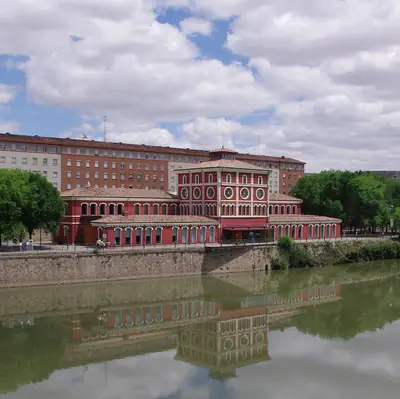
Casa de las Ciencias
On the northern bank of the Ebro, the Casa de las Ciencias occupies a landscaped setting facing Logroño’s Old Town. It stands between the Stone Bridge and the Iron Bridge and serves as an important cultural space in the city.
Puente de Hierro
The Puente de Hierro, or Iron Bridge, is the oldest of Logroño’s four bridges across the Ebro. Inaugurated in 1882, it stretches 330 metres across the river and remains one of the city’s notable historic crossings.
Church of Santiago
The Church of Santiago, also known as Santiago el Real, is regarded as the church in Logroño with the oldest origins. Its history may reach back to an early Christian crypt, while the present building was constructed between 1513 and 1527. The tower followed between 1570 and 1573.
Inside, the church is arranged as a single broad hall without columns. Its supports become octagonal towards the interior before continuing into the arches above, creating a distinctive sense of space.
Muralla del Revellín
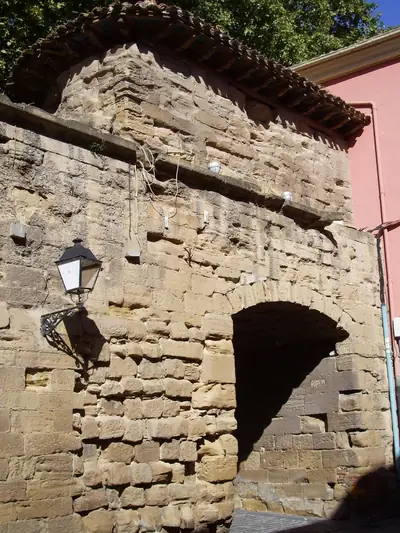
The Muralla del Revellín preserves part of Logroño’s historic defenses, including the west-facing gate. The fortifications were strengthened between 1498 and 1540, and the wall and gate visible today began in 1522, after Logroño had been besieged the previous year.
The remains offer a direct connection with the city’s military history. From the second half of the sixteenth century, the walls gradually lost their defensive role, although sections survived despite later construction against them.
Museo de La Rioja and Palacio de Espartero
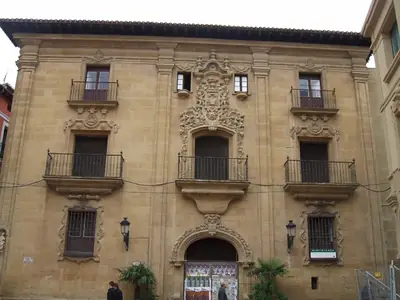
The Museo de La Rioja has been housed in the Palacio de Espartero since 1971. Its collections cover the region’s artistic and cultural heritage from the twelfth to the nineteenth century, as well as ethnography and contemporary art.
The museum displays paintings, sculptures, antique furniture, archaeological discoveries and carved wooden works. Among its notable pieces are the fourteenth-century panels of San Millán and a Gothic wooden Coronation of the Virgin. The eighteenth-century Baroque palace was also the home of General Baldomero Espartero after he withdrew from politics.
Theatre of Bretón de los Herreros
The Theatre of Bretón de los Herreros, or Teatro Bretón, has been part of Logroño’s cultural life since the nineteenth century. It opened on September 19, 1880, under the name Teatro Quintana, later becoming Teatro Principal before being renamed in 1902 after the playwright, poet and journalist Manuel Bretón de los Herreros.
Architect Félix Navarro modelled the theatre on the Teatro Gijón. Its original auditorium had a horseshoe shape and space for 700 spectators. Later renovations retained features including the ceilings, crystal lamps and box railings. The theatre also hosted Logroño’s first cinematographic projection on November 18, 1896.
Monumento al Labrador
The Monumento al Labrador, or Monument to the Farmworker, pays tribute to the people associated with Logroño’s rural tradition. The sculpture was created by Alejandro Rubio Dalmati and inaugurated in 1967.
Monument to General Espartero
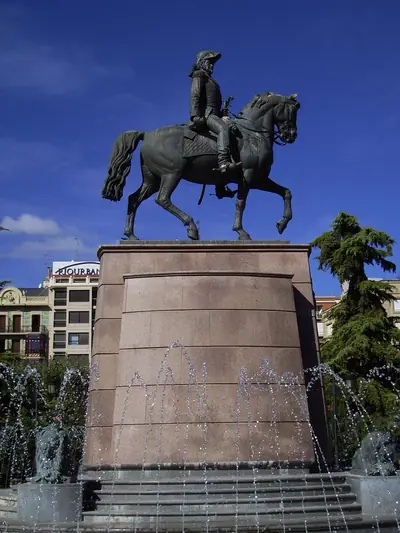
On the Paseo del Príncipe de Vergara, also called the Paseo del Espolón, stands the Monument to General Espartero. The bronze ensemble centres on an equestrian statue of Baldomero Espartero, a military figure and politician who served as regent of Spain while Isabella II was queen.
Espartero lived part of his life in Logroño, where he and his wife, María Jacinta Martínez de Sicilia y Santa Cruz, both died. The statue rises from a pedestal in the centre of a circular fountain, surrounded by four bronze lions. Two lions lie asleep, while the other two hold their heads up.
Co-cathedral of Santa María de la Redonda
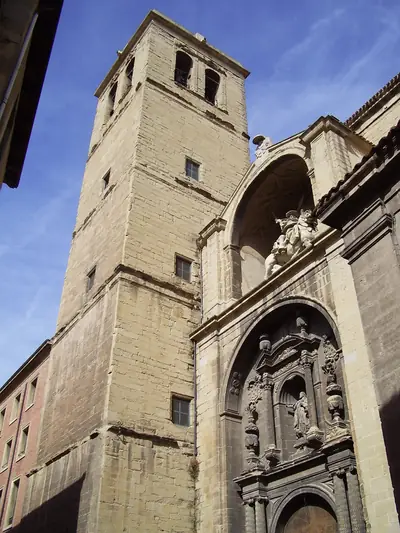
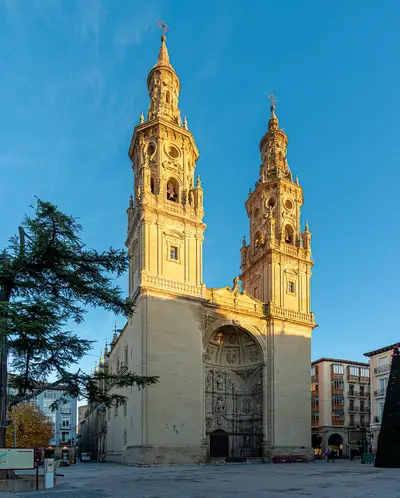
The Co-cathedral of Santa María de la Redonda, usually known as La Redonda, is one of Logroño’s central landmarks. Its name recalls an earlier church with a rounded shape. The church became a collegiate church in the fifteenth century, when Logroño gained city status, and was raised to co-cathedral rank in the twentieth century.
Its two richly decorated towers are among its most recognisable features. The side-wall clock is unusual too: its three faces show the hour, minute and second separately. The entrance is set inside an alcove filled with Christian sculptures and protected by tall iron gates and netting.
Church of Santa María de Palacio
The medieval Church of Santa María de Palacio, also known as the Imperial Church of Santa María de Palacio, is especially distinctive for its lantern tower and slender spire. Inside, the Mannerist reredos is another important artistic feature.
The title “Imperial” is connected with Alfonso VII. In 1130, he donated his palace so that the first foundation of the Order of the Holy Sepulchre in the Kingdom of Castile could be established here.
Church of San Bartolomé
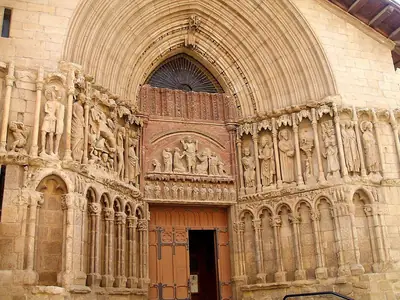
The Church of San Bartolomé is the oldest church in Logroño. Its appearance brings together several centuries of construction, beginning with twelfth-century Romanesque elements in the head of the church and the lower part of the tower.
Its most striking feature is the pointed-arch portal, whose Romanesque sculptures depict the life of Saint Bartholomew along with other biblical scenes. The church is one of the clearest places in the city to see how Romanesque and Gothic traditions meet.
Logroño City Council
Logroño City Council occupies a distinctive modern architectural complex at number 11 on Avenida de la Paz. The city council moved here in 1981, after spending more than a century—from 1865 to 1980—in the Chapiteles Palace on Calle Portales.
The building provides a contrast with the historic architecture of the Old Town and represents the city’s contemporary civic identity.
Other places to include
The Church of Santa Maria de Valvanera is another place of worship in Logroño. At the city’s sporting edge, Estadio Las Gaunas is the municipal football stadium, opened on February 28, 2002, with capacity for up to 16,000 spectators.
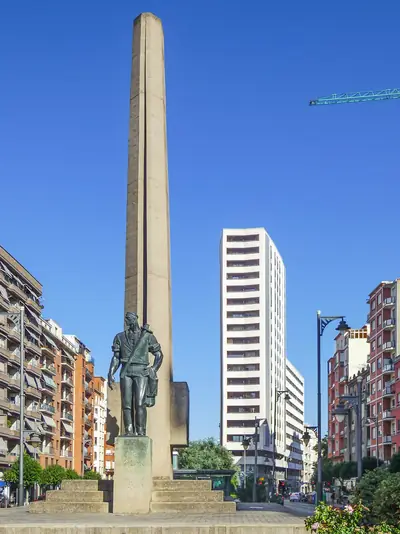
The Monument to the Ninth Centenary of the Charter of Logroño marks 900 years of the city’s charter. Created by Julián Gil, the constructivist monument was inaugurated in 1996.
Explore Logroño with a self-guided audio tour
A Logroño self-guided walking tour is a practical way to connect the city’s bridges, churches, museums and monuments without following a group. Neywo offers one walking tour and one bike route in Logroño:
- Walking tour: 3.23 km, 106 minutes and 12 narrated stops, including Casa de las Ciencias, Puente de Hierro, the Church of Santiago, Muralla del Revellín, Museo de La Rioja, Theatre of Bretón de los Herreros, Monumento al Labrador, the Monument to Espartero, La Redonda, Santa María de Palacio, San Bartolomé and Logroño City Council.
- Bike route: 4.4 km, 22 minutes and 4 narrated stops, connecting the Monument to the Ninth Centenary of the Charter of Logroño, Logroño City Council, Santa María de Palacio and Puente de Hierro.
The app tells the story of each place as you reach it, at your own pace, with no group and no schedule. Download Neywo’s free Logroño audio guide and explore the city independently, then continue discovering destinations across Spain, including Pamplona and San Sebastián de Garabandal.
Places with an audio guide in Logroño
8 places in Logroño with a Neywo audio guide. Each one starts telling its story as you reach it.
Self-guided tours in Logroño
2 tours in Logroño, free in the Neywo app. Each stop tells its story as you reach it.
- Bike ride
Logroño by Bike: From the Fuero Monument to the Old Town
A short ride on the city's signed cycle lane from the constructivist Monument to the Ninth Centenary of the city's charter, past the modern city hall, to the lantern-towered Imperial church of Santa María de Palacio and the Iron Bridge over the Ebro. A relaxed way to reach the Camino de Santiago heart of Logroño.
Monumento al IX centenario del Fuero de Logroño · Logroño City Council · Church of Santa María de Palacio · Puente de Hierro
Open this tour: Logroño by Bike: From the Fuero Monument to the Old Town - Walk
Logroño's Old Town Between Two Bridges: Pilgrims, Walls and Bronze Lions
Logroño is a stop on the French Way of St James and the capital of Rioja. Start on the Ebro riverbank by the Iron Bridge, cross into the old town, trace the surviving 16th-century wall gate, then follow the pilgrim churches, the Espartero monument and the twin-towered co-cathedral to the city's oldest church. Twelve easy stops, all on flat streets.
Casa de las Ciencias · Puente de Hierro · Church of Santiago, Logroño · Muralla del Revellín · Museo de La Rioja · Theatre of Bretón de los Herreros …
Open this tour: Logroño's Old Town Between Two Bridges: Pilgrims, Walls and Bronze Lions
Walk Logroño with Neywo
Neywo turns Logroño into a self-guided audio tour. Stories arrive as you reach the place they belong to, and the route reshapes when you wander off it.

