Things to Do in Antequera, Spain: Walking Guide
Things to Do in Antequera: Historic Palaces, Dolmens and the Alcazaba
The best things to do in Antequera include exploring a Moorish fortress, discovering elegant palaces and convents, and visiting some of Europe’s most remarkable prehistoric monuments. Set between the mountains and the plains of Andalusia, this historic city combines a rich urban heritage with extraordinary archaeological and natural landscapes. Neywo has a free audio guide for Antequera with 40 narrated places.
What to See in Antequera
Antequera’s Alcazaba
The Alcazaba crowns the hill above Antequera and remains one of the city’s defining landmarks. The Moorish fortress was built in the fourteenth century over earlier Roman ruins, when it served to resist the Christian advance from the north.
Its rectangular layout is anchored by two towers. The most prominent is the Torre del Homenaje, a fifteenth-century keep considered one of the largest in al-Andalus after the Comares Tower of the Alhambra. In 1582, a Catholic bell tower and chapel known as the Templete del Papabellotas were added on top of the Moorish keep. The Torre Blanca, or White Tower, completes the defensive complex.
Antequera Dolmens Site
The Antequera Dolmens Site is one of Europe’s most remarkable prehistoric landscapes and a UNESCO World Heritage Site since 2016. It brings together three megalithic monuments—the Dolmen of Menga, the Dolmen of Viera and the Tholos of El Romeral—with two natural formations, La Peña de los Enamorados and El Torcal.
The site shows how prehistoric communities combined engineering, astronomy and an understanding of the surrounding landscape. The protected areas cover the dolmens as well as the dramatic mountain formations that give the region its distinctive setting.
Dolmen of Menga
The Dolmen of Menga is a Neolithic burial monument built around 3750–3650 BCE. Its long chamber measures 27.5 metres, with a width of six metres and a maximum height of 3.5 metres. Thirty-two enormous stones form the structure, including one estimated to weigh around 180 tonnes.
The builders covered the completed chamber and entrance passage with earth, creating the mound visible today. When archaeologists opened the monument in the nineteenth century, they found the skeletons of several hundred people, suggesting that it served as a collective tomb for the ruling families of the community.
Tholos de El Romeral
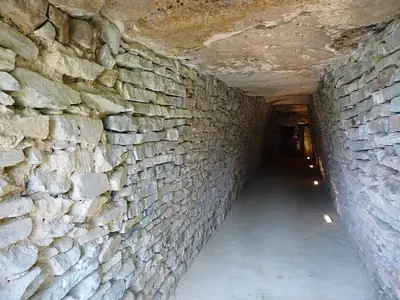
The Tholos de El Romeral dates from around 1800 BC, during the early Bronze Age. It differs from the nearby dolmens in both age and construction. Instead of relying on massive stone slabs, its builders used corbelling: successive layers of smaller stones were placed inward until they formed a false dome.
A long corridor leads to a circular chamber with a vaulted ceiling, followed by a smaller second chamber. The entire tomb was then covered with earth. Its beehive-like form explains the use of the word “tholos”, derived from the Greek term for this type of structure.
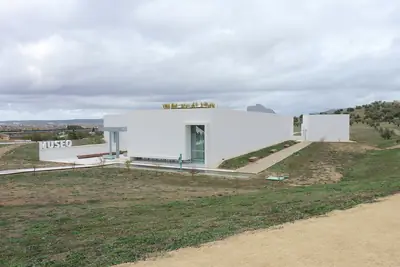
Museo del Conjunto Arqueológico Dólmenes de Antequera
The Museo del Conjunto Arqueológico Dólmenes de Antequera, also called the Museo de los Dólmenes de Antequera, introduces the prehistoric monuments scattered around the city. It acts as a gateway to understanding the dolmens and the culture that created them.
For visitors following an Antequera self-guided walking tour, the museum provides useful context before continuing to the archaeological sites themselves.
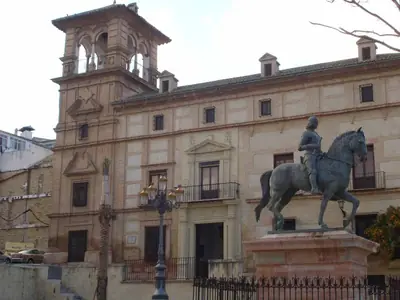
Museo de la Ciudad de Antequera
The Museo de la Ciudad de Antequera occupies the Palacio de Nájera, a historic urban palace. Its collections trace the city’s history from prehistory to the present through archaeology, fine arts and ethnology.
The museum’s standout object is the Efebo de Antequera, a Roman bronze statue of a youth regarded as one of the finest examples of its kind in Spain. The palace itself adds to the experience, giving the collection an appropriate historic setting.
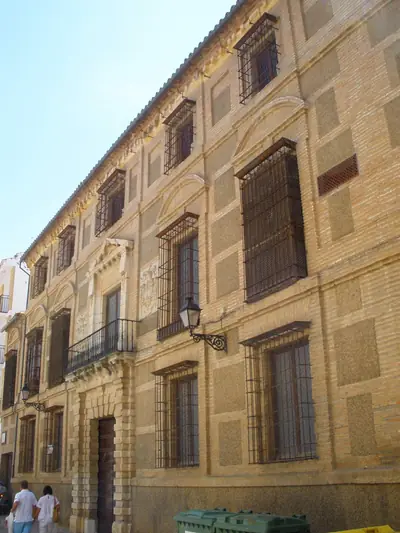
Palacio de la Marquesa de las Escalonias
The Palacio de la Marquesa de las Escalonias is a house-palace dating from the early seventeenth century and considered the best-preserved example of an old Antequeran aristocratic residence. The family’s roots in the city reach back to the Christian conquest of 1410; in 1680, King Carlos II granted them the title Marquis of Las Escalonias.
Its main façade follows the “frame façade” model first used at the Royal Chancery in Granada, with Italian Mannerist influence in its proportions and design. Behind this formal exterior, the building retains local Mudéjar traditions in its brickwork, masonry, plan and secondary façades.
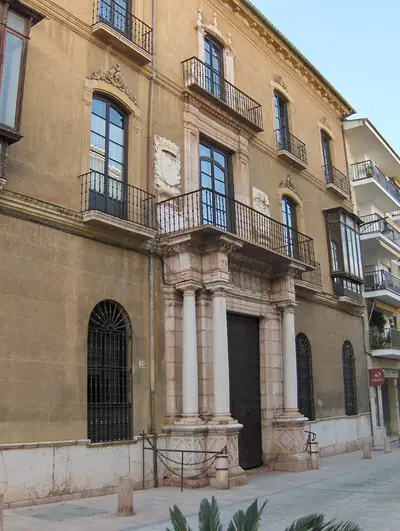
Palacio de los Marqueses de Villadarias
Construction of this noble residence began in 1710, when Francisco del Castillo y Fajardo, the second Marqués de Villadarias, settled in Antequera. The palace was largely complete by 1716.
Its entrance portal includes carved stone cylinders and chains, added to commemorate a royal visit. In 1730, King Felipe V and Queen Isabel de Farnesio stayed at the palace with their court as guests of the widowed Marquesa.
Puerta de Granada
The Puerta de Granada is one of Antequera’s historic city gates. It belongs among the monuments that reveal how the city was structured and defended over time, alongside the Alcazaba and the other surviving gates.
Convents and religious heritage
Antequera’s religious architecture adds another layer to its history. The Convento de la Madre de Dios de Monteagudo traces its origins to 1520, when Augustinian nuns established a community in the city. The present building dates largely from the mid-eighteenth century, after an earlier structure was destroyed by fire.
The Antiguo Convento de Nuestra Señora de los Remedios, also known as the Iglesia de los Remedios, is another designated cultural property. Together with the palaces, churches and convents, these buildings form the historic fabric explored by the city’s walking routes.
Teatro-Cine Torcal
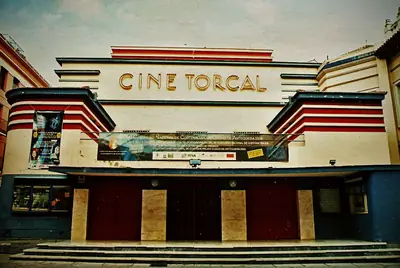
The Teatro-Cine Torcal has been a cultural landmark since the 1930s. Architect Antonio Sánchez Esteve designed the building, which was constructed between 1933 and 1934. Its rationalist lines, angular decorative details and distinctive volumes place it within the Art Deco style.
The Molina family acquired the theatre in the early 1950s and managed it for decades before it returned to public ownership. Today, the city council runs the venue, which is one of the main locations for the Baroque Festival of Music and Comedies. A renovation and expansion project approved in 2008 was designed to increase seating capacity to 650.
El Torcal de Antequera
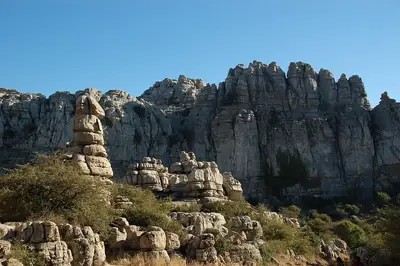
South of the city, El Torcal de Antequera offers a dramatic contrast to the historic centre. This limestone landscape was sculpted over millions of years by water and wind, producing towers, corridors, balanced slabs, sinkholes and unusual rock formations.
The protected terrain covers roughly 12 square kilometres in the Sierra del Torcal. Its geological importance has been recognized through several designations: it became Andalusia’s first Natural Site of National Interest in 1929, a natural park reserve in 1978 and a Paraje Natural in 1989. In 2014, it also received designation as a Special Conservation Zone and a Special Protection Area for birds.
Ciudad romana de Singilia Barba
Northwest of Antequera, the archaeological zone of the Roman city of Singilia Barba occupies the grounds of the Cortijo del Castillón. Its full Latin name was Magnum Municipium Flavium Singilense Barbitanum. The existence of remains at the site has been known since the sixteenth century.
Explore Antequera with Neywo
Neywo offers a free Antequera audio guide with 40 narrated places. It includes three walking tours and one bus route:
- Antequera’s Grand Tour: Palaces, Convents and the Alcazaba — 3 km, 104 minutes and 11 narrated stops.
- Gates, Convents and Mudéjar Churches — 3.51 km, 110 minutes and 12 narrated stops.
- Dolmens of Antequera: Europe’s Stone Age Giants — 3.78 km, 91 minutes and six narrated stops.
- Urban Bus L-2: Gates, Palaces and Convents — 3.2 km, 14 minutes and eight narrated stops.
The app tells the story of each place as you reach it, at your own pace, with no group and no schedule. Narration is available in 11 languages, making it an easy way to explore Antequera independently.
If you are continuing through southern Spain, discover more destinations in Andalusia or explore the wider country with the Spain destination guide.
Places with an audio guide in Antequera
8 places in Antequera with a Neywo audio guide. Each one starts telling its story as you reach it.

Self-guided tours in Antequera
4 tours in Antequera, free in the Neywo app. Each stop tells its story as you reach it.
- Bus ride
Urban Bus L-2: Gates, Palaces and Convents
Antequera's urban line L-2 runs from the Puerta de Estepa through the old town past the Escalonias palace, the two collegiate churches and the Descalzas convent museum. A cheap way to cross the historic centre without climbing its hills.
Puerta de Estepa · Iglesia de San Juan de Dios, Antequera · Palacio de la Marquesa de las Escalonias · Colegiata de San Sebastián · Iglesia de Santa María de Jesús · Puerta de Málaga …
Open this tour: Urban Bus L-2: Gates, Palaces and Convents - Walk
Antequera's Grand Tour: Palaces, Convents and the Alcazaba
The long way through Antequera's old town, from an Art Deco theatre and a palace carved with royal chains to Renaissance arches and the Moorish fortress on the hill. Eleven stops that explain why this crossroads town of Andalusia is called the heart of the region.
Puerta de Estepa · Teatro-Cine Torcal · Palacio de los Marqueses de Villadarias · Iglesia de San Francisco · Museo conventual de las Descalzas de Antequera · Museo Municipal de Antequera …
Open this tour: Antequera's Grand Tour: Palaces, Convents and the Alcazaba - Walk
Gates, Convents and Mudéjar Churches
Off the main route, a quieter loop through the lower town: old city gates, small chapels, convents and churches built in the Mudéjar style that blends Christian and Islamic building traditions.
Puerta de Málaga · Iglesia de Santa María de Jesús · Capilla de la Virgen del Socorro, Antequera · Iglesia Conventual de la Encarnación · Plaza del Coso Viejo · Iglesia de Nuestra Señora del Carmen (Antequera) …
Open this tour: Gates, Convents and Mudéjar Churches - Walk
Dolmens of Antequera: Europe's Stone Age Giants
Start at the quiet Ermita de la Veracruz, then visit the UNESCO World Heritage megaliths on the edge of town: the museum that explains them, then the 180-tonne stones of Menga, the solstice-aligned Viera dolmen and the beehive-shaped Tholos of El Romeral.
Ermita de la Veracruz · Museo del Conjunto Arqueológico Dólmenes de Antequera · Antequera Dolmens Site · Dolmen of Menga · Dolmen of Viera · Tholos de El Romeral
Open this tour: Dolmens of Antequera: Europe's Stone Age Giants
Walk Antequera with Neywo
Neywo turns Antequera into a self-guided audio tour. Stories arrive as you reach the place they belong to, and the route reshapes when you wander off it.

