Things to Do in Trabzon, Turkey: Walking Guide
Things to Do in Trabzon: Historic Monasteries, Mosques and Black Sea Heritage
The best things to do in Trabzon combine Byzantine and Ottoman history with dramatic mountain landscapes. This historic port city on Turkey’s Black Sea coast is home to remarkable monasteries, churches, mosques, museums and fortifications, making it well worth exploring beyond its coastline. Neywo offers a free audio guide for Trabzon with 69 narrated places.
What to See in Trabzon
Sümela Monastery
Sümela Monastery is one of the most remarkable sights near Trabzon. Built in 386 AD during the reign of Emperor Theodosius I, the Greek Orthodox monastery clings to a sheer cliff above the Altındere Valley in Maçka district. It stands within Altındere Valley National Park, on Mount Mela at roughly 1,150 metres above sea level.
The monastery took its present form in the 13th century, when it rose to prominence under Alexios III. After the population exchange between Greece and Turkey following the First World War, Sümela was abandoned for decades. It was later partially restored and converted into the museum visitors can see today. The site is also on Turkey’s tentative list for UNESCO World Heritage status.
Kuştul Monastery
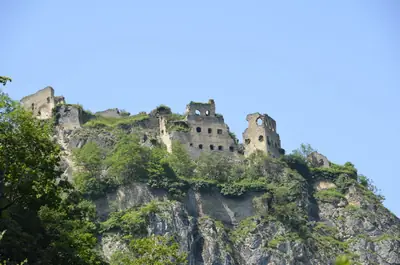
Near the village of Şimşirli, around 30 kilometres southeast of Trabzon, Kuştul Monastery preserves the remains of a once-important Greek Orthodox community. Founded in 752, it was also known as Agios Georgios Peristereotas.
According to legend, pigeons guided three monks carrying an icon of Saint George to the place where the monastery was built. At its height, the complex had 187 rooms and cells, while its library held more than 7,000 works. Today, the site is largely made up of atmospheric ruins.
Vazelon Monastery
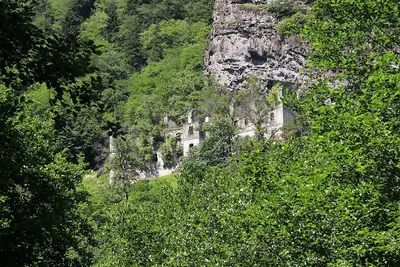
Vazelon Monastery lies in the hills of Maçka, about 40 kilometres south of Trabzon. Originally built around 270, it is among the oldest monasteries in the region. The Byzantine Emperor Justinian I ordered its renovation in 565, while most of the structures visible today date from 1410.
The northern outer wall contains frescoes showing Heaven, Hell and the Last Judgment. Vazelon suffered repeated attacks over the centuries and was finally abandoned in 1923 after the population exchange between Greece and Turkey.
Hagia Sophia, Trabzon
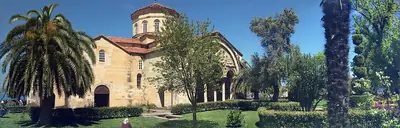
Hagia Sophia, known locally as Ayasofya, is one of the finest surviving monuments from the Empire of Trebizond. The former monastery church was built during the Byzantine period on a hill close to the sea. Its architecture combines Byzantine provincial design, a Georgian onion dome and Seljuk stone craftsmanship.
The building has served as a church, mosque, military headquarters, hospital, storage depot and museum. It became a museum in 1964, before officially reopening as a mosque on June 28, 2013.
Fatih Mosque
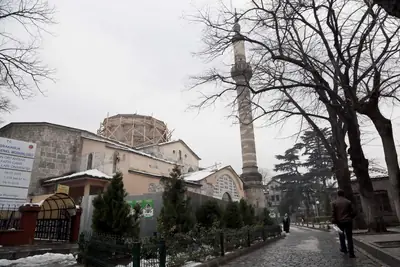
Fatih Mosque stands in Trabzon’s Ortahisar district on the site of the Panagia Chrysokephalos Church. This Greek Orthodox monastery church served the Empire of Trebizond: its emperors held coronation ceremonies there, and several rulers were buried inside the church or in its garden.
After Fatih Sultan Mehmet conquered Trabzon in 1461, he converted the church into a mosque and performed the first Friday prayer there. Inside, the walnut-wood minbar and richly decorated stone mihrab are notable features. The minaret stands separately from the main building.
Erdoğdu Bey Mosque
Erdoğdu Bey Mosque is a historic place of worship in Ortahisar. Its location in one of Trabzon’s old areas makes it a useful stop for understanding the city’s religious heritage alongside its former churches and monasteries.
Kalepark
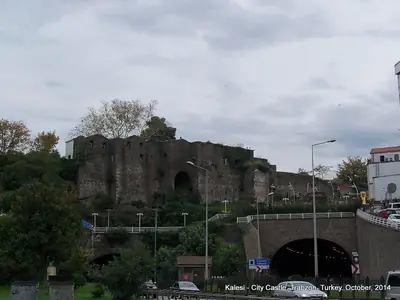
Kalepark, also known as Güzelhisar Castle, is a medieval fortress on a rocky hill in Ortahisar. Genoese and Venetian merchants built the fortress to secure their commercial presence along the Black Sea coast. Its position overlooks both of Trabzon’s harbours: the summer harbour to the west and the winter harbour to the east.
An Ottoman governor, Ahmet Pasha, later built a palace in the same area in the 1740s, though it was destroyed by fire in 1790. During the First World War, the fortress was frequently bombarded by Russian naval forces.
Trabzon Museum
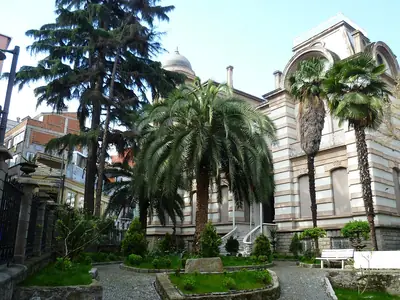
Trabzon Museum occupies the Kostaki Mansion, an early twentieth-century residence on Zeytinlik Street. Built between 1898 and 1913 for the banker Kostaki Teofilaktos, the mansion is considered one of Turkey’s finest examples of civil architecture. Its materials were brought from Italy, and every floor except the basement has walls decorated with hand-painted pen work.
The museum brings archaeological and ethnographic collections together in the former residence. In September 1924, Mustafa Kemal Atatürk stayed in the mansion during his first visit to Trabzon, accompanied by his wife Latife Hanım and his delegation.
Atatürk Pavilion Museum
Atatürk Pavilion Museum, or Atatürk Köşkü, stands in a small pine grove in the Soğuksu neighbourhood of Ortahisar. The four-storey mansion was commissioned by Konstantin Kabayanidis, a Greek-origin merchant and banker from Trabzon’s elite. Construction began in 1890 and ended in 1912, with a design influenced by Western Renaissance architecture.
After the population exchange, the property passed to the Treasury in 1923. The Trabzon Provincial Administration purchased it in 1930, and it was officially dedicated in the name of President Gazi Mustafa Kemal Atatürk on May 18, 1931.
Hapsiyaş Bridge
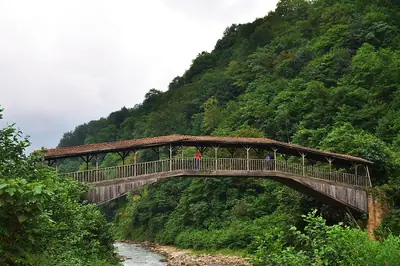
In the Of district, the Hapsiyaş Bridge—also called Kiremitli Köprü—is a reminder of local infrastructure from the early Turkish Republic. Abdülaziz Sandıkçı built the bridge in the Bölümlü neighbourhood during the 1930s.
It once carried pedestrians, vehicles and animals across the region’s streams and valleys, connecting local communities in a landscape shaped by water and hills.
City and Literature Museums
Trabzon Şehir Müzesi offers an overview of the city’s history and cultural heritage. The Trabzon Literature Museum focuses on the writers, poets and thinkers associated with this Black Sea city.
For a broader look at the region, the Uzungöl Dursun Ali İnan Museum is in Uzungöl village, around 90 kilometres from central Trabzon. Its 4,000-square-metre collection includes a traditional wooden Uzungöl house, regional and archaeological objects, and sculptures and furniture made from tree roots.
Discover the Empire of Trebizond
Trabzon’s monuments make more sense when viewed through the history of the Empire of Trebizond. Founded in 1204 by Alexios Komnenos with the support of Queen Tamar of Georgia, this Byzantine Greek state held the Black Sea coast for more than two and a half centuries.
It was one of three successor states to emerge from the Byzantine Empire and the longest-lasting of them. Its territory included parts of northeastern Anatolia and, at times, southern Crimea. The empire’s legacy remains visible in Trabzon’s churches, mosques and historic buildings.
Trabzon is one of the historic cities of Turkey, and its monuments offer a particularly rich introduction to the country’s Byzantine and Ottoman past.
Explore Trabzon with Neywo
Neywo turns a visit into a Trabzon self-guided walking tour: the app tells the story of each place as you reach it, at your own pace, with no group and no schedule. Narration is available in 11 languages.
The Trabzon audio guide includes:
- Two walking tours
- Hagia Sophia and the Mosques of Old Ortahisar: 4.02 km, 105 minutes and 9 narrated stops.
- Sultans, Bankers and a Genoese Castle: From Gülbahar Hatun to Kalepark: 3.68 km, 116 minutes and 12 narrated stops.
- One bus route
- Bus 117: From İskender Paşa Mosque to Atatürk’s Pavilion: 8.2 km, 35 minutes and 9 narrated stops.
Download Neywo for free and explore Trabzon’s churches, mosques, museums, monasteries and historic landmarks while their stories play automatically along the way.
Places with an audio guide in Trabzon
8 places in Trabzon with a Neywo audio guide. Each one starts telling its story as you reach it.
Self-guided tours in Trabzon
3 tours in Trabzon, free in the Neywo app. Each stop tells its story as you reach it.
- Bus ride
Bus 117: From İskender Paşa Mosque to Atatürk's Pavilion
A public city bus that runs from the old town's mosques and Fatih Mosque, the former church where emperors were crowned, west past the Trabzon Museum and the 1844 fountain to the Atatürk Pavilion in the pines of Soğuksu, one of the best-preserved mansions of the Black Sea coast.
Iskender Paşa Camii · Trabzon Museum · Trabzon · Fatih Mosque, Trabzon · Abdullah Paşa Fountain · Hamzapaşa Mosque …
Open this tour: Bus 117: From İskender Paşa Mosque to Atatürk's Pavilion - Walk
Hagia Sophia and the Mosques of Old Ortahisar
Begin at the Hagia Sophia, the finest surviving monument of the Empire of Trebizond with its Georgian onion dome, then walk east through the old town's lanes past Ottoman mosques, a church the locals call Kaledibi and the quiet Zağnos valley.
Hagia Sophia, Trabzon · Hatuncuk Hatun Mosque (Ortahisar) · Hamzapaşa Mosque · Hızırbey Mosque · St. John's Church · Hoca Halil Mosque …
Open this tour: Hagia Sophia and the Mosques of Old Ortahisar - Walk
Sultans, Bankers and a Genoese Castle: From Gülbahar Hatun to Kalepark
Walk the heart of old Trabzon from the mosque of Sultan Selim's mother past a fountain of 1844, Suleiman the Magnificent's birth house, a church that crowned emperors, a banker's painted mansion and the Catholic church built for travellers, to the Genoese castle above the harbours.
Gülbahar Hatun Mosque · Abdullah Paşa Fountain · Kanuni House · Fatih Mosque, Trabzon · Yeni Cuma Mosque · Saint Anne Church, Trabzon …
Open this tour: Sultans, Bankers and a Genoese Castle: From Gülbahar Hatun to Kalepark
Walk Trabzon with Neywo
Neywo turns Trabzon into a self-guided audio tour. Stories arrive as you reach the place they belong to, and the route reshapes when you wander off it.

