What to See in Washington Dc, United States: Free Audio Guide
Things to Do in Washington D.C.: What to See in the Capital
Looking for things to do in Washington D.C.? The United States capital brings together monumental landmarks, major museums, memorials, and historic documents in a city where American history can be explored on foot. Neywo’s free Washington D.C. audio guide includes 452 narrated places, so you can discover the city while stories play as you reach each site.
What to See in Washington D.C.
Start with the National Mall
The National Mall is the essential place to begin exploring Washington D.C.. Its monumental spaces connect landmarks such as the Washington Monument, the Lincoln Memorial, and the National Gallery of Art, while Smithsonian museums line the surrounding area.
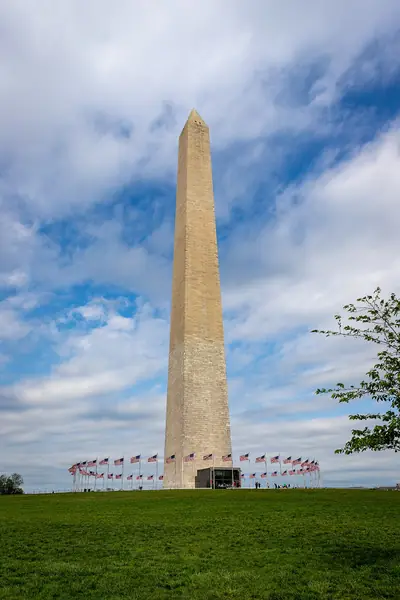
The Washington Monument is the 555-foot obelisk dedicated to George Washington, the country’s first president and commander of the Revolutionary Army. Its marble changes color about 150 feet above the ground, marking a 23-year interruption in construction. The monument was the world’s tallest structure for five years, until the Eiffel Tower surpassed it in 1889.
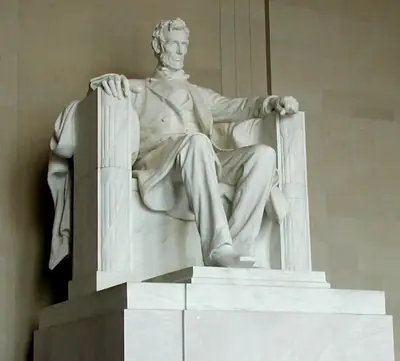
At the western end of the Mall, the Lincoln Memorial takes the form of a classical Greek temple with 36 Doric columns. Inside, a 19-foot seated statue of Abraham Lincoln forms the centerpiece. The statue’s open and clenched hands represent compassion and strength.
Visit the National Gallery of Art
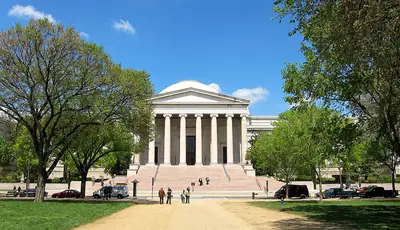
The National Gallery of Art was created in 1937 for the American people and has remained free to everyone since then. Its collection covers Western art from the Middle Ages to the present.
The museum occupies two main buildings. The neoclassical West Building was designed by John Russell Pope, while the modern East Building was designed by I. M. Pei. An underground concourse connects them, and a six-acre Sculpture Garden extends the museum outdoors. The collection includes the only painting by Leonardo da Vinci in the Americas and the largest mobile created by Alexander Calder.
Explore the Smithsonian museums
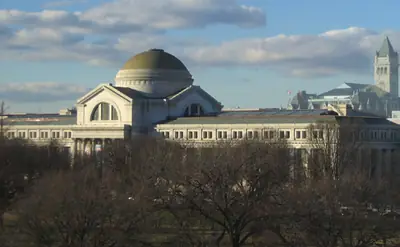
The National Museum of Natural History opened in 1910 in a neoclassical building on Constitution Avenue. Its collection contains more than 148 million specimens, including fossils, minerals, meteorites, plants, animals, human remains, and cultural artifacts. The Kenneth E. Behring Family Hall of Mammals provides an immediate introduction to the museum’s worldwide collections.
The National Museum of American History explores the country’s social, political, cultural, scientific, and military heritage. Its collections include the original Star-Spangled Banner, First Ladies’ inaugural gowns, transportation exhibits, and objects connected with the presidency.
For Asian and American art, the Freer Gallery of Art offers a quieter experience on the south side of the Mall. It was the Smithsonian’s first art museum, opening in 1923, and holds more than 26,000 objects spanning 6,000 years. Its works include Chinese paintings and porcelain, Japanese screens, Persian manuscripts, Buddhist sculpture, and James McNeill Whistler’s Peacock Room.
The Hirshhorn Museum and Sculpture Garden provides a striking contrast to the Mall’s classical buildings. Its open cylindrical structure rises on four concrete legs, surrounding a central courtyard and fountain. Opened in 1974, it focuses on modern and contemporary art, especially work created since the Second World War.
See the Jefferson Memorial
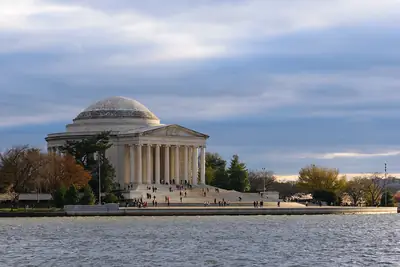
On the shore of the Potomac River in West Potomac Park, the Jefferson Memorial is one of Washington’s most graceful landmarks. It honors Thomas Jefferson, principal author of the Declaration of Independence and the country’s third president.
Designed by John Russell Pope, the memorial combines references to the Roman Pantheon and Jefferson’s rotunda at the University of Virginia. A circular colonnade supports the dome, while a 19-foot bronze statue stands inside. Excerpts from Jefferson’s writings cover the interior walls.
Visit the National Archives
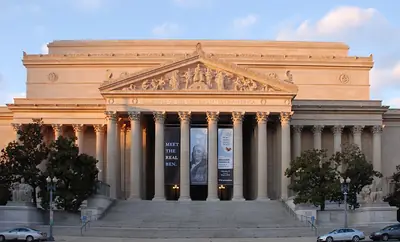
The National Archives Building on Pennsylvania Avenue preserves some of the United States’ most important founding documents. In its main rotunda, visitors can see the original Declaration of Independence, Constitution, and Bill of Rights.
Congress created the National Archives in 1934 after the country’s permanent records had been scattered in places vulnerable to fire, water, and sunlight. The building opened in the 1930s, and the agency became an independent federal agency in 1985. The documents in the rotunda are displayed in low light and cases filled with argon gas to help protect them.
Reflect at the United States Holocaust Memorial Museum
The United States Holocaust Memorial Museum is America’s official memorial to the Holocaust. It opened in April 1993, following a process that began in 1979 when President Carter established a commission to recommend a national memorial.
Architect James Ingo Freed created a deliberately unsettling building. Narrow corridors, exposed steel, raw materials, and twisted angles make the architecture part of the museum’s message. Its mission is not only remembrance but also confronting hatred, preventing genocide, and promoting human dignity.
Discover the National Museum of Women in the Arts
The National Museum of Women in the Arts is the first museum dedicated solely to championing women through the arts. It opened in 1987 and now holds more than 6,000 works by over 1,000 artists.
The collection spans the 16th century to the present and includes paintings, sculptures, works on paper, and decorative arts. Artists represented include Mary Cassatt, Alma Woodsey Thomas, Élisabeth Louise Vigée-LeBrun, and Amy Sherald. The museum also holds Frida Kahlo’s Self-Portrait Dedicated to Leon Trotsky, the only painting by Kahlo in Washington, D.C.
Visit Washington National Cathedral
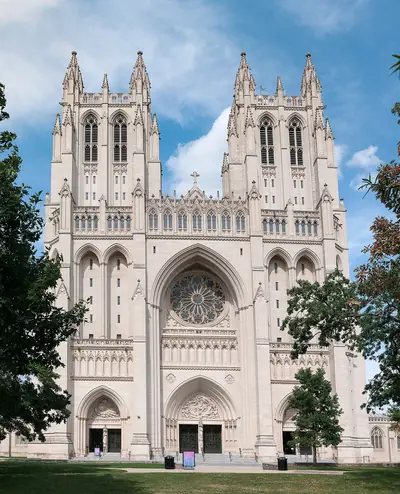
Washington National Cathedral, officially the Cathedral Church of Saint Peter and Saint Paul, is the seat of the Episcopal Church’s presiding bishop and the bishop of the Diocese of Washington. Congress has designated it the National House of Prayer.
Its Neo-Gothic architecture closely follows the English Gothic style of the late 14th century. Construction began under a congressional charter passed in 1893, and Theodore Roosevelt laid the foundation stone in 1907. The cathedral took 83 years to complete, with its final dedication attended by President George H. W. Bush in 1990. Restoration continues after damage caused by the 2011 earthquake.
Explore the Washington Navy Yard
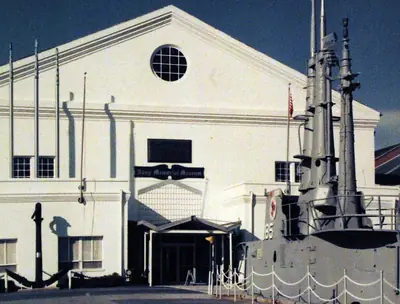
The National Museum of the United States Navy is the flagship museum of the U.S. Navy and the only one of the service’s 15 museums to cover the full history of American naval activity.
The museum occupies the former Breech Mechanism Shop of the Naval Gun Factory at the Washington Navy Yard. Its exhibitions cover naval warfare as well as exploration, diplomacy, maritime navigation, aerospace research, and humanitarian missions.
Look for distinctive monuments
Washington’s public spaces are filled with monuments beyond the best-known memorials. The General William Tecumseh Sherman Monument is an equestrian statue in Sherman Plaza, in President’s Park. It was unveiled in 1903 and is part of two historic districts listed on the National Register of Historic Places.
At the eastern end of Freedom Plaza, the General Casimir Pulaski statue commemorates the foreign-born hero of the American Revolution. Pulaski formed his own cavalry unit, Pulaski’s Legion, and died in 1779 from wounds suffered in battle. The statue was unveiled in 1910 at a ceremony attended by thousands of Polish Americans.
Explore Washington D.C. with a self-guided tour
A Washington D.C. self-guided walking tour lets you explore the city’s monuments and museums at your own pace. Neywo offers four walking tours, one bus route, and one bike route:
- The Memorial Mile: From Lincoln to the Washington Monument — 2.82 km, 113 minutes, 10 stops.
- The Smithsonian Mall: Museums and a Castle — 2.28 km, 114 minutes, 9 stops.
- Capitol Hill: Dome, Court and Library — 3.7 km, 120 minutes, 11 stops.
- The President’s Neighbourhood: Lafayette Square to Ford’s Theatre — 3.19 km, 114 minutes, 11 stops.
- Bus D10: Pennsylvania Avenue from Foggy Bottom to Federal Triangle — 4.5 km, 19 minutes, 11 stops.
- Tidal Basin and Potomac Park Memorial Ride — 4.1 km, 20 minutes, 10 stops.
The app tells the story of each place as you reach it, at your own pace, with no group and no schedule. Narration is available in 11 languages. Download Neywo’s free Washington D.C. audio guide and explore the capital with the city’s history unfolding around you.
For more destinations across the country, visit the wider United States guide. You can also continue discovering cities such as Wilmington, Delaware, Providence, or Newport.
Places with an audio guide in Washington Dc
8 places in Washington Dc with a Neywo audio guide. Each one starts telling its story as you reach it.
Self-guided tours in Washington Dc
6 tours in Washington Dc, free in the Neywo app. Each stop tells its story as you reach it.
- Bike ride
Tidal Basin and Potomac Park Memorial Ride
Ride the flat paths of West Potomac Park from the Lincoln Memorial past the Korean and Vietnam memorials, the Signers' island and the World War II Memorial to the Washington Monument, then on to the African American history museum, the Holocaust Museum, the Jefferson Memorial and the MLK Memorial on the Tidal Basin. Walk your bike through the memorials themselves; the NPS asks riders not to ride inside them.
Lincoln Memorial · Korean War Veterans Memorial · Vietnam Veterans Memorial · Memorial to the 56 Signers of the Declaration of Independence · World War II Memorial · Washington Monument …
Open this tour: Tidal Basin and Potomac Park Memorial Ride - Bus ride
Bus D10: Pennsylvania Avenue from Foggy Bottom to Federal Triangle
A plain Metrobus down Pennsylvania Avenue: Don Quixote and Washington's statue at Foggy Bottom, the GWU art galleries, Decatur House and St. John's Church at Lafayette Square, the Women in the Arts museum, Freedom Plaza's Pulaski, Franklin, the odd Temperance Fountain, the English Renaissance sculpture, the odd Temperance Fountain and Federal Triangle. Cheap, and it leaves you at the foot of the Mall.
Don Quixote · Lieutenant General George Washington · George Washington University Art Galleries · Decatur House · St. John's Episcopal Church · National Museum of Women in the Arts …
Open this tour: Bus D10: Pennsylvania Avenue from Foggy Bottom to Federal Triangle - Walk
The Memorial Mile: From Lincoln to the Washington Monument
Walk the western end of the National Mall, where the nation keeps its memory. Start on the steps of the Lincoln Memorial where Martin Luther King Jr. spoke in 1963, pass the Korean and Vietnam memorials with their nurses and soldiers, sit beside Einstein, cross to the Signers' island in Constitution Gardens and finish beneath the Washington Monument.
Lincoln Memorial · I Have a Dream · Korean War Veterans Memorial · Vietnam Women's Memorial · Three Soldiers · Vietnam Veterans Memorial …
Open this tour: The Memorial Mile: From Lincoln to the Washington Monument - Walk
The Smithsonian Mall: Museums and a Castle
The heart of the Smithsonian, from American history and the natural world to the Castle, the Freer and Sackler galleries of Asian art, African art, modern sculpture, flight and the National Gallery. Pick the doors you want to open; this walk gives you the route and the story outside each one.
National Museum of American History · National Museum of Natural History · Smithsonian Institution · Freer Gallery of Art · Arthur M. Sackler Gallery · National Museum of African Art …
Open this tour: The Smithsonian Mall: Museums and a Castle - Walk
Capitol Hill: Dome, Court and Library
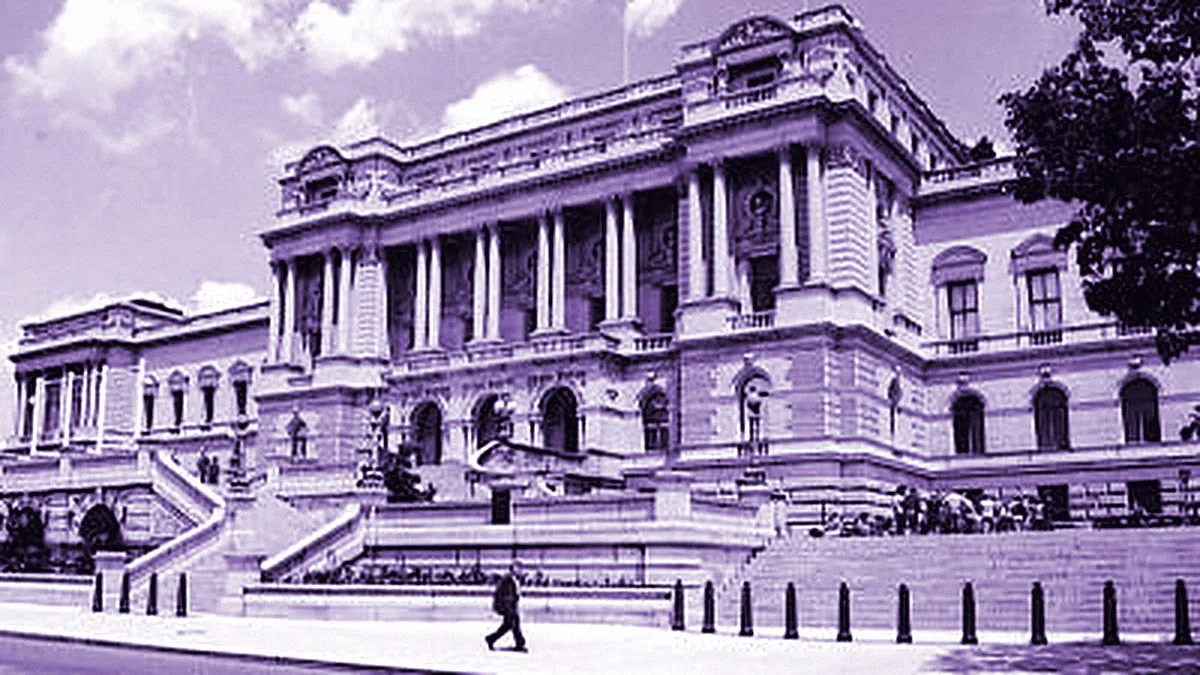
Climb Capitol Hill from the National Museum of the American Indian past the Garfield and Grant memorials to the Capitol, then on to the Library of Congress's Jefferson Building and the Supreme Court, and finish at Union Station, the Postal Museum and the Victims of Communism Memorial.
National Museum of the American Indian · James A. Garfield Monument · Ulysses S. Grant Memorial · Peace Monument · United States Capitol · Thomas Jefferson Building …
Open this tour: Capitol Hill: Dome, Court and Library - Walk
The President's Neighbourhood: Lafayette Square to Ford's Theatre
From Decatur House and the statue-lined Lafayette Square, past the White House and the Treasury, along Pennsylvania Avenue to the theatre and boarding house of Lincoln's last night, ending at the National Archives.
Decatur House · Equestrian statue of Andrew Jackson · St. John's Episcopal Church · Major General Marquis Gilbert de Lafayette · White House · United States Department of the Treasury …
Open this tour: The President's Neighbourhood: Lafayette Square to Ford's Theatre
Walk Washington Dc with Neywo
Neywo turns Washington Dc into a self-guided audio tour. Stories arrive as you reach the place they belong to, and the route reshapes when you wander off it.

