What to See in Providence, United States: Free Audio Guide
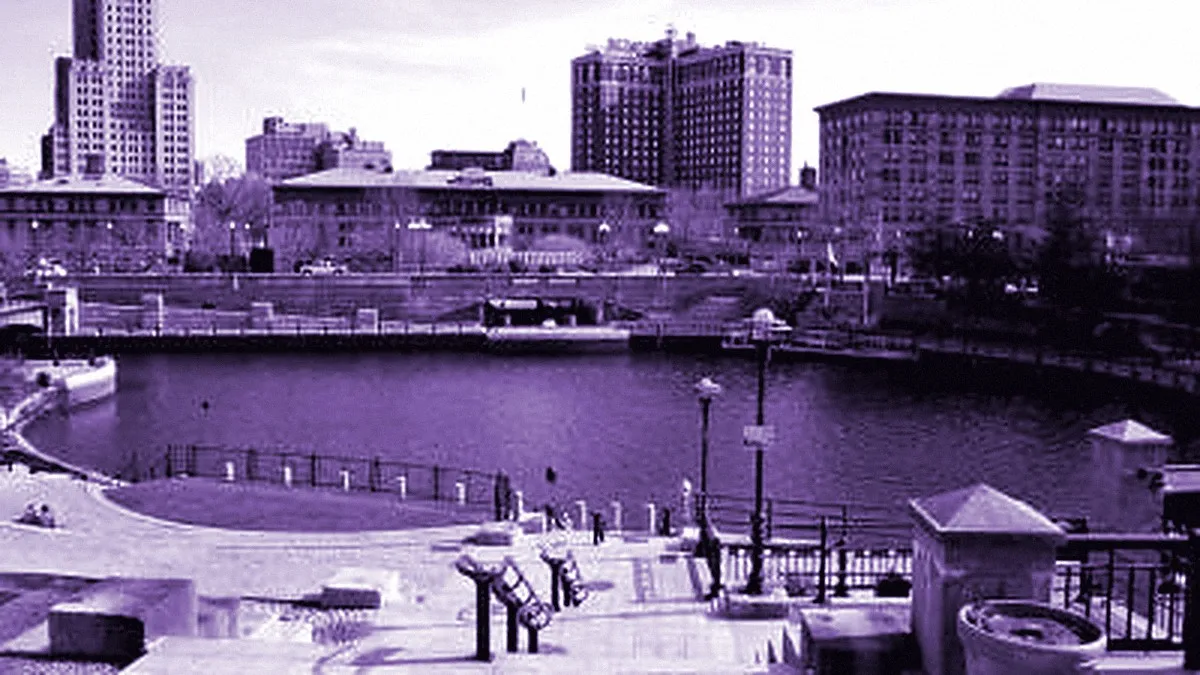
Things to do in Providence: historic buildings, museums and riverfront walks
Providence, Rhode Island, is a compact city where colonial history, university life, art and former industrial sites meet. The best things to do in Providence include exploring College Hill, visiting historic houses and museums, admiring downtown architecture and discovering the city’s churches, theatres and parks. Neywo offers a free audio guide for Providence with 115 narrated places.
What to see in Providence
Explore downtown’s historic banks and theatres
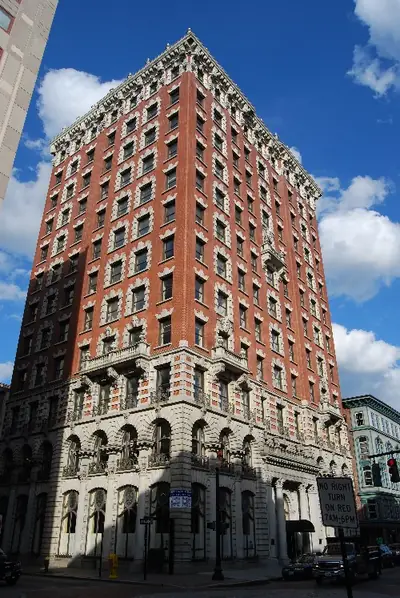
Downtown Providence reveals the city’s changing commercial and cultural history through its architecture. The Union Trust Company Building, at 170 Westminster Street and 62 Dorrance Street, was built as the headquarters of the bank that gave it its name. Today, the former banking headquarters is known as the G Reserve and is occupied primarily by apartments.
The Rhode Island Hospital Trust Building, also known as 15 Westminster Street, was completed in 1920 to designs by York and Sawyer. Since 2006, it has housed dormitories and the Fleet Library of the Rhode Island School of Design, giving the commercial building a new role in the city’s academic life.
For a glimpse of Providence’s entertainment history, visit the Providence Performing Arts Center. Opened in 1928 as a grand movie palace, the Beaux-Arts building has classical columns, ornate plasterwork, frescoes, chandeliers and a large proscenium arch. Designed by Rapp and Rapp for the Loews Theatres chain, it was originally called Loew’s State Theatre. The theatre now has 3,100 seats and hosts touring Broadway shows, concerts, plays and films.
The Uptown Theater is another Providence venue dedicated to cinema, while the Dodge House Gallery presents changing monthly exhibitions. The gallery is one of two exhibition spaces run by the Providence Art Club, established in 1880 and believed to be the second-oldest art club in the United States.
Walk College Hill and its historic houses
Providence’s College Hill combines university buildings, religious landmarks and some of the city’s most significant historic residences. Brown University dates back to 1764 and is one of the eight Ivy League universities. It is described as the seventh-oldest university in the United States and was the first American university to accept students from all religious affiliations. Its engineering program, founded in 1847, is the oldest engineering program in the Ivy League.
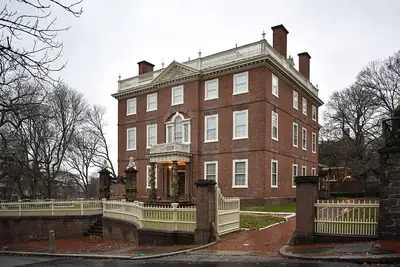
The John Brown House stands on Power Street beside the Brown University campus. Built for merchant and statesman John Brown, it is described as Providence’s first mansion. Its scale and interiors reflect the prosperity of the early city, while its history also includes Brown’s involvement in the slave trade. The museum contains original furniture from the Brown family estate, and the building became a National Historic Landmark in 1968.
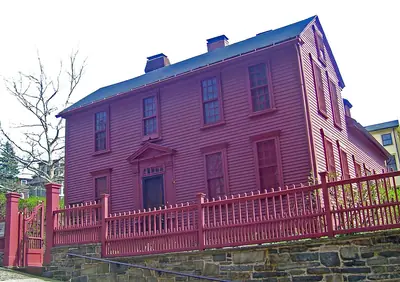
The Governor Stephen Hopkins House is another important stop. A museum and National Historic Landmark, it was home to Stephen Hopkins, a governor of the Colony of Rhode Island and Providence Plantations and a signer of the Declaration of Independence. It is recognized as Providence’s oldest surviving home. The two-and-a-half-story wooden house includes a main block built for Hopkins in 1742 and 1743, as well as an attached wing with a first floor dating from 1707.
The First Baptist Church in America traces its origins to 1638, when the congregation was established by Roger Williams. The current meetinghouse was built between 1774 and 1775. Designed by Joseph Brown, its eighty-foot-square structure combines the New England meetinghouse tradition with English Georgian design. Its portico and steeple were inspired by James Gibbs’s Book of Architecture, with the steeple particularly resembling Saint Martin in the Fields in London.
Visit the RISD Museum
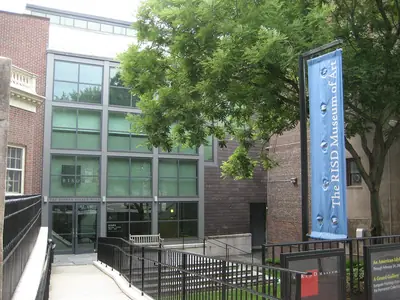
The Rhode Island School of Design Museum, commonly called the RISD Museum, brings together more than 100,000 works from different centuries, continents and artistic traditions. Its seven curatorial departments cover Ancient Art, Asian Art, Contemporary Art, Costume and Textiles, Decorative Arts and Design, Painting and Sculpture, and Prints, Drawings, and Photographs.
The collection includes European works by Manet, Monet, Renoir and Picasso, as well as American art by Thomas Cole and Gilbert Stuart. In the Asian art collection, a twelfth-century Japanese wooden Buddha is described as the largest of its kind in the United States. The museum also holds an important group of nineteenth-century Japanese prints assembled by Abby Aldrich Rockefeller.
See Providence’s churches and civic landmarks
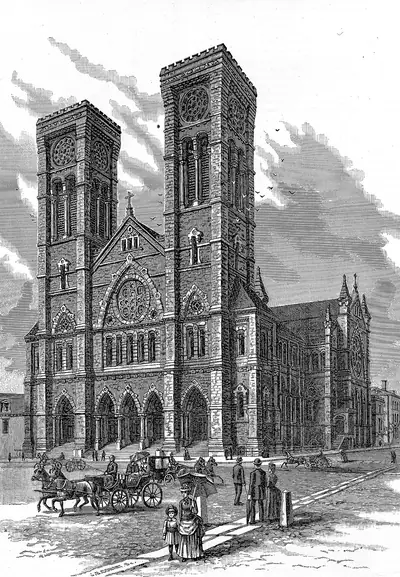
Providence’s religious buildings reflect the city’s diverse history. The Cathedral of Saints Peter and Paul is the mother church of the Diocese of Providence and a Neo-Romanesque landmark. The present cathedral was designed by Patrick Keely in 1873, with the cornerstone laid in 1878 and consecration taking place on June 30, 1889. Inside, vaulted ceilings, stained glass from Munich’s Royal Bavarian Institute and an altar carved from French Alpine green marble create a richly detailed interior.
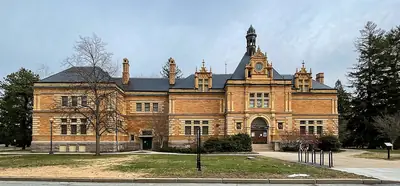
The city’s civic history is also visible in its courthouse and state buildings. The Providence County Courthouse, Old State House and Brick Schoolhouse each form part of the architectural story of downtown and Independence Hill.
Discover Providence’s industrial past
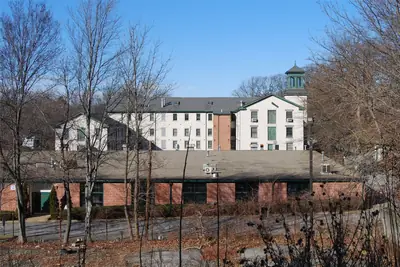
Along the Woonasquatucket River, Dyerville Mill preserves the character of Providence’s textile industry. Its oldest buildings date to 1835, making it one of the city’s oldest textile mills. The complex includes a three-and-a-half-story, L-shaped main mill made of stuccoed stone, a two-and-a-half-story picker house and a later warehouse. Together, the buildings form a courtyard.
The mill was established by Elisha Dyer and remained in the Dyer family until 1867. Truman Beckwith and his son then operated it, followed by the Joslin Manufacturing Company, which continued textile production at the site until the 1930s. The complex later served other light industrial purposes and is now home to The Groden Network of Services.
Take a quiet break in Providence’s parks
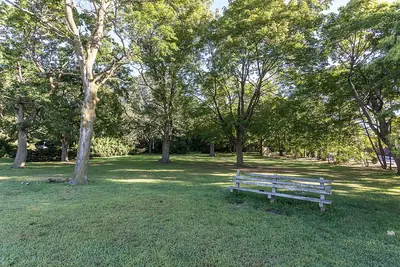
Constance Witherby Park is a small, heavily wooded green space between Waterman Street and Pitman Avenue. Added to the National Register of Historic Places in 1975, it was given to Providence in 1929 by Mr. and Mrs. S. Foster Hunt in memory of Constance Witherby, who lived from 1913 to 1929.
The park once centered on a bronze sculpture called “A Memorial to Young Womanhood”, also known as “The Spirit of Youth”. The sculpture was later removed and now stands on Blackstone Boulevard near Clarendon Street. Trees and benches still make the park a quiet corner of the city.
At Roger Williams Park, the Museum of Natural History and Planetarium offers two ways to explore the natural world in the park: through its museum and its planetarium.
Explore Providence with a self-guided audio tour
Neywo’s free Providence audio guide includes 115 narrated places and five ways to explore the city: three walking tours, one bus route and one bike route. The tours include:
- Benefit Street and the Ivy Gates: a 1.26 km walk lasting 53 minutes, with 8 narrated stops.
- Downtown Providence: Arcades, Banks and Skyscrapers: a 1.35 km walk lasting 56 minutes, with 8 stops.
- Independence Hill: Art, Law and the Jewel of the City: a 1.27 km walk lasting 52 minutes, with 8 stops.
- RIPTA 34: From College Hill to Downtown: a 3.4 km bus route lasting 15 minutes, with 5 stops.
- Broad Street Churches Ride: a 3.8 km bike route lasting 19 minutes, with 5 stops.
Download Neywo and explore Providence at your own pace. The app tells the story of each place as you reach it, with no group and no schedule. Narration is available in 11 languages.
Providence is one destination in the United States, and you can continue your trip to Newport or Portsmouth.
Places with an audio guide in Providence
8 places in Providence with a Neywo audio guide. Each one starts telling its story as you reach it.
Self-guided tours in Providence
5 tours in Providence, free in the Neywo app. Each stop tells its story as you reach it.
- Bike ride
Broad Street Churches Ride
A north-south ride on Providence's cycle lanes, from the churches of the Elmwood and Washington Park side up to the cathedral and the downtown convention district. A quiet ride past stone spires and synagogues.
Plymouth Congregational Church · Calvary Baptist Church · Beneficent Congregational Church · First Universalist Church · Rhode Island Convention Center
Open this tour: Broad Street Churches Ride - Bus ride
RIPTA 34: From College Hill to Downtown
A cheap city bus across College Hill and downtown on RIPTA's route 34. It runs past the Brown campus, the RISD Museum and the Arts and Crafts studios of Thomas Street, then down to the Still Here mural by Gaia in the downtown core. Ride it as a quick way to link the East Side with downtown.
Central Congregational Church (Providence, Rhode Island) · Edward Dexter House · Rhode Island School of Design Museum (RISD Museum) · Fleur-de-lys Studios · Still Here
Open this tour: RIPTA 34: From College Hill to Downtown - Walk
Benefit Street and the Ivy Gates
Providence's colonial heart on College Hill. See the oldest surviving home in the city, a granite Greek Revival library, a Federal-style church with a Paul Revere bell, and the Van Wickle Gates leading into Brown University's front campus. It ends at two grand merchant mansions built on slave-trade fortunes, with the history told straight.
Old Stone Bank · Governor Stephen Hopkins House · Providence Athenaeum · First Unitarian Church of Providence · Van Wickle Gates · University Hall …
Open this tour: Benefit Street and the Ivy Gates - Walk
Downtown Providence: Arcades, Banks and Skyscrapers
A short loop through the Providence of 1828 to 1920. Walk through America's first enclosed shopping mall, pass the city's early skyscrapers and the V-shaped Turk's Head Building, cross Kennedy Plaza under the Second Empire City Hall and finish by the Venetian-style bridges of Waterplace Park.
Union Trust Company Building · Westminster Arcade · Still Here · Turk's Head Building · Rhode Island Hospital Trust Building · Kennedy Plaza …
Open this tour: Downtown Providence: Arcades, Banks and Skyscrapers - Walk
Independence Hill: Art, Law and the Jewel of the City
Climb from the RISD Museum to the Old State House, where Rhode Island declared independence from the Crown two months before Philadelphia. Along the way: an Arts and Crafts studio with stucco reliefs, a 1769 schoolhouse, a historic African American church, and the Prospect Terrace lookout with its giant Roger Williams statue.
Providence County Courthouse · Rhode Island School of Design Museum (RISD Museum) · Fleur-de-lys Studios · Brick Schoolhouse · Old State House · Congdon Street Baptist Church …
Open this tour: Independence Hill: Art, Law and the Jewel of the City
Walk Providence with Neywo
Neywo turns Providence into a self-guided audio tour. Stories arrive as you reach the place they belong to, and the route reshapes when you wander off it.

