What to See in Antibes, France: Free Audio Guide
Things to Do in Antibes: What to See in the Old Town and on Cap d’Antibes
The best things to do in Antibes include exploring the historic old town, visiting Picasso’s former studio in Grimaldi Castle, seeing Fort Carré, and following the coastal landscapes of Cap d’Antibes. The town combines Greek and Roman history, fortified architecture, museums, churches, markets, and Mediterranean views. Neywo has a free audio guide for Antibes with 39 narrated places.
Antibes is in Provence-Alpes-Côte d’Azur, on the French Riviera. Its attractions extend from the narrow streets and churches of the old town to the forts, villas, chapels, and coastal paths of the peninsula.
What to see in Antibes
Fort Carré
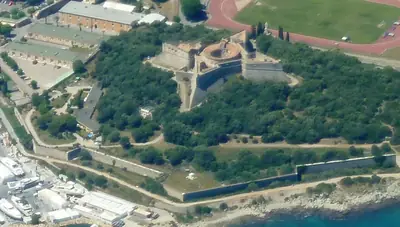
Fort Carré stands on the Saint-Roch peninsula above the Mediterranean. King Henry II ordered the star-shaped fortress in the sixteenth century, when Antibes was on a tense frontier with the Duchy of Savoy.
Its four arrow-head bastions give the fort its distinctive form. The fortress rises on a rocky promontory 26 metres above the sea, while its rampart walkway reaches 43 metres and opens onto broad views of the Côte d’Azur. On clear days, the Mercantour’s snow-capped peaks can be seen in the distance. Fort Carré remained a military site until the early twentieth century and is now a remarkable example of Renaissance military architecture.
Port Vauban
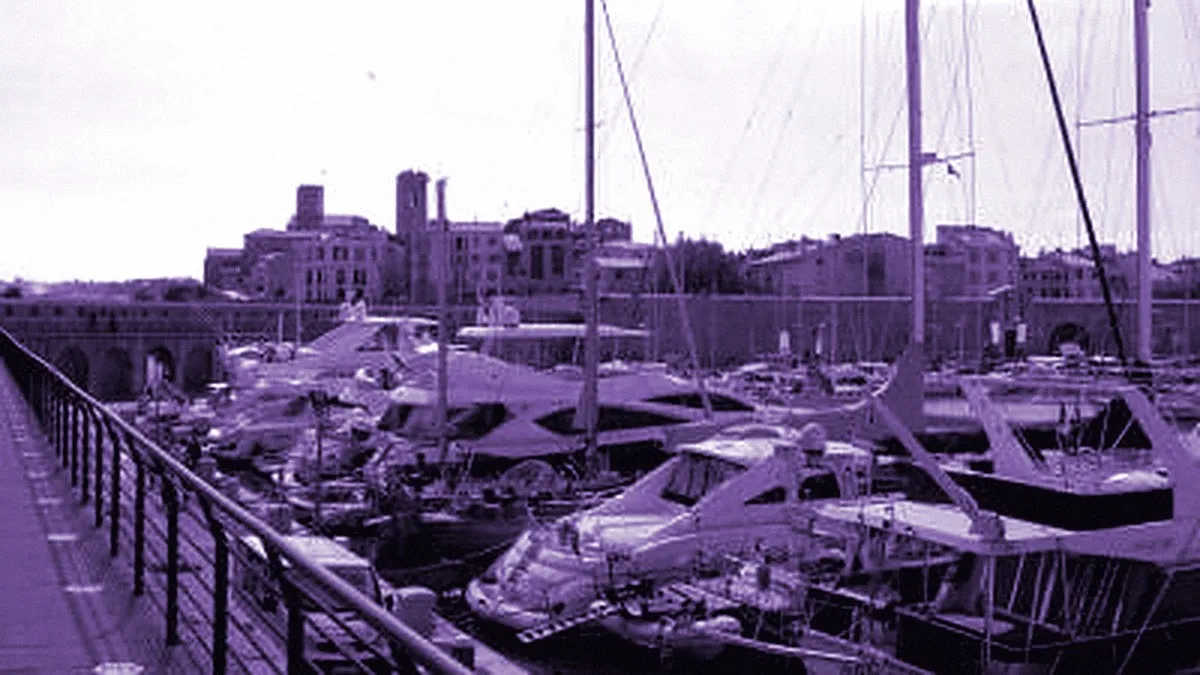
Port Vauban brings together Antibes’ maritime past and its modern Riviera character. Boats and large yachts gather beside the historic ramparts, making the waterfront a useful place to see how the town’s fortified history meets its contemporary coastal life.
Marché Provençal
The Marché Provençal is held under the covered halls on Cours Masséna in the old town. Its stalls present regional produce, cheeses, cured meats, spices, flowers, and other local specialities. Socca, the thin chickpea flatbread associated with the area, is one of the foods to look out for.
The market is also a practical starting point for exploring the nearby ramparts, museums, and old-town streets. In the audio-guide material, the market is also identified with Galerie Clémenceau.
Place Nationale and Musée Peynet
Place Nationale is home to the Musée Peynet, dedicated to the artist Raymond Peynet and the Lovers he created. Peynet first drew the romantic couple in 1943, and the characters later appeared on porcelain, lithographs, dolls, and stamps.
The museum’s permanent collection was formed after Peynet donated nearly 300 pieces. Alongside his drawings and objects featuring the Lovers, it includes work by other cartoonists known for their humour.
Chapelle Saint-Bernardin
The Chapelle Saint-Bernardin is a small historic chapel on Rue du Docteur-Rostan, dedicated to Saint Bernardine of Siena. Its portal was offered by the people of Antibes in gratitude for protection during the plague that spread through Provence in 1580.
Look at the pediment before entering: its bas-reliefs and pinnacles depict white-hooded penitents, including a symbolic head of Lucifer. Inside, gilded Baroque woodwork, sixteenth-century frescoes, and a seventeenth-century altarpiece create a richly decorated interior.
Antibes Cathedral
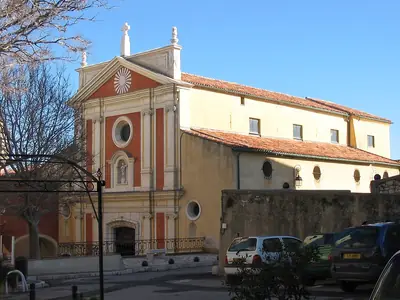
Antibes Cathedral stands at the end of a cobblestone street beneath the walls of Grimaldi Castle. Its rose-coloured façade and eighteenth-century doors, carved by Antibes sculptor Joseph Dolle, face a small square.
This is the largest church in Antibes and was historically the seat of the bishops of Antibes before that role passed to Grasse. Inside, the high altar is dominated by The Virgin of the Rosary, a sixteenth-century work by Louis Bréa showing the Virgin and Child surrounded by scenes of the Mysteries of the Rosary.
Picasso Museum in Grimaldi Castle
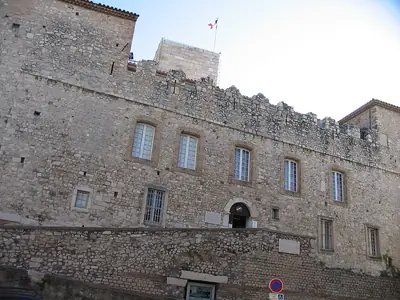
The Picasso Museum occupies historic Grimaldi Castle above the Mediterranean. The building stands on the foundations of the ancient Greek town of Antipolis and has been a classified historical monument since 1928.
Picasso worked in part of the castle in 1946, and the museum opened there in 1966. Paintings, drawings, and ceramics made during his stay reflect the energy and experimentation of his time on the coast. The collection later expanded through acquisitions and donations, including works placed there by Jacqueline Picasso.
The terrace is one of the museum’s particularly memorable spaces. It contains a permanent sculpture display with works by Germaine Richier, Joan Miró, Bernard Pagès, and Anne and Patrick Poirier, framed by views of the sea.
Archaeology Museum of Antibes
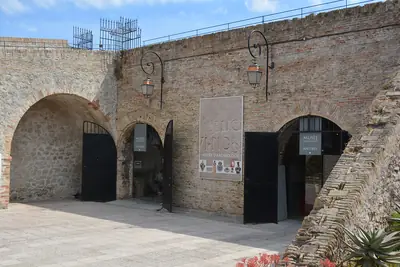
The musée d’archéologie d’Antibes is housed in the Bastion Saint-André, a seventeenth-century fortification incorporated into the old city walls beside the sea. Its two barrel-vaulted galleries occupy spaces originally built for soldiers.
The collection follows Antibes from its beginnings as the Greek settlement of Antipolis through its development as a Roman city. Objects found in local excavations and offshore waters include ceramics, coins, vases, anchors, amphorae, and cargo from Etruscan, Greek, Phoenician, and Roman shipwrecks. A large section of a Roman aqueduct is displayed near the entrance.
Notre Dame de la Garoupe
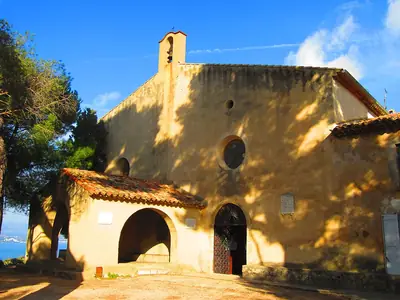
Notre Dame de la Garoupe sits on the Garoupe plateau above Cap d’Antibes. Pilgrims have visited the site since around the year 1000, and the church celebrated its millennium in 1981. The building itself dates from the fourteenth century and follows a Provençal Romanesque style.
The church has two naves, each with its own Madonna. Notre Dame de Bon Port, on the left, is the patron saint of Antibes sailors. Her statue was carved from a fig-tree trunk and is carried between the church and Antibes Cathedral during a traditional July procession.
Château de la Croë and the Cap d’Antibes coast
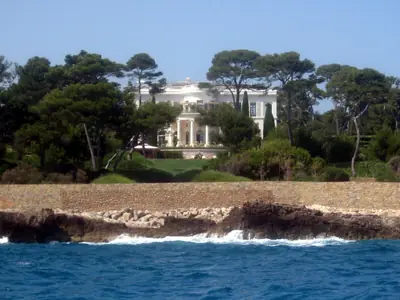
The coastal path on Cap d’Antibes passes views of several Riviera estates. Château de la Croë is a private property with a classical façade and eight hectares of private grounds. Although it resembles an aristocratic residence, it was created in the 1920s: architect Armand-Albert Rateau completed it in 1927 for Sir Pomeroy Burton.
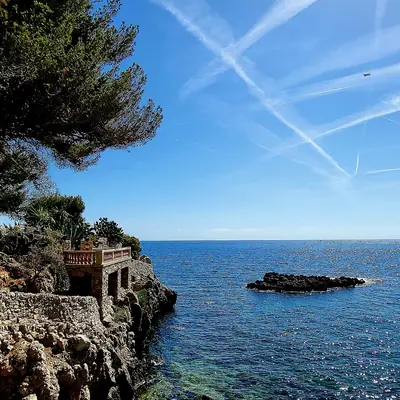
The château was modelled closely on the Château de Bagatelle in Paris’s Bois de Boulogne. Nearby, the Coastal Path of Cap d’Antibes forms a five-kilometre loop around the peninsula’s southern tip.
Château de la Garoupe is another private estate near Garoupe Beach. The area also includes Notre Dame de la Garoupe and the La Garoupe lighthouse, making this part of the peninsula particularly rewarding for a coastal walk.
Espace Mer & Littoral
At the tip of Cap d’Antibes, the Espace Mer & Littoral is associated with the historic Grillon tower and the Napoleon Museum. Its collection includes paintings, sculptures, documents, weapons, figurines, and military models connected with Napoleon Bonaparte and the Grande Armée.
Among the objects are a bust of Bonaparte sculpted by Canova in 1810 and a statue of Napoleon on horseback by Renault. The tower terrace provides views towards Cap d’Antibes, the Lérins islands, and the Alpes de Haute-Provence mountain range.
Other churches and chapels
Antibes also has smaller religious sites beyond the cathedral and Notre Dame de la Garoupe. The Chapelle Saint-Jean is a modest chapel on route Saint-Jean, while the Église du Sacré-Cœur is a church in the Alpes-Maritimes department. These places add quieter stops to an itinerary through the town’s squares and residential streets.
Explore Antibes with a self-guided audio tour
Neywo offers an Antibes self-guided walking tour experience with three walking tours and one bus route. The walks are:
- Old Antibes: Vauban’s Fort, the Market and Picasso’s Castle — 2.72 km, 100 minutes, and 9 narrated stops.
- Cap d’Antibes: Gardens, Lighthouse and Riviera Villas — 5.42 km, 113 minutes, and 7 narrated stops.
- Antibes Beyond the Walls: Squares, Churches and a Postcard Museum — 2.3 km, 57 minutes, and 5 narrated stops.
There is also Bus 2: From Antibes Centre to Cap d’Antibes, a 4 km route lasting 17 minutes with 4 narrated stops. The app tells the story of each place as you reach it, at your own pace, with no group and no schedule. Narration is available in 11 languages.
Download Neywo and explore Antibes independently, from Fort Carré and the old town to the museums, churches, and coastal estates of Cap d’Antibes. When you continue through the region, you can also discover Cannes or explore more of France.
Places with an audio guide in Antibes
8 places in Antibes with a Neywo audio guide. Each one starts telling its story as you reach it.
Self-guided tours in Antibes
4 tours in Antibes, free in the Neywo app. Each stop tells its story as you reach it.
- Bus ride
Bus 2: From Antibes Centre to Cap d'Antibes
Envibus line 2 runs from the Pôle d'Échanges in the centre of Antibes down to Posidonia on the Cap d'Antibes. Ride it past Place de Gaulle and the Museum of Postcards to the Villa Thuret botanical garden and the quiet villa quarter of the Cap.
Museum of postcards · Place De Gaulle, Antibes · Jardin botanique de la Villa Thuret · Église Saint-Benoît, Antibes
Open this tour: Bus 2: From Antibes Centre to Cap d'Antibes - Walk
Old Antibes: Vauban's Fort, the Market and Picasso's Castle
Start at the star-shaped Fort Carré, stroll the superyacht harbour and slip into the old town through the Provençal market. Visit the Peynet lovers, a chapel with a devil on its pediment and the cathedral, then finish at Picasso's studio in Grimaldi Castle and the archaeology museum on the sea wall.
Fort Carré · Port Vauban · Galerie Clémenceau · Place Nationale, Antibes · Musée Peynet · Chapelle Saint-Bernardin d'Antibes …
Open this tour: Old Antibes: Vauban's Fort, the Market and Picasso's Castle - Walk
Cap d'Antibes: Gardens, Lighthouse and Riviera Villas
A walk over the Cap d'Antibes peninsula. Begin in the 19th-century botanical garden of Villa Thuret, climb to the sailors' chapel and lighthouse on the Garoupe plateau, then follow the coast past the private châteaux to Garnier's Villa Eilenroc and its rose garden.
Jardin botanique de la Villa Thuret · Notre Dame de la Garoupe · La Garoupe lighthouse · Château de la Garoupe · Château de la Croë · Villa Eilenroc …
Open this tour: Cap d'Antibes: Gardens, Lighthouse and Riviera Villas - Walk
Antibes Beyond the Walls: Squares, Churches and a Postcard Museum
Leave the ramparts for the lively streets around Place de Gaulle, the town's meeting point. Visit the little Postcard Museum, two churches of the 19th-century town and finish at Notre-Dame-de-l'Assomption in the old town.
Place De Gaulle, Antibes · Museum of postcards · Église Réformée, Antibes · Église du Sacré-Cœur d'Antibes · Église Notre-Dame-de-l'Assomption d'Antibes
Open this tour: Antibes Beyond the Walls: Squares, Churches and a Postcard Museum
Walk Antibes with Neywo
Neywo turns Antibes into a self-guided audio tour. Stories arrive as you reach the place they belong to, and the route reshapes when you wander off it.

