Things to Do in Toulon, France: Walking Guide
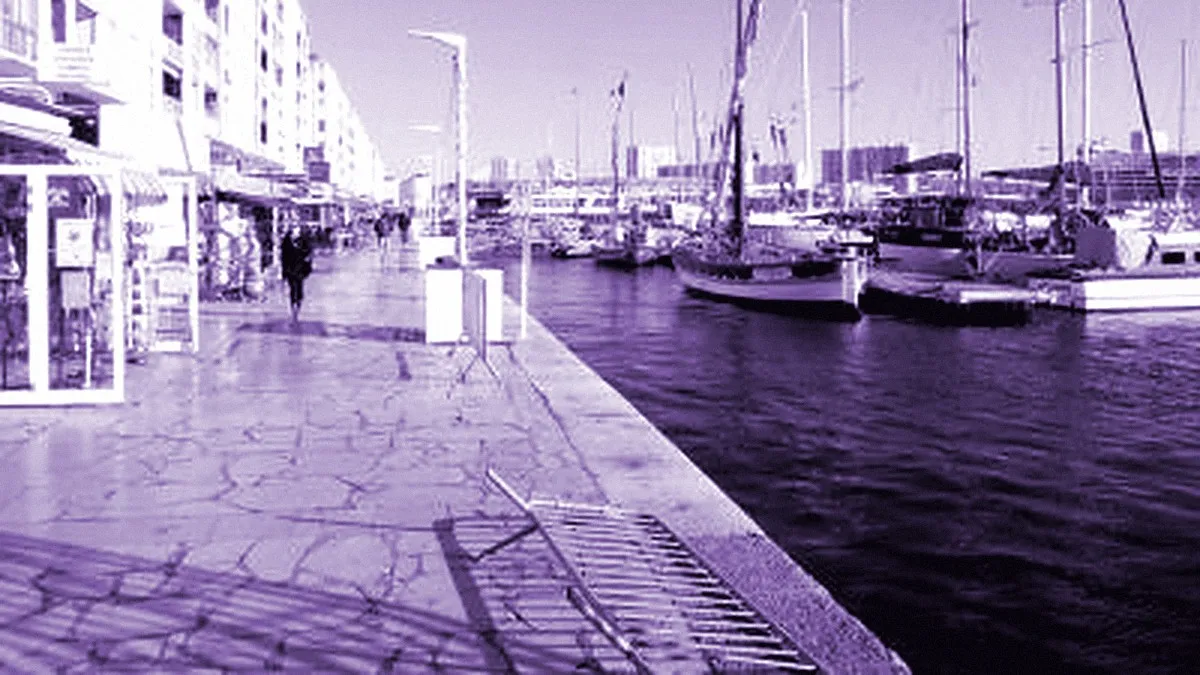
Things to do in Toulon: what to see in the Mediterranean port city
Looking for things to do in Toulon? This port city in Provence-Alpes-Côte d’Azur combines naval history, historic churches, museums, gardens and Mediterranean everyday life. Its connection with the French Navy is especially visible around the Arsenal and harbour, while the city centre offers art, architecture and quieter places to pause. Neywo has a free audio guide for Toulon with 46 narrated places, available in 11 languages.
Toulon is in the Var department, on the Mediterranean coast of Provence-Alpes-Côte d’Azur. It is also a useful stop when exploring southern France, with nearby destinations including Marseille and Fréjus.
What to see in Toulon
National Maritime Museum
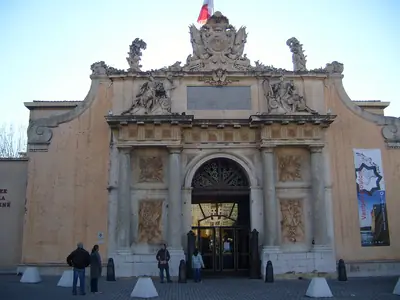
The National Maritime Museum of Toulon, or Musée National de la Marine de Toulon, is closely connected with the port and the Toulon Arsenal. It stands beside the Arsenal’s Clock Tower, behind a monumental entrance gate dated 1738. The gate is one of the few parts of the Arsenal to have survived the Second World War, making it an important part of the museum’s setting.
Inside, ship and galley models illustrate the development of shipbuilding and naval forces in Toulon from the seventeenth century into the modern era. Paintings, relief plans, sculptures, navigation instruments and other objects broaden the story, bringing together warships, galleys, penal colonies and the lives of sailors, shipbuilders and local communities.
Toulon Cathedral
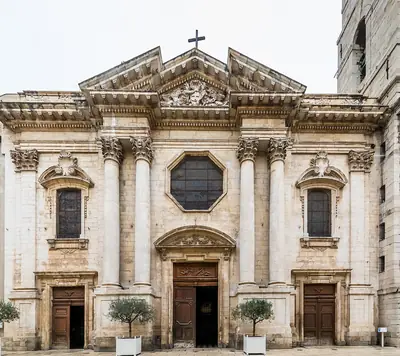
Toulon Cathedral is also known as Notre-Dame-de-la-Seds, Sainte-Marie-de-la-Seds and Sainte-Marie-Majeure. The present building began in the eleventh century and was completed through later changes in the seventeenth and eighteenth centuries. It has been listed as a historic monument since 1997.
The cathedral’s name refers to the bishop’s seat: seds comes from the Latin word for “seat”. Its history includes a remarkable episode in 1543 and 1544, when the building was temporarily turned into a mosque for the Ottoman fleet allied with King Francis I of France.
Look up at the clock tower, built between 1737 and 1740. It reaches 36 metres and carries an iron campanile. A bell has sounded there since 1524, although the original bells were melted down during the French Revolution and replaced in 1806.
Memorial of the Landing in Provence
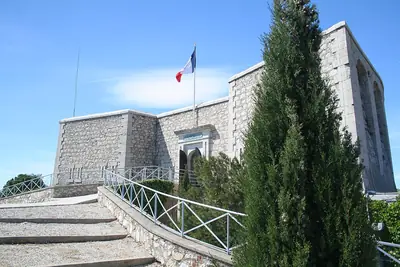
High above Toulon on Mount Faron, the Memorial of the Landing in Provence commemorates the Allied landing of 15 August 1944 and the liberation of Provence. The operation, known as Operation Anvil Dragoon, gave the Allies access to the ports of Toulon and Marseille, helped open the Rhône axis and accelerated the liberation of France.
The memorial also highlights the contribution of French forces. French Army B, commanded by General de Lattre de Tassigny, led the two largest battles of the campaign in Provence, at Toulon and Marseille.
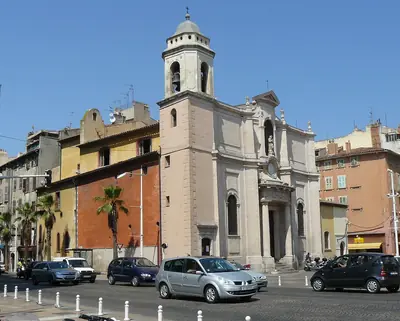
Église Saint-François-de-Paule de Toulon
At the end of Cours Lafayette, on Place Louis Blanc, stands the Church of Saint Francis of Paula. Built in 1744 on the site of a former royal castle, it was originally the chapel of a Recollect convent and was first known as the Church of Saint John.
Its façade is notable for the curves that bend inward and outward, a characteristic of Western Provençal religious architecture. The interior has a modest nave, side chapels, a flat ceiling and a balustraded gallery running around three sides. Among its details are an eighteenth-century high altar in polychrome marble, painted panels and religious objects.
The church was heavily damaged during the Second World War and reopened for worship in 1967. Restoration work between 1992 and 1994 preserved its historic ceiling, gallery and ornamental features.
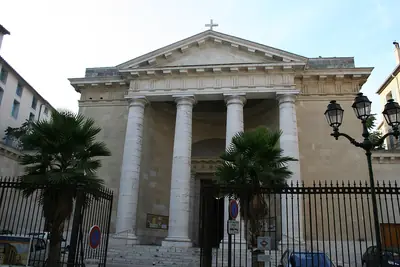
Église Saint-Louis de Toulon
The Église Saint-Louis is another important church in Toulon’s historic centre. It has been protected as a Monument historique since 1945 and, together with Toulon Cathedral, belongs to the Toulon-Mitte parish.
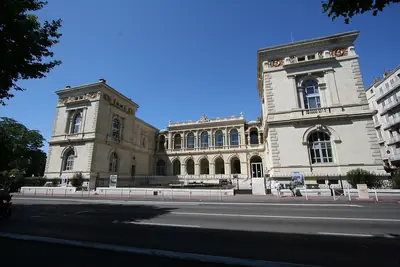
Musée d’Art de Toulon
The Musée d’Art de Toulon is housed in a building with a sculpted and enamelled façade. Opened in 1888, it was the first fine arts museum in the Var department and is recognised as a Musée de France.
The building originally contained an art museum, a natural history museum and a library. Today, it is dedicated to art. Renovation work between 2018 and 2021 tripled the exhibition space and improved conditions for preserving the permanent collections.
Nearly 3,000 objects cover a wide range of periods and formats: archaeology, paintings from the fifteenth to the twentieth century, contemporary works created since the 1960s and several hundred photographs. The museum also has a cabinet of curiosities and a graphic arts section, while temporary exhibitions introduce changing projects.
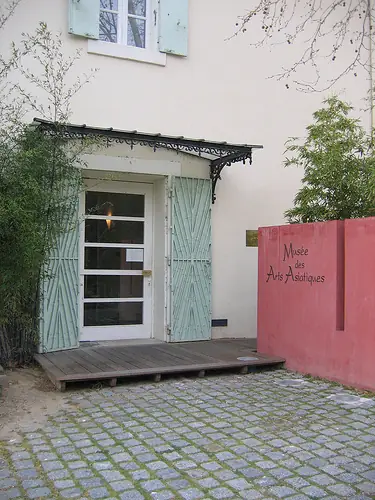
Musée des Arts Asiatiques de Toulon
The Musée des Arts Asiatiques de Toulon occupies the Jules Verne villa. Its collections are arranged according to geographical origin, and most of the objects came to Toulon through bequests. This gives the museum a particular connection with the city and with the people who donated its works.
Muséum départemental du Var
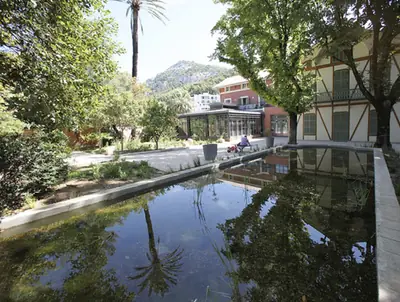
Inside the Jardin des Plantes du Var, the Muséum départemental du Var presents the natural heritage of the Var region. Its collections include minerals, fossils, plants and wildlife, as well as material related to prehistory, ethnology and paleontology.
The museum began as part of Toulon’s Art Museum and Central Library before moving in 2011 to Villa Burnett, a listed natural heritage site within the botanical garden. Its collections include around 27,000 insect specimens, 61 species of amphibians and reptiles, 250 species of terrestrial mammals and 978 bird species. More than 2,500 plant species are also represented, including many examples of Var flora.
Le Génie de la navigation
At the port, look for Le Génie de la navigation, a sculpture by Toulon artist Louis-Joseph Daumas. Erected in 1847, it celebrates the spirit of conquest and exploration associated with the great navigators.
The statue stands on a high base bearing the names of navigators ranging from Pytheas and Nearchus to figures of the modern era. Its position facing the sea, with its back turned towards the city’s honorary town hall, gave it the playful nickname “Cul-vers-ville”, a pun on Admiral Jules de Cuverville’s name.
Jardin Alexandre Ier
Jardin Alexandre Ier is a green refuge in the heart of Toulon. Created in 1852, the public garden covers 1.6 hectares and contains trees including a Louisiana cypress planted in 1797, now 33 metres high. Plane trees, hackberries, horse chestnuts, oaks and boxwoods grow alongside Japanese privet, Pittosporums and a Ginkgo biloba.
The garden was originally called the Jardin du Roy and was linked to the royal navy. It was used to grow rare and exotic plants for the court’s flowers and supplies before the city bought the domain from the French Navy in 1852.
Several historical details add character to the garden. The gate of the Church of Notre Dame de Courtine was moved there and reassembled stone by stone in 1876. Visitors can also find a statue of the sculptor Pierre Puget, a bust of the poet Jean Aicard, a bandstand, a small pond with fish and a central canal.
Other places to discover
The Jardin de rocaille de la maison Noble offers another distinctive garden setting in Toulon. The Musée d’Histoire de Toulon et de sa Région hosts temporary exhibitions, while the Comédie de Toulon is an important theatre in the city.
Near Toulon’s SNCF railway station, the Zénith de Toulon is a major venue for concerts and live shows. Inaugurated in 1992, it can accommodate up to 8,875 people and has welcomed French, Occitan and internationally known performers. The Church of the Immaculate Conception of Siblas is another local place of worship to encounter in the Var region.
Explore Toulon with Neywo
There are currently no walking, bus or bike routes listed for Toulon. Neywo’s free audio guide nevertheless includes 46 narrated places, with stories available in 11 languages.
Download Neywo and explore at your own pace: the app tells the story of each place as you reach it, with no group and no schedule.
Places with an audio guide in Toulon
8 places in Toulon with a Neywo audio guide. Each one starts telling its story as you reach it.
Walk Toulon with Neywo
Neywo turns Toulon into a self-guided audio tour. Stories arrive as you reach the place they belong to, and the route reshapes when you wander off it.

