Visiting Cannes, France: Top Sights on Foot
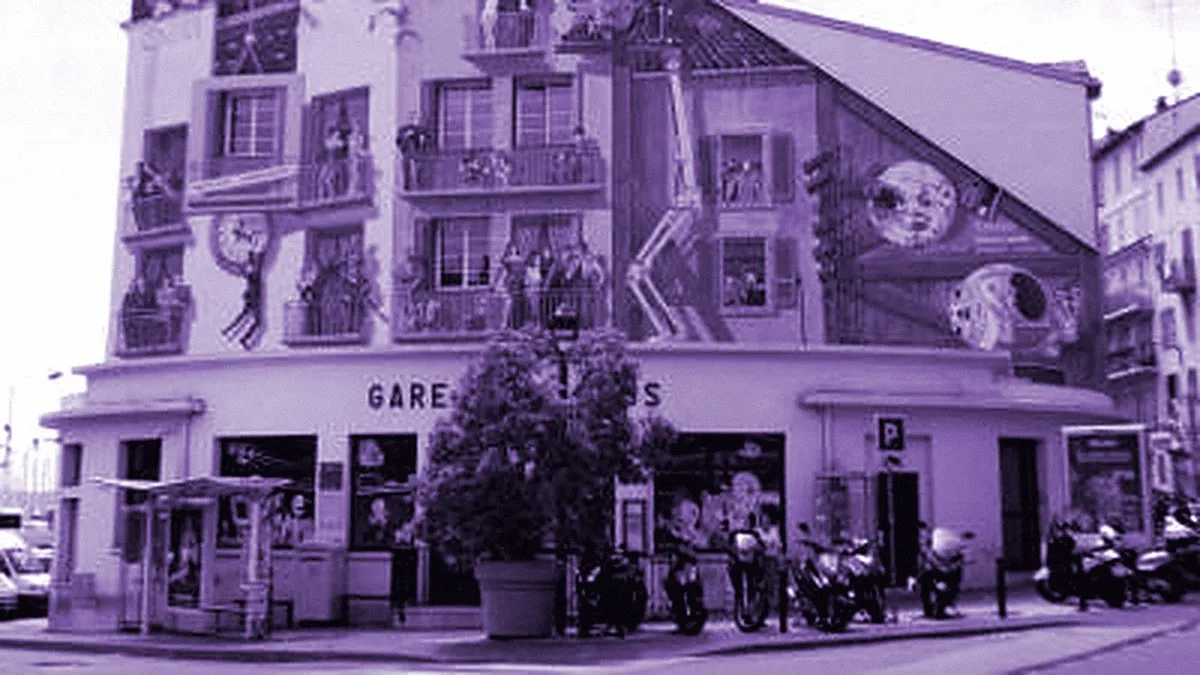
Things to do in Cannes
Cannes sits on the French Riviera, celebrated for its film festival, luxury boutiques and sandy beaches, yet it also preserves historic quarters, tranquil gardens and cultural venues that reveal a deeper Provençal character. Neywo provides a free audio guide for Cannes featuring 61 narrated places, letting you discover these highlights at your own pace.
Explore Cannes’ highlights
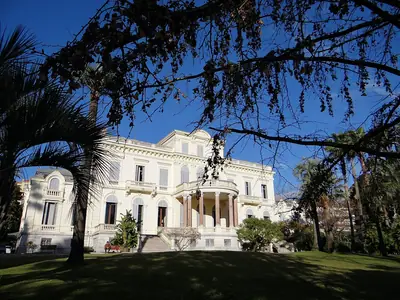
Villa Domergue
This Art Deco villa on Avenue Fiesole was commissioned by painter Jean‑Gabriel Domergue in 1926. Its Mediterranean gardens were laid out between 1926 and 1936. The house served as a museum dedicated to the artist from 1962 to 1973, later became an official city venue and has been listed as a historical monument since 1990.
Saint George’s Church (Église Saint‑Georges)
Built in 1886 as a memorial to Prince Leopold of England, Duke of Albany, who died in Cannes the previous year, the church was commissioned by his brother, the Prince of Wales. Originally Anglican, it was consecrated in 1887 under the Bishop of Gibraltar and has been used for Roman Catholic worship since 1974. Designed by Arthur Blomfield, the building blends English Gothic with other styles, showing pink sandstone, white limestone, a bell tower and a polygonal spire set within a pleasure garden accessed through an ornate ironwork gate. Inside, the nave is flanked by aisles containing the Ardent and Albany chapels, above which a false pointed barrel vault bears colourful panels before the choir ends in a flat apse. Stained glass, mosaics and ironwork enrich the interior.
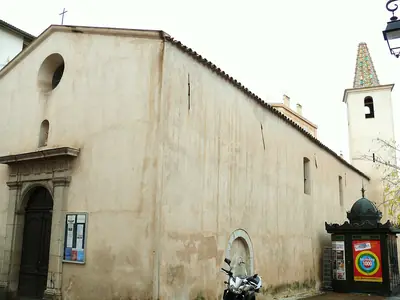
Chapelle de la Miséricorde de Cannes
Also known as the Notre‑Dame‑de‑la‑Miséricorde Chapel, this modest place of worship in the Alpes‑Maritimes recalls its former name, the Chapel of the Black Penitents. It offers a quiet spot for reflection amid the city’s bustle.
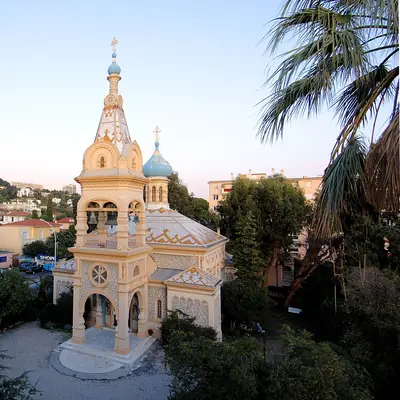
St. Michael the Archangel Church (Russian Orthodox Church)
Located at 40 Boulevard Alexandre III, this Russian Orthodox landmark comprises the church, its presbytery and an adjacent park, all listed as historic monuments in 2022. Construction began on 23 April 1894 with the blessing of Metropolitan Palladiy of Saint Petersburg; architect Louis Nouveau completed the work and the church was consecrated on 22 November 1894. Funding came from donations, including contributions from members of the Russian Imperial Family. In 1921 the church hosted the wedding of Grand Duke Andrei Vladimirovich of Russia (then in exile) and ballerina Mathilde Kschessinska. Its crypt later held the remains of several Russian exiles, notably Grand Duke Nicholas Nikolaevich and Princess Anastasia of Montenegro, who were kept there until their reinterment in Moscow in 2015.
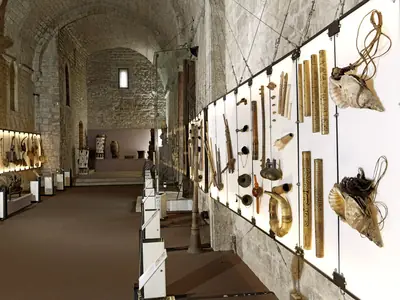
Musée des Explorations du Monde (formerly Musée de la Castre)
Perched on the hill of Le Suquet, the museum occupies the remains of a medieval castle built by the monks of Lérins, whose presence on Saint‑Honorat Island dates back to the fifth century. The castle’s construction started in the eleventh century, giving the site thick stone walls and a commanding defensive position. In 2021 the institution adopted its current name to reflect a global cultural focus. Its origins trace to 1877, when Dutch baron Tinco Lycklama donated his antiquities and “primitive art” collection to Cannes. The city acquired the old Le Suquet buildings in 1919 to house the growing assemblage, and today the museum holds the Musée de France label. Inside, visitors encounter works from the Himalaya and Tibet, the Arctic, Oceania, Africa and the Americas, including Pre‑Columbian ceramics, Mediterranean antiquities, musical instruments and nineteenth‑century landscapes.
Villa Rothschild (Médiathèque Noailles)
Set in the La Croix‑des‑Gardes district, this Neo‑classical mansion was erected in 1881 for Betty de Rothschild, widow of James Mayer de Rothschild, to designs by local architect Charles Baron. Rising over five stories, it contains forty rooms, including twenty‑eight bedrooms. Betty de Rothschild lived there until her death in 1886; the property remained in the Rothschild family until the city of Cannes bought it in 1952. Since 1991 the villa has been a listed historical monument and now operates as a public media library, its Mediterranean gardens complementing the architecture.
Palais des Festivals et des Congrès
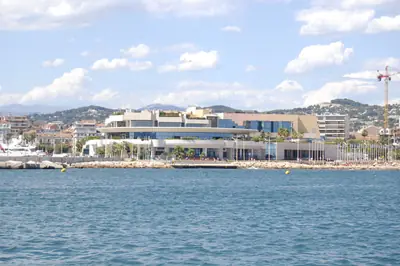
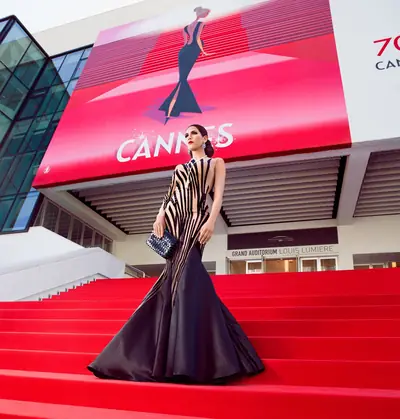
The Palais des Festivals et des Congrès is the modern heart of Cannes, best known as the main venue for the annual Cannes Film Festival while also hosting conferences, exhibitions and performances year‑round. A first building opened in 1949 to accommodate the expanding festival; the current structure was inaugurated in 1982 and enlarged in 1999. Its broad ceremonial staircase becomes the famed red carpet during the festival, a backdrop for countless photographs. The complex offers roughly 35 000 m² of exhibition space and eighteen auditoriums, the largest seating 2 300 spectators. The Grand Auditorium Louis Lumière serves as the principal screening hall for competition films.
Église Notre‑Dame‑de‑l’Espérance (Church of Our Lady of Hope)
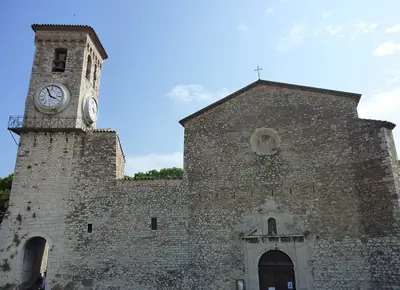
Standing atop Suquet Hill on Place de la Castre, this church commands views of the Old Port, the coastline and the Lérins Islands. Construction began in 1521 and proceeded over more than a century, resulting in a Provençal Gothic core with thick stone walls and tall, simple lines. A Renaissance‑style porch refines the entrance, while a square bell tower of Romanesque character bears five bells cast in 1921. Inside, the Saint Peter Chapel holds a carved wooden altar beneath the second arch from the entrance, and the high altar is surmounted by a gilded wooden canopy.
Cannes Film Festival
Each May the city transforms as the Cannes Film Festival takes over, with its main screenings held at the Palais des Festivals on the Croisette. The invitation‑only event is a major meeting point for filmmakers, producers, performers and audiences seeking new works of every genre, including documentaries. Its famed red‑carpet staircase, the Montée des Marches, has become an iconic symbol. The festival originated from a 1939 proposal by Philippe Erlanger to Jean Zay and Albert Sarraut; the planned September 1939 edition was cancelled by the outbreak of World War II. The first actual festival was held in 1946 and has run annually since, usually in May. The former Municipal Casino of Cannes, once a central entertainment venue, is now part of the city’s past.
Eurovision Song Contest 1959
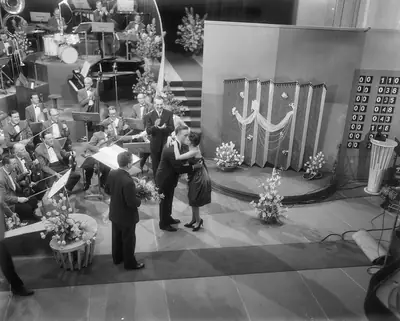
On 11 March 1959 the Palais des Festivals et des Congrès hosted the fourth Eurovision Song Contest, presented by Jacqueline Joubert. Eleven countries competed; the Netherlands won with “Een beetje” performed by Teddy Scholten, the United Kingdom took second place and host nation France finished third. The Dutch victory was notable as it marked the Netherlands’ second win, making it the first country to claim the contest more than once. Songwriter Willy van Hemert thus became the first person to pen two winning Eurovision entries. Cannes welcomed the contest again on 18 March 1961 for the sixth edition, once again presented by Jacqueline Joubert, with sixteen countries participating—a record at the time. Luxembourg triumphed with “Nous les amoureux” sung by Jean‑Claude Pascal, the United Kingdom secured second place for the third consecutive year and Switzerland came third. The 1961 event also marked France’s second stint as host, following the 1959 contest.
Fortified Monastery of Lérins Abbey
On the southern coast of Île Saint‑Honorat, the fortified monastery of Lérins Abbey rises in the Bay of Cannes. Built to protect the island, its monastic community and inhabitants, construction began in the late eleventh century under the direction of the abbey. The structure, also known as a monastery tower or tour‑monastère, reflects a defensive purpose and has been classified as a historic monument in France since 1840.
Croix‑des‑Gardes
Croix‑des‑Gardes, or the Croix‑des‑Gardes Forest Nature Park, offers a natural retreat within the Côte d’Azur commune. It provides walking trails and shaded groves that contrast with the city’s seaside promenades.
La Malmaison
Located along the Croisette, La Malmaison is a historic villa that now functions as one of Cannes’s contemporary art spaces. Built in 1863 as an annex to the Grand Hotel (today the Mondrian Cannes), it is the sole surviving element of the original hotel ensemble. The municipality acquired it in 1970, and the building became the home of the city’s contemporary art activities. Its exhibition role started in 1945 with a show organised by Aimé Maeght; after conversion to a dedicated contemporary art venue in 1983 and subsequent renovations, it hosts three major exhibitions each year. Inside, three floors display works by artists such as Matisse, Ozenfant, Picasso, Miró and César, many of whom were drawn to the light and beauty of the Côte d’Azur. The setting juxtaposes modern creations with the villa’s original architectural features.
Chapelle Bellini
Set in the Alpes‑Maritimes, the Chapelle Bellini offers a modest place to pause and take in the surroundings, providing a quiet moment amid the urban flow.
Château Vallombrosa (Hôtel du Parc)
This imposing nineteenth‑century neo‑Gothic building, also known as the Hôtel du Parc, was erected between 1852 and 1856 by Sir Thomas Robinson Woolfield for Lord Londesborough. Initially called the Château des Tours or Villa Sainte‑Ursule, it later adopted the name Hôtel du Parc. From 1906, Martin Ellmer commissioned Laurent Vianay to transform the former palace into a Baroque‑style residence. Since 1934 the château has been a co‑owned residential property, with each floor providing roughly 800 m² of living space. The ground floor, once used for reception rooms, has remained in the hands of a single family across several generations.
Explore Cannes with Neywo
Download Neywo to experience Cannes through its free audio guide. The app includes three walking tours and one bus route:
- Le Suquet, the Old Port and Riviera Villas – 1.83 km, about 75 minutes, 10 narrated stops (Quai Saint‑Pierre, Monument aux morts de Cannes, Kiosque à musique des allées de la Liberté, Marché Forville, Chapelle de la Miséricorde de Cannes, place de la Castre, Musée des Explorations du Monde, Chapelle Saint‑Roch de Cannes, Château Vallombrosa, Villa Rothschild).
- The Croisette and the Festival Palace – 3.06 km, about 101 minutes, 12 stops (Palais des Festivals et des Congrès, Les Plages Électroniques, Église Notre‑Dame‑de‑Bon‑Voyage, Majestic, Cannes, La Malmaison, Carlton Cannes, Holy Trinity Church, Boulevard de la Croisette, Hôtel Martinez, Square du 8 mai 1945, Église Notre‑Dame‑des‑Pins, St. Michael the Archangel Church).
- Behind the Croisette: Eurovision, Shops and a Copper Dome – 2.31 km, about 71 minutes, 8 stops (église Saint‑Paul de Cannes, église du Sacré‑Cœur du Prado, Synagogue du boulevard d’Alsace, Eurovision Song Contest 1959, Place Gambetta, Rue d’Antibes, Mondrian Cannes, Synagogue de la Rue du Commandant Vidal).
- Bus 8 Palm Imperial: The Croisette by Open‑Top Bus – 2.2 km, about 9 minutes, 8 stops (Quai Saint‑Pierre, Kiosque à musique des allées de la Liberté, Palais des Festivals et des Congrès, Majestic, Cannes, La Malmaison, Carlton Cannes, Boulevard de la Croisette, Hôtel Martinez).
Each story plays automatically as you reach the corresponding spot, allowing you to move at your own pace with no group and no schedule. Narration is available in 11 languages, giving you a flexible way to discover the city’s landmarks, history and culture.
Places with an audio guide in Cannes
8 places in Cannes with a Neywo audio guide. Each one starts telling its story as you reach it.
Self-guided tours in Cannes
4 tours in Cannes, free in the Neywo app. Each stop tells its story as you reach it.
- Bus ride
Bus 8 Palm Imperial: The Croisette by Open-Top Bus
Palm Bus line 8 runs from the Old Port along the Croisette to Palm Beach, with open-top double-deckers on the route. Ride past the town hall bandstand, the Palais des Festivals and the grand hotels of the seafront for the price of an ordinary bus ticket.
Quai Saint-Pierre · Kiosque à musique des allées de la Liberté · Palais des Festivals et des Congrès · Majestic, Cannes · La Malmaison · Carlton Cannes …
Open this tour: Bus 8 Palm Imperial: The Croisette by Open-Top Bus - Walk
Le Suquet, the Old Port and Riviera Villas
Start on the quay of the Old Port, pass the war memorial and the covered Forville market, then climb the narrow lanes of Le Suquet to the hilltop square with its Gothic church and the castle that became a museum of world arts. Finish with two grand nineteenth-century villas on the western side.
Quai Saint-Pierre · Monument aux morts de Cannes · Kiosque à musique des allées de la Liberté · Marché Forville · Chapelle de la Miséricorde de Cannes · Place de la Castre …
Open this tour: Le Suquet, the Old Port and Riviera Villas - Walk
The Croisette and the Festival Palace
Follow the famous seafront from the red-carpet steps of the Palais des Festivals past Art Deco and Belle Epoque grand hotels, a contemporary art villa, an Anglican church and a rose garden. End at the Russian Orthodox church of St Michael, built in 1894 with gifts from the Russian imperial family. Pause at the electronic-music beach club and the pine-shaded church near the end.
Palais des Festivals et des Congrès · Les Plages Électroniques · Église Notre-Dame-de-Bon-Voyage · Majestic, Cannes · La Malmaison · Carlton Cannes …
Open this tour: The Croisette and the Festival Palace - Walk
Behind the Croisette: Eurovision, Shops and a Copper Dome
Leave the seafront for everyday Cannes: two parish churches north of the railway, the synagogue with its copper dome, the story of the 1959 Eurovision Song Contest, lively Place Gambetta, the long shopping artery of Rue d'Antibes and a Belle Epoque hotel.
Église Saint-Paul de Cannes · Église du Sacré-Cœur du Prado · Synagogue du boulevard d'Alsace · Eurovision Song Contest 1959 · Place Gambetta (Cannes) · Rue d'Antibes …
Open this tour: Behind the Croisette: Eurovision, Shops and a Copper Dome
Walk Cannes with Neywo
Neywo turns Cannes into a self-guided audio tour. Stories arrive as you reach the place they belong to, and the route reshapes when you wander off it.

