Villefranche-sur-Mer, France: Self-Guided Walking Tour
Things to do in Villefranche-sur-Mer: a self-guided walk through the old town and port
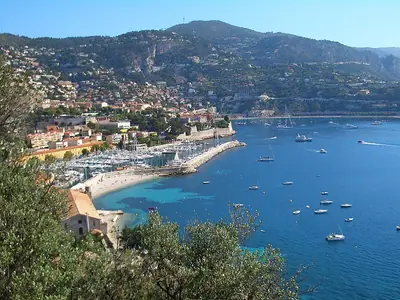
Villefranche-sur-Mer is a historic French Riviera town built around a deep, sheltered bay. Its colorful old quarter, fortified citadel, former naval harbor, and waterfront chapels make it worth exploring on foot. Neywo offers a free audio guide for Villefranche-sur-Mer with 14 narrated places, available in 11 languages.
Part of Provence-Alpes-Côte d’Azur and close to Nice, Villefranche-sur-Mer combines Mediterranean scenery with layers of military, religious, maritime, and artistic history. Here are the main things to see in Villefranche-sur-Mer.
What to see in Villefranche-sur-Mer
Villefranche-sur-Mer railway station
The railway station sits on the historic line connecting Marseille with Vintimille on the Italian border. Regional TER trains serve the station, which provides a practical arrival point for exploring the town and reaching the coast.
The station is also close to the beach and the waterfront. Nearby, The Baths of the Beach occupies a private beach concession and offers seasonal cuisine based on local ingredients and seafood.
Rue du Poilu and the old town
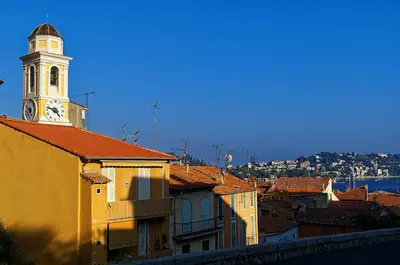
The old town rises from the harbor through steep, cobbled lanes lined with pastel façades in shades of orange, red, and yellow. Rue du Poilu is its main thoroughfare, curving uphill from the waterfront. Some buildings feature trompe-l’œil details that imitate architectural elements.
The street was once known as Straight Street and connected two gates of the fortified town. Its present name commemorates the French infantrymen who followed this route from the citadel to the railway station before leaving for the front during the First World War.
Rue Obscure
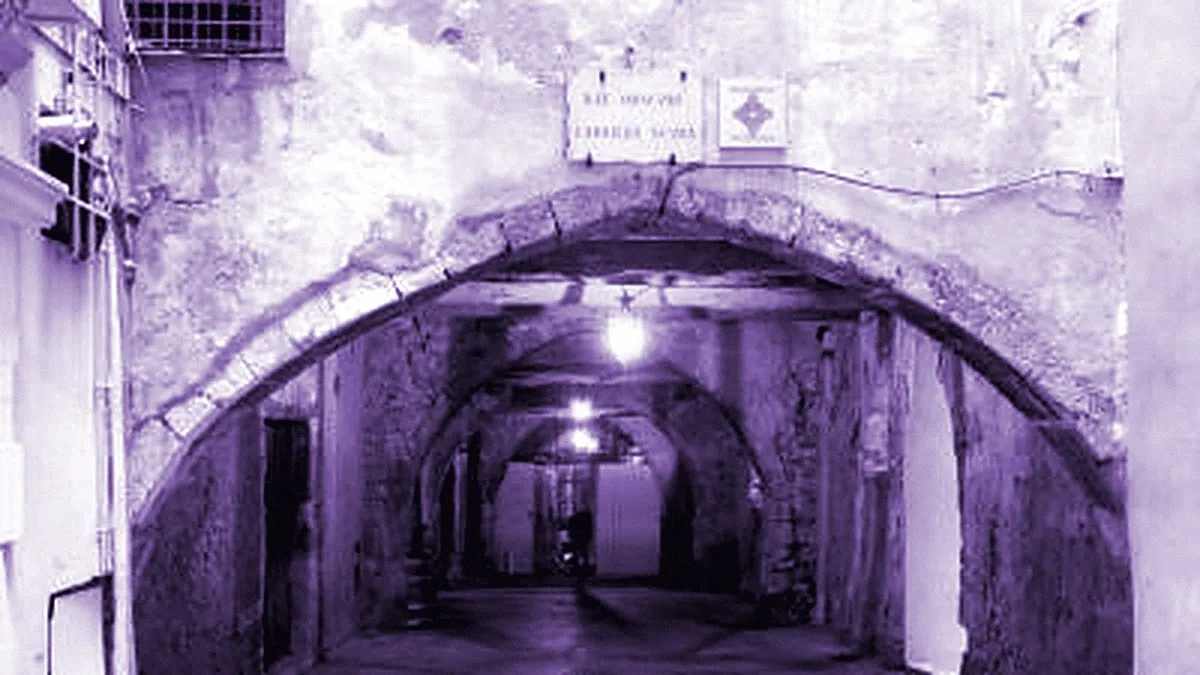
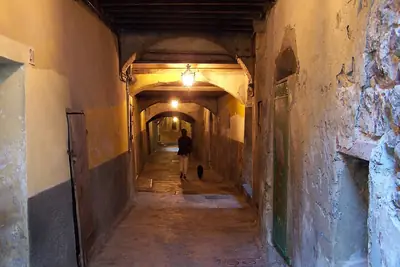
Rue Obscure is one of the most unusual places to visit in Villefranche-sur-Mer. This covered medieval passage runs for 130 metres along the line of the town’s first rampart and has been a protected Historic Monument since 1932.
It began around 1260 as an open military walkway, allowing soldiers to move beside the defensive walls unseen. As houses were built above it, the passage became an enclosed tunnel. Later, merchants used it as a cool wine cellar, while donkeys and goats found shelter there. The low arches, ancient stone, scattered lamps, and surviving Portal Robert give the passage a distinctive atmosphere.
Église Saint-Michel
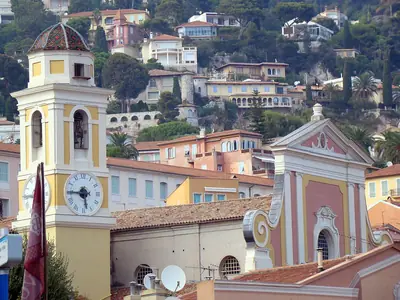
Église Saint-Michel is a Baroque church with Italianate features, built in the 1750s on the site of an earlier place of worship. A fourteenth-century church once stood here, replacing a thirteenth-century priory.
Inside, the church follows a Latin-cross plan. Its nave, transept, side aisles, round oculi windows, and semicircular apse create a restrained but elegant interior. One notable object is the wooden statue of San Rocco, whose ornate case was made by Jean Antoine Mangiapan. The church became a protected historic monument in 1990.
Chapelle Sainte-Élisabeth
Built around 1595, Chapelle Sainte-Élisabeth originally belonged to the Brotherhood of the Holy Spirit. A dove engraved above the door lintel still recalls that first association. In the eighteenth century, the Brotherhood of Humiliated Sisters took over the chapel and dedicated it to Saint Elizabeth of Hungary.
The building later moved away from religious use. From 1945 it served as a municipal market, and from 1951 it became the town council’s meeting hall for three decades. Today, its approximately 87-square-metre interior is an exhibition space with rotating art displays.
Citadelle Saint-Elme
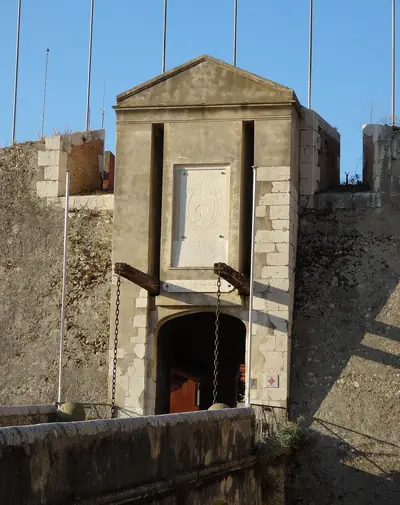
The Citadelle Saint-Elme has guarded Villefranche-sur-Mer since the sixteenth century. Built between 1554 and 1559 on the orders of Emmanuel Philibert, Duke of Savoy, it formed part of a larger defensive system. Fort du Mont Alban, the Tour Saint-Hospice on Saint-Jean-Cap-Ferrat, and the battery at Beaulieu-sur-Mer worked together to protect the Port Royal de la Darse, the naval harbor of the Dukes of Savoy.
Today, the citadel houses the town’s Museum of Art and History. Its thick walls contain the stories of the fortress and the harbor, while its elevated position provides views over the bay and the town’s terracotta roofs.
Jardins de la Citadelle
The Jardins de la Citadelle occupy the fortress grounds and offer a quieter way to experience this historic site. Paths pass through the citadel’s preserved defensive setting, with views across Villefranche-sur-Mer and the Mediterranean.
The gardens are part of a living cultural complex: the citadel now serves as the town hall as well as a cultural hub. The contrast between the former military stronghold and its peaceful gardens is one of the site’s particular charms.
Saint Peter’s Chapel
Set beside the old port, Saint Peter’s Chapel is closely connected with Villefranche-sur-Mer’s fishing community. Saint Peter is the patron saint of fishermen, and the chapel served as a place of prayer, storage for fishing equipment, and even a setting for resolving disputes.
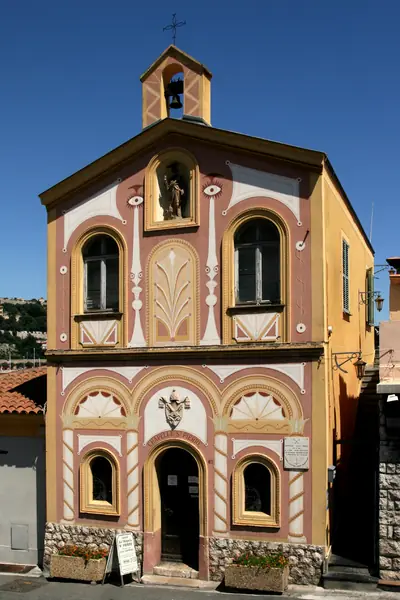
Its colorful pink, yellow, and white façade leads to an interior transformed by Jean Cocteau in 1957. He painted five main fresco scenes: two inspired by Mediterranean life and three depicting episodes from the life of Saint Peter. This was Cocteau’s first painted chapel. The result brings modern art and local religious tradition together in a small space by the water.
Port de la Darse
Port de la Darse is the historic heart of Villefranche-sur-Mer. The Dukes of Savoy began fortifying the natural harbor in 1550, recognizing its value as a deep and protected naval anchorage. After the Savoyard rulers became Kings of Sardinia in 1713, the port acquired its royal title.
An expansion in 1730 added a lighthouse, dry dock, arsenal, and forge. By 1770, the harbor also included a prison, rope factory, and officers’ barracks. Today, the Darse is a marina with berths for 520 boats, including vessels up to 30 metres long. Historic buildings from the former arsenal remain along the quays, alongside modern harbor facilities.
Oceanological Observatory of Villefranche-sur-Mer
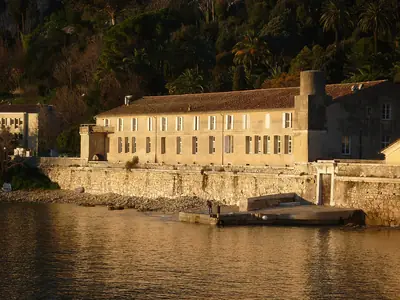
The Oceanological Observatory stands on the Port de la Darse and now forms a satellite campus of Sorbonne University. Its laboratories focus on developmental biology and oceanography.
The building was completed in 1769 as a prison and hospital for around 200 galley slaves. Grooves worn by iron chains remain visible in the stone floor. After the galley slaves were transferred to Imperia in 1850, the building became a quarantine station during a cholera outbreak in Nice in 1870. It was later used by the Russian navy for coal storage before becoming a scientific institution.
Port de la Santé and Amélie Pollonais Square
Port de la Santé is a picturesque harbor between Nice and Monaco. It continues to accommodate fishing boats alongside a limited number of pleasure craft, while also receiving cruise passengers by tender boat.
Beside the port, Amélie Pollonais Square is the largest square in the old town. Café and restaurant terraces face the harbor, surrounded by pastel-colored façades. It is a natural place to pause for a coffee, lunch, or evening apéritif while watching activity on the water.
Quai de l’Amiral Ponchardier
Quai de l’Amiral Ponchardier follows the water’s edge and offers one of the town’s classic views: colorful old-town façades behind you, the bay ahead, and fishing boats and yachts moving through the harbor.
The promenade is mainly reserved for pedestrians and is lined with cafés and restaurants, from seafood bistros to gourmet establishments. From here, the coastline extends towards Villa Rothschild and Villa Kerylos, making the quay a particularly scenic place to walk.
Explore Villefranche-sur-Mer with Neywo
Neywo’s free audio guide turns the town into a self-guided walking tour. The route From the Railway to the Riviera’s Darkest Street covers 2.45 km, takes about 80 minutes, and includes 9 narrated stops. It connects the railway station with the old town, Rue Obscure, the churches and chapels, the Citadelle Saint-Elme, Port de la Darse, and the Oceanological Observatory.
The app tells the story of each place as you reach it, at your own pace, with no group and no schedule. Download Neywo and explore Villefranche-sur-Mer while the town’s history unfolds around you.
Places with an audio guide in Villefranche-sur-Mer
8 places in Villefranche-sur-Mer with a Neywo audio guide. Each one starts telling its story as you reach it.
Self-guided tours in Villefranche-sur-Mer
1 tour in Villefranche-sur-Mer, free in the Neywo app. Each stop tells its story as you reach it.
- Walk
From the Railway to the Riviera's Darkest Street
Drop down from the station into Villefranche's medieval lanes, slip through the covered Rue Obscure and climb to the Baroque church and the Saint-Elme citadel. End at the old naval port, at Cocteau's painted fishermen's chapel and the former galley prison that became a marine laboratory.
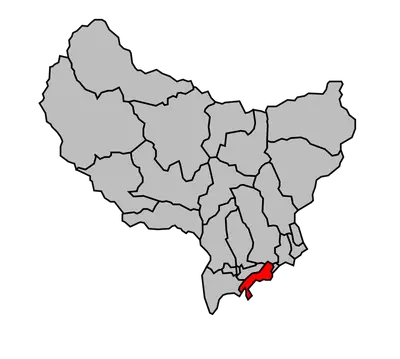
Villefranche-sur-Mer railway station · Canton of Villefranche-sur-Mer · Rue Obscure · Église Saint-Michel de Villefranche-sur-Mer · Chapelle Sainte-Élisabeth de Villefranche-sur-Mer · Citadelle de Villefranche-sur-Mer …
Open this tour: From the Railway to the Riviera's Darkest Street
Walk Villefranche-sur-Mer with Neywo
Neywo turns Villefranche-sur-Mer into a self-guided audio tour. Stories arrive as you reach the place they belong to, and the route reshapes when you wander off it.

