Visiting Avignon, France: Top Sights on Foot
Things to do in Avignon
Avignon is a historic city in the Provence-Alpes-Côte d’Azur region of France, famous as the City of the Popes for its monumental Palais des Papes and its well‑preserved medieval ramparts along the Rhône. Visitors come to admire Gothic architecture, riverside views from the Pont Saint‑Bénézet, and the lively Provençal atmosphere of the old town. Neywo offers a free audio guide for Avignon with 53 narrated places.
Exploring Avignon’s highlights
Palais des Papes
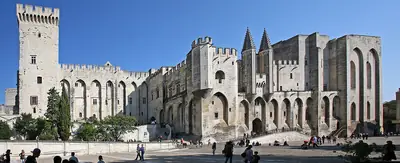
Just ahead, you’ll find the Palais des Papes—also known as the Popes’ Palace—one of the largest and most important medieval Gothic buildings in Europe. It wasn’t only a palace: for a time, it functioned as a fortress and the papal residence, and in the 14th century it was the seat of Western Christianity. What makes this place especially striking is that it’s really two palaces joined together: the old palace of Benedict XII and the new palace of Clement VI. The old palace is described as a fortress‑like stronghold set on the rock of the Doms, while the new palace is presented as the most lavish of the Avignon popes’ residences. During the 14th century, six papal conclaves were held here, each one leading to the election of a new pope—Benedict XII, Clement VI, Innocent VI, Urban V, Gregory XI, and Benedict XIII. The construction and ornamentation are credited to the combined work of major French architects of the time—Pierre Poisson and Jean de Louvres—and the palace expresses the International Gothic style at full strength.
Pont Saint‑Bénézet
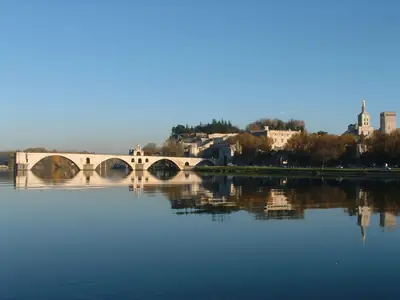
Here’s one of Avignon’s most famous sights: the Pont Saint‑Bénézet, better known as the Pont d’Avignon. Even in ruins, it’s instantly recognizable—just look for the surviving arches, and you’ll understand why this bridge became a landmark in the first place. At its height, the original bridge was about 900 meters long. Over time, floods repeatedly damaged it, and the bridge became increasingly dangerous, with parts replaced by a shaky wooden bridge. After a major flood in 1668, most of the bridge was swept away, and it was finally abandoned—no one tried to repair it. In the centuries that followed, the remaining arches continued to collapse or were dismantled, leaving just four that are still here. If you look closely at the bridge’s surviving structure, you’ll notice the chapels built on the piers. On one of the remaining pillars stands the Chapel of Saint‑Bénézet, and above it is the Chapel of Saint‑Nicolas. There’s also a fascinating story tied to the bridge’s origin. According to legend, Saint Bénézet—described as a local shepherd—was inspired by a heavenly message to build a bridge across the river. He was mocked at first, but the story says he moved huge stones miraculously.
Avignon Cathedral
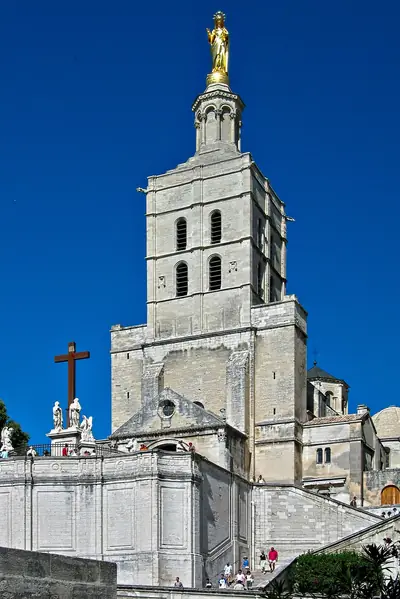
Just ahead, you’ll find Avignon Cathedral, locally known as Cathédrale Notre‑Dame‑des‑Doms. It’s the Catholic cathedral of the Archdiocese of Avignon, and it sits right beside the Palais des Papes, on a rocky spur above the palace. This cathedral has been a Catholic cathedral since the 12th century, and it was later given the title of a minor basilica by Pope Pius IX in 1854. A lot of what makes it memorable is its Romanesque Provençal character. The building was enlarged with side chapels in the 14th and 17th centuries. Look up at the bell tower: the most prominent feature is a gilded statue of the Virgin Mary, erected in 1859. Inside, you’ll find many works of art, including the mausoleum of Pope John XXII, a 14th‑century Gothic edifice. It was moved in 1759, damaged during the Revolution, and then restored to its original position in 1840. The cathedral also has a long story of change and renewal. The bell tower collapsed in 1405 and was rebuilt in 1425, and later, in 1670 to 1672, the apse was rebuilt and extended—an extension that led to the destruction of the medieval cloister. During the Revolution, the cathedral was abandoned and allowed to deteriorate, but it was reconsecrated.
Collection Lambert
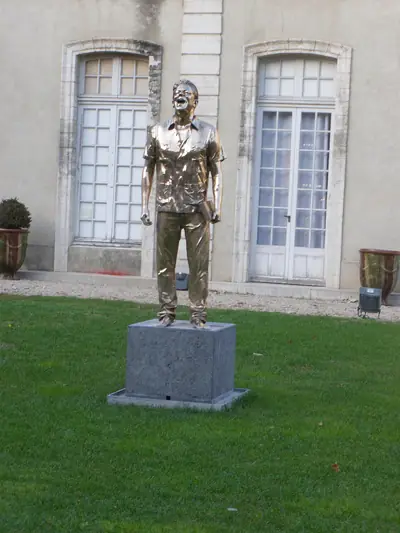
Just ahead, you’ll find the Collection Lambert, also known as the Hôtel de Caumont—one of Avignon’s standout places for contemporary art. This museum was brought together by the Parisian art dealer and collector Yvon Lambert, who started assembling the collection in the 1960s. Take a moment to appreciate the setting: the museum occupies two 18th‑century mansions—the Hôtel de Caumont and the Hôtel de Montfaucon. Inside, you’ll see works from the latter half of the 20th century and into the early 21st century, curated as Lambert’s collection grew. Now, let’s talk about the Hôtel de Caumont itself. It was designed by Jean‑Baptiste Franque and completed by his son François after 1751. Over time, the building has been used for different purposes—first as a teacher training college, and later as a national gendarmerie—yet it remains a masterpiece of the Franque family’s architectural legacy. One of the major chapters in the museum’s story came with expansion: in 2009, Yvon Lambert and Avignon’s municipality began a project to make room for additional works, including plans to incorporate the Hôtel de Montfaucon. That project was completed in 2015, guided by the Berger & Berger architects.
Palais du Roure
Just ahead is the Palais du Roure, a historic private mansion in Avignon that’s now open as a museum—so you can step into a place that has lived many different lives over the centuries. You may also hear it called the “hôtel de Baroncelli‑Javon.” It’s a 15th‑century hôtel particulier, built in Avignon and later transformed into a museum. The story begins with Pierre Baroncelli, a Ghibelline from Florence, who purchased a tavern called La Taverne du Mûrier and neighboring houses in 1469. The Baroncelli family rose to prominence in Avignon, and the mansion is connected to Julian della Rovere—later Pope Julius II. In the 19th century, the property—then known as the Baroncelli‑Javon Hotel—was renamed Roure Palace, “palace of the oak,” by the poet Frédéric Mistral, who frequented the site. After that, it was owned by Marquis Folco de Baroncelli‑Javon and became a hub for the Felibrige, a movement dedicated to preserving the Provençal language and culture. In the early 20th century, the palace went through a period of decline and damage. Then, in 1918, Jeanne de Flandreysy purchased and restored it, turning it into a center for Mediterranean culture. Later, in 1944, the city of Avignon acquired the building and opened it to the public as a museum.
Abbaye de Saint‑Ruf d’Avignon
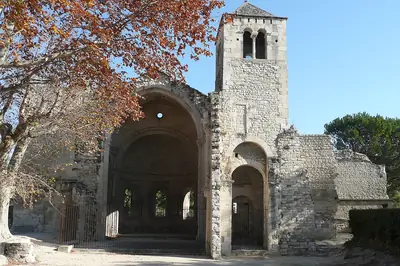
As you come to the Abbaye de Saint‑Ruf d’Avignon, you’re looking at the remains of an important former religious house in Avignon—once closely tied to the Order of Saint‑Ruf. What makes this place especially significant is its long connection to the Order of Saint‑Ruf. The abbey of Saint‑Ruf served as the mother house and original headquarters of the order, and it was home to canons regular in the city of Avignon between the 11th and 18th centuries. The abbey was built in the 11th and 12th centuries, and it later became a priory after 1158. Even though it’s described as partly destroyed, the surviving remains are protected: the remains of the abbey were classified as monuments historiques by a list in 1889.
Hotel Montaigu
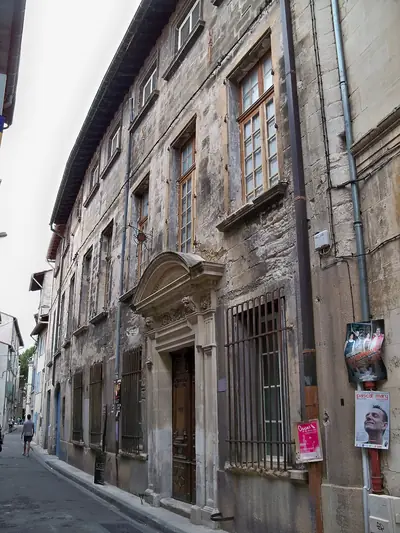
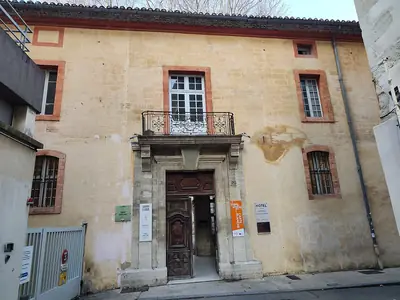
Just ahead, you’ll find Hotel Montaigu, also known as the Hôtel de Montaigu. This historic mansion adds to the rich tapestry of Avignon’s civil architecture, reflecting the city’s evolution from medieval stronghold to elegant residential quarter.
Hôtel Cloître Saint‑Louis
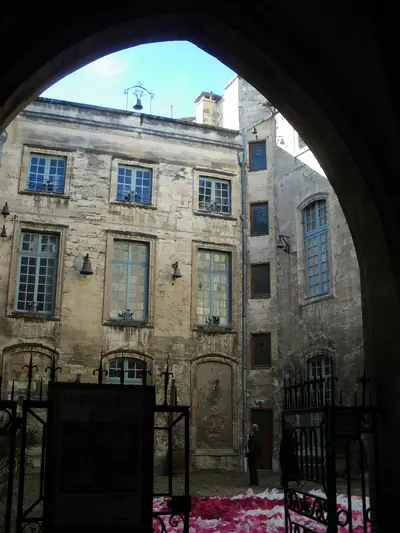
Just ahead, you’ll find Hôtel Cloître Saint‑Louis, a hotel in Avignon, France. The building provides a convenient base for exploring the surrounding historic sites while retaining its own modest architectural charm.
Musée lapidaire d’Avignon
Just ahead, you’ll find the Musée lapidaire d’Avignon—an archaeological lapidary museum that brings together the city’s ancient collections. The museum is based at 27 rue de la République, in a building that originally served as the chapel of the city’s Jesuit College. This 17th‑century building was begun in 1616, with plans by Étienne Martelange, and then construction continued from 1620 onward under François de Royers de la Valfenière. De la Valfenière raised the walls up to the nave’s main cornice, and later the building was designated a monument historique on 21 June 1928. Inside, you’ll find a wide range of artifacts, reaching back to Prehistory, and then moving through Greek, Etruscan, Roman, and Gallo‑Roman art. One highlight to look for is the Lauris‑Puyvert Stela, described as being crafted from ologenic limestone. As you explore the displays, you’ll also see a variety of Greek, Roman, Etruscan, and Gallic objects—along with vases, lamps, bas‑reliefs, statues, and Etruscan funerary monuments.
Temple Saint Martial
Just ahead, you’ll find the Temple Saint‑Martial in Avignon—today a Protestant place of worship, but with a past that keeps changing at every turn. What makes this stop especially memorable is its Neoclassical architecture, which draws visitors in right away. Long before it became the Temple Saint‑Martial, this building began as a monastery and school for Benedictine monks of Cluny, and construction was completed in 1388. Over the centuries, the complex was transformed again and again: it was first the palace of Queen Jeanne, then it became the cardinal livery of Androin de la Roche, and later it turned into a Cluniac establishment. By the 17th century, the structure was expanded, and it was later abandoned during the French Revolution. After that, it served several different purposes—at one point housing the Calvet Museum, and later the Natural History Museum of Avignon. The building also functioned as a Teachers’ College, a Post Office, and a Tourism Office before being given to the Protestant community in 1881. If you look around now, you’ll see the temple tucked away in a quiet courtyard with leafy trees, along with a distinctive tower—an unexpectedly peaceful retreat from the bustling centre.
Église Saint‑Joseph‑Travailleur d’Avignon
Just ahead, you’ll find the Église Saint‑Joseph‑Travailleur d’Avignon—an unmistakably modern parish church in Vaucluse, France, created to serve a new neighborhood. Construction took place from 1967 to 1969, and it was consecrated on October 19, 1969. Take a moment to look at the overall impression: the church and the attached parish center form a single, relatively elegant and airy ensemble made of reinforced concrete, offering a fresh approach to sacred architecture in Avignon. The parish complex was later recognized for its heritage value. The church in its entirety, along with the facades and roofs of the parish center, were added to the supplementary inventory of Historic Monuments by an order dated December 22, 1993. And more recently, the entire parish complex Saint‑Joseph‑Travailleur has been the subject of an inscription as a Historic Monument by an order dated November 14, 2024.
Église Saint Pierre (Avignon)
A little further into Avignon, you’ll find Église Saint Pierre, also known as the Basilique Saint‑Pierre or Collégiale Saint‑Pierre. It’s a Roman Catholic church with the title of a basilica, and it’s closely tied to Avignon’s religious history. What makes this church especially interesting is that it stands on the site of an earlier building from the 7th century. The current Gothic church was rebuilt in 1358, replacing that earlier construction. Take a moment to look at the style: it’s described as Gothic. And it’s located on Place Saint‑Pierre, where the church has been established since that earlier 7th‑century foundation. If you step inside, you’ll find that the church includes several smaller chapels—six in all—dedicated to the Sacred Heart, Saint Peter, and Our Lady of Lourdes, among others.
Synagogue d’Avignon
Just ahead is the Synagogue d’Avignon, a Jewish place of worship set in the heart of the old “ancienne carrière” area of Avignon—an address that also carries a deep historical weight. The building has been listed as a French historical monument since August 21, 1990. What you’re looking at today was built between 1785 and 1787, then destroyed by a fire in 1845. After that, it was rebuilt from 1846 onward under the direction of architect Joseph‑Auguste Joffroy, and it was inaugurated on May 20, 1849. Take a moment to notice the overall shape: from the outside, the building is rectangular, but the synagogue hall itself is a classicizing rotunda covered by a dome. Inside, the space is defined by white columns—along with a domed rotunda—and the bima, the pulpit, and the benches are made of walnut. The synagogue complex also includes several community rooms, a ritual bath called a mikwe, and facilities connected with Jewish daily life, including a butcher’s shop for ritual slaughter and a kosher bakery, as well as a wedding hall. The story of Jewish life in Avignon goes back at least to the 2nd century, and it became especially significant in the 13th century with the establishment of a…
Collégiale Saint Agricol
As you come into the historic heart of Avignon, one of the city’s oldest places of worship is the Collégiale Saint Agricol—also known as the Église Saint‑Agricol. Take a moment to look at it: this Gothic church has a long, layered story behind its walls. The site itself goes back much further than the church you see today. The church was built in the early 1300s on the location of an older temple dating from between 660 and 700, connected with Saint Agricola, the seventh‑century bishop of Avignon. After that early period, the original place of worship was raised from its ruins in the 10th century by Bishop Foulques II, who established it as a prieurale church. Later, in 1321, Pope John XXII elevated it to the rank of a collegiate church. Over time, it also became a cathedral after the French Revolution. And today, the current Gothic building is protected as a historic monument, classified in 1980. If you’re looking at the building closely, the Gothic style is the key impression. The church’s façade is described as the shared work of three sculptors: Antoine Collin from Lyon, Didier Miro from Toul, and Antoine Carteron from Bourges. Inside, there are ten chapels—six on the north side and four on the south.
Saint‑Didier
As you come to Saint‑Didier in Avignon, you’re looking at a former collegiate church that’s especially prized for its Gothic character—and for the artworks it still holds today. This is the Collégiale Saint‑Didier, also known as Église Saint‑Didier. It was built in the mid‑14th century, and it was later recognized as a historic monument on July 27, 1983. The site has an earlier story. The church stands where an older church is traditionally believed to have been founded in the 7th century by Agricol d’Avignon, and the earliest recorded mention of Saint‑Didier dates back to 1008, in a document about a donation by Bishop Rostaing of Avignon to the Abbey of Montmajour. Construction of the Gothic church was influenced by the Avignon papacy and was initiated by Cardinal Bertrand de Deaux. His will directed the building of a church on his estate. The work was led by the master mason Jaume Alasaud, who was known for his work on the Palace of the Popes. The church was completed in just over three years, and it was consecrated on September 20, 1359. Take a moment to appreciate how Saint‑Didier stands as a prime example of Avignon Gothic architecture. Inside, the church is home to significant artworks that reflect the religious and cultural life of the period.
Explore Avignon with Neywo
Neywo’s free audio guide lets you discover Avignon at your own pace, with no group and no schedule. The app offers 5 walking tours, 1 bus route, and 1 bike route in the city:
- The Palace of the Popes and Place de l’Horloge – 1.42 km, 124 min, 12 stops
- The Saint‑Benezet bridge and the eastern old town – 1.99 km, 113 min, 12 stops
- Avignon’s museums: Calvet, Lambert and Angladon – 2.04 km, 106 min, 12 stops
- Rue des Teinturiers and the dyers’ quarter – 0.27 km, 25 min, 5 stops
- The Ultimate Avignon: the whole walled town – 2.64 km, 194 min, 15 stops
- Bus line: “The free Baladine shuttle around old Avignon” – 6.6 km, 28 min, 11 stops
- Bike route: “Avignon cycle lane: from Place Crillon to the university” – 2.9 km, 14 min, 6 stops
Each story plays automatically as you reach the place, delivering the history and anecdotes in your chosen language (narration is available in 11 languages). Simply download Neywo, select a tour, and let the city reveal itself step by step.
Places with an audio guide in Avignon
8 places in Avignon with a Neywo audio guide. Each one starts telling its story as you reach it.
Self-guided tours in Avignon
7 tours in Avignon, free in the Neywo app. Each stop tells its story as you reach it.
- Bike ride
Avignon cycle lane: from Place Crillon to the university
A short ride along Avignon's cycle lanes from the old theatre by Place Crillon past the Louis Vouland museum, the cloister of Saint-Louis, the station and the Célestins church to the university quarter.
Ancienne Comédie d'Avignon · Musée Louis Vouland · Hôtel Cloître Saint-Louis · Gare d'Avignon-Centre · Church of the Célestins of Avignon · Avignon University
Open this tour: Avignon cycle lane: from Place Crillon to the university - Bus ride
The free Baladine shuttle around old Avignon
A small free electric shuttle looping inside the ramparts. Ride it from the synagogue and the Black Penitents' chapel past the churches of Saint-Pierre and Saint-Agricol, the Ancienne Comedie and the Louis Vouland museum the Maison Jean Vilar, the Collection Lambert and the Palais du Roure to the covered market (Les Halles), without climbing a single street.
Synagogue d'Avignon · Chapelle des Pénitents noirs · Église Saint Pierre (Avignon) · Collégiale Saint Agricol · Maison Jean Vilar · Ancienne Comédie d'Avignon …
Open this tour: The free Baladine shuttle around old Avignon - Walk
The Palace of the Popes and Place de l'Horloge
The largest Gothic palace in Europe, built when Avignon rather than Rome was the seat of the papacy, with the cathedral beside it and the theatre-festival streets below. Everything on this walk is within three hundred metres of the palace gate.
Palais du Roure · Chapelle des Templiers · Collégiale Saint Agricol · Town hall of Avignon · Tour de la Madeleine (ancienne) · Opéra d'Avignon …
Open this tour: The Palace of the Popes and Place de l'Horloge - Walk
The Saint-Benezet bridge and the eastern old town
The bridge of the song, which stops halfway across the Rhone because the river took the rest of it, then up to the Rocher des Doms garden for the view and back down through the Carmelite cloister and the market halls.
Pont Saint-Bénézet · Musée du Petit Palais · Panorama du Rocher des Doms · Jean Althen · Chapelle des Pénitents noirs · Cloître des Carmes …
Open this tour: The Saint-Benezet bridge and the eastern old town - Walk
Avignon's museums: Calvet, Lambert and Angladon
The southern half of the walled town, where an eighteenth-century collector's mansion, a contemporary art foundation and a small private museum with a Van Gogh are strung along a few hundred metres of the rue Joseph Vernet.
Chapellerie Mouret · Saint-Didier · Musée Angladon · Musée lapidaire d'Avignon · Temple Saint Martial · Chapelle Saint-Michel d'Avignon …
Open this tour: Avignon's museums: Calvet, Lambert and Angladon - Walk
Rue des Teinturiers and the dyers' quarter
Four hundred metres along the canal where Avignon's cloth dyers worked, still turning its waterwheels, past a Franciscan convent, a penitents' chapel and the house of the entomologist Jean-Henri Fabre.
Couvent des Cordeliers · Chapelle des pénitents gris, Avignon · Maison de Jean-Henri Fabre · Rue des Teinturiers · Maison du IV de Chiffre
Open this tour: Rue des Teinturiers and the dyers' quarter - Walk
The Ultimate Avignon: the whole walled town
From the Collection Lambert in the south to the papal palace and the broken bridge in the north, taking in the cathedral, the synagogue, the opera and the lapidary museum. Under three kilometres, and everything inside the ramparts.
Collection Lambert · Temple Saint Martial · Musée lapidaire d'Avignon · Saint-Didier · Palais du Roure · Chapelle des Templiers …
Open this tour: The Ultimate Avignon: the whole walled town
Walk Avignon with Neywo
Neywo turns Avignon into a self-guided audio tour. Stories arrive as you reach the place they belong to, and the route reshapes when you wander off it.

