What to See in Kalamata, Greece: Free Audio Guide
Things to do in Kalamata: what to see in the city and surroundings
Kalamata is a city in Greece’s Peloponnese, known for its historic landmarks, railway heritage and views towards the Taygetus mountain range. The best things to do in Kalamata include exploring the medieval castle, visiting its churches and museums, and discovering the monasteries and fortified buildings around Messinia. Neywo offers a free audio guide for Kalamata with 18 narrated places.
What to see in Kalamata
Kalamata Castle
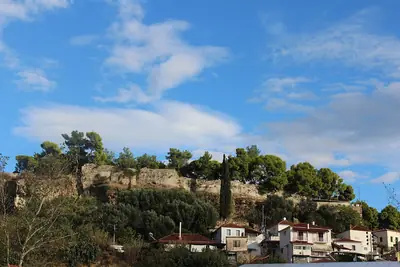
Kalamata Castle stands on a hill in the northwestern part of the city, near the Nedontas River. The ruined medieval fortress dates mainly from the 13th century, when Crusaders established the Principality of Achaea.
The hill has a much older history. In antiquity, it was associated with the acropolis of Pharae, whose palace was said to have belonged to kings who took part in the Trojan War. A Christian church was later built on the ancient remains, followed by Byzantine fortifications. The Villehardouin family rebuilt and strengthened the castle during the Frankish period, and Geoffrey I of Villehardouin made it his residence and the seat of the Barony of Kalamon.
The Byzantines captured the castle in 1325. It later passed to the Ottomans and, between 1685 and 1715, to the Venetians, who maintained and extended its defences. Its layered history makes the castle one of the most important places to visit in Kalamata.
Cathedral of Ypapanti
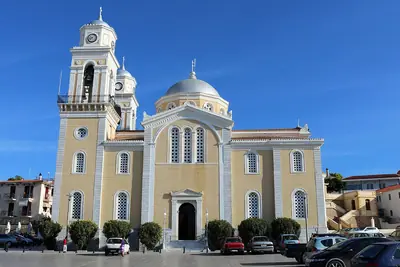
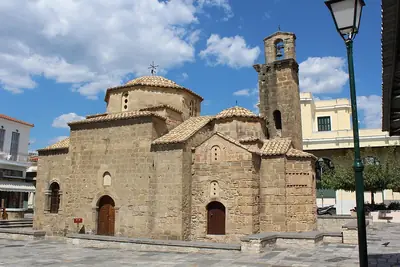
The Cathedral of Ypapanti is one of Kalamata’s central landmarks. This church is an important religious and architectural presence in the city and makes a natural stop when exploring the historic centre.
Church of Agioi Apostoloi
The Church of Agioi Apostoloi is an Orthodox church in Kalamata with deep roots in the local community. Its setting offers a quieter moment during a walk through the city.
Military Museum of Kalamata
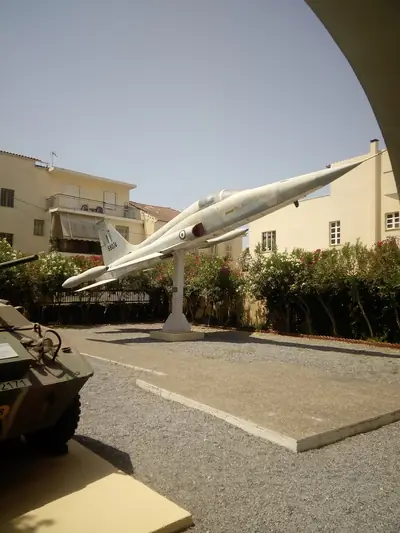
The Military Museum of Kalamata presents Greece’s modern military history, from the War of Independence in 1821 through the Korean War and the role of the Greek Armed Forces in peacekeeping missions. The museum was inaugurated on 10 June 2006 and operates under the IV Army Corps.
Its focus is also strongly local. The Book of the Messenian Fallen records the names of Messenians who died in the nation’s struggles from 1897 through the Korean War. The museum occupies a two-storey building that once housed the Metropolis of Messinia and was later granted to the Hellenic Army General Staff. Its exhibits include historical artefacts and a specially designed Sound and Light hall for documentaries.
Kalamata Municipal Railway Park
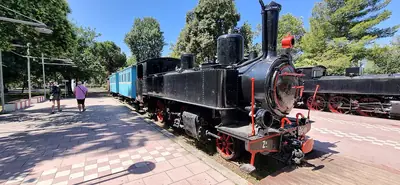
The Kalamata Municipal Railway Park is an open-air museum dedicated to the city’s railway heritage. Created in 1986 through a municipal preservation initiative, with assistance from the Friends of the Railway Society, it displays vintage railway equipment and historic structures across 54 acres.
A former station of the Hellenic Railways Organization forms the heart of the park and now serves as the main museum building. The preserved station and railway equipment make this a distinctive place to explore, especially for visitors interested in industrial history.
Messiniakos Stadium
Messiniakos Stadium, also known as the Stavros Papadopoulos Stadium, is in Kalamata’s northeastern neighbourhood, on Astron Street near the castle. Built in 1967, it belongs to the Messiniakos Gymnastic Club.
Places to visit around Kalamata
Taygetus
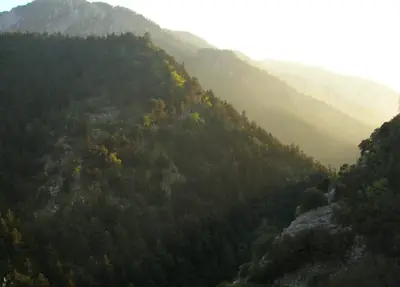
Taygetus rises behind Kalamata and is the highest mountain range in the Peloponnese. Its highest peak reaches 2,405 metres and is known as Profitis Ilias, or Prophet Elias, after a small church near the summit.
The mountain has a long place in the region’s history and mythology. The name Taygetus appears in Homer’s Odyssey and is associated in classical mythology with the nymph Taygete. During the Byzantine period and until the 19th century, it was also known as Pentadaktylos, meaning “five-fingered”.
Velanidia Monastery
The seventeenth-century Monastery of Velanidia lies in the hills north of Kalamata. Its name comes from a large oak tree that once stood there and was uprooted by the earthquake of 1884.
Velanidia is closely connected with the region’s struggle for independence. Papaflessas set out from the monastery to liberate Kalamata, and each year on 23 March the Sacred Flame of the Revolution begins its journey there before continuing to Kalamata’s main square. Since 1966, Velanidia has been a women’s monastery.
The monastery was destroyed during the Kalamata earthquakes of 1986, when two nuns lost their lives, and was later rebuilt under the care of Chrysostomos, the Metropolitan of Messinia.
Kapetanakis Tower
The Kapetanakis Tower is a late-medieval house in Western Mani and an example of the region’s tower-house tradition. Its tall, sturdy form reflects the fortified homes built to protect families in a landscape where conflict was once part of everyday life.
Castle of Pidima
The Castle of Pidima is a Byzantine castle in Messenia. Its quiet setting and surviving medieval character offer a glimpse into the region’s past beyond the city.
Tower of Rigas
East of Elaiochori stands a small medieval tower known locally as the Tower of Rigas and sometimes as Kastelli tou Moria. It is one of the historic fortified structures scattered through Messinia.
Monasteries and churches in Messinia
Several quieter religious sites lie around Kalamata. The Monastery of Dimiovas and the Prophet Joel monastery are small monastic sites in the region, while the Monastery of Velanidia is particularly notable for its historical connection with the Greek struggle for freedom. The Church of the Dormition of the Theotokos is another peaceful monastery in the Kalamata Municipality, offering a place of spiritual significance away from the busier city centre.
Explore Kalamata with a free audio guide
Neywo’s Kalamata self-guided walking tour follows a 3.06-kilometre route from the Villehardouin castle to the railway park. It lasts around 77 minutes and includes six narrated stops, including Kalamata Castle, the Cathedral of Ypapanti, the Church of Agioi Apostoloi, the Military Museum of Kalamata and the Kalamata Municipal Railway Park.
Download Neywo and explore Kalamata at your own pace. The app tells the story of each place as you reach it, with no group and no schedule. The narration is available in 11 languages, so you can turn a city walk into a self-guided tour while discovering the history around you. As you plan a wider trip through Greece, you can also continue to other destinations such as Athens or Thessaloniki.
Places with an audio guide in Kalamata
8 places in Kalamata with a Neywo audio guide. Each one starts telling its story as you reach it.
Self-guided tours in Kalamata
1 tour in Kalamata, free in the Neywo app. Each stop tells its story as you reach it.
- Walk
Kalamata: from the Villehardouin castle to the railway park
Climb the Frankish castle that watches over the Nedontas river, then drop into the old market quarter around the cathedral and the church of the Old Market Baptist. Step into the archaeological museum built on the former market hall and the military museum, and finish among the steam engines of the open-air Railway Park.
Kalamata Castle · Cathedral of Ypapanti, Kalamata · Church of Agioi Apostoloi · Archaeological Museum of Messenia · Military Museum of Kalamata · Kalamata Municipal Railway Park
Open this tour: Kalamata: from the Villehardouin castle to the railway park
Walk Kalamata with Neywo
Neywo turns Kalamata into a self-guided audio tour. Stories arrive as you reach the place they belong to, and the route reshapes when you wander off it.

