Kobe, Japan: Self-Guided Walking Tour
Things to do in Kobe
Kobe is a cosmopolitan port city nestled between Osaka Bay and the Rokko Mountains, where a lively waterfront, historic foreign settlements, and scenic mountain views meet a reputation for excellent cuisine, especially Kobe beef. The city’s blend of international trade heritage, modern attractions, and memorials to its resilience makes it a rewarding destination for travelers who enjoy culture, history, and urban nature. Neywo provides a free audio guide for Kobe with 118 narrated places, letting you explore at your own pace.
Explore Kobe’s highlights
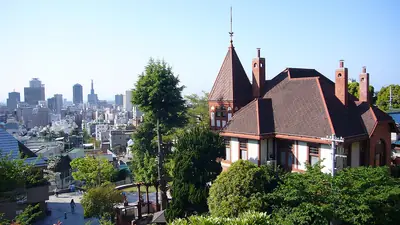
Weathercock House
This striking brick residence in the Kitano district is recognizable by the rooster‑shaped weathercock atop its roof, which gave the building its name. Originally the home of German trader Thomas, it has been designated an important cultural property of Japan for its heavy brick façade and its role in the city’s foreign‑settlement history.
Kobe Lamp Museum
Known locally as あかりの木, the “Tree of Light,” this small museum stood in the Chuo‑ku Kyomachi area. It closed permanently on February 28 2022, ending its run as a venue dedicated to lamps and lighting design.
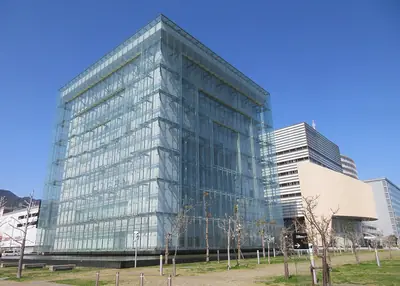
Disaster Reduction and Human Renovation Institution
Located in HAT Kobe, this museum and research centre preserves the lessons of the 1995 Great Hanshin‑Awaji Earthquake. Its 1.17 Theater floor presents a permanent video reconstruction titled The Shock of 5:46, showing the moment the quake destroyed railways, highways and the surrounding neighbourhood. An exhibit features a damaged road structure from the quake that was later recognised as a civil‑engineering heritage by the Japan Society of Civil Engineers.
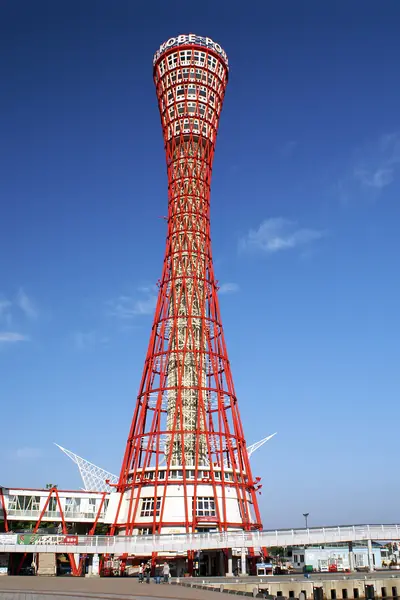
Kobe Port Tower
The red, pipe‑structured tower on Kobe’s central breakwater has become the harbour’s symbol. Completed in 1963 and nicknamed “Iron Tower Beauty” for its drum‑like appearance, it stood 108 metres tall, underwent renovations (late 2009‑April 2010 and September 2021‑April 2024), and celebrated its 50th anniversary in November 2013. It remains a prominent landmark for visitors exploring the port area.
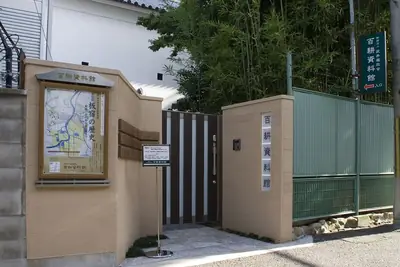
Hyakkō Museum
Situated in Kobe’s Suma ward, this modest museum offers a quiet space to view local exhibits. Though small, it contributes to the ward’s cultural offerings.
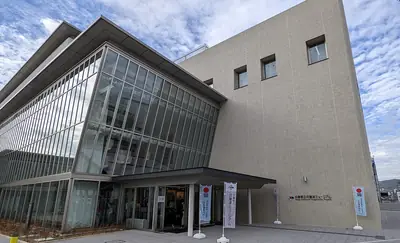
Hyogo Prefectural Hyōgo‑no‑Tsu Museum
This history museum in Kobe’s Hyogo ward explores the origins of the prefecture. It comprises a reconstructed First Prefectural Office Building, which replicates the Meiji‑era office that marked the start of modern administration in Hyogo, and the Hyogo Hajimari Kan, the main exhibition hall where visitors can see how government functioned over a century ago.
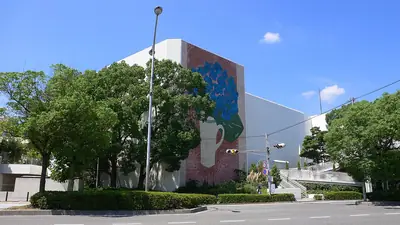
Kobe Bunka Hall
Set in Okurayama Park, Kobe Bunka Hall serves as the city’s music and theatre hub. Opened on April 1 1973, it is home to the Kobe Philharmonic and features a large and a medium‑sized auditorium. Its walls are adorned with a giant mural of Takamura Chieko’s Hydrangea. The hall also hosts the annual All‑Japan High School and College Dance Festival each summer.
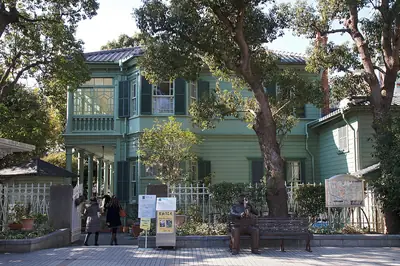
Former Sharp’s House (Moegi House / American House)
This Western‑style residence in the Kitano‑cho Yamamoto‑dori preservation district is one of Kobe’s Important Cultural Properties, designated on December 18 1980. Unlike the neighbouring neo‑Baroque Windmill House, it presents a light, colonial two‑story design with Baroque details, two distinct bay‑window patterns, a mosaic‑decorated staircase, and subtle Japanese touches. It is also known today as the Teddy Bear Museum.
Minume Shrine
Also called Iwaya, this Shinto sanctuary sits on a hill in Kobe’s Nada Ward. Listed as a Shikinai shrine (included in the Engishiki), it once held prefectural‑shrine status and offers a quiet place for prayer and contemplation amid the urban setting.
Sawanotsuru Sake Museum
Located in Nada Ward, the museum occupies the former Sawanotsuru sake brewery, which once produced the region’s renowned Nada sake. Inside, a collection of traditional sake‑making tools illustrates the brewing process that has shaped local culture for generations.
Hakutsuru Fine Art Museum
Opened in 1934, this private museum displays the personal collection of Kanō Jihei, the seventh‑generation head of the Hakutsu sake‑brewing family. Housed in the former Hermann residence, it holds around 1,450 objects, including two National Treasures and twenty‑two Important Cultural Properties, offering close views of works of national significance.
Kobe Mosque
Japan’s first mosque was built in 1935 in the historic Kitano‑cho foreign district, funded by Turkish residents, exiled Tatars, and Indian traders living in Kobe. Designed by Czech architect Jan Josef Švagr in a traditional Indo‑Islamic style, it provides separate prayer halls for men on the first floor and women on the second. The building survived wartime seizure, the 1945 air raids, and the 1995 Great Hanshin earthquake, even serving as a shelter for residents. Visitors are welcome of any faith, with modest dress advised and group visits requiring advance arrangement.
Wadamisaki Battery
This stone fortification in Kobe’s Hyogo ward is a remnant of the Bakumatsu‑era coastal defenses designed by samurai and naval expert Katsu Kaishū. Construction began in 1863 and the battery was completed the following year at a cost of twenty‑five thousand ryō. Although it was part of the Tokugawa shogunate’s last‑ditch defense line around Osaka Bay, it never saw combat and is noted for its low, mortar‑like profile and stone tower shape.
Hyogo Prefectural Maiko Park
A prefectural urban park located within Kobe city, Maiko Park offers green space for walking and relaxation amid the urban environment.
Minami Kōen Station
Serving as stop PL07 on the Port Liner line in Chuo Ward, this station provides access to the South Park area. Its single‑track, one‑way platform lies on the line’s loop section. The station is nicknamed IKEA‑mae due to its proximity to an IKEA store and also bears the subtitle IKEA・こども病院前, reflecting its closeness to the Hyogo Prefectural Children’s Hospital.
Discover Kobe with Neywo
Neywo’s free audio guide turns your walk through Kobe into a self‑guided storytelling experience. The app offers seven walking tours and one bus route, ranging from 2.4 km to 5.9 km in length and lasting between 64 and 112 minutes. Each tour includes multiple narrated stops—such as the Weathercock House, Kobe Port Tower, the Disaster Reduction and Human Renovation Institution, and many more—so you hear the story of each place exactly when you reach it. There is no group to join and no schedule to follow; you explore at your own pace, in any of the 11 languages available. Download Neywo, choose a tour that matches your interests, and let the city’s history, culture, and scenery unfold as you walk.
Places with an audio guide in Kobe
8 places in Kobe with a Neywo audio guide. Each one starts telling its story as you reach it.
Self-guided tours in Kobe
7 tours in Kobe, free in the Neywo app. Each stop tells its story as you reach it.
- Bus ride
PortLoop: Kobe's waterfront by articulated bus
Shinki Bus's blue PortLoop runs a long circuit from Shin-Kobe station through Meriken Park, Nankinmachi and Harborland, then back past the Kitano foreign district and down to the Doll Museum and the harbour-side TEN×TEN hall. It links the Port Tower, the earthquake memorial, the Overseas Chinese museum, Harborland, the carpentry museum, the Union Church, the Doll Museum and TEN×TEN in about an hour and a half.
Kobe Port Tower · Port of Kobe Earthquake Memorial Park · Kobe Overseas Chinese History Museum · Harborland · Takenaka Carpentry Tools Museum · Kobe Union Church …
Open this tour: PortLoop: Kobe's waterfront by articulated bus - Walk
Meriken Park: Kobe's Harbour and the Memory of 1995
Kobe grew rich as a port, and this walk follows the waterfront that shows it. Start at the Harborland shopping district, stroll to the harbour-side TEN×TEN cultural hall, then reach the red Port Tower, the sailing-ship Maritime Museum and the BE KOBE sign. Visit the memorial park where a stretch of quay has been left as the 1995 earthquake broke it, and end in Minato-no-mori Park, the city's other earthquake memorial.
Harborland · Hatobacho TEN×TEN · Kobe Port Tower · Kobe Maritime Museum · BE KOBE · Port of Kobe Earthquake Memorial Park …
Open this tour: Meriken Park: Kobe's Harbour and the Memory of 1995 - Walk
Kitano Ijinkan: Weathercocks, Mosque and Foreign Houses
Climb the hill where foreign traders built their houses after Kobe opened to the world. Start at the red-brick Eiko Church, rebuilt exactly after the earthquake, and a surviving Edo-period pleasure barge, then see Japan's first mosque, the Western villas of Kitano and the Weathercock House with its rooster. Finish at a century-old church and a carpentry museum, and ride the ropeway up to a herb garden above the city. Steep in places, but full of detail.
Kobe Eiko Church · Houseboat · Kobe Mosque · Former Sharp's House · Weathercock House · Kobe Union Church …
Open this tour: Kitano Ijinkan: Weathercocks, Mosque and Foreign Houses - Walk
Nankinmachi and the Old Foreign Settlement
Kobe's old quarter has a shrine more than a thousand years old with stone cows instead of lion-dogs, the history of the overseas Chinese community in Nankinmachi, a church that is one of Japan's oldest Protestant congregations, and a bank-turned-museum of East-West encounters. Finish among small museums of dolls and glass in the former foreign settlement.
UCCJ Kobe Church · Hashiudo Shrine · Kobe Overseas Chinese History Museum · Kobe City Museum · Kobe Doll Museum · Kobe Lampwork Glass Museum
Open this tour: Nankinmachi and the Old Foreign Settlement - Walk
Nada's Ando Walls, Quake Memory and the Panda Zoo
A walk through Nada ward, east of the centre. Learn what the 1995 earthquake did at the Disaster Reduction institution, see Tadao Ando's art museum and the contemporary works of Yokoo Tadanori, then visit three old shrines and Japan's only zoo with both giant pandas and koalas.
Disaster Reduction and Human Renovation Institution · Hyōgo Prefectural Museum of Art · BB Plaza Museum of Art · Minume Shrine · Yokoo Tadanori Museum of Contemporary Art · Kobe Oji Zoo …
Open this tour: Nada's Ando Walls, Quake Memory and the Panda Zoo - Walk
Old Hyogo: Rakugo Theatres, a Great Buddha and the Birth of the Prefecture
Before Kobe there was the port of Hyogo. Walk through its old streets west of the centre, from the city's music hall and a rakugo storytelling theatre to small temples tied to an emperor in exile, the Hyogo Daibutsu bronze Buddha, and the museum that rebuilt the first prefectural office.
Kobe Bunka Hall · Kobe Shinkaichi Kirakukan · Shinkaichi Community Center for Arts and Interaction · Fujino-tera Temple · Fukugon-ji Temple · Nōfuku-ji Temple …
Open this tour: Old Hyogo: Rakugo Theatres, a Great Buddha and the Birth of the Prefecture - Walk
Mount Rokko Summit: Musical Boxes, Rock Altars and Ando's Church of the Wind
Take the cable car up Mount Rokko and walk the summit ridge: the nature visitor centre, a museum of musical boxes, a shrine built around a natural rock altar, and Tadao Ando's concrete Church of the Wind. Cooler than the city and with views over Osaka Bay.
Mt. Rokkō Visitor Center · Rokko International Musical Box Museum · Rokkōhime Shrine · Church of the Wind
Open this tour: Mount Rokko Summit: Musical Boxes, Rock Altars and Ando's Church of the Wind
Walk Kobe with Neywo
Neywo turns Kobe into a self-guided audio tour. Stories arrive as you reach the place they belong to, and the route reshapes when you wander off it.

