Kyoto, Japan: Self-Guided Walking Tour
Things to Do in Kyoto: Temples, Gardens and Historic Districts
Kyoto is a historic Japanese city known for Zen temples, Buddhist precincts, gardens, traditional districts and landscapes shaped by centuries of religious and cultural life. The city’s highlights range from the gold-covered pavilion of Kinkaku-ji and the stone garden of Ryōan-ji to the bamboo paths of Arashiyama and the open walkways beside the Kamo River. Neywo has a free audio guide for Kyoto with 295 narrated places.
What to See in Kyoto
Ryōan-ji Temple and its famous stone garden
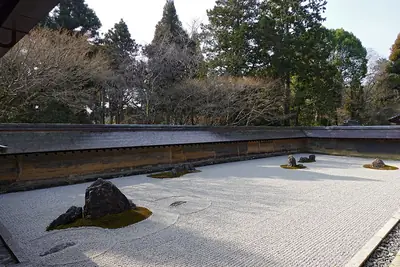
Ryōan-ji is one of Kyoto’s best-known Zen temples and belongs to the Rinzai branch of Zen Buddhism. Its celebrated kare-sansui, or dry landscape garden, places larger rocks within carefully raked pebbles, without flowing water or abundant planting. The restrained design creates a setting associated with contemplation and meditation.
Founded in 1450 by Hosokawa Katsumoto, the temple is part of the UNESCO World Heritage property Historic Monuments of Ancient Kyoto. Its principal image is Shakyamuni Buddha, and its name is commonly rendered as “the Temple of the Dragon at Peace.”
Kinkaku-ji, the Golden Pavilion
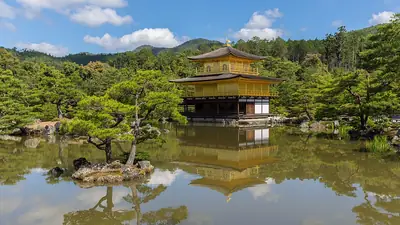
Kinkaku-ji is the popular name for Rokuon-ji, a Zen Buddhist temple associated with Ashikaga Yoshimitsu, the third shogun of the Muromachi shogunate. The gleaming pavilion itself is the Shariden, or reliquary hall, and its upper two floors are covered in gold leaf.
The pavilion seen today is a reconstruction. The original was destroyed by arson in 1950 and rebuilt in 1955. Rokuon-ji became part of the UNESCO World Heritage listing Historic Monuments of Ancient Kyoto in 1994.
Kiyomizu-dera Temple
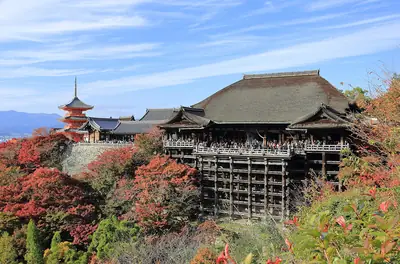
In eastern Kyoto, Kiyomizu-dera is one of the city’s best-known Buddhist temples. Its name means “Pure Water Monastery,” and the temple has long been associated with Kannon, the bodhisattva of compassion. Its principal image is a hidden statue of Jūichimen Kannon, the Eleven-Faced Kannon.
Traditionally said to have been founded around 778 by the monk Enchin, Kiyomizu-dera is counted among the few Kyoto temples that existed before the capital was established at Heian-kyō. Its grounds cover about 130,000 square metres, making this a broad temple precinct rather than a single building to visit.
Kōdai-ji and the historic Higashiyama area
Kōdai-ji is a Zen temple in Higashiyama with a personal connection to Toyotomi Hideyoshi and his wife, Kita-no-Mandokoro, later known as Kōdai-in. She founded the temple in 1606 to pray for the peaceful repose of her deceased husband.
The temple’s gardens were designed by Kobori Enshū and are recognised as a nationally designated Place of Scenic Beauty. Kōdai-ji is also known for its Momoyama-style maki-e, a decorative lacquer technique. The temple’s wider precinct was designated a National Historic Site in 1966.
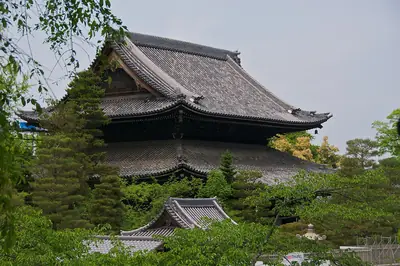
Nearby, Chion-in is the headquarters of Japan’s Jōdo-shū, or Pure Land Sect. Its imposing Sanmon, built in 1621 by Tokugawa Hidetada, is about 24 metres high and 50 metres wide. The two-storey wooden gate has a roof covered by approximately 70,000 tiles and is among the few surviving structures of its kind in Japan.
Ginkaku-ji, the Silver Pavilion
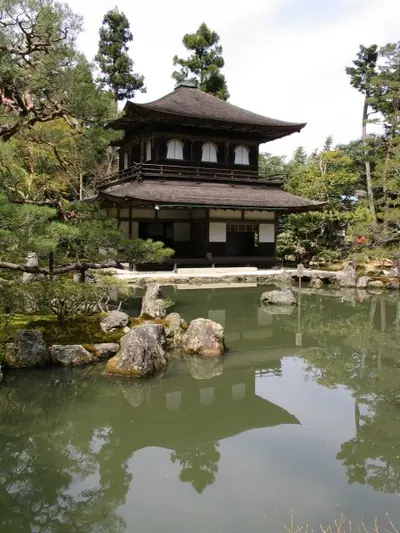
Officially called Jishō-ji, Ginkaku-ji is a Zen temple associated with Ashikaga Yoshimasa, the eighth shogun of the Muromachi shogunate. Its Kannon Hall is known as the Silver Pavilion, giving the temple its familiar name. Ginkaku-ji belongs to the Rinzai school of Zen Buddhism and is part of the UNESCO World Heritage property Historic Monuments of Ancient Kyoto.
Together with Kyoto’s Golden Pavilion and the Flying Cloud Pavilion at Nishi Hongan-ji, it is counted among Kyoto’s three celebrated pavilions.
Daigo-ji Temple
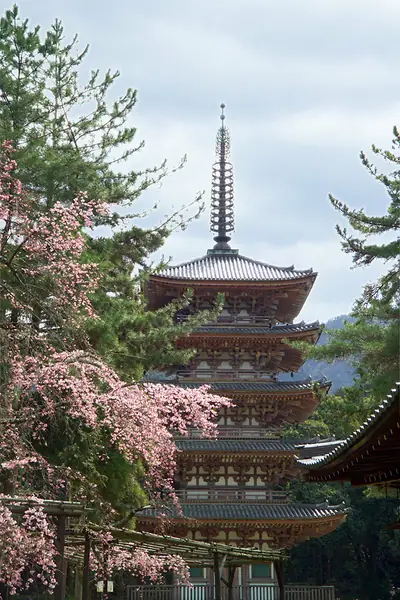
Daigo-ji is a major Shingon Buddhist temple whose grounds extend across Mount Daigo, southeast of the city. The complex covers more than 6.6 million square metres and preserves approximately 150,000 temple treasures, including National Treasures and Important Cultural Properties. Six buildings at Daigo-ji are designated as Japanese National Treasures.
The temple is also associated with Toyotomi Hideyoshi’s famous Daigo Cherry Blossom Viewing event. It forms one of the component sites of the UNESCO World Heritage property Historic Monuments of Ancient Kyoto, recognised for its testimony to the development of Japanese wooden architecture and garden design.
Arashiyama Bamboo Forest
The Bamboo Forest, also called the Arashiyama Bamboo Grove or Sagano Bamboo Forest, is one of Kyoto’s most distinctive places to explore on foot. Tall mōsō bamboo rises along paths near Tenryū-ji Temple and Nonomiya Shrine, creating a natural passage through the wider Arashiyama area.
The bamboo itself is the central experience: a forest shaped into a memorable walking route rather than a single monument. Arashiyama is one of the places covered by Neywo’s Kyoto self-guided walking tours.
The Kamo River
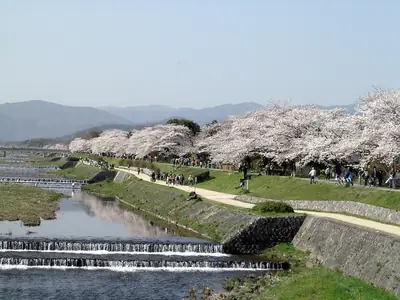
The Kamo River, or Kamogawa, offers one of Kyoto’s inviting open spaces. Walkways follow the river, while stepping stones create simple crossing points where the water is usually less than a metre deep. In summer, restaurants open balconies facing the water, adding activity to the riverbanks.
The river is also the subject of a dedicated Neywo bike route, linking several places along its course.
Museums and smaller stops
Kyoto’s attractions also include museums connected with the city’s religious, artistic and industrial history. The Lake Biwa Canal Museum, near Murin-an Garden, tells the story of the canal connecting Lake Biwa with Kyoto. It opened on August 9, 1989, marking the centenary of the canal’s completion.
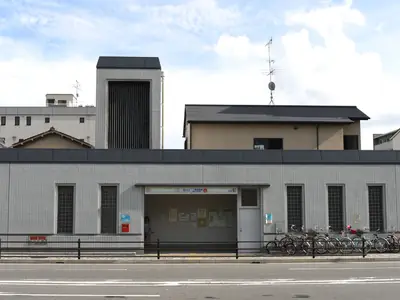
Other stops in the city’s audio guide include Ninna-ji Reihōkan, the Shō Museum and the Raku Museum. Nijōjō-mae Station, whose name means “in front of Nijō,” is a stop on Kyoto’s Tōzai subway line.
Explore Kyoto with a Free Audio Guide
Neywo offers six walking tours, one bus route and one bike route in Kyoto. Each story plays as you reach the place, at your own pace: there is no group and no schedule. Narration is available in 11 languages.
The six walking tours are:
- Pilgrims, Monkeys and a Weeping Cherry: Southern Higashiyama — 3.18 km, 117 minutes, 8 narrated stops
- Gold, Stone and Zen: Kinkaku-ji to Ryoan-ji — 3.17 km, 110 minutes, 5 narrated stops
- Bamboo, Moss and Maple: Arashiyama and Sagano — 4.22 km, 113 minutes, 8 narrated stops
- Kyoto’s Kitchen to Geisha Gion: Downtown and the Pleasure Quarter — 4.1 km, 118 minutes, 10 narrated stops
- Ten Thousand Gates and Imperial Tombs: Fushimi Inari to Sennyu-ji — 4.77 km, 114 minutes, 8 narrated stops
- Daitoku-ji Gardens and the Nail-Pulling Jizo — 3.83 km, 106 minutes, 7 narrated stops
There is also the bus route Bus 46: Gion, the Old Palace Site and the Temple of Nail-Pulling Jizo, covering 11.2 km in 48 minutes with 11 narrated stops. The bike route Along the Kamo River covers 6.3 km in 32 minutes with 4 narrated stops.
Download Neywo to explore Kyoto independently, and discover more destinations in Japan, including Kobe and Koya.
Places with an audio guide in Kyoto
8 places in Kyoto with a Neywo audio guide. Each one starts telling its story as you reach it.
Self-guided tours in Kyoto
8 tours in Kyoto, free in the Neywo app. Each stop tells its story as you reach it.
- Bike ride
Along the Kamo River
A flat ride on the cycle lane beside the Kamo River, from the kabuki theatre by Shijo to the bridge where the old Tokaido road ended, then north past the tea museum at the meeting of the Kamo and Takano rivers to a Korean art museum.
Minami-za · Sanjō Ōhashi Bridge · Kitamura Museum · Koryo Museum of Art
Open this tour: Along the Kamo River - Bus ride
Bus 46: Gion, the Old Palace Site and the Temple of Nail-Pulling Jizo
A city bus from the Okazaki museums through Gion and the Shijo shopping streets, then north up Senbon Street. You pass kabuki and geisha Kyoto, the site of the original Heian palace and two temples that survived the centuries, including a National Treasure hall.
Yūrinkan Museum · Gion Kaikan · Gion · Minami-za · Kyoto Art Center · Heian Palace …
Open this tour: Bus 46: Gion, the Old Palace Site and the Temple of Nail-Pulling Jizo - Walk
Pilgrims, Monkeys and a Weeping Cherry: Southern Higashiyama
Start at the hillside temple Kiyomizu-dera and wander down the stone-paved slopes of old Kyoto. Meet a blue guardian warrior and the three wise monkeys, visit the widow's temple built for Hideyoshi, pass the Noh stage beside Yasaka Shrine, rest beneath the famous weeping cherry and end beneath the huge gate of Chion-in.
Kiyomizu-dera Temple · Three-year Slope · Yasaka Kōshin-dō Temple · Kōdai-ji Temple · Maruyama Park · Noh stage, Yasaka Jinja …
Open this tour: Pilgrims, Monkeys and a Weeping Cherry: Southern Higashiyama - Walk
Gold, Stone and Zen: Kinkaku-ji to Ryoan-ji
Follow the western Zen belt from the Golden Pavilion shimmering on its pond, past a small peace museum, to the famous raked-gravel garden of Ryoan-ji. Then step into the quiet temples of Ninna-ji and Myoko-ji, where a screen of the Wind and Thunder Gods and a soy-sauce legend are remembered.
Kinkaku-ji Temple · Kyoto Museum for World Peace · Ryōan-ji Temple · Ninna-ji Reihōkan · Myōkō-ji Temple
Open this tour: Gold, Stone and Zen: Kinkaku-ji to Ryoan-ji - Walk
Bamboo, Moss and Maple: Arashiyama and Sagano
Begin by the Togetsukyo bridge, then slip into the green tunnel of the bamboo grove and on to an actor's hillside garden and the Shrine in the Country. Climb the Sagano slope past temples hidden in moss and maples, where poets, a dancer's tragedy and eight thousand stone Buddhas of the dead are remembered.
Arashiyama · Bamboo Forest · Ōkōchi Sansō · Nonomiya Shrine · Jōjakkō-ji Temple · Nison-in Temple …
Open this tour: Bamboo, Moss and Maple: Arashiyama and Sagano - Walk
Kyoto's Kitchen to Geisha Gion: Downtown and the Pleasure Quarter
Dive into Nishiki Market, Kyoto's kitchen, after a stop at a textile gallery and the hexagonal temple where ikebana was born. Pass the cathedral with a shrine-style roof, then cross to the east bank for the kabuki theatre and finish in Gion, the district of geiko and comedians.
Chisō Gallery · Rokkaku-dō Temple · Museum of Kyoto · Nishiki Market · Nishiki Tenmangū · Art Complex 1928 …
Open this tour: Kyoto's Kitchen to Geisha Gion: Downtown and the Pleasure Quarter - Walk
Ten Thousand Gates and Imperial Tombs: Fushimi Inari to Sennyu-ji
Walk beneath the vermilion torii of Fushimi Inari, then visit the great Zen complex of Tofuku-ji with its maples and Sesshu's garden. End among the quiet sub-temples and the imperial tombs of Sennyu-ji, the Imperial Temple.
Fushimi Inari-taisha · Tōfuku-ji Temple · Funda-in · Takio Shrine · Hōon-in Temple · Imakumano Shrine …
Open this tour: Ten Thousand Gates and Imperial Tombs: Fushimi Inari to Sennyu-ji - Walk
Daitoku-ji Gardens and the Nail-Pulling Jizo
Explore the north-west temple quarter: the festival shrine of Imamiya, the smallest rock garden in Japan at Ryogen-in and the tea house of Koto-in. Finish with Kyoto's old Senbon street, the Nail-Pulling Jizo, the Daihoon-ji hall and the cherry-blossom shrine of Hirano.
Imamiya Shrine · Kōtō-in · Ryōgen-in · Jōbon Rendai-ji Temple · Shakuzou-ji Temple · Daihōon-ji Temple …
Open this tour: Daitoku-ji Gardens and the Nail-Pulling Jizo
Walk Kyoto with Neywo
Neywo turns Kyoto into a self-guided audio tour. Stories arrive as you reach the place they belong to, and the route reshapes when you wander off it.

