Visiting Kumamoto, Japan: Top Sights on Foot
Things to Do in Kumamoto: What to See in the Castle City
The best things to do in Kumamoto include exploring a historic castle, strolling through a daimyo garden, visiting museums, and discovering how volcanic water shapes the city. Kumamoto is the capital of Kumamoto Prefecture in central Kyushu, a region known for its connection to Mount Aso and its dramatic volcanic landscapes. Neywo offers a free audio guide for Kumamoto with 19 narrated places, so you can explore the city while hearing its stories at your own pace.
What to See in Kumamoto
Kumamoto Castle
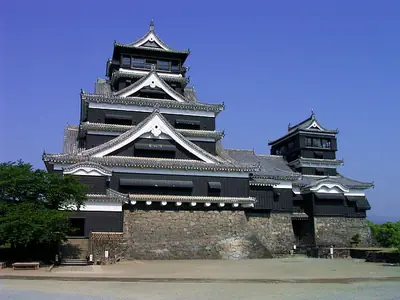
Kumamoto Castle is the city’s essential landmark. Also known as Ginnan Castle, or the Castle of Ginkgo Trees, it stands on a hill and reflects the power of the feudal lords who shaped the region.
Katō Kiyomasa rebuilt and expanded the castle around an earlier medieval fortification. Later, it became the residence of the Hosokawa family, who governed the Kumamoto domain until the end of the Edo period. The complex was once large and strongly fortified, but the main keep and other central buildings were destroyed by fire just before the Satsuma Rebellion.
Several original structures remain, including the Uto Turret, other turrets, gates, and sections of wall. Thirteen surviving structures are designated Important Cultural Properties of Japan, while the castle grounds are designated a Special Historic Site as the Ruins of Kumamoto Castle. The present keep is a concrete reconstruction built in 1960; the remaining wooden buildings preserve part of the earlier complex.
The castle also became a battlefield during the Satsuma Rebellion in the Meiji period, adding another layer to its history.
Kyū Hosokawa Gyōbutei
In the former Sannomaru area of Kumamoto Castle, Kyū Hosokawa Gyōbutei offers a glimpse into the domestic world of a samurai family. It was the residence of the Hosokawa Gyōbu family, also known as the Koga-i Hosokawa family, who were closely connected with the Hosokawa domain.
The traditional residence is designated an Important Cultural Property building by Kumamoto Prefecture. It is more than an old house: it represents the home and status of a family within the domain’s samurai society.
Kumamoto Prefectural Museum of Art
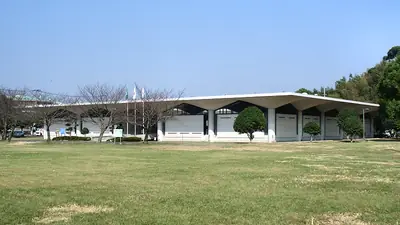
Located in Ninomaru Park within the grounds of Kumamoto Castle, the Kumamoto Prefectural Museum of Art brings together art, crafts, and cultural heritage from Kumamoto and beyond. It opened in 1976 as one of Japan’s prefecture-supported museums.
The collection focuses especially on art and crafts from Kumamoto Prefecture, while also including works by Renoir and Rodin. A room devoted to replicas of decorated kofun found in the prefecture connects the museum with the region’s ancient history. The collection contains about 3,300 works.
The building itself is also notable. Designed by Kunio Maekawa, it received the Grand Prize of the Japan Institute of Architects’ 25 Years Award in 2006.
Kenmotsudai Arboretum
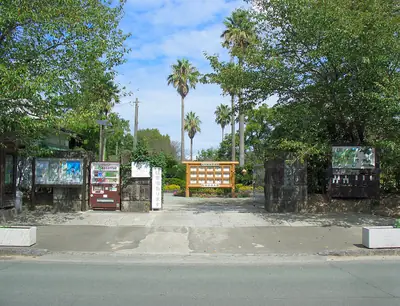
Near Kenmotsu Tower, at the northern edge of Kumamoto Castle, Kenmotsudai Arboretum is also known as Nin no Maru Park. Its location makes it a natural place to combine green space with a visit to the castle grounds.
Shimada Museum of Art
In Shimazaki, in Kumamoto’s Nishi Ward, the Shimada Museum of Art is particularly associated with the swordsman Miyamoto Musashi. It is one of the city’s places to explore for a more focused look at Japanese cultural history.
Contemporary Art Museum, Kumamoto
The Contemporary Art Museum, Kumamoto, also known as CAMK, is a municipal art museum in central Kumamoto’s Chuo Ward. It provides a dedicated space for contemporary art in the city and adds a modern counterpoint to Kumamoto’s castle heritage.
Suizen-ji Jōju-en
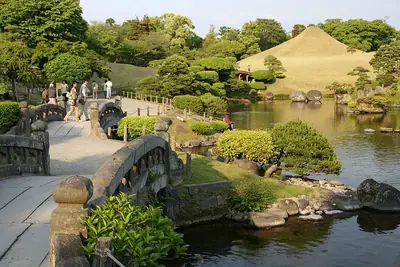
Suizen-ji Jōju-en, commonly called Suizenji Park, is one of Kumamoto’s most distinctive landscapes. The garden was created during the Edo period by the Hosokawa clan, the lords of Kumamoto Domain, as a place for strolling and viewing.
At its center, a pond is fed by water from the Aso area. The garden combines water, lawns, rocks, carefully arranged trees, and sculpted land in the style of a Japanese daimyo garden. An artificial hill is said to represent Mount Fuji, while the raised and flatter sections evoke scenic places along the Tōkaidō route.
The garden’s recent history is also striking. After the 2016 Kumamoto earthquake, the pond’s water disappeared for an unknown reason, leaving about 80 percent of its bed exposed. That event became another remarkable chapter in the story of this historic landscape.
Kumamoto City Zoological and Botanical Gardens
In Higashi Ward, Kumamoto City Zoological and Botanical Gardens combine a zoo, botanical gardens, and an amusement park. The city-run park covers about 24 acres and includes around 550 animals from 110 species, as well as approximately 70,000 plants representing 700 species.
The gardens began as Kumamoto Zoo, which opened in 1929 inside Suizenji Park. In 1969, the zoo moved to its present location and became the zoological and botanical garden known today. Educational programmes are offered for elementary and junior secondary schools.
The park also carries the memory of the 2016 Kumamoto earthquakes. It was heavily damaged and closed to visitors, partially reopening ten months later and fully reopening two years and eight months after the disaster.
Kumamoto City Water Science Museum
Water is central to Kumamoto’s identity, and the Kumamoto City Water Science Museum in Kita Ward explores this essential resource through exhibits focused on water and its science.
Much of the city’s tap water comes from natural aquifers. Water filtered through layers of volcanic rock connected to the Aso region helps explain why groundwater is such an important part of everyday life in Kumamoto.
Museums, theatre, and cultural landmarks
Kumamoto has several other places worth adding to a cultural itinerary:
- The Kumamoto International Folk Craft Museum, known locally as Kumamoto Kokusai Mingeikan, is in Tatsuda, in Kita Ward, and collects and exhibits folk crafts.
- The Kumamoto University Memorial Museum of the Fifth High School preserves the story of a historic educational institution in the city.
- The Japan Evangelical Lutheran Kumamoto Church is a Lutheran church in Chuo Ward.
- The Kumamoto Prefectural Theater is an important performing arts venue in Kumamoto Prefecture.
Remembering the 2016 Kumamoto earthquakes
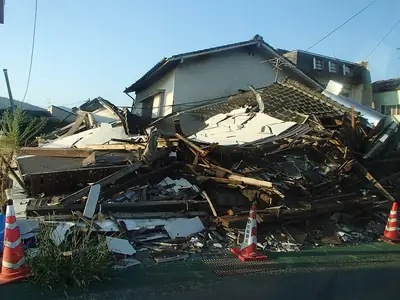
The 2016 Kumamoto earthquakes remain an important part of the city’s recent history. The disaster was a powerful sequence affecting Kumamoto and Ōita prefectures, rather than a single tremor.
The sequence began on April 14, 2016, at 9:26 in the evening. A second major earthquake followed in the early hours of April 16. Both reached intensity 7, the highest level on Japan’s seismic intensity scale. Many structures collapsed or caught fire, and more than 44,000 people were evacuated from their homes.
The earthquakes affected the castle, Suizen-ji Jōju-en, the zoological and botanical gardens, and many other places across the region. Understanding this history adds context to the preservation and restoration work visible around Kumamoto.
Kumamoto self-guided walking tour
For a focused introduction to the city, Neywo’s Kumamoto self-guided walking tour follows the route “Kumamoto Castle and the samurai quarter beneath it”. The walk covers 4.99 km, takes 111 minutes, and includes eight narrated stops:
- Shimada Museum of Art
- Kumamoto Prefectural Museum of Art
- Kenmotsudai Arboretum
- Kyū Hosokawa Gyōbutei
- Kumamoto Castle
- Contemporary Art Museum, Kumamoto
- Japan Evangelical Lutheran Kumamoto Church
- Shirakawa Park
The route brings together museums, castle grounds, a former samurai residence, a church, and a park in one walk. It is a practical way to explore the historic centre without joining a group.
Explore Kumamoto with Neywo
Download Neywo to explore Kumamoto with one walking tour, covering 4.99 km in 111 minutes and featuring eight narrated stops. The app has a free audio guide for Kumamoto with 19 narrated places, and narration is available in 11 languages.
Each story plays as you reach the place, at your own pace. There is no group and no schedule: just open the app, walk through Kumamoto, and let Neywo tell you the story of each stop as you arrive.
Places with an audio guide in Kumamoto
8 places in Kumamoto with a Neywo audio guide. Each one starts telling its story as you reach it.
Self-guided tours in Kumamoto
1 tour in Kumamoto, free in the Neywo app. Each stop tells its story as you reach it.
- Walk
Kumamoto Castle and the samurai quarter beneath it
Start with the swordsman Miyamoto Musashi at the Shimada Museum of Art, then circle the hill of Ginnan, the Castle of Ginkgo Trees, built by Katō Kiyomasa and later home of the Hosokawa lords. Walk the old Sannomaru grounds past a samurai residence, the castle arboretum and the prefectural museum of art, then stroll down to the contemporary art museum and Shirakawa Park.
Shimada Museum of Art · Kumamoto Prefectural Museum of Art · Kenmotsudai Arboretum · Kyū Hosokawa Gyōbutei · Kumamoto Castle · Contemporary Art Museum, Kumamoto …
Open this tour: Kumamoto Castle and the samurai quarter beneath it
Walk Kumamoto with Neywo
Neywo turns Kumamoto into a self-guided audio tour. Stories arrive as you reach the place they belong to, and the route reshapes when you wander off it.

