What to See in Hiroshima, Japan: Free Audio Guide
Things to Do in Hiroshima: A Guide to the City’s History and Culture
The best things to do in Hiroshima include visiting Peace Memorial Park, exploring Hiroshima Castle and Shukkei-en, and discovering museums and temples that connect the city’s past with its present. Hiroshima is a city shaped by the atomic bombing of August 6, 1945, but also by cultural heritage, artistic life, and renewal. Neywo offers a free audio guide for Hiroshima with 47 narrated places.
What to See in Hiroshima
Hiroshima Peace Memorial Park
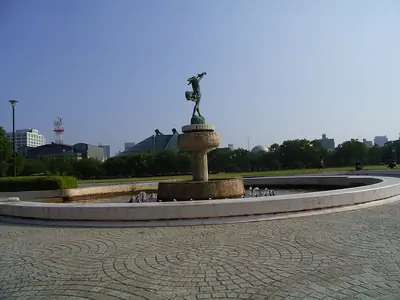
Hiroshima Peace Memorial Park occupies the open space created by the atomic bomb’s explosion, where one of the city’s busiest commercial and residential districts once stood. Planned by architect Kenzō Tange, the park is now a place of remembrance and a call for peace.
Its memorials include the Cenotaph for the A-bomb Victims, the Atomic Bomb Memorial Mound, the Peace Bell, and the Children’s Peace Monument. The Hiroshima Peace Memorial Museum lies to the south, while the Atomic Bomb Dome stands nearby to the north and northeast.
Hiroshima Peace Memorial, or Atomic Bomb Dome
The Hiroshima Peace Memorial is better known as the Atomic Bomb Dome. Before the bombing, the building opened in 1915 as a venue for displaying products from Hiroshima Prefecture and later became the Hiroshima Prefectural Industrial Promotion Hall.
On August 6, 1945, the atomic bomb destroyed almost every building around the blast. This structure remained standing, although severely damaged. Its exposed framework, ruined walls, and empty dome have been permanently preserved rather than rebuilt.
The Atomic Bomb Dome is a memorial to the destructive effects of nuclear warfare and to the more than 140,000 people killed in the bombing.
Children’s Peace Monument
The Children’s Peace Monument commemorates Sadako Sasaki and the thousands of children who died as a result of the atomic bombing. Also known by its Japanese name, Genbaku no Ko no Zō, or Atomic Bomb Children Statue, it has become one of the most recognised monuments in Peace Memorial Park.
Sadako Sasaki died of leukemia on October 25, 1955. Her illness was caused by radiation from the atomic bomb dropped on Hiroshima.
Monument in Memory of the Korean Victims of the A-bomb
This monument in Peace Memorial Park is dedicated to Korean and Korean-born victims of the Hiroshima atomic bombing. It was originally placed across the river from the park, at the site where Yi U was found. Yi U was a lieutenant colonel in the Imperial Japanese Army and a staff officer of the Second General Army. The memorial was later moved to its present location in the park.
Honkawa Elementary School Peace Museum
The Honkawa Elementary School Peace Museum tells the history of Hiroshima through one school and its community. It is housed in the basement of the former school building, which suffered immense damage in the bombing.
Honkawa Elementary School was the closest school to ground zero. About 400 students and more than 10 teachers lost their lives on August 6, 1945. Every August 5, the school holds a memorial service for the students and teachers killed in the blast. The school also appears in Keiji Nakazawa’s manga Barefoot Gen.
Hiroshima Castle and Hiroshima Gokoku Shrine
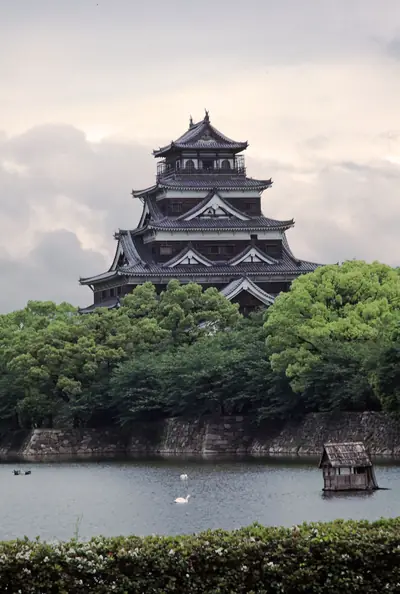
Hiroshima Castle, also called Carp Castle, stands in Hiroshima Castle Park. It was originally built in the 1590s by Mori Terumoto in the delta of the Ōta River as a flatland castle, rather than a hilltop fortress. It became the residence of the feudal lord of the Hiroshima Domain.
The original buildings survived until 1945, when the atomic bombing destroyed them. The main keep was reconstructed in 1958, and its museum focuses on Hiroshima’s history before the Second World War. Hiroshima Castle and its grounds are designated a national historic site.
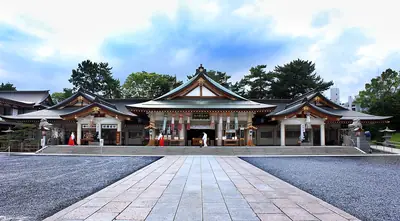
Nearby, Hiroshima Gokoku Shrine offers a quieter place to pause within Naka-ku.
Shukkei-en
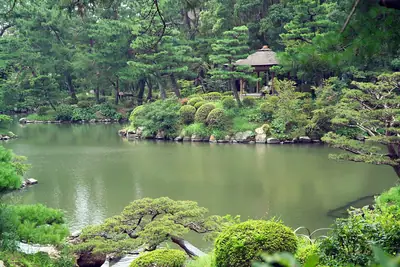
Shukkei-en is one of Hiroshima’s historic Japanese gardens. Its central pond, Taku-ei Pond, brings together the garden’s principal views, while Kōkō Bridge divides the pond into eastern and western sections. Artificial hills on the northern, eastern, and western sides borrow views of Mount Sōgoyama, Mount Futabayama, and Mount Misen.
The garden was created in 1620 by Asano Nagaakira, the first lord of the Hiroshima domain. It was designated a national place of scenic beauty in 1940 and donated to Hiroshima Prefecture that same year. The principal building, Seifūkan, stands south of Kōkō Bridge.
The Hiroshima Prefectural Art Museum is beside the garden, making Shukkei-en a natural stop for visitors interested in both landscape design and art.
Hiroshima Chūō Park and Hiroshima Museum of Art
Hiroshima Chūō Park, also known as Hiroshima Central Park, is an urban park in Motomachi, in Hiroshima’s Naka Ward. It contains the Hiroshima Museum of Art, founded in 1978 by Hiroshima Bank to mark its hundredth anniversary.
The museum is particularly known for works by French Impressionist painters. Its collection also includes works by Vincent van Gogh and Pablo Picasso, offering a focused artistic experience within the park.
Hiroshima City Museum of Contemporary Art
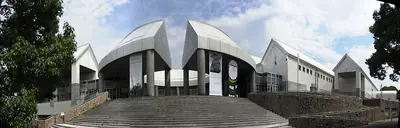
In Hijiyama Park, the Hiroshima City Museum of Contemporary Art brings modern art into a setting closely connected with the city’s history. Founded in 1989, it was the first public contemporary art museum to open in Japan.
Its exhibitions focus on art created after 1945, contemporary emerging artists, and works that connect contemporary art with Hiroshima. The building was designed by architect Kisho Kurokawa.
Mitaki-dera Temple
Mitaki-dera is a historic Buddhist temple on the wooded slope of Soko Mountain. It belongs to the Koyasan Shingon Buddhist tradition and is associated with Mitaki Kannon. The temple is said to have been founded in 809 by Kukai.
Mitaki-dera was almost entirely spared during the 1945 atomic bombing, despite being about 3.18 kilometres from the hypocentre. It later became a temporary relief centre. Several buildings in its grounds are recorded on Hiroshima’s list of atomic-bombed buildings.
One of its most distinctive sights is the vermilion Tahoto pagoda, moved to the temple grounds in 1951 as an offering for the victims of the bombing. The pagoda is designated an Important Cultural Property of Hiroshima Prefecture.
Hiroshima City Transportation Museum
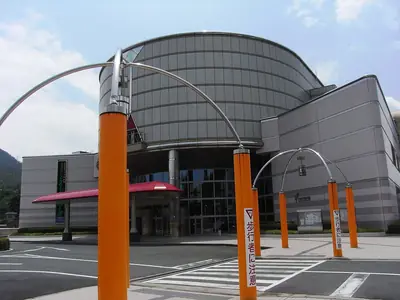
The Hiroshima City Transportation Museum, also known as the Numaji Transportation Museum, is an indoor science museum devoted to vehicles and transport. Its permanent exhibition features more than two thousand vehicle models, alongside information displays and hands-on exhibits.
The museum also presents special exhibitions and regularly holds craft workshops, particularly for children. It opened on March 18, 1995, as the Hiroshima City Transportation Science Museum and stands above the Chorakuji depot of the Astram Line in Hiroshima’s Asaminami Ward.
Other places connected with Hiroshima’s history
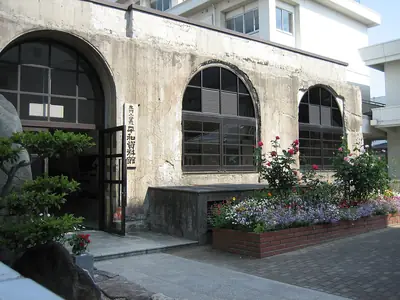
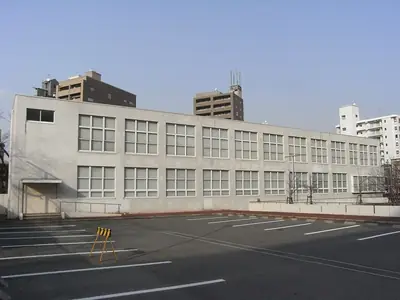
The Hiroshima Teishin Hospital Former Outpatients Ward Exhibition Room in Hakushima is one of the city’s surviving examples of Teishin architecture and one of its surviving atomic-bombed buildings. The preserved former hospital ward connects architectural history with the experience of the bombing.
In Fukuromachi, the Rai San’yō Historic Site Museum presents materials connected with Rai San’yō and the Rai family.
The events that shaped Hiroshima were part of the final stages of the Second World War. The United States dropped the first atomic bomb, known as Little Boy, on Hiroshima on August 6, 1945, and a second bomb, Fat Man, on Nagasaki three days later. Japan announced its unconditional surrender on August 15, and the surrender document was signed on September 2.
Explore Hiroshima with a self-guided audio tour
Neywo’s Hiroshima audio guide includes 47 narrated places. You can choose from three walking tours and one bus route:
- Where the Clock Stopped at 8:15: a 1.35 km walk lasting 57 minutes, with 7 narrated stops.
- Carp Castle and the Garden Reborn: a 3.55 km walk lasting 98 minutes, with 7 narrated stops.
- Hiroshima Highlights: Peace Park to Carp Castle: a 3.39 km walk lasting 105 minutes, with 9 narrated stops.
- Peace Park to Hijiyama by Bus: a 4.9 km bus route lasting 21 minutes, with 4 narrated stops.
The app tells the story of each place as you reach it, at your own pace, with no group and no schedule. Download Neywo and explore Hiroshima independently, from Peace Memorial Park and the Atomic Bomb Dome to Carp Castle, Shukkei-en, and Hijiyama Park.
When planning a wider journey through Japan, Hiroshima can also be combined with other destinations such as Iwakuni, Himeji, or Fukuoka.
Places with an audio guide in Hiroshima
8 places in Hiroshima with a Neywo audio guide. Each one starts telling its story as you reach it.
Self-guided tours in Hiroshima
4 tours in Hiroshima, free in the Neywo app. Each stop tells its story as you reach it.
- Bus ride
Peace Park to Hijiyama by Bus
A public JR Bus loop from Hiroshima Station that passes the atomic-bomb sites on the Honkawa riverside and Peace Memorial Park, then climbs to Hijiyama Park. Ride it to see the Honkawa school museum, a surviving A-bombed building and the Korean victims monument, and end at Japan's first public contemporary art museum.
Honkawa Elementary School Peace Museum · Honkawa Public Lavatory · The Monument in Memory of the Korean Victims of the A-bomb · Hiroshima City Museum of Contemporary Art
Open this tour: Peace Park to Hijiyama by Bus - Walk
Where the Clock Stopped at 8:15
A quiet walk through the park built on the open ground left by 6 August 1945. Start across the river at a bombed public lavatory, pass the monument to the Korean victims and the memorials of Peace Memorial Park, reflect at the Atomic Bomb Dome, and finish at the school museum closest to ground zero. Short, flat and moving.
Honkawa Public Lavatory · The Monument in Memory of the Korean Victims of the A-bomb · Hiroshima Peace Memorial Park · Children's Peace Monument · Hiroshima Peace Memorial · Atomic bombings of Hiroshima and Nagasaki …
Open this tour: Where the Clock Stopped at 8:15 - Walk
Carp Castle and the Garden Reborn
From the stadium and museums of Central Park to the flatland castle Mori Terumoto built in the 1590s, rebuilt in 1958 after the bomb. Then follow the lanes east to Shukkei-en, the 1620 lord's garden where only three pre-war trees survived, a hospital ward that outlived the blast.
Hiroshima Children's Museum · Edion Peace Wing Hiroshima · Hiroshima Chūō Park · Hiroshima Castle · Hiroshima Gokoku Shrine · Shukkei-en …
Open this tour: Carp Castle and the Garden Reborn - Walk
Hiroshima Highlights: Peace Park to Carp Castle
One walk across the heart of Hiroshima: the Honkawa lavatory and the Peace Memorial Park, the Children's Peace Monument and the Dome, a school museum beside ground zero, then north through Central Park to Carp Castle and the lord's garden of Shukkei-en.
Honkawa Public Lavatory · Hiroshima Peace Memorial Park · Children's Peace Monument · Hiroshima Peace Memorial · Honkawa Elementary School Peace Museum · Hiroshima Children's Museum …
Open this tour: Hiroshima Highlights: Peace Park to Carp Castle
Walk Hiroshima with Neywo
Neywo turns Hiroshima into a self-guided audio tour. Stories arrive as you reach the place they belong to, and the route reshapes when you wander off it.

