Things to Do in Nagasaki, Japan: Walking Guide
Things to Do in Nagasaki: What to See in the City
Nagasaki is a port city on Japan’s western coast, spread among green hills around a deeply indented harbor. Its history of contact with China, Portugal, the Netherlands and other overseas communities has shaped its architecture, traditions and food, while its museums and memorials preserve the memory of the atomic bombing. Neywo offers a free audio guide for Nagasaki with 45 narrated places, available in 11 languages.
For more ideas across the country, see our guide to Japan. In Nagasaki, the most rewarding places to visit bring together international exchange, religious history, industrial heritage and a lasting commitment to peace.
What to see in Nagasaki
Glover Garden
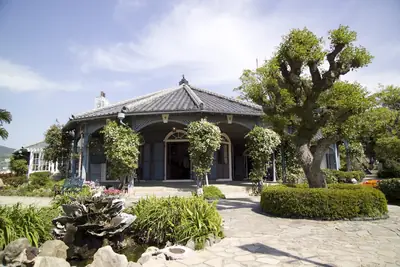
Glover Garden is an open-air museum on the Minamiyamate hillside. Its historic Western-style buildings are connected with foreign merchants who came to Nagasaki after the port opened to foreign trade in 1859.
The grounds occupy the former residences of Thomas Blake Glover, Frederick Ringer and William J. Alt. Buildings that survived elsewhere in the city were also moved here, creating an unusual collection of historic architecture. The former Glover Residence, completed in 1863, is described as the oldest surviving Western-style house in Japan and is designated an Important Cultural Asset.
Thomas Blake Glover, a Scottish merchant, contributed to Japan’s modernization in shipbuilding and coal mining. His former residence is also part of the UNESCO World Heritage property covering the Sites of Japan’s Meiji Industrial Revolution. The house is associated with Puccini’s opera and is also known as the Madame Butterfly House.
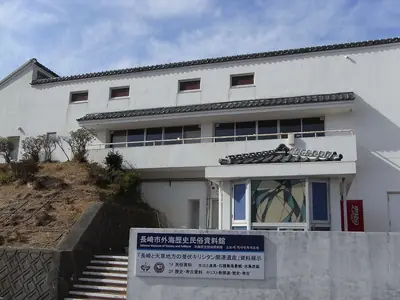
Nagasaki Traditional Performing Arts Museum
The Nagasaki Traditional Performing Arts Museum focuses on the city’s traditional performing arts. It offers a way to understand how performances have contributed to Nagasaki’s cultural character.
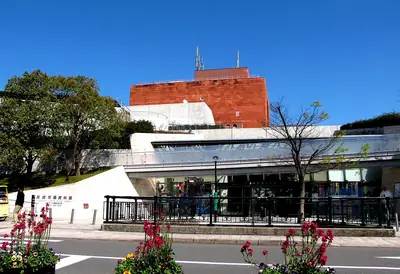
Nagasaki Prefectural Art Museum
Opened in 2005, the Nagasaki Prefectural Art Museum has two central themes: art connected with Nagasaki and Spanish art. Its collections continued the museum functions and Spanish art collection of the former Nagasaki Prefectural Museum and Art Museum.
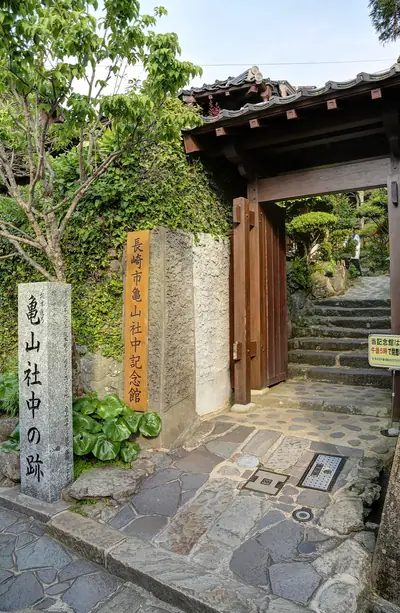
Kameyama Shachū Memorial Museum
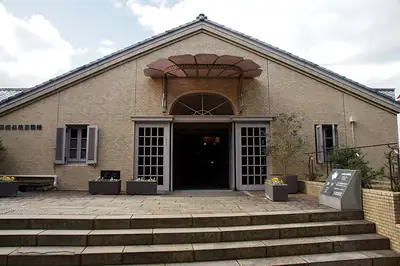
The Kameyama Shachū Memorial Museum stands on the former site of Kameyama Shachū, a group formed in Nagasaki in 1865 by Sakamoto Ryōma and others. It served both as an association of masterless samurai and as a trading organization.
The site had previously been a kiln for Kameyama ware. After the kiln closed, the property was made available for Sakamoto Ryōma’s activities. The building today is a restored reconstruction rather than the original structure. The museum opened in 2009 and displays objects associated with Sakamoto Ryōma and reproductions of letters from his time in Nagasaki.
Kōtai-ji Temple
Kōtai-ji Temple is a Buddhist temple in Nagasaki belonging to the Sōtō sect. Its formal name is Kaiunzan Fushō Kōtai Zenji, reflecting its long religious identity.
Twenty-Six Martyrs Museum and Monument
Beside Nishizaka Hill, this memorial complex commemorates the Twenty-Six Martyrs of Japan. On February 5, 1597, twenty-six Christians were executed on the hill after being arrested in Kyoto and Osaka for preaching Christianity. The group included twenty Japanese Christians and six foreign priests.
The museum opened in 1962, the year marking the centenary of the Roman Catholic Church’s canonization of the Twenty-Six Martyrs. The complex also includes a memorial church and a monument. Its large bronze depiction of the martyrs was designed by Japanese sculptor Yasutake Funakoshi, who spent four years completing the work.
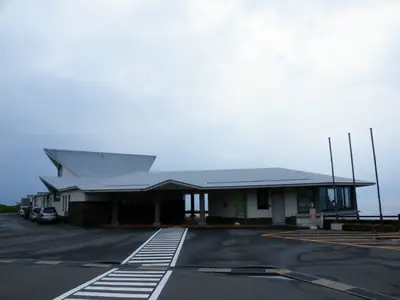
Sotome Museum of History and Folklore and Shitsu Church
The Sotome Museum of History and Folklore introduces the wider Sotome area and its local history. Nearby, Shitsu Church—also known as Catholic Shitsu Church—stands in Nishi-Shitsu.
The church forms part of the Sotome Shitsu Village included in the UNESCO World Heritage site of the Hidden Christian Sites in the Nagasaki and Amakusa Regions. It is designated an Important Cultural Property of Japan. The site’s inclusion in the World Heritage listing was decided in 2018, with registration confirmed on June 30 of that year.
Endo Shusaku Literary Museum
In Sotome, the Endo Shusaku Literary Museum is dedicated to the life and work of Japanese novelist Shusaku Endo. Established in May 2000, it preserves his books, manuscripts, letters and photographs, along with personal belongings such as his writing desk, Bible, rosary and a statue of Mary inherited from his mother.
The museum overlooks the Gotō Sea and Shitsu Culture Village. A monument to Silence in the village carries the words, “Humanity is so sad, Lord, and the ocean so blue.” The view and inscription offer a quiet context for reflecting on themes associated with Endo’s work.
Hashima Island
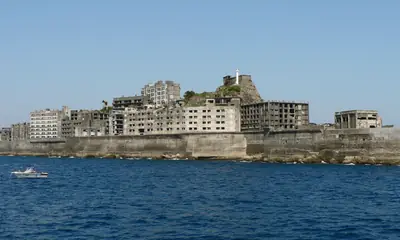
About fifteen kilometres out at sea, Hashima Island is a striking landscape of abandoned concrete buildings enclosed by a seawall. Its nickname, Gunkanjima, means “Battleship Island,” a reference to its distinctive silhouette.
Hashima was once an undersea coal-mining community. After the mine closed in 1974, its residents left and the island became uninhabited. Among its notable structures were reinforced-concrete apartment blocks, including what is described as Japan’s earliest reinforced-concrete high-rise housing.
Today, the ruins remain largely undisturbed while age and nature continue to reshape the island. Some collapsed exterior walls have been restored. In 2015, Hashima’s coal mine became part of the UNESCO World Cultural Heritage listing for the Sites of Japan’s Meiji Industrial Revolution.
Nagasaki’s places of remembrance
Nagasaki Atomic Bomb Museum
The Nagasaki Atomic Bomb Museum tells the story of the atomic bombing of the city and its human and historical consequences. The bombing took place on August 9, 1945, at 11:02 and 35 seconds in the morning.
Its exhibitions begin with the attack and the events leading up to it, then trace the development of nuclear weapons. Photographs, documents and relics connect the historical account with the evidence left behind. The present museum was completed in April 1996, replacing the deteriorating International Culture Hall.
The museum stands in the Peace Park area, alongside the Nagasaki City Peace Hall and the Nagasaki National Peace Memorial Hall for the Atomic Bomb Victims.
Fat Man
The atomic bomb dropped on Nagasaki was known as Fat Man. Developed at Los Alamos Laboratory as part of the Manhattan Project, it used plutonium and an implosion design. On August 9, 1945, a B-29 bomber called Bockscar released it over Nagasaki, where it exploded about 550 metres above what is now Matsuyama Town.
The bombing killed about 73,900 people, injured around 74,900 and completely destroyed or burned approximately 12,900 buildings. The damaged area covered about 6.7 square kilometres. Nagasaki’s hilly terrain reduced the destruction compared with flatter Hiroshima, but the human cost remained immense.
Nagasaki Peace Park
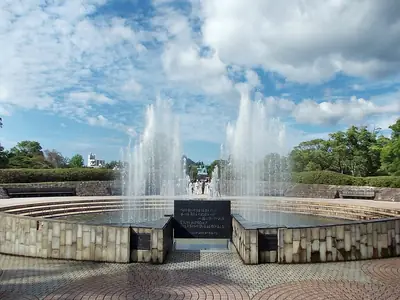
Nagasaki Peace Park was created to commemorate the atomic bombing of August 9, 1945, and to provide a place to pray for peace. Its central landmark is the Peace Memorial Statue, created by Nagasaki-born sculptor Seibo Kitamura.
The park also includes the Tower of Origami Cranes, the Bell of Nagasaki, the Fountain of Peace and an area dedicated to symbols of world peace. It stands beside the Atomic Bomb Museum and near the Peace Memorial Hall, making these sites closely connected places for understanding and remembering the bombing.
Nagasaki City Nagai Takashi Memorial Museum
Also known as the Archbishop’s Palace of Nagasaki, the Nagasaki City Nagai Takashi Memorial Museum is dedicated to Nagai Takashi. Its Japanese name is Nagasaki Daishikokan.
Nagasaki City Science Museum
Known by the nickname Starship, the Nagasaki City Science Museum explores Earth science and astronomy. It adds a different perspective to a city whose museums also examine history, art, religion and remembrance.
Explore Nagasaki with a self-guided walking tour
Neywo’s Nagasaki audio guide includes three walking tours, with 23 narrated stops across the routes:
- Windows on the West: Glover Garden to Dejima — 2.77 km, 93 minutes, 8 stops
- Hypocenter and Hope: Urakami Valley Remembered — 4.62 km, 104 minutes, 7 stops
- Red Gates, Ryoma and the Martyrs’ Hill — 4.34 km, 108 minutes, 8 stops
The routes connect places such as Glover Garden, Nagasaki Shinchi Chinatown, the Nagasaki Atomic Bomb Museum, Nagasaki Peace Park, Kōtai-ji Temple, Kameyama Shachū Memorial Museum and the Twenty-Six Martyrs Museum and Monument.
Download Neywo and explore Nagasaki at your own pace. The app tells the story of each place as you reach it, with no group and no schedule.
Places with an audio guide in Nagasaki
8 places in Nagasaki with a Neywo audio guide. Each one starts telling its story as you reach it.
Self-guided tours in Nagasaki
3 tours in Nagasaki, free in the Neywo app. Each stop tells its story as you reach it.
- Walk
Windows on the West: Glover Garden to Dejima
Nagasaki was Japan's door to the world. Climb to the hillside house of Scottish merchant Thomas Glover, the oldest Western-style house in Japan, then wander down past a British bank and a Chinese shrine to the lantern-lit lanes of Shinchi Chinatown. Finish at the Dutch trading island of Dejima and the harbourside art museum.
Glover Garden · Nagasaki Minamiyamate Museum · Former Hongkong and Shanghai Bank Nagasaki Branch · Nagasaki Traditional Performing Arts Museum · Confucius Shrine, Nagasaki · Nagasaki Shinchi Chinatown …
Open this tour: Windows on the West: Glover Garden to Dejima - Walk
Hypocenter and Hope: Urakami Valley Remembered
A quiet, serious walk through the valley where the second atomic bomb fell on 9 August 1945. See the shrine's one-legged torii, the hypocenter, the museum and the Peace Park, the cathedral rebuilt from nothing and Nagai Takashi's memorial, then the wartime tunnel factory.
Sannō Shrine · Fat Man · Nagasaki Atomic Bomb Museum · Nagasaki Peace Park · Urakami Cathedral · Nagasaki City Nagai Takashi Memorial Museum …
Open this tour: Hypocenter and Hope: Urakami Valley Remembered - Walk
Red Gates, Ryoma and the Martyrs' Hill
Follow the old temple belt of Teramachi: the Thousand-Armed Kannon of Kiyomizu-dera, the vermilion Red Temple of Kofuku-ji and the site where Sakamoto Ryoma ran his trading company. Pass the old magistrate's seat, then climb through the ruins of a church destroyed in 1614 to Nishizaka Hill, where twenty-six Christians were executed in 1597, and end at Nagasaki's oldest temple.
Kiyomizu-dera Temple · Kōtai-ji Temple · Kōfuku-ji Temple · Kameyama Shachū Memorial Museum · Santo Domigo Church · Twenty-Six Martyrs Museum and Monument …
Open this tour: Red Gates, Ryoma and the Martyrs' Hill
Walk Nagasaki with Neywo
Neywo turns Nagasaki into a self-guided audio tour. Stories arrive as you reach the place they belong to, and the route reshapes when you wander off it.

