Visiting Naha, Japan: Top Sights on Foot
Things to Do in Naha: A Guide to Ryukyuan History and Local Life
The best things to do in Naha include exploring the former royal capital of the Ryūkyū Kingdom, visiting royal mausoleums and museums, and discovering markets shaped by Okinawa’s postwar history. The city brings together historic sites, Buddhist temples, pottery traditions, and lively commercial districts. Neywo offers a free audio guide for Naha with 27 narrated places.
What to See in Naha
Shuri Castle and the legacy of the Ryūkyū Kingdom
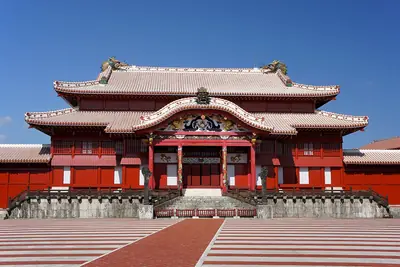
Shuri Castle, known in Okinawan as Sui Gusuku, was the palace of the Ryūkyū Kingdom from 1429 to 1879. The castle and its grounds are among Okinawa’s most important historic sites.
The original castle was almost completely destroyed during the Battle of Okinawa in 1945. Its central citadel and walls were rebuilt on their original site from 1992, using historical records, photographs, and memories. A fire on October 31, 2019 destroyed the main courtyard structures once again, and reconstruction is continuing. Full completion is expected in autumn 2026, with a completion ceremony scheduled for November 22.
Shuri Castle is a natural starting point for understanding the Ryūkyū Kingdom, an island kingdom established in 1429 after Okinawa Island was unified. Its maritime connections and relations with China helped shape the culture and history of the Ryūkyū Islands. The kingdom became the Ryūkyū Domain in 1872 before being abolished in 1879, when it was incorporated into Japan as Okinawa Prefecture.
Tamaudun, the royal mausoleum
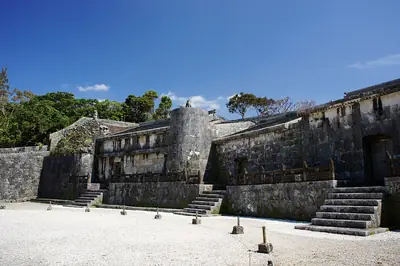
A short distance from Shuri Castle, Tamaudun is one of the most important royal burial sites of the Ryūkyū Kingdom. King Shō Shin built the mausoleum in 1501 for his father, King Shō En. It later became the resting place of successive kings of the Second Shō Dynasty.
The complex consists of three chambers: central, eastern, and western. Together, they form Okinawa’s largest gable tomb. Tamaudun became a National Historic Site in 1972, joined the UNESCO World Heritage group Gusuku Sites and Related Properties of the Kingdom of Ryukyu in 2000, and was recognized as a National Treasure in 2018.
Ryūtan pond and its Chinese-style landscape
Ryūtan, also known as Iyugumui or Fish Pond, lies beside the Shurijo Castle site. The pond formed part of a Chinese-style garden created during the Ryūkyū Kingdom.
Its story began in 1425, when the Ming dynasty investiture envoy Chai Shan encouraged King Shō Hashi to create a garden north of Shuri Castle. The pond was excavated in 1427 after the regent Kaiki returned from studying gardens in China. Flowers from many countries were planted around the water, while the earth removed during excavation formed an artificial hill called Mount Ankokuzan.
Ryūtan was designed as a scenic landscape rather than simply as a pond. Its waters were intended to reflect the view of Shuri Castle, making it one of the celebrated places of the former kingdom.
Makishi Public Market
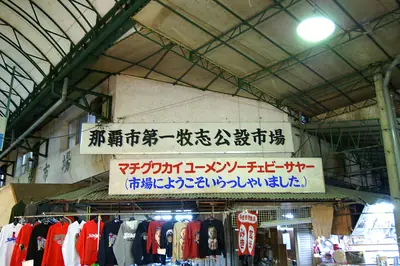
Makishi Public Market, or Makishi Kōsetsu Ichiba, is one of Naha’s major visitor destinations. It opened in 1951 and has a lively two-level layout with around 200 shops.
The building closed in 2019 because it had aged, and renovation work followed. The market’s history, changing layout, and large number of individual shops offer a view of its importance in Naha’s everyday and visitor culture. The market is also one of the stops on the Neywo route through Makishi, Tsuboya, and Kokusai Street.
Makishi Station and Kokusai Street
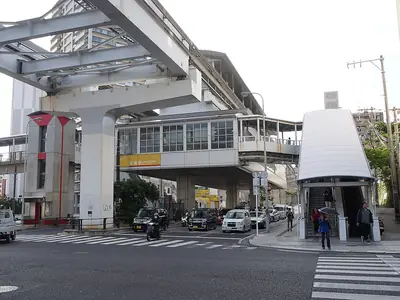
Makishi Station is a gateway to the northern entrance of Kokusai Street, one of Naha’s main commercial areas. The station is part of the Okinawa Urban Monorail, known as Yui Rail, and a pedestrian deck connects it directly with Saion Square, a mixed-use commercial complex.
Makishi Station and Asato Station are about 300 metres apart in a straight line. The surrounding area has changed through the Makishi and Asato redevelopment project, making the station an interesting point from which to understand modern Naha.
Sakaemachi Market
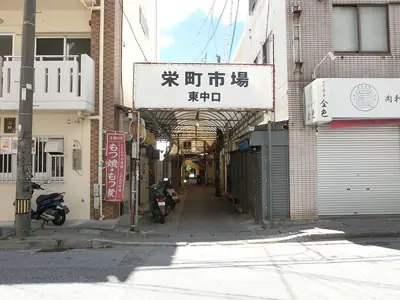
In Asato, Sakaemachi Market brings together around 150 shops in one local shopping area. It was established in 1955 as part of a plan to develop the commercial district.
The market’s postwar origins and collection of individual stores give it a different character from the larger Makishi Public Market. Together, the two markets show how shopping and food areas have remained part of Naha’s urban identity.
Tsuboya pottery and the Naha Municipal Tsuboya Pottery Museum
The Naha Municipal Tsuboya Pottery Museum explores Tsuboya ware, a distinctive form of Ryukyuan pottery. Opened in 1998, the museum’s collection focuses on Okinawan ceramic traditions and the history of Tsuboya ware.
It is a useful stop for understanding a craft tradition closely connected with the region. The museum also appears on Neywo’s walking route through Makishi, Tsuboya, and Kokusai Street.
Okinawa Prefectural Museum & Art Museum
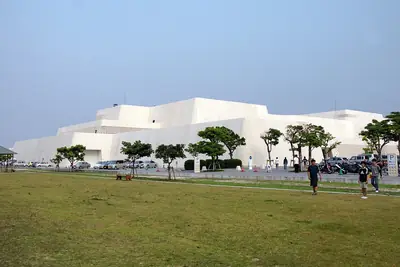
Known locally as OkiMu or Okimyu, the Okinawa Prefectural Museum & Art Museum combines art, history, and natural history with a focus on Okinawan subjects. The complex opened in November 2007 in Naha’s Omoro-machi area.
The museum and art museum face each other across a shared lobby, and visitors can choose either section or a combined admission. The building is designed to evoke an Okinawan gusuku, or castle, and uses local Okinawan limestone. Its collections continue the work of the Okinawa Prefectural Museum, which opened in Shuri in 1972 before moving to Omoro-machi.
Gokoku-ji Temple
Gokoku-ji is regarded as the oldest surviving temple in Okinawa. This Shingon Buddhist temple dates back to the late fourteenth century and was closely connected with Naminoue Shrine, serving as its Buddhist temple.
The temple also became a prayer site for the kings of the Ryūkyū Kingdom. In the nineteenth century, it was used for negotiations between Commodore Matthew Perry and the Ryukyuan side in 1853 and 1854. The temple was destroyed during the Battle of Okinawa in 1945 and rebuilt soon afterward.
Kamejiro Senaga and the People’s History Museum
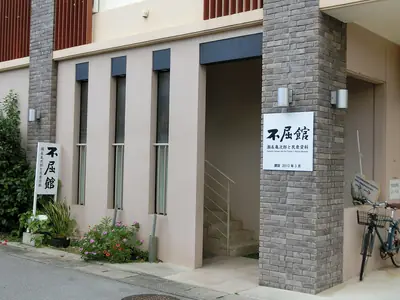
Fukutsukan, the Kamejiro Senaga and People’s History Museum, explores Okinawa’s postwar history through the records of politician Kamejiro Senaga. It opened in Naha in March 2013.
Senaga was involved in resistance to oppression during the period of United States occupation. He organized the Okinawa People’s Party and later served as a member of the legislature, mayor of Naha, and a member of Japan’s House of Representatives for the Japanese Communist Party.
Okinawa Prefecture and its postwar history
Naha is the capital of Okinawa Prefecture, Japan’s southernmost and westernmost prefecture. The region consists of island groups whose traditions were shaped by maritime connections and a history distinct from mainland Japan.
After the Battle of Okinawa in 1945, the islands were under United States administration until they reverted to Japan in 1972. This history forms an important part of the context behind Naha’s museums, monuments, and rebuilt religious sites.
Explore Naha with a self-guided audio tour
A Naha self-guided walking tour lets you explore the city while Neywo tells the story of each place as you reach it. The app offers three walking tours and one bus route:
- Shuri: Kings, Tombs and a Castle Reborn: a 3.31 km walk lasting 94 minutes, with five narrated stops.
- Kume and Naminoue: Temples, Gardens and Wartime Memory: a 5.11 km walk lasting 118 minutes, with nine narrated stops.
- Makishi, Tsuboya and Kokusai Street: a 3.12 km walk lasting 73 minutes, with five narrated stops.
- Naha Bus 9: Oroku to Ishimine through the heart of Naha: a 10.8 km bus route lasting 46 minutes, with six narrated stops.
Download Neywo and explore Naha at your own pace. The app tells the story of each place as you reach it, with no group and no schedule. Narration is available in 11 languages, so you can discover the city independently while moving through its royal sites, markets, museums, temples, and streets.
Places with an audio guide in Naha
8 places in Naha with a Neywo audio guide. Each one starts telling its story as you reach it.

Self-guided tours in Naha
4 tours in Naha, free in the Neywo app. Each stop tells its story as you reach it.
- Bus ride
Naha Bus 9: Oroku to Ishimine through the heart of Naha
Naha Bus route 9 is an ordinary city line that crosses Naha from the south past Taichu-ji temple, Asahibashi, the Kumoji River and the Makishi public market, then climbs east to Ishimine near Shuri. Cheap and local, it links the old town with the Yui Rail stations on the way to the castle district.
Taichū-ji Temple · Asahibashi Station · Kumoji River · Makishi Public Market · Makishi Station · Ishimine Station
Open this tour: Naha Bus 9: Oroku to Ishimine through the heart of Naha - Walk
Shuri: Kings, Tombs and a Castle Reborn
Climb the hill where the kings of the Ryukyu Kingdom ruled for 450 years. Visit Tamaudun, the royal mausoleum with Okinawa's largest gable tomb, the Chinese-style Ryutan pond, the site of the old prefectural museum, and finish at Shuri Castle, burned in 1945 and again in 2019 and still being rebuilt.
Tamaudun · Ryūtan · Ryūkyū Seifuritsu Hakubutsukan · Shuri Castle · Ishimine Station
Open this tour: Shuri: Kings, Tombs and a Castle Reborn - Walk
Kume and Naminoue: Temples, Gardens and Wartime Memory
Walk the old Chinese quarter of Kume and the hill of Naminoue. Start at Okinawa's oldest surviving temple, reflect at the memorial for the Tsushima-maru schoolchildren, step into a Fuzhou-style garden, and follow the Yui Rail stations along the Kumoji River.
Gokoku-ji Temple · Tsushima-maru Memorial Museum · Kamejiro Senaga and the People's History Museum · Fukushūen · Asahibashi Station · Prefectural Office Station …
Open this tour: Kume and Naminoue: Temples, Gardens and Wartime Memory - Walk
Makishi, Tsuboya and Kokusai Street
Eat and browse your way through Naha's everyday heart: Tsuboya pottery, the two-floor Makishi Public Market, the monorail gateway to Kokusai Street and the postwar Sakaemachi market. End at Okimu, the limestone museum that echoes Okinawa's castles.
Naha Municipal Tsuboya Pottery Museum · Makishi Public Market · Makishi Station · Sakaemachi Market · Okinawa Prefectural Museum & Art Museum
Open this tour: Makishi, Tsuboya and Kokusai Street
Walk Naha with Neywo
Neywo turns Naha into a self-guided audio tour. Stories arrive as you reach the place they belong to, and the route reshapes when you wander off it.

