Things to Do in Kagoshima, Japan: Walking Guide
Things to Do in Kagoshima: What to See in the City and Around Sakurajima
Kagoshima is a city in southern Kyushu shaped by volcanoes, Satsuma history and the Meiji Restoration. The best things to do in Kagoshima range from exploring museums and historic shrines to seeing Sakurajima, the active volcano rising across Kagoshima Bay. Neywo has a free audio guide for Kagoshima with 38 narrated places, available in 11 languages.
As the capital and largest city of Kagoshima Prefecture, Kagoshima is a useful starting point for understanding this southern region of Japan. The prefecture includes the Satsunan Islands and is known for volcanic landscapes, including Sakurajima and Kirishima. It was also the heartland of the Satsuma Domain, which played an important role in Japan’s Edo-period history, the introduction of Western technology and the Meiji Restoration.
What to see in Kagoshima
Sakurajima
Sakurajima is Kagoshima’s defining landmark: an active volcano rising from Kagoshima Bay. Once an island, it became a peninsula during the great Taishō eruption of 1914, when volcanic material filled the Seto Strait and connected it to the Osumi Peninsula.
The volcano covers about 77 square kilometres and has three principal peaks: North Peak, Central Peak and South Peak. North Peak is the highest at 1,117 metres, while South Peak remains active. Sakurajima stands near the southern edge of the Aira Caldera, created by a huge eruption around 29,000 years ago.
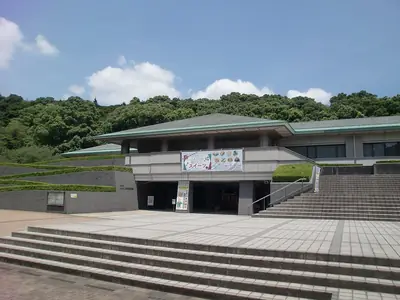
Its volcanic landscape is particularly vivid at the Sakurajima Visitor Center. The prefectural science exhibition hall stands among lava flows from the Taishō-era eruption, near the Lava Nagisa promenade, Lava Nagisa Park, Sakurajima Fishing Park and a foot bath. Together, these places show how the volcano has shaped the coast and the lives around it.
Haragosha Shrine and the Kurokami Buried Torii
On the eastern side of Sakurajima, Haragosha Shrine preserves one of the clearest reminders of the 1914 eruption. The Kurokami Buried Torii was buried beneath volcanic stones thrown out during the eruption, leaving only its upper section visible.
The torii is designated as a natural monument of Kagoshima Prefecture. Its partially buried structure offers a direct sense of how dramatically the surrounding landscape changed when Sakurajima was connected to the mainland.
Saigō Nanshū Memorial Museum
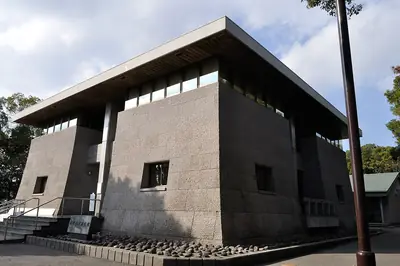
The Saigō Nanshū Memorial Museum stands beside Saigō Takamori’s grave at Nanshū Shrine, within Nanshū Park. Its exhibitions focus on Saigō Takamori, one of Kagoshima’s most important historical figures, as well as Ōkubo Toshimichi and the events of the Meiji Restoration.
The museum opened in July 1978. Its collected materials provide a way to explore the people and political changes associated with this important period in Japanese history.
Museum of the Meiji Restoration
Along the Kōtsuki River, the Museum of the Meiji Restoration introduces the history of Satsuma Province and its role in the transformation of Japan. Exhibits present the people, objects and events connected with Satsuma and the Meiji Restoration.
The basement hall offers a more immersive presentation, combining sound, light and robots to tell the story in three dimensions. It is one of the most useful places to visit for understanding why Kagoshima had such a strong influence on modern Japanese history.
Sekiyoshi Sluice Gate of Yoshino Leat
The Sekiyoshi Sluice Gate of Yoshino Leat, also known as Sekiyoshi no Sosuiko, reflects Kagoshima’s industrial history. The leat was built in 1852 under Shimazu Nariakira, the twenty-eighth head of the Satsuma domain.
Its purpose was to provide power for the Shuseikan enterprise, an industrial project carried out under Nariakira’s direction. The site illustrates Satsuma’s efforts to introduce advanced Western technology before the Meiji Restoration.
Nagashima Museum
Nagashima Museum occupies a hill about 110 metres above sea level, with views over Sakurajima and Kagoshima Bay. It opened in 1989, marking the centenary of Kagoshima’s official foundation.
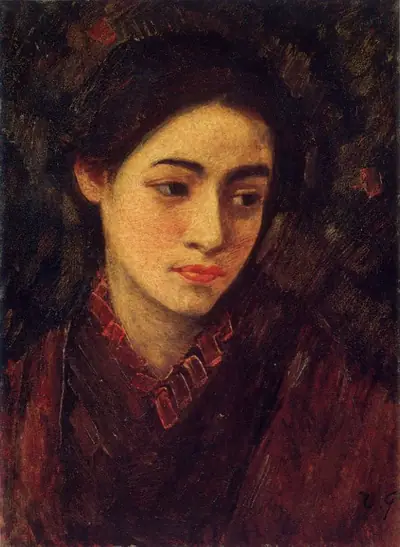
The collection began with works gathered by Nagashima Kōsuke, founder of the Nagashima business group, and now contains around one thousand objects. Local artists such as Kuroda Seiki, Wada Eisaku and Fujishima Takeji are represented alongside international artists including Marc Chagall and Auguste Rodin.
Terukuni Shrine
Terukuni Shrine is associated with Shimazu Nariakira, whose posthumous name was Terukuni Daimyōjin. Located in Terukuni-chō, the shrine belongs to a tradition of shrines dedicated to domain founders, which became popular from the late Edo period into the early Meiji period.
Its kami is understood to be Shimazu Nariakira. The shrine offers another perspective on the figures and institutions that shaped Kagoshima’s history.
Kagoshima’s cultural zone
The area around Tsurumaru Castle brings several cultural institutions together. The Kagoshima Prefectural Library forms part of this cultural zone alongside the Saigo Takamori statue, the Kagoshima Prefectural Museum and the Kagoshima City Museum of Art.
The library began in 1902 as a library attached to the Kagoshima Private Educational Association and was transferred to Kagoshima Prefecture in 1912. Nearby, the Kagoshima City Museum of Art occupies the Ninomaru, or secondary enclosure, of Tsurumaru Castle in Shiroyama. Opened in 1985, it combines local artistic voices with works by internationally known Western painters.
Kagoshima City Museum of Archaeology
The Kagoshima City Museum of Archaeology, also known as Furusato Kōko Rekishikan, presents archaeological discoveries from the city alongside ongoing research. It functions both as an archaeological museum and as an excavation research facility operated by Kagoshima City.
The museum’s work forms part of a wider division of archaeological research with the Kagoshima Prefectural Center for Buried Cultural Properties at the Uenohara Site in Kirishima City.
Kagoshima City Aquarium
Kagoshima City Aquarium, also called Io World, explores the marine environment through the theme “The Kuroshio Romantic Route.” It is a public aquarium devoted to the world associated with the Kuroshio Current and adds a marine perspective to a city otherwise strongly defined by volcanoes and historic sites.
Historic shrines, temples and riverside spaces
Kagoshima also has smaller religious and urban sites to discover. Matsubara Shrine, or Matsubara-jinja, is a Shinto shrine in Matsubara-chō. Terukuni Shrine offers a connection with the Shimazu domain, while the city’s wider cultural landscape includes historic temples and green spaces along the Kōtsuki River.
Kamoike Ballpark, in Kamoike Park in Yojiro, is a multi-purpose stadium that opened in 1970 and can accommodate up to 21,000 spectators. Although it is used for several purposes, baseball is its main use.
Explore Kagoshima with a free audio guide
A Kagoshima self-guided walking tour lets you discover the city without joining a group or following a fixed timetable. Neywo’s free audio guide tells the story of each place as you reach it, at your own pace, with no group and no schedule.
The app currently offers three walking tours in Kagoshima:
- Satsuma’s Cultural Hill: Samurai Lords, Saints and Restoration — 3.11 km, 84 minutes and 8 narrated stops.
- Stone Bridges, Saigo and the Shimazu Garden — 3.61 km, 80 minutes and 5 narrated stops.
- Old Shrines and the Kōtsuki River Green Belt — 4.03 km, 88 minutes and 6 narrated stops.
Download Neywo to explore Kagoshima with an audio guide that plays each story when you arrive at the place. Choose your walk, follow it at your own pace and discover the city without a group or a schedule.
Places with an audio guide in Kagoshima
8 places in Kagoshima with a Neywo audio guide. Each one starts telling its story as you reach it.
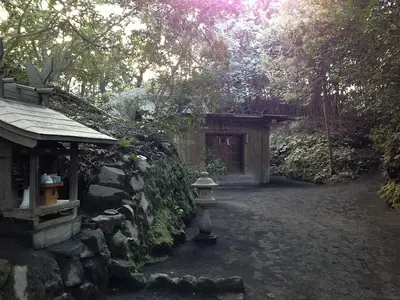
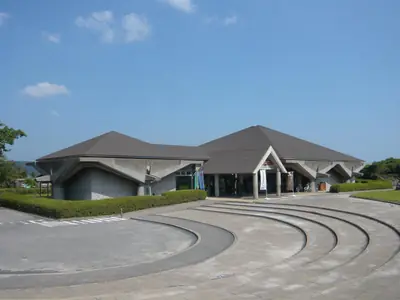
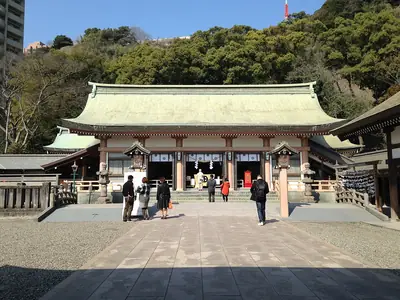
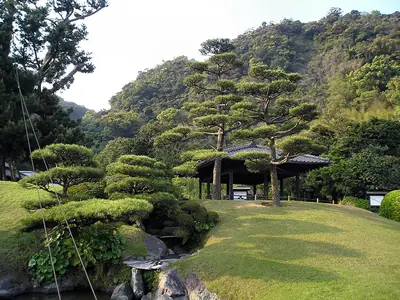
Self-guided tours in Kagoshima
3 tours in Kagoshima, free in the Neywo app. Each stop tells its story as you reach it.
- Walk
Satsuma's Cultural Hill: Samurai Lords, Saints and Restoration
Start at the Methodist church in Kajiya-chō, then pass the museum that tells the Meiji Restoration with robots and light and the cathedral that marks the arrival of Christianity in 1549. Cross the cultural zone of Tsurumaru Castle, with its prefectural museum, library and city art museum, finish at the shrine of Shimadzu Nariakira, the enlightened lord who modernised Satsuma, and end at a quiet Buddhist temple in Yasui-chō.
Kagoshima Kajiyachō Church · Museum of the Meiji Restoration · St. Francis Xavier Cathedral, Kagoshima · Kagoshima Prefectural Museum · Kagoshima Prefectural Library · Kagoshima City Museum of Art …
Open this tour: Satsuma's Cultural Hill: Samurai Lords, Saints and Restoration - Walk
Stone Bridges, Saigo and the Shimazu Garden
Walk from the great garden of the Shimazu lords, with Sakurajima as its borrowed scenery and a family shrine inside its grounds, past the foremost of the Five Shrines of Kagoshima and three rescued Edo-period stone bridges to the grave of Saigō Takamori, the last samurai, and the museum beside it.
Sengan-en · Tsurugane Shrine · Minamikata Shrine · Ishibashi Park · Saigō Nanshū Memorial Museum
Open this tour: Stone Bridges, Saigo and the Shimazu Garden - Walk
Old Shrines and the Kōtsuki River Green Belt
A quieter walk through Kagoshima's everyday neighbourhoods. Begin at Ichinomiya Shrine, the first of the city's three principal shrines, pass Kagoshima University and two small shrines and a temple, and finish along the green belt that follows the Kōtsuki River.
Ichinomiya Shrine · Kagoshima University · Arata-hachimangu Kita-zuisin, Kagoshima · Kōshō-ji betsu-in Temple · Matsubara Shrine
Open this tour: Old Shrines and the Kōtsuki River Green Belt
Walk Kagoshima with Neywo
Neywo turns Kagoshima into a self-guided audio tour. Stories arrive as you reach the place they belong to, and the route reshapes when you wander off it.

