Visiting Morioka, Japan: Top Sights on Foot
Things to Do in Morioka: What to See in This Tohoku City
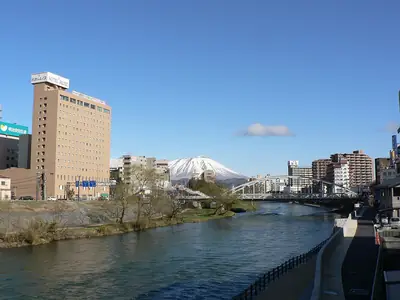
Looking for things to do in Morioka? The capital of Iwate Prefecture offers a quieter introduction to northern Japan, with historic sites, museums, traditional culture, and views towards Mount Iwate. A free Neywo audio guide for Morioka covers 10 narrated places, helping you discover the city as you walk.
Morioka lies in the northern Tohoku region of Honshu. Its identity is closely connected to the surrounding landscape and to the history of the Nanbu clan, while its museums preserve the archaeology, literature, art, and folklore of the city and prefecture. For a broader journey through the country, you can also explore Neywo’s guide to Japan.
What to see in Morioka
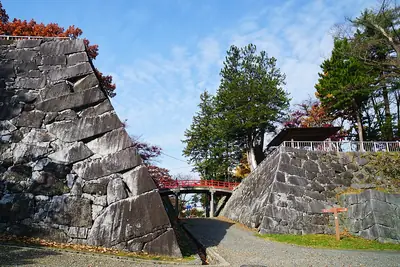
Morioka Castle
Morioka Castle, also known as Morioka-jō, occupies a central site in the city. Built in 1611, it was the residence and political base of the Nanbu clan, who ruled Morioka Domain during the Edo period.
The castle was a hirayama-style Japanese castle, combining a hill with surrounding lowland. It was designated a national historic site in 1937 and selected as one of Japan’s 100 Famous Castles in 2006. The site is also sometimes called Kozukata Castle, or Kozukata-jō, although Kozukata Castle was technically the predecessor of Morioka Castle on the same site.
The Rock-Breaking Cherry Tree
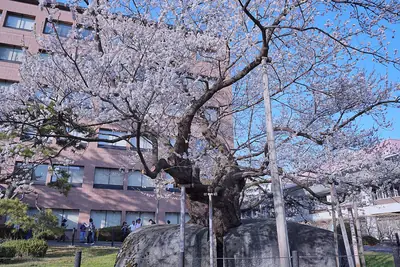
The Rock-Breaking Cherry Tree, known in Japanese as Ishiwarizakura, is one of Morioka’s most distinctive sights. A centuries-old cherry tree grows from a crack in a massive granite boulder, creating the impression that its trunk has split the stone apart.
The tree measures about 4.3 metres around its base and reaches approximately 10 metres in height. The crack in the granite is about 1.35 metres across. Ishiwarizakura was proclaimed a Natural Treasure of Japan in 1923, and its unusual form makes it memorable throughout the year.
Morioka City Study Museum of Archaeological Site
Located in Morioka Central Park in Motomiya, the Morioka City Study Museum of Archaeological Site presents discoveries made through archaeological excavations across Morioka City.
The museum opened on June 1, 2004. Its displays bring together cultural artefacts and information from archaeological sites around the city, offering a way to understand Morioka through the objects left by earlier communities.
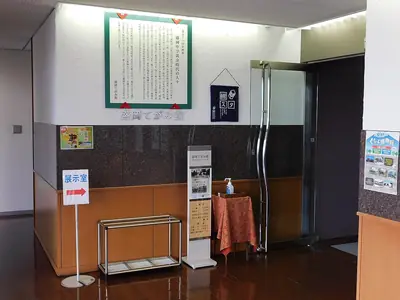
Morioka Museum of Letter
The Morioka Museum of Letter is devoted to the written memories connected with Morioka. Its displays offer a quiet look at the people and stories preserved through their own words.
For visitors interested in local lives and literary history, the museum provides a more personal perspective on the city than a traditional overview of monuments or political events.
Fukazawa Kōko Nonohana Museum
The Fukazawa Kōko Nonohana Museum is an art museum dedicated to the work of Fukazawa Kōko and Fukazawa Shōzō. Its Japanese name is Fukazawa Kōko Nonohana Museum, or 深沢紅子野の花美術館.
The museum opened in August 1993 and is a registered museum under Japan’s Museum Act. Its collection and exhibitions focus on works by the two artists, making it an important stop for discovering Morioka’s artistic heritage.
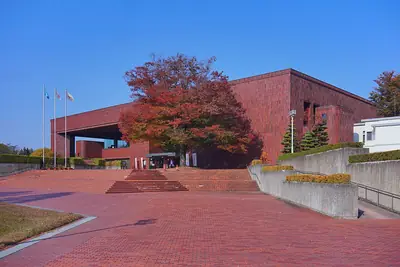
Iwate Prefectural Museum
The Iwate Prefectural Museum explores the prefecture through its geology, natural history, archaeology, history, and folklore. It opened in 1980 to commemorate one hundred years since the establishment of Iwate Prefecture.
The museum stands about seven kilometres northeast of Morioka Station. On a clear day, the second-floor Grand Hall offers a view of Mount Iwate. Its grounds extend beyond the exhibition rooms, with the Former Sasaki Family Residence, the Former Fujino Family Residence, a botanical garden featuring plants from Iwate, and a rock garden displaying stones collected within the prefecture.
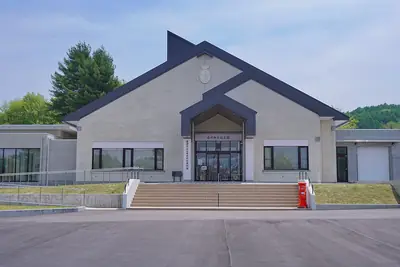
Ishikawa Takuboku Memorial Museum
The Ishikawa Takuboku Memorial Museum in Shibutami commemorates Ishikawa Takuboku, one of the leading tanka poets of the modern era. Opened in 1970, the museum introduces his literary legacy.
Two related buildings have also been relocated to the grounds and opened to visitors: the former Saito family residence, associated with Takuboku, and the former Shibutami Ordinary Elementary School. Together, the museum and buildings connect Takuboku’s work with the places linked to his life.
Iwate Prefecture and its regional identity
Morioka is the capital and largest city of Iwate Prefecture, one of the broadest regions of Japan. Iwate covers about 15,274 square kilometres, making it Japan’s second-largest prefecture after Hokkaido.
The prefecture stretches across the northern Tohoku region, with mountains, limited flat land along the coast, and smaller cities between the sea and the interior. Cape Todo is the easternmost point of Honshu. Iwate’s history also reflects the divisions of the early Edo period, when parts of the region belonged to the Nanbu and Date domains.
Museums, art and everyday Morioka
Morioka’s attractions are spread across several subjects rather than concentrated around a single landmark. Archaeology explains the city’s earlier settlements, the Morioka Museum of Letter preserves written memories, and the Fukazawa Kōko Nonohana Museum presents local artistic work. The prefectural museum widens the view to include the landscapes and heritage of Iwate as a whole.
The city’s central historic sites add another layer. Morioka Castle recalls the political power of the Nanbu clan, while the Rock-Breaking Cherry Tree has become a striking symbol of endurance: a living tree emerging from solid granite.
Explore Morioka with Neywo
Neywo’s free Morioka audio guide includes 10 narrated places. There are no organised tours or fixed routes listed for the city, so you can explore at your own pace and choose how to move between the sights.
The app tells the story of each place as you reach it, with no group and no schedule. Narration is available in 11 languages, turning a walk through Morioka’s museums, historic sites, and cultural landmarks into a self-guided experience.
Places with an audio guide in Morioka
6 places in Morioka with a Neywo audio guide. Each one starts telling its story as you reach it.
Walk Morioka with Neywo
Neywo turns Morioka into a self-guided audio tour. Stories arrive as you reach the place they belong to, and the route reshapes when you wander off it.

