What to See in Matsushima, Japan: Free Audio Guide
Things to Do in Matsushima: Temples, Viewpoints and Coastal History
Matsushima is a scenic destination in Japan known for its bay, pine-covered islands and strong connection with Buddhist culture. Its landscapes and places of worship make it worth visiting for travellers looking for both coastal scenery and a quieter, more reflective side of Japan. Neywo offers a free audio guide for Matsushima with 2 narrated places, available in 11 languages.
Matsushima is part of a wider journey through Japan, where natural landscapes and cultural traditions often meet. The town’s most interesting experiences are found not only in the famous views, but also in the stories connected to its temples and surrounding area.
What to See in Matsushima
Kan’non-ji Temple
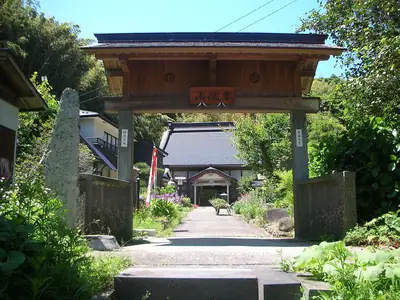
Kan’non-ji Temple, also known as Kannon-ji, is a Soto Zen temple in Miyato Monzen, in Higashimatsushima. It is the fourth sacred site on the Sanriku Thirty-Three Kannon pilgrimage, giving the temple an important place in the region’s Buddhist traditions.
The temple is also connected with the story of Tajuro, described as the first Japanese person to travel around the world. His grave was moved to Kan’non-ji from Murohama, near his birthplace, when the road was being expanded. The story includes another unresolved detail: the formal grave of Gihei has never been found.
This combination of pilgrimage history and unanswered questions gives Kan’non-ji a particularly contemplative atmosphere. It is a place to pause and reflect on the people remembered there, as well as those whose final resting places remain unknown.
鳥磯崎 Viewpoint
鳥磯崎 is a viewpoint associated with another distinctive part of Matsushima’s identity: Blue Impulse, the Japan Air Self-Defense Force’s aerobatic demonstration team. Based at Matsushima Air Base, the team is known for precise manoeuvres, close formations and patterns drawn in the sky with smoke.
Blue Impulse began in 1960 as a six-aircraft team flying F-86 Sabres. Its aircraft later changed to the Mitsubishi T-2 in 1980 and then to the Kawasaki T-4 in 1995. The team became an independent squadron in 1995 and is formally designated the 11th Squadron of the 4th Air Wing.
Its main mission is public relations through specialised demonstration flights. These performances are known as demonstration flights, while travelling to an event is called a deployment. Among aerobatic teams around the world, Blue Impulse is especially associated with smoke drawings and highly precise manoeuvres performed by a small number of aircraft flying in tight formation.
From 鳥磯崎, the story of Blue Impulse adds an aviation perspective to a destination otherwise strongly associated with temples, islands and coastal scenery.
Matsushima’s Pine-Covered Islands and Bay
Matsushima’s best-known landscape is its bay, scattered with roughly 260 small islands, many covered with pine trees. The combination of calm waters, wooded islets and coastal views has inspired poets, artists and travellers for centuries.
The name Matsushima means “Pine Islands”, reflecting the defining character of the scenery. The bay is also associated with the Buddhist idea of the Pure Land, giving the natural landscape a spiritual dimension. This is one reason Matsushima is regarded as both a scenic destination and an important cultural and pilgrimage centre.
Exploring the bay means experiencing the relationship between nature and religious tradition that defines the area. Pine-covered islands stretch across the water, while temples, viewpoints and wooded surroundings create a setting suited to slow, attentive travel.
Oshima Island
Oshima is a small island reached by the red Togetsukyo Bridge. Its wooded paths, peaceful shoreline and historic Buddhist details offer a closer look at Matsushima’s religious heritage.
The island is a good place to experience the quieter side of the bay. Rather than focusing only on panoramic scenery, a walk through Oshima brings together the natural environment and the contemplative traditions found throughout Matsushima.
Exploring Matsushima at Your Own Pace
Matsushima is rewarding for travellers who want more than a quick viewpoint. Its scenery is closely connected to stories of pilgrimage, Zen Buddhism, aviation and the people who shaped the region’s history.
A Matsushima self-guided walking tour can make those connections easier to follow. Instead of moving through the town without context, you can listen as each place’s story unfolds around you. For a wider trip through Japan, you can also compare Matsushima’s atmosphere with destinations such as Kyoto, Morioka or Nagano.
Explore Matsushima with Neywo
Neywo’s free Matsushima audio guide includes 2 narrated places. Each story plays as you reach the place, at your own pace, with no group and no schedule. The narration is available in 11 languages, making it an easy way to explore Kan’non-ji Temple and 鳥磯崎 while learning the stories connected to them.
Download Neywo and discover Matsushima as you walk, listening to the history of each place when you arrive.
Places with an audio guide in Matsushima
1 place in Matsushima with a Neywo audio guide. Each one starts telling its story as you reach it.
Walk Matsushima with Neywo
Neywo turns Matsushima into a self-guided audio tour. Stories arrive as you reach the place they belong to, and the route reshapes when you wander off it.

