Things to Do in Nikko, Japan: Walking Guide
Things to Do in Nikko: What to See in Japan’s Sacred Mountain Town
The best things to do in Nikko combine Shinto shrines, Buddhist temples, historic residences, gardens, and dramatic mountain scenery. The city’s most important landmark is the UNESCO-listed Shrines and Temples of Nikkō, but places such as Kegon Falls, Lake Chūzenji, and Tamozawa Imperial Villa reveal how closely Nikko’s cultural heritage is connected to its natural setting. Neywo also offers a free audio guide for Nikko with 21 narrated places, available in 11 languages.
What to See in Nikko
Shrines and Temples of Nikkō
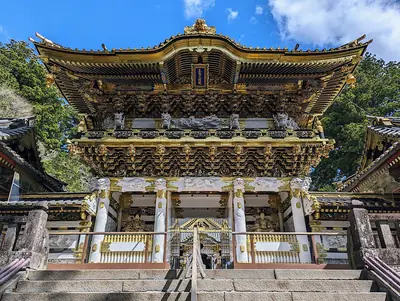
The Shrines and Temples of Nikkō form a World Heritage ensemble of 103 buildings and structures belonging to Futarasan Shrine, Nikkō Tōshō-gū, and Rinnō-ji. Inscribed on the UNESCO World Heritage list in 1999, the site recognizes both the religious buildings and the natural setting around them.
This is the central place to understand Nikko’s spiritual importance. Shinto and Buddhist traditions stand side by side within a forested landscape that has been regarded as sacred since the opening of Nikkō Mountain as a religious site, traditionally dated to 766.
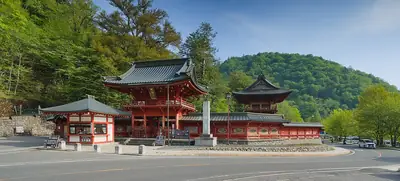
Nikkō Tōshō-gū
Nikkō Tōshō-gū is one of Japan’s most significant Shinto shrines. It is dedicated to Tōshō Daigongen, the deified spirit of Tokugawa Ieyasu, founder of the Tokugawa shogunate. The shrine was established in 1617, after Ieyasu’s death in 1616, and Nikko became the principal center of the many Tōshō-gū shrines found across Japan.
The complex combines Gongen-zukuri and Hachiman-zukuri architectural styles. Its importance also reflects Nikko’s earlier religious authority: the area had already received offerings from Minamoto no Yoritomo, founder of the Kamakura shogunate.
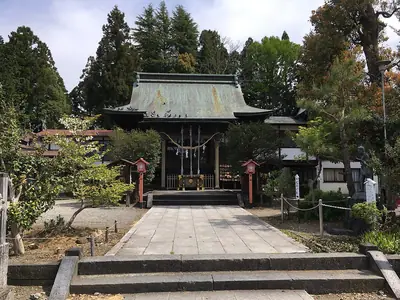
Takinoo Shrine
Takinoo Shrine, also known as Takinoo-jinja Shrine, is a Shinto shrine in Tochigi Prefecture. It forms part of Nikko’s wider sacred landscape and is included in Neywo’s walk through the city’s principal religious sites.
Shōyō-en
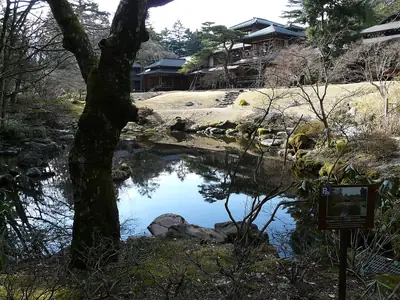
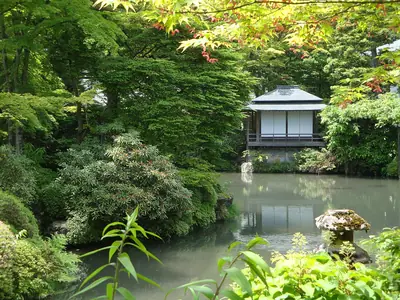
Close to the Sanbutsudō Hall of Rinnō-ji Temple, Shōyō-en is a tranquil Japanese garden arranged around a pond. Carp swim in the water, while stone lanterns, bridges, bamboo fences, a pagoda, and a small tea house shape the views around it.
The garden was first created in the early Edo period and reformed at the beginning of the nineteenth century. Its name was given by the Confucian scholar Issai Sato. The carefully arranged combination of water, stone, and plants makes it a place to explore slowly rather than rush through.
Nikkō Tamozawa Imperial Villa Memorial Park
Nikkō Tamozawa Imperial Villa Memorial Park preserves a former imperial summer residence and its surrounding garden. The villa was built in 1899 as a retreat for the future Emperor Taishō, then Crown Prince. During the Second World War, it also served as a hideout for Emperor Hirohito.
The building is one of Japan’s largest wooden buildings. Its architecture brings together traditional Edo forms with styles from the Meiji and Taishō eras, creating a residence in which several periods of Japanese history remain visible at once.
Chūzen-ji Temple and Lake Chūzenji
Chūzen-ji Temple stands beside Lake Chūzenji and belongs to the Tendai school of Buddhism. Its principal image is Jūichimen Senjū Kannon Bosatsu, the Eleven-Faced, Thousand-Armed Kannon. The temple is also a branch temple of Rinnō-ji, part of the World Heritage temple and shrine complex.
Its lakeside setting gives the temple a distinctive character, linking Buddhist worship with the mountain scenery beyond the city’s central religious district.
Kegon Falls
Kegon Falls is one of the most dramatic sights in Nikkō National Park. Water from Lake Chūzenji plunges about 97 metres over a sheer cliff. The main waterfall is normally about seven metres wide, while around twelve smaller waterfalls appear through cracks between the mountain and the lava flows.
The falls are traditionally said to have been discovered by the Buddhist monk Shōdō, and their name is connected with the Kegon Sutra. The surrounding valley also includes waterfalls named after other Buddhist teachings, such as Agon, Hōdō, Hannya, and Nehan Falls.
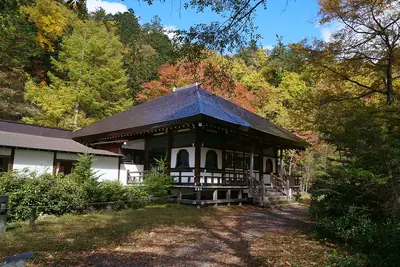
Onsen-ji Temple
Onsen-ji Temple in Yumoto is a Tendai Buddhist temple dedicated to Bhaiṣajyaguru Buddha, the Medicine Buddha. It is a branch temple of Rinnō-ji and has the mountain name Nikkō-san, linking it closely to the area’s spiritual geography.
The temple’s living quarters contain Yakushi-yu, a source-fed hot spring bath with separate bathing areas for men and women. It is open for use from around mid-April until late November.
Ashio Copper Mine
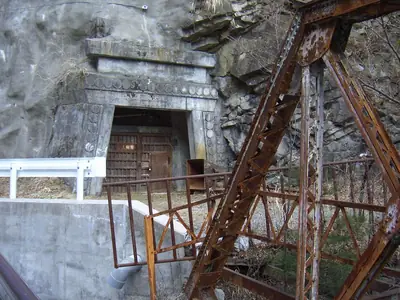
The Ashio Copper Mine, or Ashio Dōzan, preserves the remains of a former mine in Ashio District. During the Meiji period, the site produced copper and arsenic acid, while sulfuric acid was made as a byproduct of smelting. In modern times, the mine was owned by Furukawa Mining Company.
Ashio’s history also includes miners’ riots in 1907 and the forced labor of prisoners of war from various nationalities during the Second World War. Mining ended in 1973, and the site is now designated as the Ashio Copper Mine Ruins, a national historic site. Its story connects Japan’s industrial development with the beginnings of its environmental movement.
More Places to Visit in Nikko
Nikko’s wider area includes several additional religious, cultural, and recreational sites. Hōtoku Ninomiya Shrine in Imaichi is dedicated to Ninomiya Sontoku and preserves the memory of Sontoku, his family, and his close disciple. Ryūzō-ji Temple, a Tendai temple in the Ashio area, has Amida Buddha as its principal image.
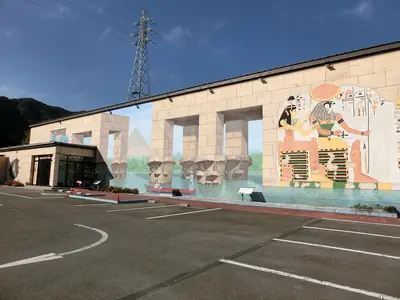
In Kinugawa-Onsen, Tateiwa Kinuhime Shrine offers another place of Shinto significance. Futarasan Shrine Chūgū-shi is a candidate shrine for Futaarayama Shrine. Visitors interested in unusual museums can also find Trick Art Pia Nikkō, an art museum in Nikko.
For ice sports, Nikkō Kirifuri Ice Arena is an indoor sporting arena that opened in 1992. It can accommodate 2,000 people, including 1,608 seated places and 392 standing places.
Nikko is one of many destinations to explore in Japan, whose cities include Narita, Saitama, and Niigata.
Explore Nikko with Neywo
Neywo’s free audio guide turns a visit into a self-guided walking tour of Nikko. The app includes 21 narrated places and one walking tour: Shogun’s Shrine and Imperial Retreat.
The walk covers 3.62 km, takes around 98 minutes, and includes five narrated stops:
- Nikkō Tamozawa Imperial Villa Memorial Park
- Shōyō-en
- Shrines and Temples of Nikkō
- Nikkō Tōshō-gū
- Takinoo Shrine
Each story plays as you reach the place, at your own pace. There is no group and no schedule: download Neywo and explore Nikko while the app tells the story of each site around you.
Places with an audio guide in Nikko
8 places in Nikko with a Neywo audio guide. Each one starts telling its story as you reach it.
Self-guided tours in Nikko
1 tour in Nikko, free in the Neywo app. Each stop tells its story as you reach it.
- Walk
Shogun's Shrine and Imperial Retreat
Nikko is where the Tokugawa shoguns built their holy mountain. Visit an imperial summer villa, a carp pond garden at Rinno-ji, the World Heritage ensemble of Two Shrines and One Temple, the splendid Toshogu shrine of Tokugawa Ieyasu and the quiet Takinoo shrine hidden in the cedar forest.
Nikkō Tamozawa Imperial Villa Memorial Park · Shōyō-en · Shrines and Temples of Nikkō · Nikkō Tōshō-gū · Takinoo Shrine
Open this tour: Shogun's Shrine and Imperial Retreat
Walk Nikko with Neywo
Neywo turns Nikko into a self-guided audio tour. Stories arrive as you reach the place they belong to, and the route reshapes when you wander off it.

