What to See in Osaka, Japan: Free Audio Guide
Things to do in Osaka: what to see in Japan’s lively city
The best things to do in Osaka range from historic temples and castles to theatres, museums, markets and waterfront attractions. The city’s landmarks reveal its commercial history, artistic traditions and unmistakable urban character. Neywo offers a free audio guide for Osaka with 178 narrated places, so you can discover the city while walking.
Osaka is one of Japan’s major destinations, with attractions spread across districts including Chūō-ku, Kita-ku, Tennōji-ku, Naniwa-ku and the waterfront around Osaka Bay. If you are planning a wider trip through Japan, Osaka makes a rich city stop: its sights cover centuries of history, culture and entertainment.
What to see in Osaka
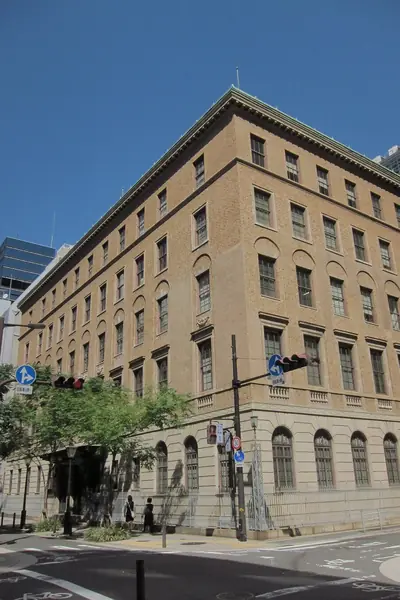
Mengyo Kaikan
In the Senba district of Chūō-ku, Mengyo Kaikan—also known as the Cotton Trading Hall—stands on Sankyūbashi-suji with a distinctive Renaissance-style façade. The historic building was designated an Important Cultural Property by the national government in 2003 and recognized as part of Japan’s industrial modernization heritage in 2007.
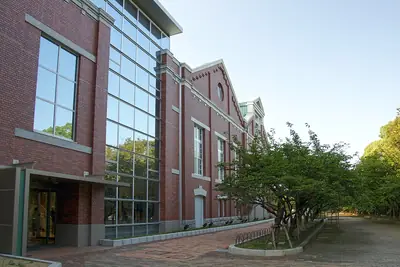
Mint Museum
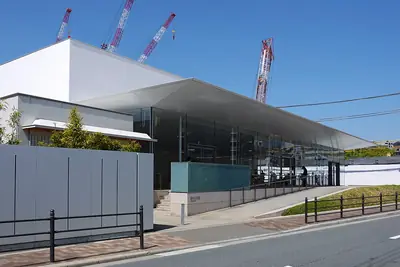
The Mint Museum occupies a brick building dating from 1911, originally the thermal power plant of the Japan Mint’s head office in Kita-ku. Opened as a museum in 1969, it presents around 4,000 objects across four rooms, including Japanese gold and silver pieces, ancient imperial coins, foreign currency, medals and decorative crafts. A large clock made in 1867 greets visitors in the entrance hall.
Osaka Castle and Osaka Castle Museum
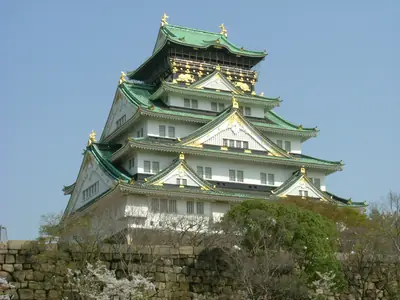
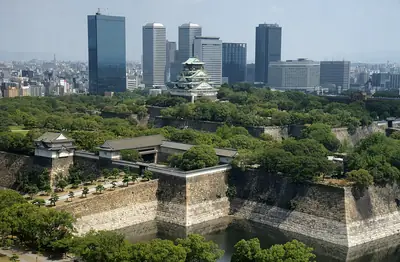
Osaka Castle is one of the city’s most recognizable landmarks and a monument to Japan’s sixteenth-century unification. Built during the Azuchi–Momoyama period on the Uemachi plateau, it became the seat of Toyotomi power before being destroyed during the Siege of Osaka. The Edo shogunate later rebuilt it as an important stronghold for controlling the daimyō of western Japan.
The castle grounds are now Osaka Castle Park, a Special Historic Site of Japan. The present main keep was reconstructed in 1931 and houses the Osaka Castle Museum. The keep itself is registered as a national tangible cultural property, while the museum explores the history connected with the castle and its surroundings.
Kyoikuto
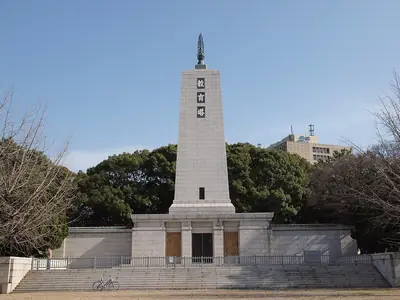
Also in Osaka Castle Park, the Kyōikutō, or Education Tower, is a memorial to people who died in the line of duty in education. It specifically commemorates victims of the 1934 Muroto typhoon, giving this part of the park a more solemn atmosphere.
Fujita Art Museum
The Fujita Art Museum in Amijima contains one of the most important private art collections in the Kansai region. The collection was assembled by businessman Fujita Denzaburō and his descendants and includes Chinese and Japanese painting, calligraphy, sculpture, ceramics, lacquerware, textiles, metalwork and tea-ceremony objects.
Among its works are the Murasaki Shikibu Diary Emaki, a National Treasure, thirteenth- and fourteenth-century scrolls, paintings of the Sixteen Rakan, and tea-ceremony ceramics by artists including Chōjirō and Nonomura Ninsei.
Yamamoto Noh Theater
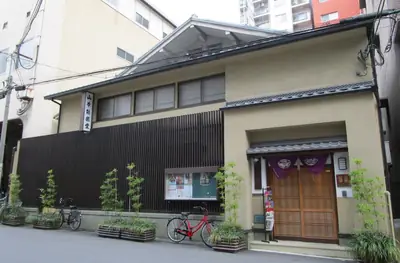
The Yamamoto Noh Theater is a working noh stage inside a three-story wooden building in Chūō-ku. Registered as a national tangible cultural property in 2006, it underwent a major renovation between 2011 and 2014.
The project combined seismic reinforcement and modern facilities with the building’s historic character. Its “open noh theatre” concept includes updated stage lighting, underfloor heating and accessible audience seating. The stage’s painted pine is the work of artist Matsuno Sōfū.
Namba Station and Minami
Namba Station is the gateway to Minami, one of Osaka’s liveliest districts, and the southern end of the Midōsuji corridor. The name refers to a connected group of railway and subway stations, including Nankai Namba, Osaka Namba, the Sennichimae and Midōsuji subway lines, the Yotsubashi line and JR Namba Station.
Above the station is Namba Grand Kagetsu, commonly called NGK, a comedy theatre operated by Yoshimoto. Its nickname, the “palace of laughter,” reflects the importance of comedy in Osaka’s entertainment culture.
Kuromon Market
Kuromon Market is a covered shopping street in Nippombashi and one of Osaka’s classic food destinations. The arcade follows a bent, roughly 580-metre route and contains around 150 to 160 shops. Fresh fish, meat and produce are central to its offer.
Kuromon Market is counted alongside Tsuruhashi Market and Hōnan Market among Osaka’s major food destinations, making it a particularly useful stop for experiencing the city’s commercial and culinary traditions.
Shitennō-ji Temple
Shitennō-ji in Tennōji-ku is one of Japan’s oldest Buddhist temples and gave the district its name. According to the Nihon Shoki, construction began in 593 as one of the seven great temples associated with Prince Shōtoku.
The temple buildings have been rebuilt several times, most recently in 1963, but the grounds retain a five-story pagoda, statues and turtle ponds. Its principal object of worship is Kuze Kannon. Historical names for the temple include Arahaka-ji, Naniwa-daiji and Mitsu-ji.
Tsūtenkaku and Keitaku-en
Tsūtenkaku rises above Shinsekai in Naniwa-ku. The current tower was rebuilt in 1956 after the original, completed in 1912, was lost. It stands 108 metres tall, with its main observation deck at 91 metres, and was registered as a tangible cultural property in 2007.
The tower’s official mascot is Billiken, a pointy-headed good-luck figure closely associated with the landmark. Nearby, Keitaku-en in Tennōji Park offers a contrasting setting: a traditional strolling garden arranged around a pond with small islands, wooded paths and rare stones and trees gathered from across Japan.
Osaka Aquarium Kaiyukan
At Osaka Bay in Minato-ku, Osaka Aquarium Kaiyukan is one of the city’s signature attractions. When it opened in 1990, it was the largest public aquarium in the world. It is now accredited as a museum-equivalent facility by Japan’s education ministry and belongs to the Japanese Association of Zoos and Aquariums.
Its main tank measures nine metres long and thirty-four metres across and holds around 5,400 tons of water. Fourteen additional tanks complete the exhibitions, which together present around 540 species and roughly 40,000 marine animals, seabirds and reptiles.
Hokonagashi Bridge and Miyakojima Bridge
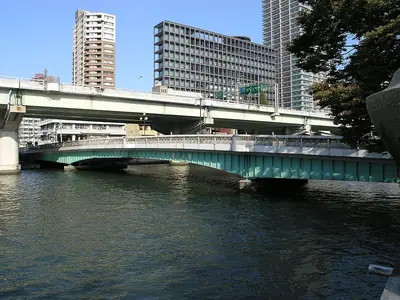
Osaka’s bridges also help explain the city’s geography. Hokonagashi Bridge crosses the Dōjima River in Kita-ku, carrying the city road beside the courthouse.
Miyakojima Bridge carries Miyakojima-dōri across the Ōkawa river between Kita-ku and Miyakojima-ku. The first bridge was built in 1922 as part of Osaka’s municipal loop road and stood alongside tram tracks. The present bridge dates from 1956; the tram line ended in 1969.
Umeda Arts Theater
The Umeda Arts Theater stands in the Chayamachi Applause complex in Kita-ku’s Chayamachi district. It opened in 1992 with a main hall and the smaller Theater Drama City below it.
The theatre has hosted major productions, including the world premiere of Prince of Broadway, a musical retrospective dedicated to Harold Prince and directed by Prince with Susan Stroman.
Explore Osaka with a self-guided audio tour
Neywo’s Osaka audio guide is free and includes 178 narrated places. The app offers five walking tours and one bike route, with narration available in 11 languages:
- Minami: Neon, Street Food and Puppets — 3.61 km, 114 minutes, 10 stops.
- Tennoji: Japan’s Oldest Temple to the Tallest Tower — 3.9 km, 103 minutes, 7 stops.
- Osaka Castle: Toyotomi’s Stronghold and Ancient Palaces — 3.54 km, 105 minutes, 9 stops.
- Art and Trade: From Nakanoshima to Doshomachi — 4.15 km, 115 minutes, 8 stops.
- Umeda: Sky Bridges, Theatres and Namban Art — 4.08 km, 89 minutes, 5 stops.
- Osaka Castle Park: A Ride Around the Moats — a 1.4 km bike route lasting 7 minutes, with 5 stops.
Each story plays as you reach the place, at your own pace, with no group and no schedule. Download Neywo and explore Osaka through its castle, temples, markets, museums, theatres and bridges while the app tells you the story of each stop.
Places with an audio guide in Osaka
8 places in Osaka with a Neywo audio guide. Each one starts telling its story as you reach it.
Self-guided tours in Osaka
6 tours in Osaka, free in the Neywo app. Each stop tells its story as you reach it.
- Bike ride
Osaka Castle Park: A Ride Around the Moats
Cycle the wide car-free paths on the outer ring of Osaka Castle Park, starting at the Museum of History above Naniwa Palace and stopping at the Education Tower, Hokoku Shrine, the foot of the castle keep and its museum. Walk your bike through the inner grounds, where cycling is not allowed.
Osaka Museum of History · Kyoikuto · Hōkoku Shrine · Osaka Castle · Osaka Castle Museum
Open this tour: Osaka Castle Park: A Ride Around the Moats - Walk
Minami: Neon, Street Food and Puppets
Osaka's entertainment heart on foot. Start at a lion-headed shrine and the folk-art museum, pass the comedy theatres of Namba, taste your way through the covered Kuromon Market and visit the national home of bunraku puppet theatre. Cross the old bridges to the Dotonbori canal and its oversized signs, the Glico runner and the site of the Shochikuza kabuki theatre.
Namba-yasaka Shrine · Japan Folk Art Museum · Namba Station · NMB48劇場 · Kuromon Market · National Bunraku Theatre …
Open this tour: Minami: Neon, Street Food and Puppets - Walk
Tennoji: Japan's Oldest Temple to the Tallest Tower
From Shitenno-ji, founded in 593, walk south through the shrine where a famous samurai fell and Tennoji Park's museum and garden to the retro tower of Shinsekai. Then end under Abeno Harukas, Japan's second-tallest building, with its art museum, and the ground where the Siege of Osaka was fought.
Shitennō-ji Temple · Yasui Shrine · Osaka City Museum of Fine Arts · Keitaku-en · Abeno Harukas · Siege of Osaka
Open this tour: Tennoji: Japan's Oldest Temple to the Tallest Tower - Walk
Osaka Castle: Toyotomi's Stronghold and Ancient Palaces
Start at the Tamatsukuri Inari shrine that Hideyoshi had enshrined to protect his castle, then walk into Osaka Castle Park to the shrine of Hideyoshi and the keep he built. Pass the Education Tower memorial and finish on the plateau where emperors built Naniwa Palace 1,400 years ago, with the Museum of History above its excavated ruins.
Tamatsukuri Inari Shrine · Grand Cathedral of the Virgin Mary of Osaka · Hōkoku Shrine · Osaka Castle · Osaka Castle Museum · Kyoikuto …
Open this tour: Osaka Castle: Toyotomi's Stronghold and Ancient Palaces - Walk
Art and Trade: From Nakanoshima to Doshomachi
Cross the old merchant city, from the island museums of Nakanoshima through the science centre and the Yuki Museum of Art to the Cotton Trading Hall, the medicine district's shrine, Goryeo Bridge and a working noh theatre.
Nakanoshima Museum of Art, Osaka · National Museum of Art, Osaka · Osaka Science & Technology Center Exhibition Hall · Yuki Museum of Art · Mengyo Kaikan · Sukunahikona Shrine …
Open this tour: Art and Trade: From Nakanoshima to Doshomachi - Walk
Umeda: Sky Bridges, Theatres and Namban Art
Osaka's northern hub. Start at the Gallery Namban, which keeps early European-contact art, ride the glass sky bridge between the twin towers of the Umeda Sky Building, then visit the theatres of Chayamachi and the HEP complex and end at the Hosei-ji temple in Sonezaki.
Gallery Namban · Umeda Sky Building · HEP Hall · Umeda Arts Theater · Hōsei-ji Temple
Open this tour: Umeda: Sky Bridges, Theatres and Namban Art
Walk Osaka with Neywo
Neywo turns Osaka into a self-guided audio tour. Stories arrive as you reach the place they belong to, and the route reshapes when you wander off it.

