Things to Do in Saitama, Japan: Walking Guide
Things to do in Saitama: shrines, temples and major stadiums
Looking for things to do in Saitama? The capital of Saitama Prefecture combines important Shinto shrines and Buddhist temples with some of Japan’s most notable sports venues. A visit can reveal a different side of the Kantō region, from the sacred grounds of Hikawa Shrine to the vast scale of Saitama Stadium 2002. Neywo offers a free audio guide for Saitama with 88 narrated places, available in 11 languages.
Saitama is an inland prefecture on Honshu, in Japan’s Kantō region. Saitama City is its capital and largest city, while Kawaguchi, Kawagoe and Tokorozawa are among its other major cities. Within the city, religious landmarks, cultural sites and stadiums create a varied itinerary for travellers exploring beyond Japan’s best-known destinations.
What to see in Saitama
Hikawa Shrine
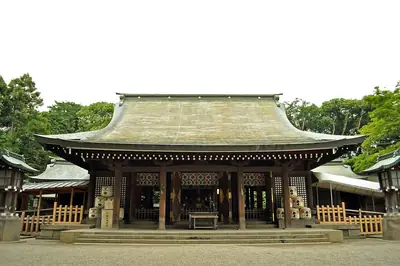
One of the most important places to visit in Saitama is Hikawa Shrine, also called Ōmiya Hikawa Shrine. Located in Ōmiya-ku, it serves as the head shrine for around 280 Hikawa shrines, mainly across the Kantō region.
The shrine’s traditional foundation date is the third year of Emperor Kōshō, corresponding to 473 BCE, although the actual construction date is not known with certainty. The name Ōmiya means “Great Shrine”, reflecting the importance associated with the site. Emperor Meiji gave Hikawa Shrine special status above other shrines in the Kantō region. Its main festival takes place on August first each year.
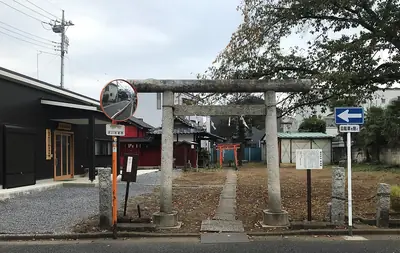
A second Hikawa Shrine is located in Minuma-ku. Other Shinto sites in Saitama City include Tago Inari Shrine in Omiya Ward, Oyaba Hikawa Shrine and Oyaguchi Hikawa Shrine in Minami Ward, and Oto Hikawa Shrine in Chuo Ward. Together, these places offer quieter encounters with the city’s religious traditions.
Jion-ji Temple
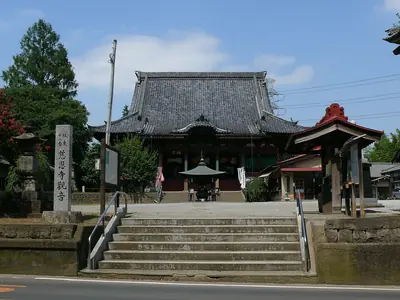
In the Iwatsuki area, Jion-ji Temple is a Tendai Buddhist temple and an important stop on the Bando Thirty-Three Kannon pilgrimage route, where it is number twelve. Its full name is Karin-zan Saijo-in Jion-ji, and it is also known as Jion-ji Kannon.
The temple’s origin story is connected with the monk Ennin, who is said to have carved a Thousand-Armed Kannon image after receiving a request from Bishamonten. After the original image was destroyed by fire, the present principal image was brought from Enryaku-ji by Tenkai around the seventeenth century.
Jion-ji also contains unusual historical objects, including a Nanban-style iron lantern dedicated by Date Yohei, a retainer of the Iwatsuki castle lord Hojo Ujifusa, and a bone from the crown of Xuanzang.
Kichijō-ji Temple
Kichijō-ji Temple in Midori-ku belongs to the Tendai tradition and has Amida Buddha as its principal image. It is also known by the mountain name Hōshuzan and the title Jūrin-in.
The Sanmon gate is one of the temple’s most distinctive features. It is considered one of the oldest examples of temple architecture in Saitama City, making Kichijō-ji a worthwhile stop for visitors interested in the city’s Buddhist heritage.
Other temples add to Saitama’s religious landscape. Shuko-in in Minami-ku belongs to the Sōtō school of Buddhism, while Daisen-in in Sakura-ku is a temple of the Soto school. Kakushin-ji Temple in Urawa-ku belongs to the Jōdo sect of Buddhism.
Saitama Stadium 2002
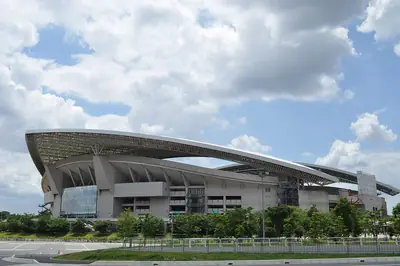
For sports fans, Saitama Stadium 2002 is one of the city’s defining landmarks. Built for the 2002 FIFA World Cup, it is Japan’s largest football-specific stadium, with space for 63,700 spectators.
The stadium is home to J1 League club Urawa Red Diamonds and is also used for international matches by the Japan national team. It hosted a semi-final during the 2002 FIFA World Cup and the semi-finals of the football tournament at the 2020 Summer Olympics.
Its opening match took place on October 13, 2001, when Urawa Red Diamonds played Yokohama F. Marinos. The attendance of 60,553 set a J.League record at the time. Locally, the stadium is often called Saitama Stadium or simply Saisuta.
Saitama Super Arena
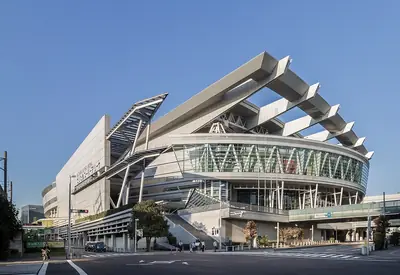
Saitama Super Arena is a large indoor venue in Chūō-ku, Saitama City. Known in Japanese as さいたまスーパーアリーナ, it is also referred to as SSA or Tama Ari.
Its most distinctive feature is a huge movable section of seating. This allows the venue to change scale, reducing its capacity for smaller events and creating a more intimate setting. At its largest, the arena can hold up to 36,500 people; the main arena accommodates between 19,000 and 22,500.
Designed by Dan Meis, then working with Ellerbe Becket and Nikken Sekkei, the building was selected through an international design competition. It opened provisionally on May 5, 2000, and officially opened on September 1 of the same year. Its events have included professional wrestling, mixed martial arts, boxing, volleyball, tennis, ice hockey, gymnastics and many other sports. It is also the only arena in Japan equipped especially for American football.
St. Theresa of the Child Jesus Cathedral, Urawa
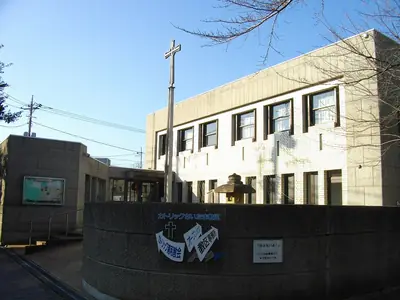
St. Theresa of the Child Jesus Cathedral, Urawa, is the seat of the Roman Catholic Diocese of Saitama. Also known as Urawa Church, it remains a parish of the Roman Catholic Church.
The church was founded in 1940 and became a cathedral in 1957, when the Diocese of Saitama was established. Its official Japanese name is 幼いイエスの聖テレジア司教座聖堂, meaning the Cathedral of St. Theresa of the Child Jesus.
A Saitama self-guided walking tour
A good way to explore the city’s shrine and cultural heritage is Neywo’s self-guided walking tour, “Omiya: The Great Shrine and the Bonsai Museum.” The walk covers 5.01 km, takes 107 minutes and includes seven narrated stops.
The route includes Tōkō-ji, Tago Inari Shrine, Saitama Gokoku Shrine, Hikawa Shrine, NACK5 Stadium Omiya, the Omiya Bonsai Art Museum, Saitama, and Toro Shinmei-sha. It brings together religious sites, a stadium and the city’s bonsai heritage in one route.
Explore Saitama with Neywo
Download Neywo to explore Saitama with a free audio guide covering 88 narrated places. The city currently has one walking tour: a 5.01 km route lasting 107 minutes, with seven stops.
The app tells the story of each place as you reach it, at your own pace, with no group and no schedule. Narration is available in 11 languages, so you can discover Saitama independently while moving from one stop to the next.
Saitama is part of Japan, a country with many different urban and cultural landscapes. If you are continuing your journey, you can also explore Sendai, Nikko or Osaka.
Places with an audio guide in Saitama
8 places in Saitama with a Neywo audio guide. Each one starts telling its story as you reach it.
Self-guided tours in Saitama
1 tour in Saitama, free in the Neywo app. Each stop tells its story as you reach it.
- Walk
Omiya: The Great Shrine and the Bonsai Museum
Saitama's Omiya district takes its name from Hikawa Shrine, the head shrine of some 280 Hikawa shrines across the Kanto region and the 'Great Shrine' that gave Omiya its name. Start at a quiet Soto Zen temple, pass neighbourhood shrines and the Gokoku shrine, cross Omiya Park past the home stadium of RB Omiya Ardija, then continue north to the world's first public bonsai art museum and a last small shrine.
Tago Inari Shrine · Saitama Gokoku Shrine · Hikawa Shrine · NACK5 Stadium Omiya · Omiya Bonsai Art Museum, Saitama · Toro Shinmei-sha
Open this tour: Omiya: The Great Shrine and the Bonsai Museum
Walk Saitama with Neywo
Neywo turns Saitama into a self-guided audio tour. Stories arrive as you reach the place they belong to, and the route reshapes when you wander off it.

