Toyama, Japan: Self-Guided Walking Tour
Things to Do in Toyama: Culture, Mountain Landscapes and Traditional Villages
Looking for things to do in Toyama? This city and its surrounding prefecture offer a quieter side of Japan, where World Heritage villages, historic Buddhist art, museums and dramatic mountain landscapes come together. Toyama is especially rewarding for travellers who want to explore beyond Japan’s busiest destinations and discover a region shaped by snow, rivers, traditional craftsmanship and the Northern Alps.
Neywo has a free audio guide for Toyama with 89 narrated places, available in 11 languages.
What to See in Toyama and the Surrounding Region
Toyama’s most interesting sights extend beyond the city itself. The wider area includes traditional settlements, cultural museums and remarkable engineering landmarks, making it a destination with plenty to explore at your own pace.
Ainokura Village
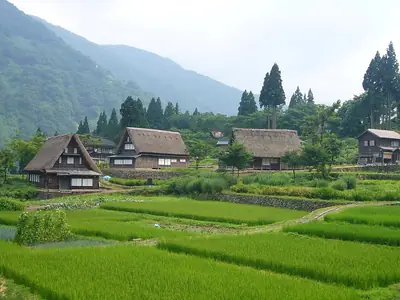
Ainokura Village forms part of a World Heritage site in Japan. Its importance lies in the preservation of a traditional rural settlement and the historic buildings that reflect the region’s distinctive way of life.
Suganuma Village
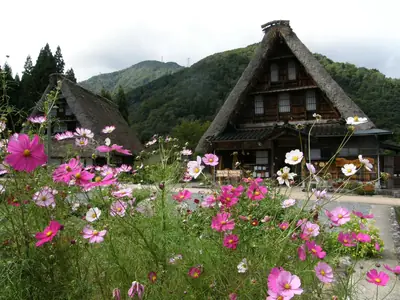
Suganuma Village is another beautifully preserved settlement forming part of a World Heritage site. Its narrow lanes are lined with traditional farmhouses known as gassho-zukuri. Their steep thatched roofs were designed to withstand the heavy snowfall of the region, while their shape resembles hands pressed together in prayer.
The houses also reveal how architecture supported local livelihoods. Their large attic spaces once provided room for activities connected with the area’s silk and paper industries.
The Great Buddha of Takaoka
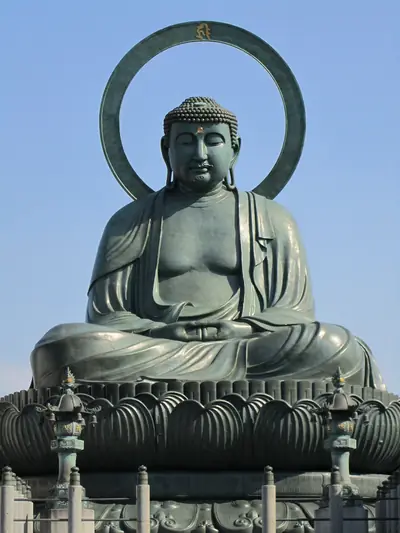
The Great Buddha of Takaoka stands in the grounds of Daibutsu Temple and is one of the city’s best-known landmarks. The seated bronze statue of Amida Buddha is about 15 metres tall and is regarded as one of the three great Buddha statues of Japan, alongside the famous statues in Nara and Kamakura.
The site has a long history. The original statue was created from wood in 1221, but fires destroyed it several times over the centuries. The bronze statue seen today dates from 1907 and has become a lasting symbol of Takaoka.
Habake Residence
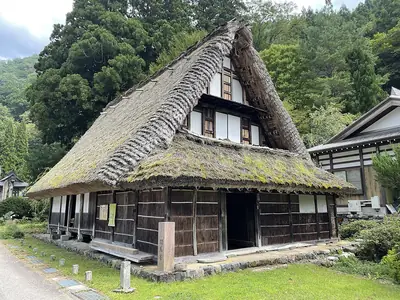
The Habake Residence is a preserved gasshō-zukuri farmhouse in the Tamukai settlement of Nanto City. It is recognised as an Important Cultural Property of Japan.
Its steep thatched roof was developed to shed heavy snow, while the spacious attic supported traditional silk and paper industries. The residence offers a close look at the practical design of the farmhouses associated with this part of Toyama.
Kurobe Dam
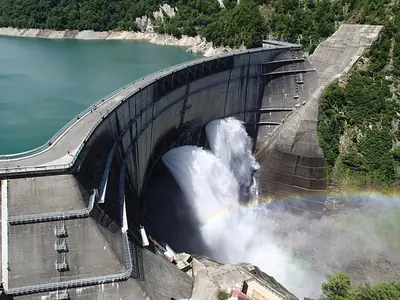
Kurobe Dam is Japan’s tallest dam, rising 186 metres in the dramatic Kurobe Gorge. Located at an elevation of 1,454 metres between the Tateyama and Ushiro-Tateyama mountain ranges, it is one of the region’s most impressive engineering landmarks.
Construction began in 1956 and took seven years to complete. The project was finished in June 1963, and 171 workers lost their lives during its construction. The dam is a variable-radius arch dam: its changing curve helps it withstand the pressure of the water while using less material than a traditional gravity dam.
Kurobe Dam is also known as Kuroyon Dam, named after the Kurobe No. 4 Hydropower Plant it supports.
Tateyama Caldera Sabo Museum
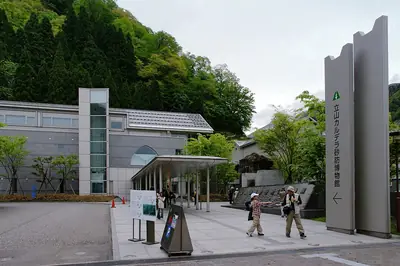
The Tateyama Caldera Sabo Museum explores the volcanic landscape of the Tateyama caldera and the region’s long history of erosion and flood control. Its exhibitions focus on both the ancient volcanic formation and sabo, the Japanese approach to erosion and sediment control.
The subject is closely connected to Toyama’s geography. Steep volcanic terrain can produce debris and floods, making the management of erosion essential for protecting communities downstream.
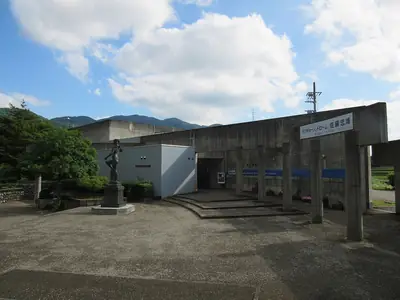
Shogawa Memorial Museum of Sotojiro Matsumura
Located in the Kanaya area of Shogawa Town, the Shogawa Memorial Museum of Sotojiro Matsumura is a public art museum devoted to the work of sculptor Sotojiro Matsumura. His art forms the centre of the museum’s collection.
Nanto Fukumitsu Art Museum
The Nanto Fukumitsu Art Museum focuses primarily on two artists, Ishizaki Ko-yo and Munakata Shiko. Its concentrated collection makes it a useful stop for travellers interested in Japanese art and in exploring the work of these two distinctive creators.
Tonami Sankyoson Museum
The Tonami Sankyoson Museum presents the Tonami Plain as one large open-air museum. The area is known for its scattered settlement pattern, and the museum acts as the centre of this broader cultural concept.
The facility includes four buildings: an information hall, a traditional culture hall, a community exchange hall and a folk tools hall. Together, they introduce the landscape, traditions and everyday objects associated with the Tonami area.
Tonami Tulip Gallery
The Tonami Tulip Gallery is a botanical garden and museum dedicated entirely to tulips. It opened on April 20, 1996, and occupies a spacious site of about 27,500 square metres.
The building is a two-storey steel-reinforced concrete structure with a total floor area of about 2,900 square metres. It offers a focused look at one of the plants closely associated with Tonami.
Tonami Provincial Museum
Inside Tonami Tulip Park, the Tonami Provincial Museum presents the history and culture of the Tonami area. It also houses the Tonami Dispersed Settlement Research Institute, which studies the region’s distinctive scattered village pattern.
The museum’s branch exhibition space, the Tonami Folk Tools Exhibition Room in the Ranjo district, displays traditional tools and everyday objects from the area.
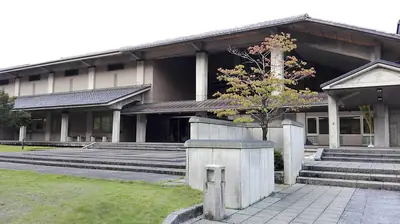
Fukuno Creative Cultural Center Helios
Fukuno Creative Cultural Center Helios is a cultural hub in the Yakata area of Nanto City. Designed by architect Akira Uchii, it opened on March 3, 1991.
The centre includes the Fukuno Library, part of the Nanto City Library system, and the lifelong learning facility Kichiya. Since 1991, Helios has also been the main venue for the Sukiyaki Meets the World festival.
Fukuoka Camera Museum
The Fukuoka Camera Museum in Fukuoka-cho, Takaoka, is devoted entirely to cameras and photography. Its collection celebrates the history and craft of photography, making it an appealing stop for anyone interested in how cameras and photographic culture have developed.
Fukuoka History and Folklore Museum of Takaoka City
The Fukuoka History and Folklore Museum of Takaoka City preserves and presents the local history and folk traditions of the former Fukuoka Town area. It offers an introduction to the cultural heritage of this part of Takaoka.
Toyama Prefectural Library
The Toyama Prefectural Library is the main public library serving Toyama Prefecture. Located in Chayamachi, Toyama City, it provides a quiet place to browse local publications or take a break during a day of exploring.
Toyama’s attractions make sense as part of a wider journey through Japan. Travellers continuing through the country can also compare the region’s quieter cultural character with cities such as Osaka, Okayama or Sendai.
Explore Toyama with Neywo
Neywo’s free audio guide for Toyama includes 89 narrated places. There are no scheduled tours or fixed routes to follow: the app tells the story of each place as you reach it, at your own pace, with no group and no schedule.
Download Neywo and explore Toyama independently, listening to the city and its surrounding sights as you discover them.
Places with an audio guide in Toyama
8 places in Toyama with a Neywo audio guide. Each one starts telling its story as you reach it.
Walk Toyama with Neywo
Neywo turns Toyama into a self-guided audio tour. Stories arrive as you reach the place they belong to, and the route reshapes when you wander off it.

