Things to Do in Tanabe, Japan: Walking Guide
Things to do in Tanabe, Japan
Looking for things to do in Tanabe? This city in Wakayama Prefecture is a gateway to the Kumano Kodo, with important Shinto sites, museums, mountain landscapes and pilgrimage routes connected to the spiritual history of the Kii Peninsula. Neywo also offers a free audio guide for Tanabe, with seven narrated places available in 11 languages.
What to see in Tanabe
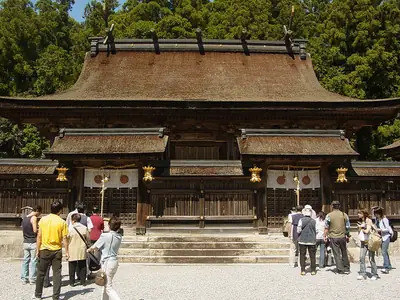
Kumano Hongū Taisha
Kumano Hongū Taisha is one of Japan’s most important Shinto shrines and one of the three grand shrines of the Kumano region, known together as the Kumano Sanzan. It is included in the UNESCO World Heritage Site Sacred Sites and Pilgrimage Routes in the Kii Mountain Range, which extends across Wakayama, Nara and Mie prefectures.
The shrine is dedicated to the Kumano Sansho Gongen: Ketsumimiko, Hayatama and Fusubi. For centuries, the ancient Kumano Kodo pilgrimage routes have led to this spiritual centre.
The shrine originally stood at Ōyunohara, on a sandbank where the Kumano and Otonashi rivers meet. A devastating flood in 1889 destroyed part of the original complex, and the remaining structures were moved to the present site in 1891. Four of the deities were transferred, while the other eight remain at the original location in two stone monuments. The Ōtorii, the largest torii shrine gate in the world, now marks the entrance to the former site.
Sacred Sites and Pilgrimage Routes in the Kii Mountain Range
The Sacred Sites and Pilgrimage Routes in the Kii Mountain Range bring together three major sacred areas: Yoshino and Omine, the Kumano Sanzan and Koyasan. UNESCO recognised the site in 2004.
Its heritage includes not only the sacred places themselves but also the mountain routes that connect them. The Kumano Kodo, the Omine Okugake Trail and the Koya Pilgrimage Road have linked these religious centres for centuries, crossing the wooded mountains of the Kii Peninsula.
For visitors interested in the cultural landscape around Tanabe, the site explains why the region is much more than a collection of isolated shrines and trails. Its religious traditions, pilgrimage paths and mountain scenery form one connected heritage.
Tsugizakura Ōji Shrine
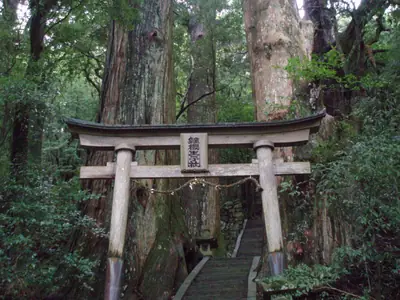
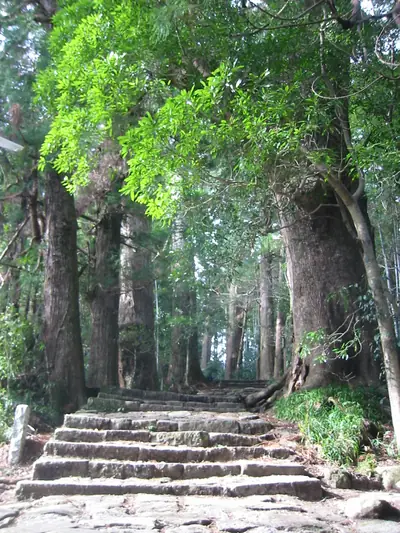
Tsugizakura Ōji Shrine is a quiet stop on the ancient Kumano pilgrimage route. It is the 83rd of the Ninety-Nine Ōji Shrines, a series of smaller shrines that once guided pilgrims through the sacred Kii mountains.
The site is also associated with the names Hidehira-zakura and Ipposugi. Its peaceful setting and connection with the pilgrimage route make it a particularly atmospheric place to pause while exploring the Kumano Kodo.
Kumanokodo Nakahechi Museum of Art
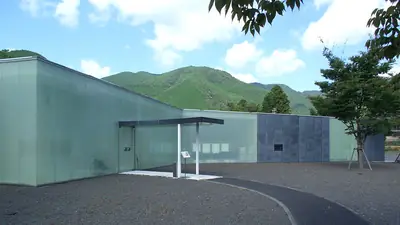
The Kumanokodo Nakahechi Museum of Art stands beside the Nakahechi route of the Kumano Kodo. It offers a place for walkers and pilgrims to rest while discovering art connected with the region.
The building has the appearance of a glowing glass box. Inside, a glazed corridor surrounds the exhibition rooms, while a rest area at the back looks out towards the Kumano Kodo scenery. The museum’s collection includes works by local Japanese painters, especially the Nihonga artist Nagase Banka and the Nanga painter Watase Ryōun. It also holds more than a thousand works by Japanese artists connected with the region.
Minakata Kumagusu Archives
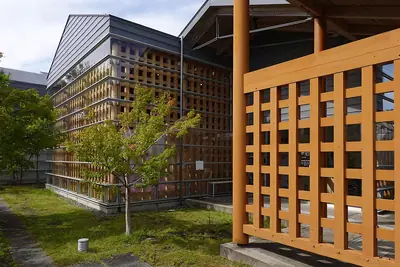
The Minakata Kumagusu Archives combine the restored home of Minakata Kumagusu with a modern archive building. The collection preserves his books, documents, letters and specimens, offering an insight into the work of one of Japan’s distinctive scholars.
Kumagusu’s interests ranged from plants and fungi to folklore and philosophy. After his death, his family kept the collection together. In 2000, his last surviving daughter, Fumie, donated it to the city of Tanabe. The city restored the residence to its former appearance and built the archive hall just north of the house.
Tanabe City Museum of Art
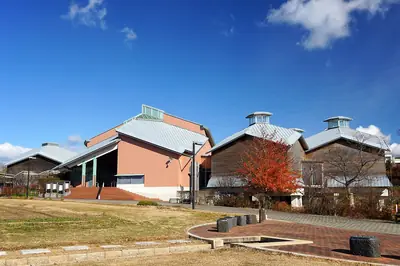
Tanabe City Museum of Art is located inside Shinjo General Park. It opened in 1996 around a collection entrusted by Wakiura Reijiro, a Tanabe-born businessman and collector.
The museum focuses on artists connected with the region. Its collection includes works by the three great literati painters of Kishu: Gion Nankai, Kuwayama Tanshoku and Noro Rokkaku. It also presents Japanese Western-style paintings collected by Yoshitaro Wakimura, Reijiro’s older brother and an economist.
Roadside station Tanabe Ryujin Gomasan Sky Tower
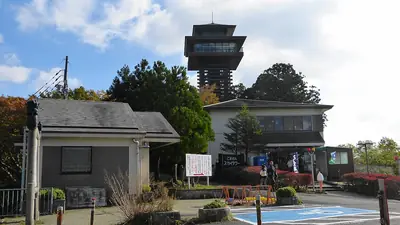
In the village of Ryujin, within Tanabe City, the Roadside Station Tanabe Ryujin Gomasan Sky Tower stands along National Route 371. The site has a wide parking area and is known as one of the premier destinations in the Kansai region for stargazing and astronomical observation.
Clear skies and low light pollution make it particularly attractive after dark. It is a different way to experience Tanabe’s mountain environment, away from the city’s shrines and museums.
Explore Tanabe at your own pace with Neywo
A Tanabe self-guided walking tour is a simple way to connect the city’s museums, shrines and pilgrimage heritage without joining a group. Neywo’s free audio guide tells the story of each place as you reach it, at your own pace, with no group and no schedule.
The Tanabe guide includes seven narrated places. Download Neywo and explore Tanabe while the app accompanies your walk with stories of the city’s cultural and spiritual landmarks. If you are continuing through Japan, you can also discover destinations such as Osaka, Uji and Okayama.
Places with an audio guide in Tanabe
7 places in Tanabe with a Neywo audio guide. Each one starts telling its story as you reach it.
Walk Tanabe with Neywo
Neywo turns Tanabe into a self-guided audio tour. Stories arrive as you reach the place they belong to, and the route reshapes when you wander off it.

