Gdańsk, Poland: Self-Guided Walking Tour
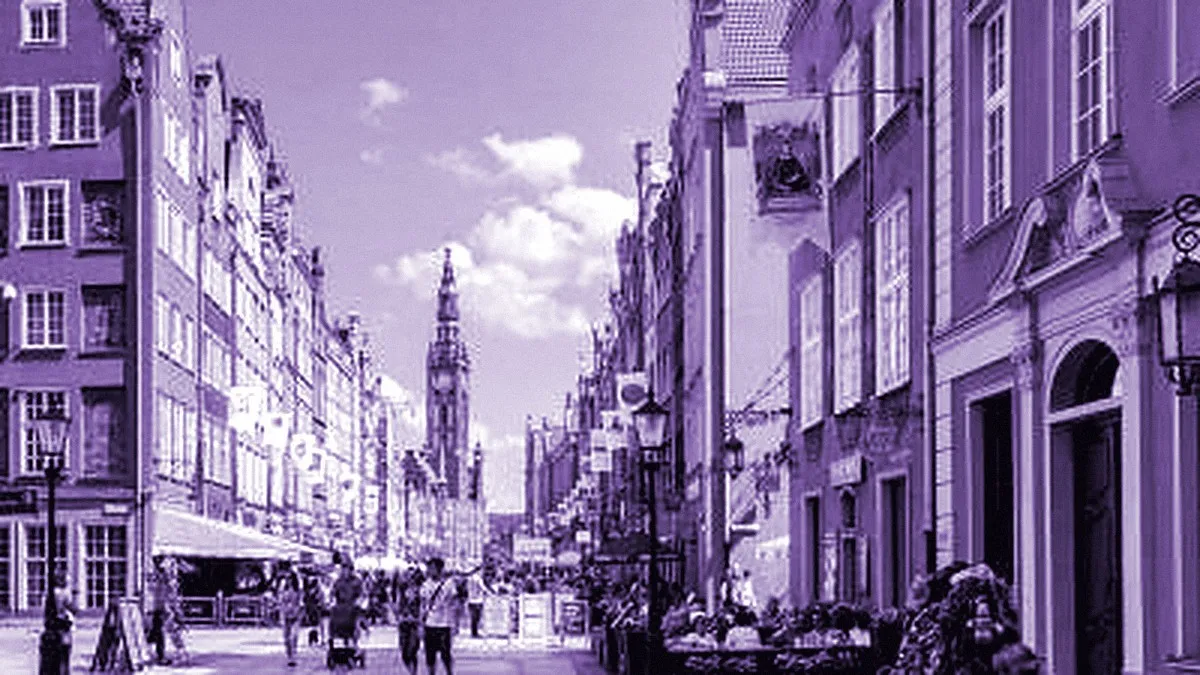
Things to Do in Gdańsk: What to See in the Historic City
Gdańsk is a historic Baltic city known for its Brick Gothic churches, merchant architecture, museums and layered religious and civic history. The city’s central streets bring together landmarks such as St. Mary’s Basilica, Artus Court and the Main Town Hall, while districts such as Oliwa and the shipyard reveal other sides of Gdańsk. Neywo offers a free audio guide for Gdańsk with 85 narrated places.
What to See in Gdańsk
St. Mary’s Basilica
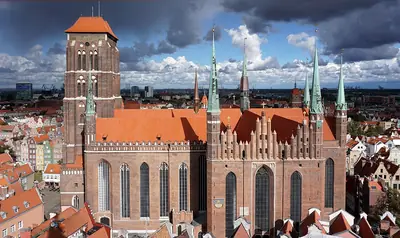
St. Mary’s Basilica is one of Gdańsk’s defining landmarks and is often called the “Crown of Gdańsk”. Built between 1346 and 1502, it is a major example of Brick Gothic architecture, a style that spread around the Baltic Sea.
Its massive western bell tower and slender corner turrets shape the city skyline. Inside, the basilica contains medieval works including the Altar of the Coronation of Mary, the Beautiful Madonna of Gdańsk and the Pietà. Other notable features include the altar of St. Barbara, the Tablet of the Ten Commandments and an astronomical clock.
Gdańsk Main Town Hall and the Museum of Gdańsk
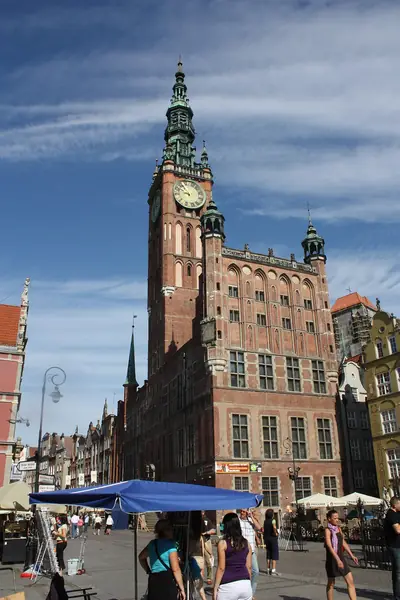
The Main Town Hall combines Gothic and Renaissance character and houses the Museum of Gdańsk. Its tower rises to 81.5 metres, making it the tallest tower in Gdańsk.
The museum’s History and Art sections include paintings, sculptures and work by goldsmiths, potters and weavers from the 16th to the 20th centuries. The Red Room is a highlight, with Dutch Mannerist decoration, a richly carved 1593 fireplace, a 1596 portal and a ceiling containing 25 paintings. The room was dismantled and hidden in 1942 to protect it from wartime bombing, then restored after the war.
Artus Court
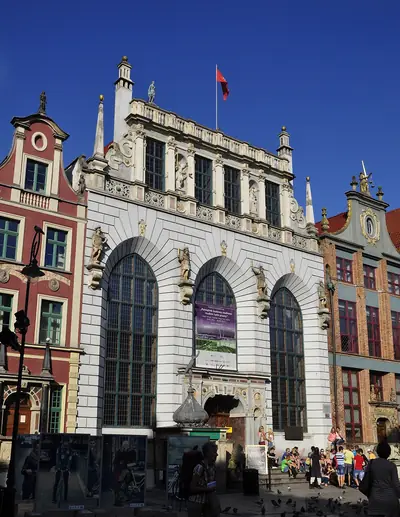
Artus Court stands at Długi Targ 44, close to Neptune’s Fountain and the Long Market. Established by the mid-14th century, it was a meeting place for wealthy merchants, city officials and visiting dignitaries. Its name refers to the legend of King Arthur, whose court represented honour, loyalty and chivalry.
Today, Artus Court is a branch of the Gdańsk History Museum. The building reflects later rebuilding and renovations after the original structure was destroyed by fire in 1476.
Uphagen’s House
Uphagen’s House offers a glimpse into the home of an 18th-century merchant. The building’s earliest recorded structure dates to 1357, while the property was bought by Johann Uphagen in 1775. He commissioned a Rococo redesign of the façade and interiors.
The rooms feature low wood panelling and decorative motifs including insects, flowers, birds, ancient architecture and Chinese scenes. It is a reconstructed merchant house and one of only a few such European homes open to visitors.
St Catherine’s Church
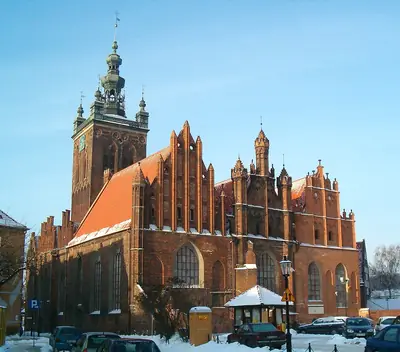
Dating from the 1220s, St Catherine’s Church is the oldest church in Gdańsk. It was expanded after 1379 and served as a Protestant church from 1545 until the end of World War II in 1945.
The primarily Gothic building has a high gable roof, chapels and vaults. Its 76-metre tower is topped by a Baroque helm designed by Jacob van den Block in 1634. Inside are paintings by Anton Möller and Isaac van den Block, Baroque epitaphs and the tomb of the astronomer Johannes Hevelius, dated 1659.
Saint Nicholas Church
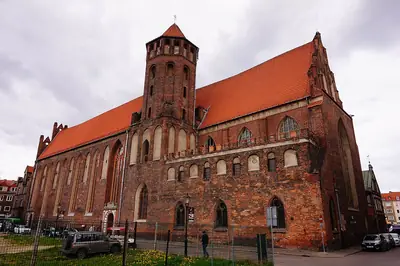
Saint Nicholas Church is a Brick Gothic basilica in Gdańsk’s Old Town and remains connected with the Dominican Order. The present church was built in the 14th and 15th centuries, although an earlier church on the site probably existed around 1185.
It is especially notable for surviving the destruction of World War II as the only historic church in central Gdańsk to escape damage. Its Gothic interior includes a star vault added in 1487, supported by eighteen octagonal pillars.
Royal Chapel
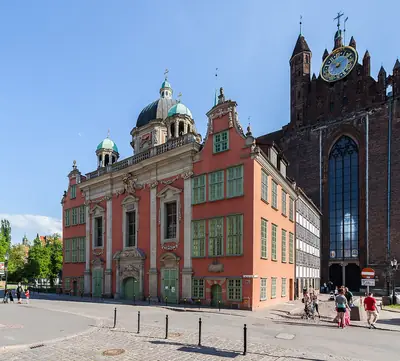
The Royal Chapel is a Baroque Roman Catholic church beside St. Mary’s Basilica. Completed in 1681 and consecrated in 1685, it was built to provide Gdańsk Catholics with their own place of worship after Catholics were expelled from the basilica in the late 16th century.
The chapel was created after the demolition of five houses on Saint Spirit Street. Its history reflects the longstanding religious divisions that shaped Gdańsk’s central churches.
Saint John Church
Saint John Church is a valuable Brick Gothic monument in the Old Town. Construction began in 1377 on the site of an earlier wooden chapel. The church is a three-nave hall with an east-side transept, a 47-metre tower and a low hipped roof.
The building developed over several stages, including an expansion of the nave between 1450 and 1463. It was handed over to Protestants in 1559, adding another chapter to the city’s complex religious history.
Saint Bridget Church
Saint Bridget Church was built for followers of Saint Bridget’s Order in the late 14th century, with construction completed in 1397. Almost entirely destroyed during World War II, it was reconstructed in 1973 according to designs from 1394 to 1420.
The church is known for its “Amber Altar”, an ongoing project connected with Divine Providence, Pope John Paul II’s papacy and Poland’s regained independence. Its imagery includes the Blessed Virgin Mary, painted by Father Franciszek Znaniecki.
Saint Joseph’s Church
Saint Joseph’s Church is a Roman Catholic rectoral church connected with the parish of St. Bridget. Its adjoining chapel hosts adoration of the Blessed Sacrament throughout the day, with the sacrament of reconciliation also available during that time.
During the Reformation period, it was one of the few Roman Catholic churches still operating in Gdańsk, alongside the Dominican and Bridgett churches and, later, the Royal Chapel.
Saint Barbara Church
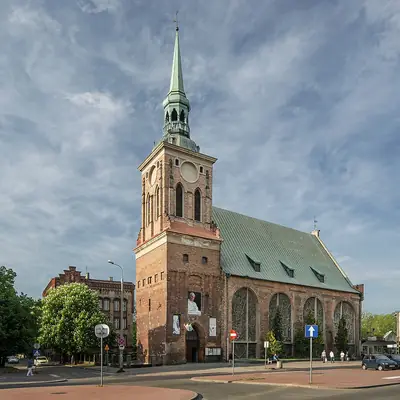
Saint Barbara Church stands in the city centre and served as a Protestant church from the middle of the 16th century until 1945. The building is 36 metres long, 18 metres wide and 10 metres high, with a tower of about 40 metres facing Długie Ogrody Street.
Three bronze bells hang inside the tower. Named Mary, Saint Barbara and the Heart of Jesus, they were cast by Friedrich Wilhelm Schilling and donated by the clergy of the Magdeburg diocese.
The National Museum in Gdańsk
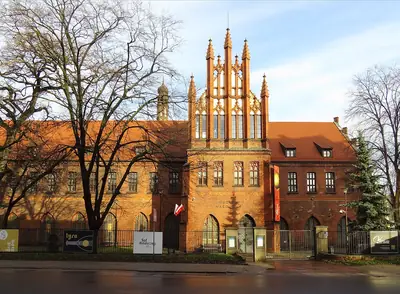
The National Museum in Gdańsk occupies a former late-Gothic Franciscan monastery. Its origins reach back to the late 19th century, when it was known as the Gdańsk City Museum.
Its collections include the Jacob Kabrun collection of several thousand pictures, drawings and prints by European masters from the late 15th to the early 19th centuries. World War II caused serious damage: about 65% of the main building was destroyed, and many collections were lost. The first post-war exhibition opened in 1948, and Hans Memling’s Last Judgment and parts of the painting and print collections returned in 1956.
Oliwa Cathedral
Oliwa Cathedral, formally the Archcathedral Basilica of the Holy Trinity, combines Brick Gothic, Mannerist and Baroque elements. Completed in the late 14th century, it has two 46-metre towers with sharply edged Baroque helmets and a Baroque portal dating from 1688.
The interior contains artistic work from the Renaissance, Baroque, Rococo and Classical periods. Among its features are 23 altars, many in Baroque and Rococo styles, including several made of marble. Nearby, Saint James Church in Gdańsk Oliwa and the former monastery complex offer further reasons to explore the district.
For a wider trip through the region, compare Gdańsk with Gdynia, another city in Pomerania, or continue exploring Poland.
Explore Gdańsk with Neywo
Neywo turns a visit into a Gdańsk self-guided walking tour. The app has 8 walking tours and 1 bus route, covering routes from 0.41 to 5.24 km and from 22 to 204 minutes, with 4 to 15 narrated stops per tour or route.
Choose the Royal Way, the Old Town churches, the western gates, the Lowland fortifications, Oliwa, the shipyard, Granary Island or a wider route through the historic centre. The bus route covers Gdańsk’s gates, churches and shipyard. Each story plays as you reach the place, at your own pace, with no group and no schedule. Narration is available in 11 languages.
Download Neywo and explore Gdańsk with a free audio guide that brings each stop to life as you walk or ride through the city.
Places with an audio guide in Gdańsk
8 places in Gdańsk with a Neywo audio guide. Each one starts telling its story as you reach it.
Self-guided tours in Gdańsk
11 tours in Gdańsk, free in the Neywo app. Each stop tells its story as you reach it.
- Bike ride
Wiślana Trasa Rowerowa · the Motława and the Old Town by bike
7 narrated places along the way: Saint Elisabeth of Hungary church in Gdańsk, Saint Nicholas Church, Uphagen's House, Kotwiczników Tower, Stągwie Mleczne, Gdańsk, Saint Barbara church in Gdańsk, Żuławska Gate in Gdańsk.
Saint Elisabeth of Hungary church in Gdańsk · Saint Nicholas Church · Uphagen's House · Kotwiczników Tower · Stągwie Mleczne, Gdańsk · Saint Barbara church in Gdańsk …
Open this tour: Wiślana Trasa Rowerowa · the Motława and the Old Town by bike - Bus ride
Bus 106: Gdańsk's Gates, Churches and Shipyard
A regular city bus that loops through the old and right town: Żuławska Gate, St Barbara's, the National Museum in its Franciscan monastery, the High Gate and St Elisabeth's, finishing near the Gdańsk Shipyard where Solidarity began. The same line runs on to Westerplatte, where the Second World War began.
Żuławska Gate in Gdańsk · Saint Barbara church in Gdańsk · Immaculate Conception church in Gdańsk · National Museum in Gdańsk · High Gate in Gdańsk · Saint Elisabeth of Hungary church in Gdańsk …
Open this tour: Bus 106: Gdańsk's Gates, Churches and Shipyard - Bus ride
Bus 106 · the Old Town gates to the shipyard
Board at Brama Żuławska 05, alight at Europejskie Centrum Solidarności 02. 7 narrated places along the way: Żuławska Gate in Gdańsk, Saint Barbara church in Gdańsk, Immaculate Conception church in Gdańsk, National Museum in Gdańsk, High Gate in Gdańsk, Saint Elisabeth of Hungary church in Gdańsk, Center for worker protection of Gdansk shipyard.
Żuławska Gate in Gdańsk · Saint Barbara church in Gdańsk · Immaculate Conception church in Gdańsk · National Museum in Gdańsk · High Gate in Gdańsk · Saint Elisabeth of Hungary church in Gdańsk …
Open this tour: Bus 106 · the Old Town gates to the shipyard - Walk
The Royal Way: St Mary's, Artus Court and the Crane
Gdańsk's showpiece. The largest brick church in the world, the merchants' Artus Court, the Golden House, and down through the water gates to the medieval port crane and the Soldek moored beside it.
Royal Chapel in Gdańsk · St. Mary's Basilica in Gdańsk · Gdańsk Main Town Hall · Artus Court · Golden House in Gdańsk · Green Gate …
Open this tour: The Royal Way: St Mary's, Artus Court and the Crane - Walk
The Old Town churches and the Amber Museum
North of the Royal Way, six churches in a kilometre and a half — St Catherine's, St Bridget's with its amber altar, St Nicholas, which the Red Army spared — plus the amber museum in the old mill.
Saint Elisabeth of Hungary church in Gdańsk · Klasztor Zgromadzenia Misjonarzy Oblatów Najświętszej Maryi Panny Niepokalanej · Saint Josephs church · Amber Museum in Gdańsk · St Catherine's Church · Saint Bridget Church …
Open this tour: The Old Town churches and the Amber Museum - Walk
The western gates and the National Museum
The landward defences — the High Gate, the Golden Gate, the Gaol Tower — with Uphagen's House, an eighteenth-century merchant interior, and the National Museum, which holds Memling's Last Judgement.
Saints Peter and Paul church in Gdańsk · National Museum in Gdańsk · Holy Trinity Church · Klasztor Ojców Franciszkanów Konwentualnych · Mennonite church in Gdańsk · Corner Tower in Gdańsk …
Open this tour: The western gates and the National Museum - Walk
The Lowland fortifications
Five kilometres around the eastern water defences — bastions, the Stone Sluice, the Lowland Gate and the Żuławy Gate. Earthworks and canals rather than monuments, and almost nobody else walking it.
White Tower in Gdańsk · Pod Zrębem Tower in Gdańsk · Lowland Gate in Gdańsk · Śluza Kamienna · Immaculate Conception church in Gdańsk · Żuławska Gate in Gdańsk …
Open this tour: The Lowland fortifications - Walk
Oliwa: the cathedral and the abbot's palace
Four hundred metres in the northern suburb: a Cistercian cathedral with a famous rococo organ that is demonstrated hourly, the abbot's palace and its park, and the abbey granary.
Saint James church in Gdańsk Oliwa · Muzeum Archidiecezjalne w Gdańsku · Oliwa Cathedral · Spichlerz Opacki · Abbot's Palace (Oliwa)
Open this tour: Oliwa: the cathedral and the abbot's palace - Walk
The Shipyard and the European Solidarity Centre
Where the Soviet bloc started coming apart. Gate No. 2, where Wałęsa announced the August agreement, the monument to the workers shot in 1970, and the rusted-steel Solidarity centre behind it.
NOMUS · European Solidarity Centre · Center for worker protection of Gdansk shipyard · Gate No 2 of the Gdańsk Shipyard · Monument to the Fallen Shipyard Workers of 1970 · Railway directory in Gdańsk …
Open this tour: The Shipyard and the European Solidarity Centre - Walk
Granary Island: St Barbara's and the Cow Gate
Under a kilometre on the far bank of the Motława — the Milk Cans towers, the Cow Gate, the anchor-makers' tower, and St Barbara's, rebuilt after 1945 like most of what stands here.
Saint Barbara church in Gdańsk · Stągwie Mleczne, Gdańsk · Cow Gate in Gdańsk · Kotwiczników Tower
Open this tour: Granary Island: St Barbara's and the Cow Gate - Walk
The Ultimate Gdańsk: Artus Court to St Elisabeth's
Two and a quarter kilometres and eleven churches, gates and merchant houses — the Main Town Hall, St Mary's, the Crane, and the whole line of Old Town churches. Gdańsk was rebuilt from photographs and it shows nowhere better.
Golden House in Gdańsk · Artus Court · Gdańsk Main Town Hall · St. Mary's Basilica in Gdańsk · Royal Chapel in Gdańsk · Żuraw in Gdańsk …
Open this tour: The Ultimate Gdańsk: Artus Court to St Elisabeth's
Walk Gdańsk with Neywo
Neywo turns Gdańsk into a self-guided audio tour. Stories arrive as you reach the place they belong to, and the route reshapes when you wander off it.

