What to See in Białystok, Poland: Free Audio Guide
Things to Do in Białystok: What to See in Poland’s Multicultural City
The best things to do in Białystok include exploring Branicki Palace, Kościuszki Square, historic churches, museums, and the city’s distinctive architectural heritage. Białystok is a rewarding destination for understanding the history and cultural diversity of Podlasie, with Polish, Orthodox, Jewish, and industrial influences visible across its streets. Neywo offers a free audio guide for Białystok with 85 narrated places.
What to See in Białystok
The city centre brings together grand residences, religious buildings, museums, public squares, and reminders of Białystok’s industrial past. These are some of the most important places to include in your visit.
Branicki Palace
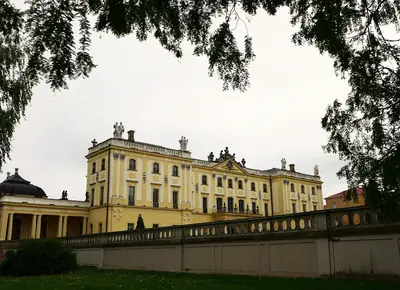
Branicki Palace, known locally as Pałac Branickich, is one of Białystok’s defining landmarks. It is often called the Polish Versailles because of its grand late Baroque design and extensive complex of gardens, pavilions, sculptures, and outbuildings.
The site dates back to the 16th century, when a brick Gothic-Renaissance castle was built by the royal architect Hiob Bretfus. The present palace took shape in the first half of the 18th century, when Jan Klemens Branicki transformed it into a residence suited to his ambitions. The surrounding city developed at the same time, with churches, a city hall, and a monastery inspired by French models.
Kościuszki Square
Rynek Kościuszki is the heart of Białystok and the city’s main representative promenade. The square extends from John Paul II Square towards the streets leading to Suraska and Lipowa.
Its western side is lined by a continuous row of buildings, creating an elegant and enclosed character. As a central gathering place, it is a natural point from which to continue exploring Białystok’s streets and landmarks.
Białystok Cathedral
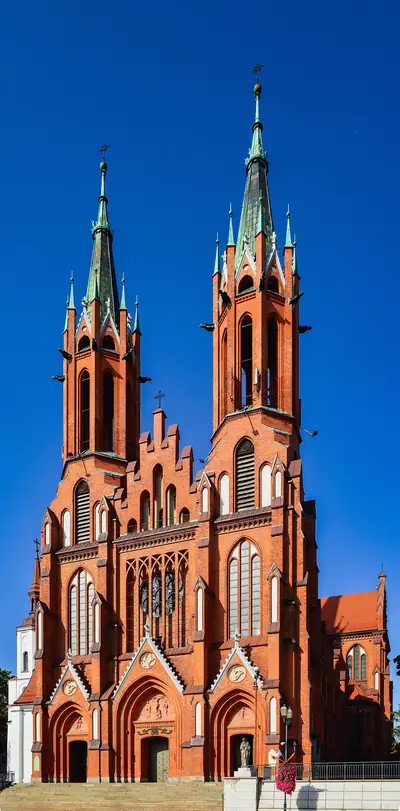
Białystok Cathedral is the main church of the Archdiocese of Białystok and one of the city’s most prominent buildings. It is actually a complex of two churches: a small early-17th-century parish church beside a much larger early-20th-century basilica.
Designed by Józef Pius Dziekoński, the basilica has three naves, stretches 90 metres in length, and has towers rising 72.5 metres. It received the status of a basilica from Pope John Paul II in 1985. The contrast between the modest older church and the monumental basilica makes this one of the city’s most striking architectural pairings.
The Orthodox Cathedral of Saint Nicolas
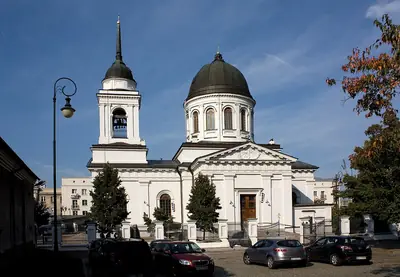
The Orthodox Cathedral of Saint Nicolas stands on Lipowa Street and is the largest Orthodox church in Białystok. The present building was erected between 1843 and 1846 on the site of an older Uniate church.
Its classical architecture reflects the style used for Orthodox churches across the Russian Empire in the late 18th and early 19th centuries. The three-nave cathedral rises 40 metres high and became the cathedral of the Białystok-Gdańsk diocese in 1951. Since 1992, it has also housed the relics of Saint Gabriel of Białystok.
Museum of Siberian Memory
The Muzeum Pamięci Sybiru, or Museum of Siberian Memory, examines one of the most painful chapters in Polish history. Its exhibitions trace the Polish presence in Siberia from the 18th century, including tsarist deportations deep into Russia and Soviet repressions and crimes.
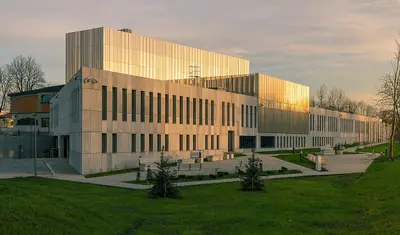
The museum was established as a municipal cultural centre of Białystok in 2017. Its permanent exhibition opened on Węglowa Street on 17 September 2021.
Historical Museum in Białystok
The Historical Museum in Białystok, a branch of the Podlasie Museum, focuses on the history of the city and the wider Podlasie region. Its collections include archives, iconography, and bourgeois cultural monuments, particularly examples of applied crafts.
One highlight is the Numismatic Cabinet, with 20,000 coins, medals, and securities. The museum also holds the only collection in Poland of memorabilia connected with Tatar settlement in the Polish-Lithuanian-Belarusian borderland.
St. Roch’s Church
St. Roch’s Church stands on Saint Roch hill along Lipowa Street. Its full name, the Church-Monument of Poland’s Regained Independence, reflects its national significance.
Built between 1927 and 1946, the church is a notable example of modernistic architecture. Professor Oskar Sosnowski designed it as an octagonal structure made up of three stacked blocks. Star motifs appear throughout the design, particularly in the vaulted ceilings, and the tower rises 83 metres.
Saint Adalbert Church
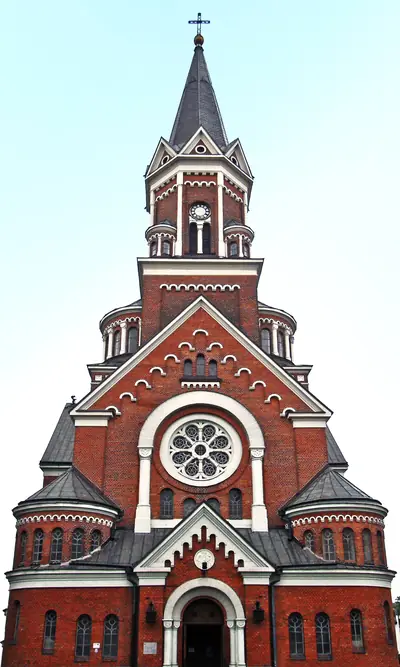
The red-brick Church of Saint Adalbert on Warszawska Street was built between 1909 and 1912 in the Neo-Romanesque style. Its architect was Johannes Wende from Łódź.
The building originally served the Lutheran community and was known as the Church of Saint John the Baptist until 1944. It became a protected historical monument of the Podlaskie Voivodeship in 1969 and underwent major restoration between 1996 and 2004.
Historic palaces and industrial heritage
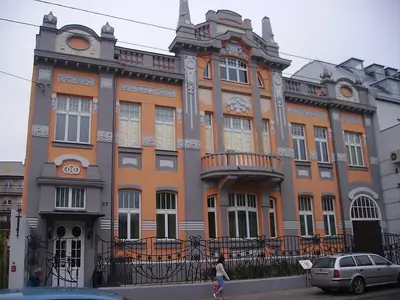
Białystok’s historic streets reveal the city’s prosperous urban and industrial past. At 7 Warszawska Street, the Trulling Palace is an eclectic city residence built between 1898 and 1899. On Lipowa Street, Nowik Palace was the former home of Chanon-Hersz Nowik, a prominent Białystok manufacturer.
The former factory of the Białystok Association of Manufacture, associated with Eugeniusz Becker and Company, recalls the city’s textile industry. The German firm produced silk plush, a luxurious fabric that formed part of Białystok’s manufacturing tradition.
The building housing Restaurant Astoria is also worth noticing: it is a Baroque townhouse dating from 1753.
Alfons Karny Sculpture Museum
The Alfons Karny Sculpture Museum occupies a historic wooden villa that once belonged to General von Driesen. It is dedicated to the sculptor Alfons Karny and combines his sculptures with documents about his career.
Permanent displays include portraits of notable Poles, a reconstruction of Karny’s studio, an account of his creative life, and old and contemporary artworks collected by the artist.
Other churches to discover
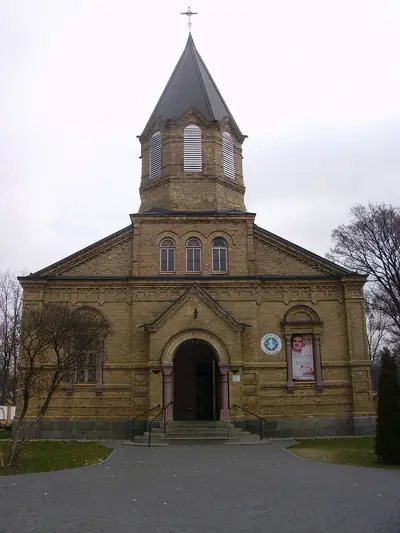
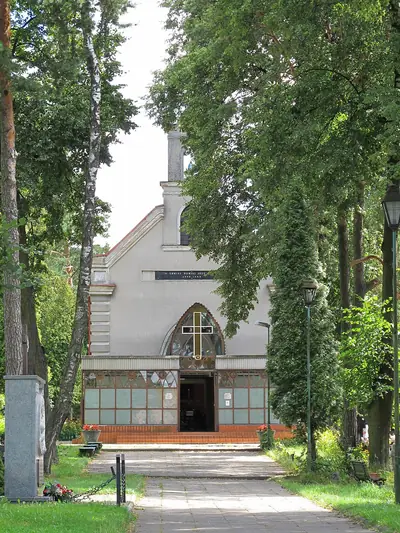
The city’s religious heritage extends beyond its cathedrals and best-known landmarks. Saint Stanislaus Church is a Roman Catholic parish church on Wiadukt Street. Salvator Church, also known as the Chapel of Christ the Savior, stands within the parish cemetery on Raginisa Street.
Together with the Catholic and Orthodox cathedrals, these churches reflect the variety of religious buildings found across Białystok.
A Białystok Self-Guided Walking Tour with Neywo
Neywo turns a visit into a self-guided experience: the app tells the story of each place as you reach it, at your own pace, with no group and no schedule. Its Białystok audio guide includes 2 walking tours, 1 bus route, and 1 bike route, with narration available in 11 languages.
The available routes are:
- The Versailles of Podlasie: a 1.33 km walk lasting 69 minutes, with 6 narrated stops.
- Zamenhof’s Białystok: Three Alphabets, One Dream: a 2.08 km walk lasting 60 minutes, with 6 narrated stops.
- Bus 4: From the Washerwomen to the Orthodox Cathedral: a 2.6 km bus route lasting 11 minutes, with 7 narrated stops.
- Białystok Cycle Lanes: Theatre to the Defenders’ Monument: a 5.7 km bike route lasting 29 minutes, with 5 narrated stops.
The routes cover places including Branicki Palace, Kościuszki Square, the Orthodox Cathedral of Saint Nicolas, the Zamenhof sites, Restaurant Astoria, Nowik Palace, St. Roch’s Church, and the Monument to the Defenders of Białystok.
Download Neywo and Explore Białystok at Your Own Pace
Download Neywo to explore Białystok with a free audio guide covering 85 narrated places. Choose between 2 walking tours, 1 bus route, and 1 bike route, then let the app guide your visit as each story plays when you reach the next place.
There is no group and no schedule: walk, ride, or take the bus at your own pace. Białystok is one destination in Poland, whose cities offer many different perspectives on the country’s history and culture.
Places with an audio guide in Białystok
8 places in Białystok with a Neywo audio guide. Each one starts telling its story as you reach it.
Self-guided tours in Białystok
4 tours in Białystok, free in the Neywo app. Each stop tells its story as you reach it.
- Bike ride
Białystok Cycle Lanes: Theatre to the Defenders' Monument
A 5.7 km ride on signed cycle lanes from the Węgierko theatre over the Biała river by the Bartoszewski bridge, past the Sleńdziński gallery and St Roch's church to the Monument to the Defenders of Białystok.
Aleksander Węgierko Drama Theatre · Statue of Władysław Bartoszewski · Galeria im. Sleńdzińskich w Białymstoku · St. Roch's Church in Białystok · Monument to the Defenders of Białystok
Open this tour: Białystok Cycle Lanes: Theatre to the Defenders' Monument - Bus ride
Bus 4: From the Washerwomen to the Orthodox Cathedral
A regular city line that cuts through the centre along Mickiewicza and Lipowa. Ride it past the Planty park sculptures, the Bartoszewski bridge, the Zamenhof bust and the Orthodox Cathedral of Saint Nicholas to the Nowik Palace.
Washerwomen Białystok · Aleksander Węgierko Drama Theatre · Statue of Władysław Bartoszewski · Restaurant Astoria in Białystok · Bust Ludwik Zamenhof of Białystok · The Orthodox Cathedral of Saint Nicolas …
Open this tour: Bus 4: From the Washerwomen to the Orthodox Cathedral - Walk
The Versailles of Podlasie
Hetman Jan Klemens Branicki rebuilt a provincial town into a little Versailles in the 18th century. Walk from his late Baroque palace and its guest palace through the old parish church and the market square to the town hall and the Orthodox cathedral of Saint Nicholas.
Branicki Palace · Guest Palace Branicki in Białystok · Old Parish church in Białystok · Rynek Kościuszki in Białystok · Town hall in Białystok · The Orthodox Cathedral of Saint Nicolas
Open this tour: The Versailles of Podlasie - Walk
Zamenhof's Białystok: Three Alphabets, One Dream
Ludwik Zamenhof grew up here among Poles, Jews, Russians and Germans, and invented Esperanto so they could understand each other. Follow his traces from a burned and rebuilt synagogue past murals, statues and a lost Jewish quarter to the Modernist Cytron synagogue.
Beit Szmuel Synagogue in Białystok · Zamenhof's mural in Białystok · Young Ludwik Zamenhof Monument · Miś z kulą · Bust Ludwik Zamenhof of Białystok · Cytron Synagogue
Open this tour: Zamenhof's Białystok: Three Alphabets, One Dream
Walk Białystok with Neywo
Neywo turns Białystok into a self-guided audio tour. Stories arrive as you reach the place they belong to, and the route reshapes when you wander off it.

