Things to Do in Warsaw, Poland: Walking Guide
Things to Do in Warsaw: What to See in Poland’s Capital
The best things to do in Warsaw include exploring the rebuilt Old Town, following the Royal Route, visiting royal palaces and discovering the city’s changing neighbourhoods. Poland’s capital brings together medieval and neoclassical landmarks, twentieth-century history and contemporary culture. Neywo offers a free audio guide for Warsaw with 630 narrated places, so you can explore the city while its stories play as you arrive.
What to See in Warsaw’s Old Town
Warsaw’s historic centre is a natural starting point. Much of it was destroyed during the Second World War and reconstructed afterwards, making the Old Town both a historic district and a remarkable example of postwar restoration.
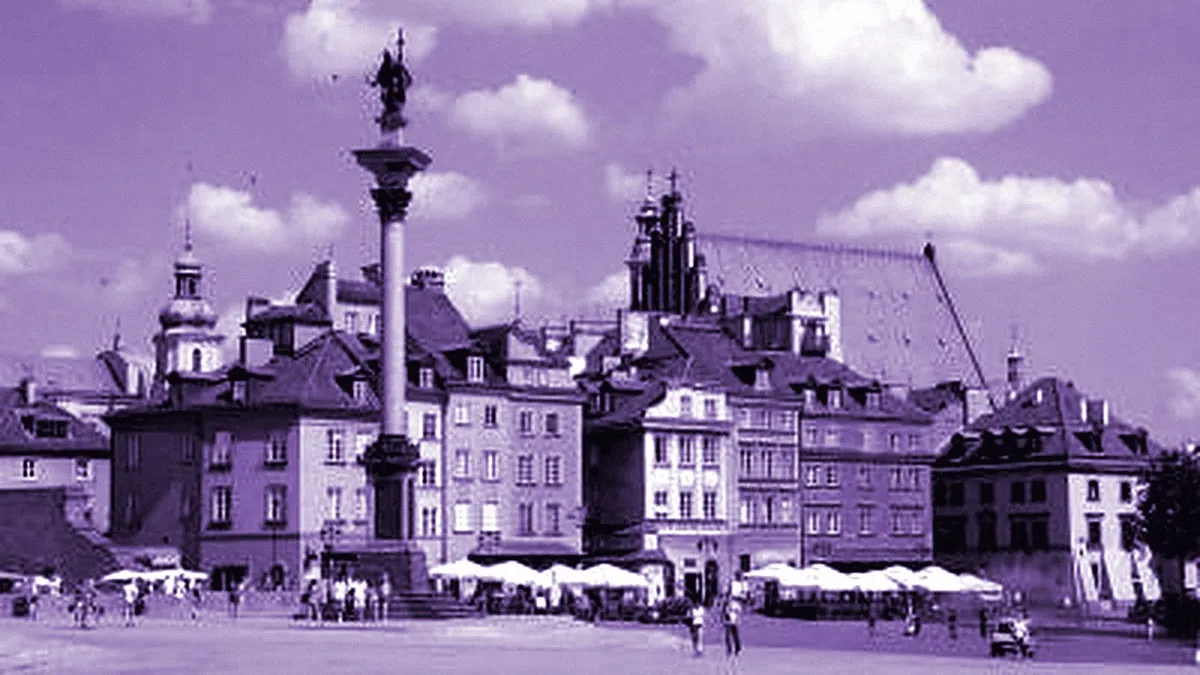
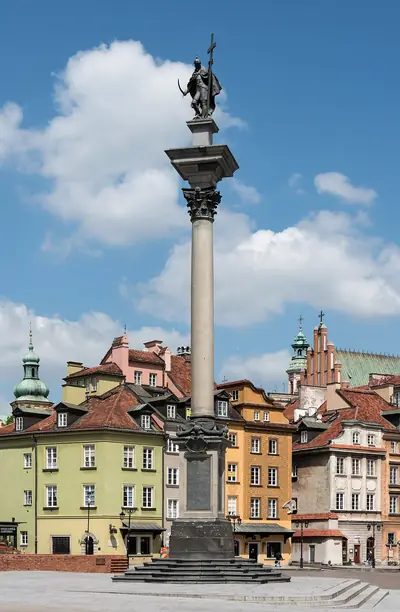
Castle Square and Sigismund’s Column
Castle Square is the meeting point between the Royal Castle, historic townhouses and the beginning of the Royal Route. Its roughly triangular layout was created between 1818 and 1821, and the buildings were reconstructed after destruction in 1939 and 1944.
Near the square’s south-western side stands Sigismund’s Column. Erected in 1643 and 1644, the monument commemorates King Sigismund III Vasa, who moved Poland’s capital from Kraków to Warsaw in 1596. The bronze king stands above a column decorated with four eagles.
Royal Castle in Warsaw
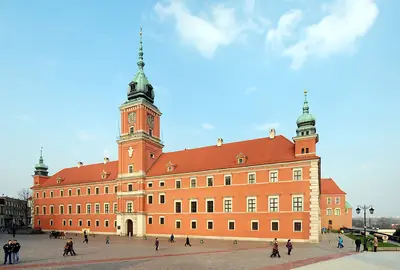
The Royal Castle was once the residence of Polish monarchs and the centre of political life. Its history began with a stone castle built in the fourteenth century for the dukes of Mazovia. From the sixteenth century, it became the seat of the king and the governing institutions of the Polish–Lithuanian Commonwealth.
The Constitution of 3 May 1791 was drafted here by the Four-Year Parliament. The castle was later destroyed in 1944 and reconstructed between 1971 and 1984. Today, it functions as a museum and national historical monument.
Old Town Market Square
Old Town Market Square is the centre and oldest part of Warsaw’s Old Town. The rectangular square was laid out at the end of the thirteenth century, with eight streets leading away from its corners.
The German Army systematically destroyed the square after the Warsaw Uprising. Its postwar reconstruction restored the appearance of the prewar market, creating the colourful historic setting seen today.
St. John’s Archcathedral
St. John’s Archcathedral is one of Warsaw’s oldest churches and the mother church of the Archdiocese of Warsaw. First recorded in 1339, it was built in the fourteenth century and reconstructed after its destruction in 1944 in a form intended to recreate the original Brick Gothic church.
The cathedral witnessed royal weddings, coronations and funerals, and the Constitution of 3 May was sworn here. Together with Warsaw’s Old Town, it forms part of a UNESCO World Heritage Site.
St. Anne’s Church and New Town churches
St. Anne’s Church stands on Krakowskie Przedmieście near Castle Square. Its Neoclassical façade has remained unchanged since 1788, despite the church’s many earlier reconstructions.
In New Town, the Church of the Visitation of the Blessed Virgin Mary is one of Warsaw’s oldest buildings and one of the city’s few surviving Gothic examples. Built in 1411, it was damaged in 1939, burned in 1944 and reconstructed between 1947 and 1966.
Follow Warsaw’s Royal Route
The Royal Route connects many of the city’s most important historic and political landmarks. It leads south from Castle Square towards the palaces and parks associated with Warsaw’s royal and national history.
Presidential Palace
The Presidential Palace is the official residence of the President of the Republic of Poland and the largest palace in Warsaw. Its present Neoclassical appearance was completed in 1818, after repeated rebuilding and remodelling.
The palace began as an aristocratic mansion in 1643. It later hosted authors and supporters of the Constitution of 3 May, became a government residence and served as the seat of the Council of Ministers after Poland regained independence in 1918.
Kazimierz Palace
Kazimierz Palace stands on the central campus of the University of Warsaw. Built between 1637 and 1641, it was remodelled for King John II Casimir in 1660 and later adapted for the Corps of Cadets.
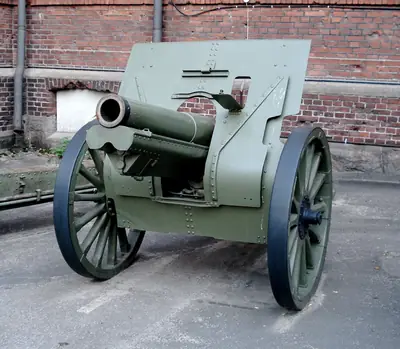
The present building was reconstructed between 1945 and 1954. Near the palace, a towed 122-millimetre howitzer introduces a contrasting chapter of twentieth-century military history.
Łazienki Palace
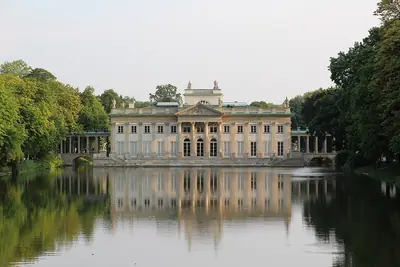
Łazienki Palace, also called the Palace on the Isle or Palace on the Water, rises from an artificial island in a pond in Royal Baths Park. Two bridges connect it to the shore.
The building began as a Baroque bath pavilion, constructed between 1683 and 1689. King Stanisław August Poniatowski bought the estate in 1766 and transformed it into a Classicist summer residence. The palace survived an attempt to blow it up during the final stages of the Second World War, although its interior was devastated.
Belweder
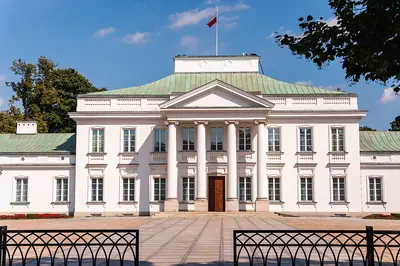
Near Łazienki Park, Belweder Palace is a Neoclassical residence and one of the official residences of the President of the Republic of Poland. The palace took its present form between 1819 and 1822, following a design by Jakub Kubicki.
Belweder has served as a seat of the Head of State, a presidential residence and the workplace of the chairmen of the Council of State. Its history makes it an important stop on the southern part of the Royal Route.
Wilanów Palace
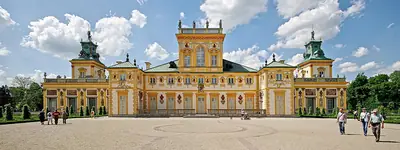
Wilanów Palace is a former royal residence in Warsaw’s Wilanów district. Its Baroque architecture, historic park and preserved artistic character connect the city with the royal world of King John III Sobieski and Queen Maria Kazimiera.
Built as a residence between the late seventeenth and early eighteenth centuries, the palace combines European artistic influences with Polish building traditions. Its façades and interiors include ancient symbols celebrating the military triumphs of John III Sobieski. The side wings, added between 1723 and 1729, created the palace’s distinctive three-winged form.
Explore modern Warsaw and its difficult history
Warsaw’s central districts reveal how dramatically the city has changed. The Palace of Culture and Science, contemporary art institutions and memorial sites each tell a different part of the capital’s story.
Palace of Culture and Science
Built between 1952 and 1955, the Palace of Culture and Science is a 237-metre landmark combining Socialist Realism and historicism. Designed by Soviet architect Lev Rudnev, it was inspired by Moscow’s Seven Sisters while also drawing on Polish historical architecture and American art deco high-rises.
The building was presented as a gift from the Soviet people to the Polish people. It now belongs to the city and contains theatres, museums, a cinema, educational institutions, the offices of the Polish Academy of Sciences and Warsaw’s city council. Parade Square, or Plac Defilad, spreads out beside it.
Centre for Contemporary Art Ujazdowski Castle
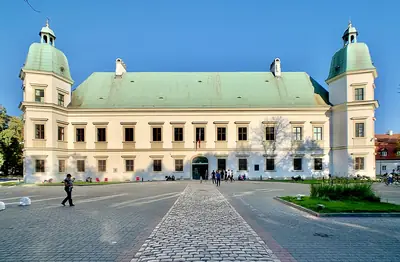
The Centre for Contemporary Art Ujazdowski Castle occupies a historic castle between Ujazdów Park and Royal Baths Park. Established in 1985, it creates, exhibits and documents Polish and international contemporary art.
The castle itself dates back to the thirteenth century and has been rebuilt several times. It suffered extensive damage during the Warsaw Uprising in 1944 and was reconstructed in 1974, placing a living contemporary-art institution inside a building with a long history.
New Town and the memory of the ghetto
The churches and palaces of New Town offer a route through Warsaw’s religious and civic history, while the Museum of the History of Polish Jews and Pawiak connect the area with the city’s Jewish heritage and wartime experience. These sites help explain the human cost behind Warsaw’s destruction and reconstruction.
Take a Warsaw self-guided walking tour with Neywo
Neywo has seven walking tours and one bus route in Warsaw, with narration available in 11 languages. Walks range from 1.11 to 3 kilometres and from 91 to 119 minutes; the bus route covers 4.9 kilometres in 21 minutes. Together, the tours include between 7 and 12 narrated stops each.
The routes include:
- Reborn from Rubble: Warsaw’s Old Town — 1.11 km, 112 minutes, 7 stops
- The Royal Route: Palaces of Krakowskie Przedmieście — 2.1 km, 111 minutes, 9 stops
- Łazienki: Chopin, a Palace on the Water and a King’s Retreat — 1.78 km, 113 minutes, 8 stops
- Saxon Garden and Piłsudski Square — 2.15 km, 103 minutes, 9 stops
- Palace of Culture and Downtown Warsaw — 2.42 km, 109 minutes, 10 stops
- New Town and the Ghetto Memory — 3 km, 119 minutes, 8 stops
- Praga: Warsaw’s Right-Bank Quarter — 2.93 km, 91 minutes, 8 stops
- Bus 180: The Royal Route from Wilanów to the Old Town — 4.9 km, 21 minutes, 12 stops
Download Neywo and explore Warsaw at your own pace. The app tells the story of each place as you reach it, with no group and no schedule—a free audio guide for discovering the Old Town, Royal Route, Łazienki, Praga and the city beyond. To continue exploring the country, see the wider Poland destination guide.
Places with an audio guide in Warsaw
8 places in Warsaw with a Neywo audio guide. Each one starts telling its story as you reach it.

Self-guided tours in Warsaw
8 tours in Warsaw, free in the Neywo app. Each stop tells its story as you reach it.
- Bus ride
Bus 180: The Royal Route from Wilanów to the Old Town
The classic sightseeing ride along Warsaw's Royal Route: from the Belweder by the Łazienki park north along Aleje Ujazdowskie, Nowy Świat and Krakowskie Przedmieście past Staszic Palace, Holy Cross Church and the Tyszkiewicz Palace to St Anne's at Castle Square. A regular city line, with the cheapest tour ticket in town.
Belweder · Henryk Sienkiewicz Monument Warsaw · Sobański Palace in Warsaw · Wilhelm Ellis Rau Palace · St. Alexander's Church · Greetings from Jerusalem Avenue …
Open this tour: Bus 180: The Royal Route from Wilanów to the Old Town - Walk
Reborn from Rubble: Warsaw's Old Town
In 1944 the Old Town was blown up; it was rebuilt brick by brick from paintings and memory. Walk from St Anne's to Sigismund's Column, the Royal Castle and the Gothic cathedral, pass St Martin's, cross the Market Square and end at the Barbican, a surviving piece of the medieval walls.
St. Anne's Church · Sigismund's Column · Royal Castle in Warsaw · St. John's Archcathedral · St. Martin's Church · Old Town Market Square in Warsaw …
Open this tour: Reborn from Rubble: Warsaw's Old Town - Walk
The Royal Route: Palaces of Krakowskie Przedmieście
Walk the Royal Route south from the Presidential Palace along Krakowskie Przedmieście: palaces and churches of the University of Warsaw, the Baroque Holy Cross with Chopin's heart, Staszic Palace and, down the slope toward the Vistula, the palace that now houses the Chopin Museum.
Presidential Palace · Potocki Palace · Tyszkiewicz Palace · Visitationist Church · Kazimierz Palace · Auditorium Maximum …
Open this tour: The Royal Route: Palaces of Krakowskie Przedmieście - Walk
Łazienki: Chopin, a Palace on the Water and a King's Retreat
Warsaw's loveliest park in one loop: the Belweder, the Chopin monument under the willows, the Old Orangery, the White House and the neoclassical Palace on the Isle, the Officer Cadets School, the Myślewicki Palace and the Sobieski monument.
Belweder · Frederic Chopin Monument in Warsaw · Old Orangery · White House in Łazienki · Łazienki Palace · Officer Cadets School in Łazienki …
Open this tour: Łazienki: Chopin, a Palace on the Water and a King's Retreat - Walk
Saxon Garden and Piłsudski Square
From the Słowacki monument and the Blue Palace to the Theatre Museum, then Piłsudski Square with the Tomb of the Unknown Soldier, into the Saxon Garden, Poland's first public park, with its fountain and Sybil Temple, and out to Holy Trinity Church.
Juliusz Słowacki Monument in Warsaw · Blue Palace · Theater Museum in Warsaw · Piłsudski Square · Tomb of the Unknown Soldier, Warsaw · Saxon Garden …
Open this tour: Saxon Garden and Piłsudski Square - Walk
Palace of Culture and Downtown Warsaw
Warsaw's modern centre around Stalin's gift to the city: the Palace of Culture and Science, with the Museum of Modern Art, the Fotoplastikon, Złote Tarasy and the Central Station, and the Philharmonic and Uprising Square to finish.
Church of Saints Peter and Paul, Warsaw · Warsaw Fotoplastikon · Warsaw Central Railway Station · Złote Tarasy · Museum of Technology, Warsaw · Palace of Culture and Science …
Open this tour: Palace of Culture and Downtown Warsaw - Walk
New Town and the Ghetto Memory
Walk the New Town's churches, then west past the Krasiński Palace to the Museum of the History of Polish Jews at the heart of the former ghetto and the Pawiak prison memorial.
Church of the Holy Spirit in Warsaw · St. Hyacinth's Church · Church of the Visitation of the Blessed Virgin Mary · St. Kazimierz Church · Church of St Francis in Warsaw · Krasiński Palace …
Open this tour: New Town and the Ghetto Memory - Walk
Praga: Warsaw's Right-Bank Quarter
Cross the Vistula to the old Praga district: the zoo, the Loreto church and the park, then the cathedral of St Mary Magdalene, the courtyard-band monument, the Museum of Praga and the Jahrman Synagogue.
Warszawski Ogród Zoologiczny · Church of Our Lady of Loreto · Praga Park · Eliza Orzeszkowa monument in Park Praski · Cathedral of St. Mary Magdalene · Pomnik Praskiej Kapeli Podwórkowej …
Open this tour: Praga: Warsaw's Right-Bank Quarter
Walk Warsaw with Neywo
Neywo turns Warsaw into a self-guided audio tour. Stories arrive as you reach the place they belong to, and the route reshapes when you wander off it.

