Gdynia, Poland: Self-Guided Walking Tour
Things to Do in Gdynia: What to See in Poland’s Baltic City
Looking for things to do in Gdynia? This modern Baltic city combines maritime history, interwar architecture, museums, historic churches, and coastal neighbourhoods. Its story is closely connected with the development of Poland’s port, making the waterfront and its ships essential stops for any visit. Neywo has a free audio guide for Gdynia with 49 narrated places.
Gdynia belongs to the Tri-City area of northern Poland, alongside Gdańsk and Sopot. While Gdańsk is known for its historic centre, Gdynia’s identity was shaped largely during the interwar period, when it grew from a modest fishing settlement into an important Baltic port. To understand the city in context, you can also explore the wider Pomerania region.
What to see in Gdynia
The following places reveal Gdynia’s maritime character, local history, and changing identity. They range from central museums and ships to historic buildings in Oksywie and Orłowo.
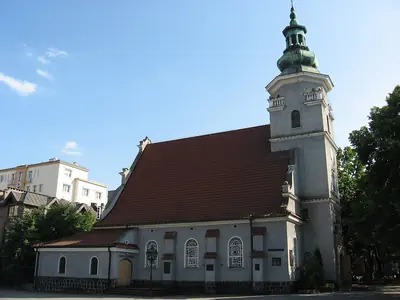
Collegiate Church in Gdynia
The Collegiate Church of the Virgin Mary, Queen of Poland, also known as Saint Mary’s Church or the Sea Basilica, is one of Gdynia’s two oldest Roman Catholic churches. Built between 1922 and 1924, it belongs to the Neo-Baroque style and stands in the Śródmieście district, close to Świętojańska Street.
Local residents helped furnish the interior. The main altar contains a distinctive golden three-masted ship made by a local carpenter, an image that connects the church with Gdynia’s life beside the sea. It remains an active place of worship, so visitors should avoid entering during Mass.
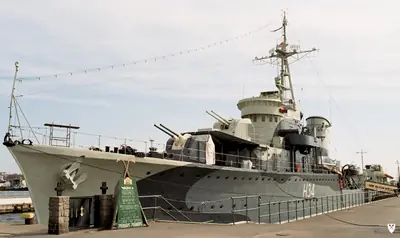
ORP Błyskawica
Moored in Gdynia, ORP Błyskawica is a historic destroyer preserved as a museum ship. Built in Britain between 1935 and 1937, it was the second of two Grom-class destroyers constructed for the Polish Navy.
The ship served throughout the Second World War in the Atlantic, North Sea, and Mediterranean. Its wartime operations included the Norwegian campaign, the evacuation of Dunkirk, the Battle of the Atlantic, and Operations Torch and Overlord. After the war, Błyskawica returned to Poland and became the Polish Navy’s flagship after repairs and rearmament.
It was withdrawn from active service in 1969 and became a museum ship in 1976. Błyskawica is the oldest preserved destroyer in the world and the only Polish Navy ship to receive the Virtuti Militari, Poland’s highest military decoration for gallantry.
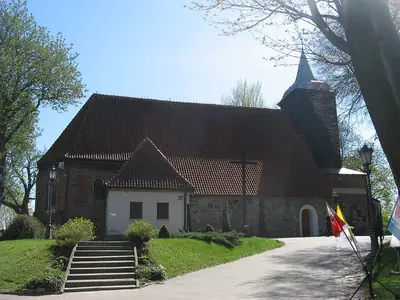
Saint Michael Archangel church in Gdynia
In the Oksywie district stands the Church of Saint Michael the Archangel, regarded as Gdynia’s oldest building and the oldest building in the entire Tricity area. The church was founded in 1224 by Norbertine nuns on the site of a former pagan temple.
Its single-aisle layout, polygonal presbytery, and Baroque tower reflect rural medieval Pomeranian architecture. The building has survived repeated damage and restoration, including destruction during the seventeenth-century Swedish invasion and damage from a Soviet cannonball in the final days of the Second World War.
Dar Pomorza
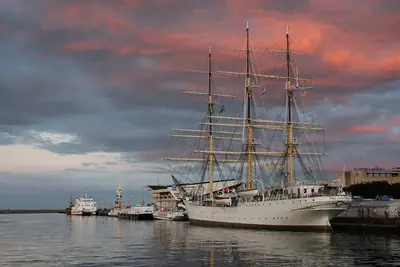
Dar Pomorza is one of Gdynia’s most recognizable maritime landmarks. Permanently moored as a museum ship, this three-masted, full-rigged sailing vessel offers a vivid impression of life aboard a training ship.
Built in 1909, it served as a sail training vessel in Germany, France, and Poland. The people of Pomerania bought it in 1929 for the Maritime School in Gdynia for seven thousand pounds. Originally named Prinzess Eitel Friedrich, it was renamed Dar Pomorza, meaning “Gift of Pomerania.”
Visitors can explore the decks, crew quarters, and navigational instruments. The ship is now an institution of the National Maritime Museum in Gdańsk and won the Cutty Sark Trophy in 1980.
EXPERYMENT Science Centre
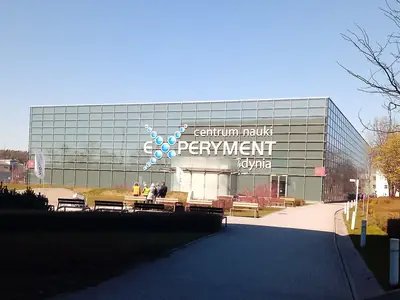
The EXPERYMENT Science Centre presents science through interactive installations and demonstrations. It is designed as a hands-on place where visitors can explore scientific ideas rather than simply read about them, making it a useful stop for families and anyone interested in learning through experimentation.
Emigration Museum
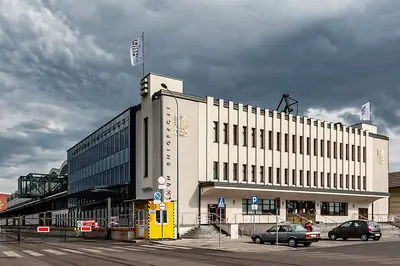
The Emigration Museum occupies Gdynia’s historic Maritime Station, a building constructed in the 1930s. The station served as a transit building for thousands of Polish emigrants leaving for new homes and continued in that role until 1979.
The museum follows around two hundred years of Polish emigration, from the nineteenth century to the present day. It also addresses modern migration and the experiences of people who immigrated to Poland. Its main permanent exhibition takes visitors through the stages of a journey, including the story of a family leaving Poland for the United States during the transition from the nineteenth to the twentieth century.
17 Polska Street
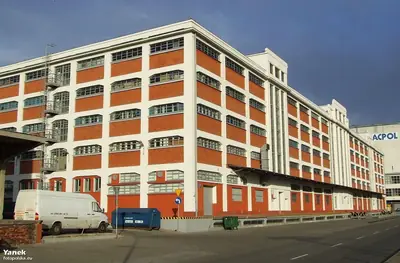
The building at 17 Polska Street is also known as the Long-Term Warehouse “H”, or Magazyn Długoterminowy “H.” It forms part of the port area explored on the route towards the Emigration Museum and the Former Maritime Station.
Former Maritime Station in Gdynia
The Former Maritime Station, or Dworzec Morski, stands at the French Quay beside Witold Gombrowicz Square. Dating from 1933, the building carries the address Polska Street 1.
Its surroundings include the harbour master’s office and the Monument to the People of the Sea. Together, these buildings and monuments form an important part of Gdynia’s seaport landscape and its history as a place of departure.
Stefan Żeromski House
In Orłowo, the Stefan Żeromski House is a small museum and cultural centre in the house where the writer lived with his family during the summer of 1920. Stefan Żeromski stayed there from May to September and took an interest in the building of Gdynia and the surrounding area.
The upstairs exhibition, “The Life and Work of Stefan Żeromski,” includes photographs, manuscript copies, letters, documents, information panels, older editions of his works, and period furniture. His time in Orłowo inspired the work “Sambor i Mestwin.”
Gdynia City Museum
The Gdynia City Museum stands in the Kamienna Góra district, at the symbolic meeting point of land and sea. Its exhibitions document the history, culture, and identity of the city.
The permanent exhibition, “Gdynia – An Open Work,” occupies the top floor and presents the city as something shaped continuously by its past, present, and future. The museum’s origins go back to efforts by local intellectuals in the 1960s to preserve Gdynia’s distinctive history.
Polish Naval Museum
The Polish Naval Museum, or Muzeum Marynarki Wojennej, explores Poland’s maritime military heritage. Located near Kosciuszko Square and the Seaside Boulevard, it displays weapons, naval equipment, aircraft, and vessels connected with the history of the Polish Navy.
The museum was founded in Gdynia on June 28, 1953. Its collections include naval weapons dating from the seventeenth century, cannons, torpedoes, and other ordnance. The outdoor displays add aircraft, helicopters, and missile launchers to the experience.
ORP Sokół
ORP Sokół is a former naval submarine that became part of Gdynia’s maritime heritage. The Kobben-class vessel was built in 1966 at the Nordseewerke shipyard in Emden for the Royal Norwegian Navy, entering Norwegian service in 1967 as HNoMS Stord.
It was transferred to Poland in 2002, formally given the name Sokół, and entered the Polish Navy. After serving as one of four Kobben-class submarines in the Polish Navy, it was decommissioned on June 8, 2018.
Kolibki
Kolibki lies in the southern part of Orłowo, beside the Kolibkowski Stream and close to the Baltic Sea. The area is also known as the Kolibki manor and landscape complex. It provides a different perspective on Gdynia, linking the coastal setting with a greener landscape.
Gdynia Motor Museum
In Gdynia-Cisowa, the Gdynia Motor Museum presents restored historic cars and motorcycles in an exhibition hall designed as a cobbled street from the 1920s. The structure originally stood in the Port of Gdynia, while the paving stones came from Starowiejska Street in Gdynia and the brick from Ogarna Street in Gdańsk.
The collection contains around two hundred restored vehicles, including almost fifty historic cars and about one hundred and fifty motorcycles. The motorcycles come from England, Belgium, France, the United States, and Poland, including Sokół models.
Monument to Antoni Abraham
On Kaszubski Square, the Monument to Antoni Abraham commemorates a Kashubian activist. The four-metre monument was created by Stanisław Szwechowicz. Its pedestal describes Abraham as a son of Kashubian land and a fighter for its Polish character.
Plans to commemorate him in Gdynia existed before the Second World War, but the monument was finally commissioned in 1995 following efforts by activists from the Kashubian and Pomeranian Association.
Explore Gdynia with a free audio guide
Neywo gives you six ways to explore Gdynia: four walking tours, one bus route, and one bike route. Together, they cover routes from 1.76 to 6 kilometres, lasting between 16 and 115 minutes, with narrated stops ranging from 4 to 11 per route.
The walks include:
- Gdynia, the City Built from Nothing — 3.87 km, 115 minutes, 11 stops.
- Ships, Submarines and the South Pier — 1.76 km, 74 minutes, 9 stops.
- Port of Departure: Emigrants and Oksywie — 5.07 km, 111 minutes, 6 stops.
- Orłowo: Pier, Cliff and the Kolibki Woods — 3.65 km, 94 minutes, 8 stops.
There is also Bus 119: From the Emigration Museum into the City Centre, covering 3.8 km in 16 minutes with 6 stops, and Orłowo and Kolibki Cycle Route to the City Centre, covering 6 km in 30 minutes with 4 stops.
Download Neywo and explore Gdynia at your own pace. The app tells the story of each place as you reach it, with no group and no schedule. Narration is available in 11 languages, so you can turn a visit to Gdynia into a self-guided walking, bus, or cycling experience.
Places with an audio guide in Gdynia
8 places in Gdynia with a Neywo audio guide. Each one starts telling its story as you reach it.
Self-guided tours in Gdynia
6 tours in Gdynia, free in the Neywo app. Each stop tells its story as you reach it.
- Bike ride
Orłowo and Kolibki Cycle Route to the City Centre
Ride the cycle lanes from the wooded Kolibki valley on the Sopot border north through Orłowo to the centre. You pass a war memorial with a view over the bay, the Experyment science centre and the double church of the Sacred Heart.
Pomnik Obrońców Gdyni 1939 · Kościół św. Józefa w Gdyni Kolibkach · EXPERYMENT Science Centre · Parish of the Sacred Heart of Lord Jesus in Gdynia
Open this tour: Orłowo and Kolibki Cycle Route to the City Centre - Bus ride
Bus 119: From the Emigration Museum into the City Centre
Ride city bus 119 from the Maritime Station, where the Emigration Museum stands, through central Gdynia. It passes an elliptical church with sea-themed stained glass, the Kashubian couple on their bench, Konstytucji Square, the 1930s constructivist market hall and the church built in two storeys.
Emigration Museum · Church of Our Lady of Perpetual Help and St. Peter the Fisherman in Gdynia · Para Kaszubów na ławce · Konstytucji Square in Gdynia · Miejskie Hale Targowe S.A. in Gdynia · Parish of the Sacred Heart of Lord Jesus in Gdynia
Open this tour: Bus 119: From the Emigration Museum into the City Centre - Walk
Gdynia, the City Built from Nothing
In 1920 Gdynia was a fishing village. By the 1930s it was a modernist port city, and this walk reads that story in its market hall, its churches, its monuments and its main street, from Konstytucji Square to the Gombrowicz Theatre.
Konstytucji Square in Gdynia · Miejskie Hale Targowe S.A. in Gdynia · Church of Our Lady of Perpetual Help and St. Peter the Fisherman in Gdynia · Para Kaszubów na ławce · Pomnik Antoniego Abrahama · Parish of the Sacred Heart of Lord Jesus in Gdynia …
Open this tour: Gdynia, the City Built from Nothing - Walk
Ships, Submarines and the South Pier
Gdynia's waterfront is a floating museum. Ride the free glass funicular down from Stone Hill, board a destroyer and a three-masted tall ship, look inside a submarine, and finish at the aquarium and the Conrad monument at the end of the South Pier.
Gdynia Kamienna Góra Funicular · Gdynia City Museum · Muzeum Marynarki Wojennej · ORP Sokół · Polska Riviera in Gdynia · ORP Błyskawica …
Open this tour: Ships, Submarines and the South Pier - Walk
Port of Departure: Emigrants and Oksywie
From the 1930s Maritime Station thousands of Poles left for new lives overseas. Visit the Emigration Museum, the boulder monument to the people of the sea, the Navy garrison church, and walk up to the oldest building in the Tricity, a church founded in 1224.
17 Polska Street in Gdynia · Emigration Museum · Former Maritime Station in Gdynia · Monument to the People of the Sea · Our Lady of Częstochowa church in Gdynia · Saint Michael Archangel church in Gdynia
Open this tour: Port of Departure: Emigrants and Oksywie - Walk
Orłowo: Pier, Cliff and the Kolibki Woods
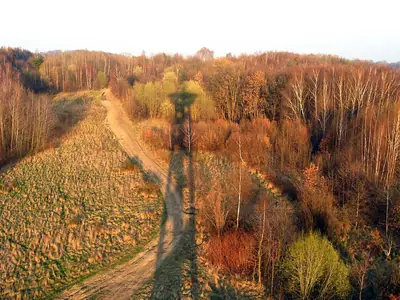
Walk the seaside resort of Orłowo, with its wooden pier, beach theatre and the bench of the painter Antoni Suchanek, past the house where Żeromski spent the summer of 1920. Then follow the stream south into the wooded Kolibki valley, to a 1939 war memorial and a viewing tower above the bay.
Gdynia Orłowo Pier · Summer Theater in Gdynia · Antoni Suchanek bench in Gdynia · Stefan Żeromski House in Gdynia · Kolibki · Kościół św. Józefa w Gdyni Kolibkach …
Open this tour: Orłowo: Pier, Cliff and the Kolibki Woods
Walk Gdynia with Neywo
Neywo turns Gdynia into a self-guided audio tour. Stories arrive as you reach the place they belong to, and the route reshapes when you wander off it.

