What to See in Tarifa, Spain: Free Audio Guide
Things to do in Tarifa: what to see at the southern tip of Spain
The best things to do in Tarifa range from exploring medieval fortifications and historic churches to standing at the point where the Atlantic Ocean meets the Mediterranean Sea. The town’s position at the southern tip of continental Europe gives it a distinctive character, shaped by the Strait of Gibraltar, centuries of cultural exchange and its closeness to Africa. Neywo offers a free audio guide for Tarifa with 18 narrated places, available in 11 languages.
Tarifa belongs to Andalusia, in southern Spain. Its historic centre, coastal landmarks and surrounding archaeological sites make it a rewarding destination beyond its well-known beaches and water sports.
What to see in Tarifa
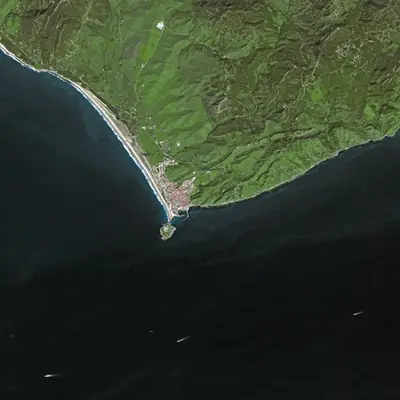
Punta de Tarifa
Punta de Tarifa is the southernmost point of continental Europe, where the Atlantic Ocean meets the Mediterranean Sea. The promontory forms part of the former Isla de Las Palomas, now connected to the mainland by a causeway. It is also known as Punta Marroquí, or Moroccan Point, because the coast of Morocco can be seen across the water.
The name Tarifa is linked to Tarif ibn Malik, who launched the Muslim conquest of the Iberian Peninsula from this area in 711. The island was occupied by a military base from the 1930s until 2001. Today, its highest point is marked by the Punta de Tarifa lighthouse. On a clear day, the outline of Africa is visible from the promontory.
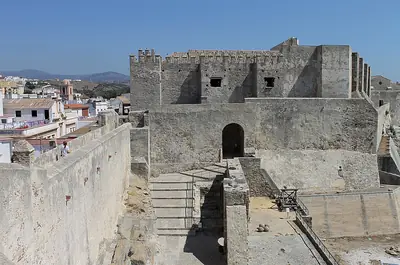
Castle of Tarifa
The Castle of Tarifa, also known as the Castle of Guzmán el Bueno, occupies a strategic position beside the Strait of Gibraltar. Its military role was closely connected to the town’s location at the southern edge of the Iberian Peninsula.
Roman remains have been found within the site, but the structure standing today dates from the Caliphal period. The castle’s name refers to Alonso Pérez de Guzmán, known as Guzmán el Bueno, whose family line later produced the dukes of Medina Sidonia.
Puerta de Jerez
Puerta de Jerez is one of the notable landmarks of Tarifa’s historic town. The gate stands in the southern part of Andalusia, at 26 metres above sea level, and forms part of the town’s historic identity.
Iglesia Mayor de San Mateo
The Iglesia Mayor de San Mateo is Tarifa’s main church and has been its spiritual centre for centuries. It is believed to have been built in 1506 on the remains of an earlier mosque, although written records mention worship at the site from 1534.
The church is dedicated to Saint Matthew in memory of Tarifa’s capture in 1292, which took place on the feast day of the apostle. Its current appearance reflects several alterations over the centuries. The main Baroque façade was designed by Torcuato Cayón de la Vega in 1774 and completed four years later under the direction of Carlos Hermida. The bell tower has a square base and a fluted dome.
Iglesia de San Francisco
The Iglesia de San Francisco stands in the heart of Tarifa’s old town. It remains open for worship and is described as the southernmost church on continental Europe still used for that purpose.
Iglesia de Santa María
The Iglesia de Santa María is another notable church in the centre of Tarifa. Its quiet presence makes it a natural stop while walking through the historic area.
Iglesia de Santiago
The Iglesia de Santiago is one of the town’s historic church buildings. It can be included in a walk through Tarifa’s old streets alongside the other landmarks of the centre.
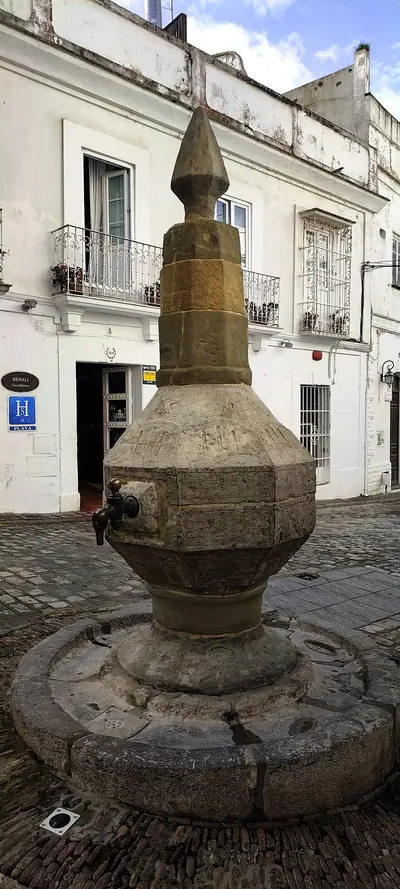
Fuente del Mesón
The Fuente del Mesón is a fountain and long-standing landmark in Tarifa. It offers a small but characteristic detail to look out for while exploring the historic town on foot.
Monument to Guzmán el Bueno
The Monument to Guzmán el Bueno honours one of the figures most closely associated with Tarifa’s medieval history. Guzmán el Bueno is remembered in Spanish history as a symbol of loyalty and sacrifice, and the statue keeps that story visible in the town.
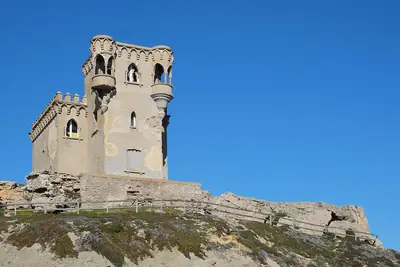
Castillo de Santa Catalina
The Castillo de Santa Catalina stands on Cerro de Santa Catalina, close to the port and Tarifa’s centre. Although its appearance suggests an older fortress, it was built in 1933. The castle is currently unused but retains the official status of a Bien de Interés Cultural and Monumento.
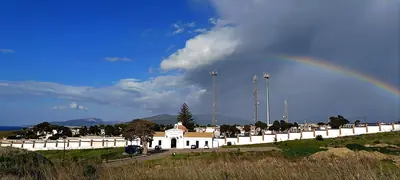
Cementerio del Santo Cristo de las Animas
The Cementerio del Santo Cristo de las Animas is Tarifa’s municipal cemetery. It provides a quieter and more reflective setting, away from the beaches and the busier streets of the old town.
Cueva del Moro
Cueva del Moro is a cave in the Tarifa area and a significant prehistoric site. It represents the southernmost Paleolithic sanctuary on the European continent.
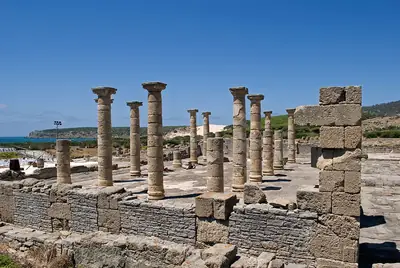
Baelo Claudia
Baelo Claudia lies on the shore of the Strait of Gibraltar, outside the village of Bolonia and about 22 kilometres northwest of Tarifa, within the Parque Natural del Estrecho. The site preserves the remains of a Roman town founded at the end of the second century BC.
The settlement began as a fishing village and trading centre and became an important economic site in the Mediterranean world. It flourished particularly during the reign of Emperor Claudius, whose name it adopted. Its remains include a forum, temples, a theatre, market halls and streets arranged on a Roman grid.
Baelo Claudia’s prosperity was closely connected to garum, the fermented fish sauce widely consumed across the Roman Empire. The remains of the fish-salting factories show how central that industry was to the town’s economy. Earthquakes contributed to its gradual decline, and by the sixth century the settlement had been completely abandoned.
Tahivilla
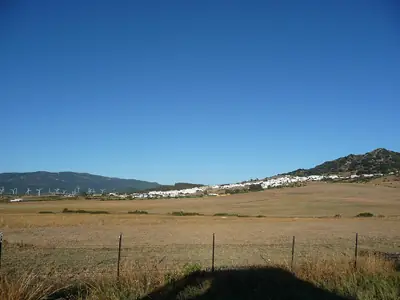
Tahivilla is a small rural settlement within the municipality of Tarifa, in the Campo de Gibraltar area of Cádiz province. Its territory covers around 1,500 hectares, giving the place a distinctly open and rural character.
Facinas
Facinas is a village on the slopes of the Sierra de Fates, also within the municipality of Tarifa. Although the coast is about 15 kilometres away, the village has a mountain character rather than a seaside one. It is close to Los Alcornocales Natural Park and to the beaches of Bolonia, Valdevaqueros and Zahara de los Atunes.
The village is known for its feria and romería. Its population was around 3,000 in the 1960s and is now roughly 1,400, with a modest increase during summer.
Explore Tarifa with a self-guided walking tour
Neywo’s Tarifa self-guided walking tour covers 3.37 kilometres and takes 114 minutes, with 12 narrated stops. The walk includes Iglesia de Santiago, the Monument to General Francisco de Copons, Iglesia Mayor de San Mateo, Fuente del Mesón, Biblioteca Pública Municipal de Tarifa - Mercedes Gaibrois, Iglesia de Santa María, the Castle of Tarifa, the Monument to Guzmán el Bueno, Iglesia de San Francisco, Puerta de Jerez, Castillo de Santa Catalina and Punta de Tarifa.
Download Neywo and explore Tarifa at your own pace. The app tells the story of each place as you reach it, with no group and no schedule. Tarifa has one walking tour, 3.37 kilometres long, lasting 114 minutes and featuring 12 narrated stops.
Places with an audio guide in Tarifa
8 places in Tarifa with a Neywo audio guide. Each one starts telling its story as you reach it.
Self-guided tours in Tarifa
1 tour in Tarifa, free in the Neywo app. Each stop tells its story as you reach it.
- Walk
Land's End of Europe: Castle, Wind and the Hero of Tarifa
Wander the whitewashed lanes of the oldest town at Europe's southern tip. You will pass the medieval castle of Guzman el Bueno, four historic churches and the old Jerez gate, then follow the shore to Punta de Tarifa, where the Atlantic meets the Mediterranean and Africa shows on the horizon.
Iglesia de Santiago · Monument to General Francisco de Copons, Tarifa · Iglesia Mayor de San Mateo · Fuente del Mesón · Biblioteca Pública Municipal de Tarifa - Mercedes Gaibrois · Iglesia de Santa María …
Open this tour: Land's End of Europe: Castle, Wind and the Hero of Tarifa
Walk Tarifa with Neywo
Neywo turns Tarifa into a self-guided audio tour. Stories arrive as you reach the place they belong to, and the route reshapes when you wander off it.

