Ronda, Spain: Self-Guided Walking Tour
Things to Do in Ronda: What to See in the Andalusian City
Ronda is a historic city in Andalusia, Spain, built around the dramatic El Tajo Gorge. Its mix of Islamic, Christian and Roman heritage makes it one of the region’s most distinctive places to visit, from the Puente Nuevo and ancient city walls to the Arab Baths and the old town’s palaces. Neywo has a free audio guide for Ronda with 48 narrated places.
What to See in Ronda
Puente Nuevo and the Tajo Gorge
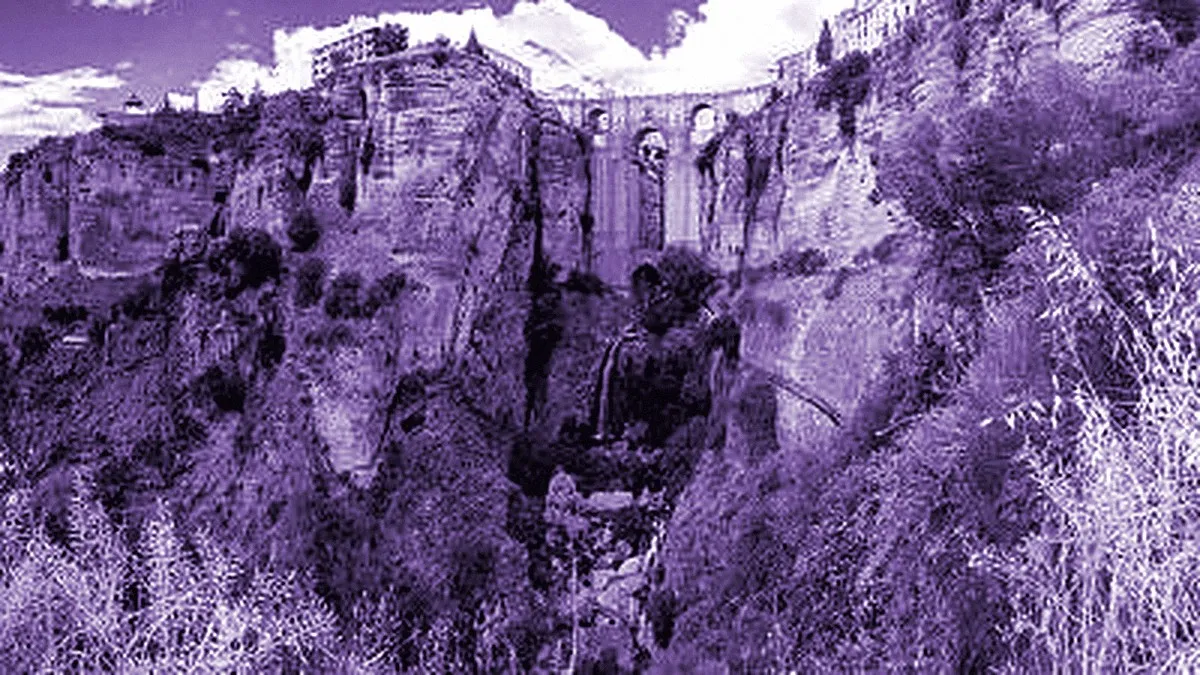
Puente Nuevo is Ronda’s defining landmark, spanning the gorge carved by the Guadalevín River. The bridge connects the city’s historic and newer areas, while the surrounding viewpoints open onto the gorge and the hills beyond.
The gorge walk also leads to several important historic sites, including the Casa del Rey Moro, the Palacio del Marqués de Salvatierra, Puerta de Felipe V, Puente Viejo, Puente Romano and the Arab Baths of Ronda.
Casa del Rey Moro
The Casa del Rey Moro is a historic complex above the gorge, despite its name: no Moorish monarch is known to have lived there. Its three main elements belong to different periods and include a house, terraced gardens and a medieval water mine.
The Water Mine was created during the Muslim period in the fourteenth century. Its stairway descends approximately 60 metres through the rock towards the bottom of the gorge, revealing how water was obtained and brought up to the city. The mine and gardens are open to visitors.
Arab Baths of Ronda
Outside the city walls, beside the Old Bridge, the Arab Baths offer one of the best-preserved glimpses of Ronda’s Muslim past. The former hammam has cold, warm and hot rooms, along with a reception area, heating system and boiler.
Four pairs of horseshoe arches divide the main spaces. Above them, vaulted roofs contain star-shaped openings that bring light into the baths. The site also preserves elements of the medieval water system, including the original pump tower and aqueduct.
Puerta del Almocábar
The Almocábar Gate marks the southern approach to Ronda’s historic quarter. Built in the thirteenth century and later modified during the time of Charles the Fifth, it consists of three successive gateways framed by two semicircular towers.
Its name comes from the Arabic word Al-maqabir, referring to the former Muslim cemetery nearby. The entrance was later given a Renaissance appearance, including the imperial eagle coat of arms of Charles the Fifth, and was restored in 1961.
Iglesia de Santa María La Mayor
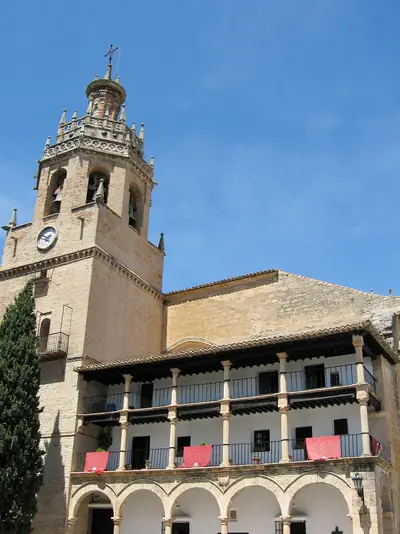
In Duchess of Parcent Square, the Church of Saint Mary the Elder brings together several layers of Ronda’s religious history. It stands on the site of the city’s former main mosque, and the mosque’s mihrab remains inside.
Construction of the present church began after Christian forces reconquered Ronda in 1486 and continued for two centuries. The result combines Renaissance and Gothic features, including pointed arches and sturdy columns. Its unusual tower and civic-looking façade make it one of the old town’s most memorable buildings.
Minaret of San Sebastián
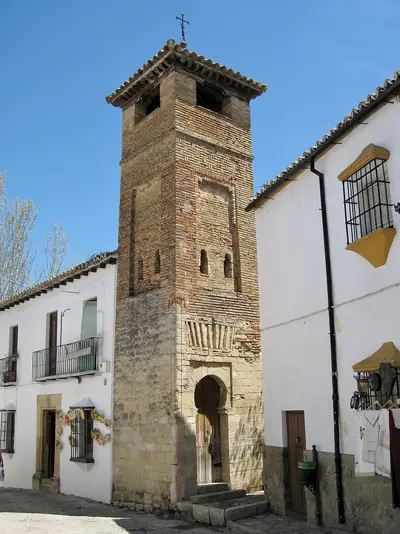
The Minaret of San Sebastián originally belonged to a mosque and later served the now-disappeared Church of San Sebastián. Its three sections are clearly visible: a stone lower level with a horseshoe-arched doorway, a fourteenth-century brick middle section and an upper brick section added after the Christian conquest.
The upper part served as a bell tower, while the lower doorway preserves the characteristic combination of a horseshoe arch and alfiz.
Casa del Gigante
Casa del Gigante is a small palace and one of Ronda’s most remarkable examples of Nazarí architecture. Built between the late thirteenth and early fourteenth centuries, it resembles buildings found in Granada and the Maghreb.
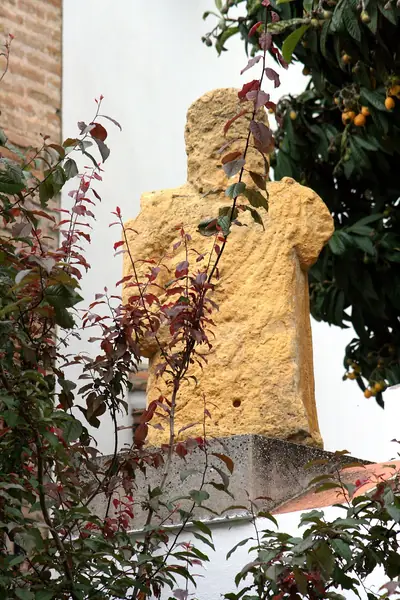
The house follows the form of a traditional Arab residence, with an interior courtyard and decorative elements. Its name comes from two stone reliefs that once decorated its corners and are thought to have Phoenician origins. After restoration, the building opened to the public in December 2004.
Nearby, the Museo del Vino de Ronda adds a wine-focused cultural stop to this part of the city.
Plaza de Toros de Ronda
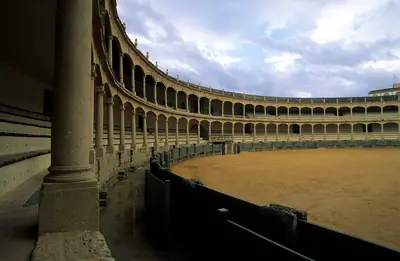
The Plaza de Toros de Ronda is one of Spain’s oldest bullrings and a protected monument belonging to the Real Maestranza de Caballería de Ronda. Construction began in 1780 and was completed in 1785 after a temporary pause.
The project was directed by Martín de Aldehuela, whose work is also associated with Ronda’s New Bridge. The bullring is known for its brick and stone façade, gallery arches and arena measuring 66 metres in diameter.
Palacio del Marqués de Salvatierra
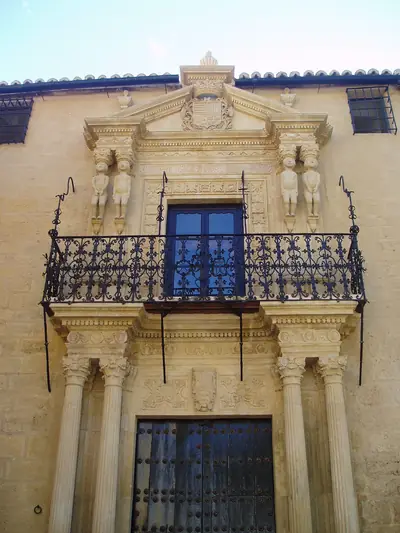
The Palacio del Marqués de Salvatierra is an eighteenth-century residence built on the site of earlier Mudejar houses. Its Baroque façade is particularly striking, with Corinthian columns, a carved stone frieze and a wrought-iron balcony.
Four Inca-inspired figures appear beneath the straight pediment, while the Salvatierra family coat of arms occupies its centre. The interior contains furnishings and decorative and artistic objects, including carvings and paintings.
Acinipo and its Roman theatre
The ruins of Acinipo, also known as Ronda la Vieja, lie in the hills around Ronda. The site was occupied from the Neolithic period, with prehistoric huts from the Copper Age and Bronze Age, but it became especially important during the Roman era.
Its buildings were arranged in steps along the slope and protected by a circuit wall with rounded towers. The best-preserved feature is the Roman theatre, one of the clearest reminders of Acinipo’s ancient character. Archaeologists have also found coins minted in Acinipo itself.
Other historic places
Ronda’s historic fabric includes several smaller but significant sites. The remains of Castillo del Laurel are traces of a former fortification within the town and are protected as a cultural property.
The Muralla urbana reveals how the city’s defensive wall forms part of the built environment. The Arco del Cristo, also known as the Puerta de los Molinos, is another named historic site, while the Iglesia mozárabe de las Cuevas de San Antón, or Hermitage of Nuestra Señora de la Cabeza, stands a short distance from Ronda and is associated with caves and a rock-cut religious tradition.
Explore Ronda with a self-guided audio tour
A Ronda self-guided walking tour is an easy way to connect the city’s landmarks without joining a group. Neywo offers three walking tours and one bus route in Ronda, with 48 narrated places in total:
- Moors, Kings and Conquerors: Ronda’s Old City — 1.36 km, 104 minutes and 11 stops.
- Bridges Over the Abyss: The Tajo Gorge Walk — 0.76 km, 60 minutes and 9 stops.
- Bulls, Gardens and Plazas: Ronda’s Mercadillo — 1.98 km, 91 minutes and 11 stops.
- Ronda Urban Line 2: Mercadillo to the Old City — a 1.8 km bus route taking 8 minutes, with 6 stops.
The app tells the story of each place as you reach it, at your own pace, with no group and no schedule. Narration is available in 11 languages, making Neywo a practical Ronda audio guide for exploring the city independently.
Download Neywo and discover Ronda through its gorge, bridges, walls, palaces and historic streets. When you continue exploring Spain, nearby Andalusian cities such as Seville, Nerja and Setenil de las Bodegas offer more places to explore with the app.
Places with an audio guide in Ronda
8 places in Ronda with a Neywo audio guide. Each one starts telling its story as you reach it.
Self-guided tours in Ronda
4 tours in Ronda, free in the Neywo app. Each stop tells its story as you reach it.
- Bus ride
Ronda Urban Line 2: Mercadillo to the Old City
A local town bus (Line 2, run for the Ayuntamiento de Ronda) that links the bullring and Mercadillo churches with Puente Nuevo and the walled old city. A cheap way to cover the main sights without the climbs.
Iglesia de la Merced · Plaza de Toros de Ronda · Puente Nuevo · Casa del Gigante · Castillo del Laurel · Plaza Ruedo Alameda, Ronda
Open this tour: Ronda Urban Line 2: Mercadillo to the Old City - Walk
Moors, Kings and Conquerors: Ronda's Old City
Wander the old quarter of La Ciudad, where a Moorish minaret, a Nasrid palace and a Roman forum site all sit within a few streets. You pass the palace where the Catholic Monarchs stayed after taking Ronda in 1485, then follow the medieval walls to the fortified Almocabar gate.
Plaza de María Auxiliadora, Ronda · Palacio de Mondragón · Museo Lara · Casa del Gigante · Minaret of San Sebastián · Iglesia de Santa María La Mayor …
Open this tour: Moors, Kings and Conquerors: Ronda's Old City - Walk
Bridges Over the Abyss: The Tajo Gorge Walk
Ronda's story is told across a 100-metre gorge. Start on the famous Puente Nuevo, peer down into the Tajo, then descend through the Moorish King's water mine, a Baroque palace with carved Inca figures, the Old and Roman bridges and the 13th-century Arab baths.
Puente Nuevo · Tajo de Ronda · Casa del Rey Moro · Palacio del Marqués de Salvatierra · Puerta de Felipe V · Puente Viejo …
Open this tour: Bridges Over the Abyss: The Tajo Gorge Walk - Walk
Bulls, Gardens and Plazas: Ronda's Mercadillo
Cross to the 'new town' that grew after Puente Nuevo opened. Visit one of Spain's oldest bullrings, stroll the clifftop Alameda del Tajo, and pass the churches and squares of the Mercadillo before finishing at the cave chapel of La Oscuridad.
Plaza de España, Ronda · Teatro Vicente Espinel · Plaza de Toros de Ronda · Al Toro de Lidia · Statue of Blas Infante, Ronda · Alameda del Tajo …
Open this tour: Bulls, Gardens and Plazas: Ronda's Mercadillo
Walk Ronda with Neywo
Neywo turns Ronda into a self-guided audio tour. Stories arrive as you reach the place they belong to, and the route reshapes when you wander off it.

