Marbella, Spain: Self-Guided Walking Tour
Things to Do in Marbella: What to See in the Costa del Sol City
The best things to do in Marbella combine the whitewashed streets of the Old Town with historic monuments, museums, distinctive religious buildings and the wider landscape of the Costa del Sol. The city is worth visiting for the way its medieval and Renaissance heritage sits alongside a Mediterranean setting. Neywo has a free audio guide for Marbella with 21 narrated places, available in 11 languages.
What to See in Marbella
Torre Ladrones
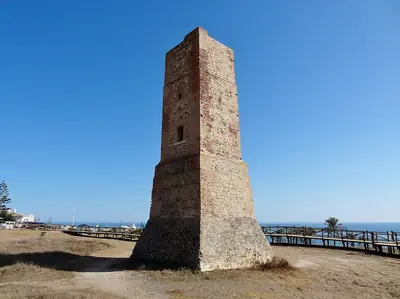
Near the dunes of Artola, beside Puerto de Cabopino, Torre Ladrones is one of Marbella’s historic coastal landmarks. Also called Torre Vigía Ladrones, the square watchtower rises more than 14 metres and is the tallest watchtower on the Málaga coast according to the supplied information.
The tower formed part of the defensive line along the Andalusian Mediterranean coast. Its name, meaning “Thieves Tower”, refers to the projecting defensive structures known as ladroneras. Built during the period of Muslim rule in the Iberian Peninsula, it contains three rooms and a rooftop terrace. Torre Ladrones was declared a Good of Cultural Interest in 1985.
Casa del Corregidor and Plaza de los Naranjos
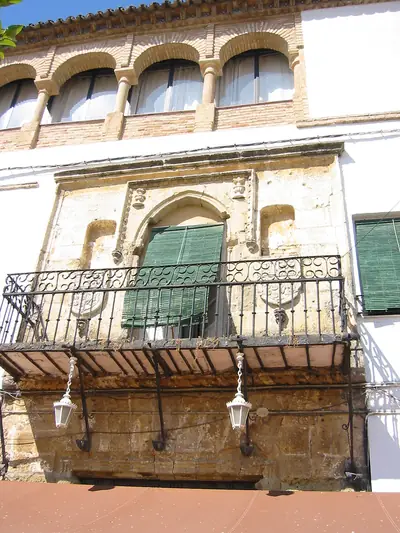
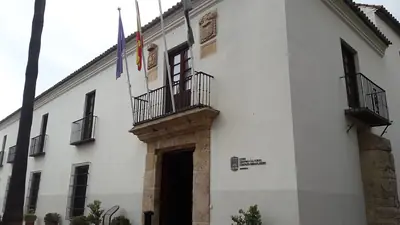
Casa del Corregidor stands in the heart of Marbella’s Old Town, combining Gothic and Renaissance elements. Its stone façade and three-arched balcony are among its most distinctive features, while the building’s Moorish-style ceiling is decorated with fresco murals.
Just nearby, Plaza de los Naranjos is one of the defining spaces of the historic centre. Created in 1485 after the Christian conquest of the city, the square is framed by the Casa Consistorial, Casa del Corregidor and Ermita de Santiago. Orange trees surround a Renaissance fountain at its centre; the trees were planted in 1941 and give the plaza its name.
Ermita de Santiago
The Ermita de Santiago occupies a prominent position in Plaza de los Naranjos. Dating from the fifteenth century, it is the oldest religious building in Marbella and was built after the city was captured by the Crown of Castile.
The chapel has a simple rectangular nave and a pitched roof covered with Moorish tiles. It is also home to the Brotherhood of the Most Holy Christ of Love, Mary Most Holy of Charity, and Saint John the Evangelist.
Iglesia de la Encarnación
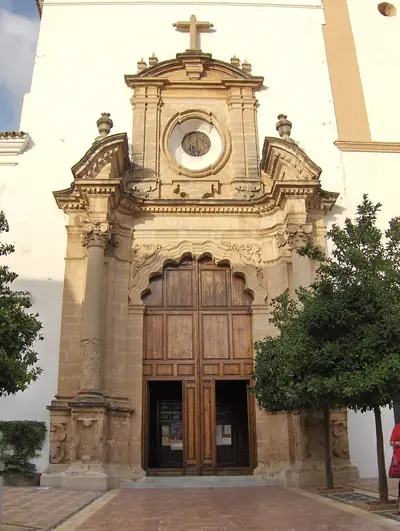
The Iglesia de la Encarnación, also known as the Parish Church of Our Lady of the Incarnation, is another important religious landmark in the Old Town. The present church was built during the sixteenth and seventeenth centuries, giving it a long historical presence in the centre of Marbella.
Castillo de Marbella
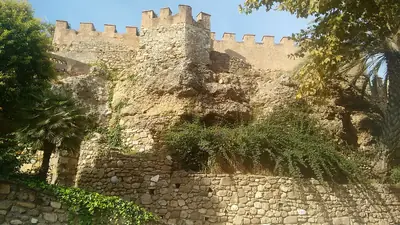
The ruined walls of the Castillo de Marbella offer a glimpse of the city’s fortified past. Also known as Castillo de la Madera or the Alcazaba of Marbella, the castle has a rectangular layout and stands in the historic centre.
The site has been protected as a monument since 1949 and also received protection under Spain’s Historical Heritage legislation in 1985. Its surviving walls are a reminder of the defensive importance of the old city.
Ermita del Santo Cristo de la Vera Cruz
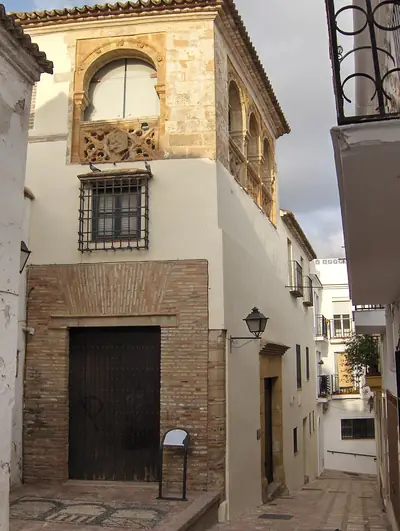
In Barrio Alto, the historic upper quarter of the ancient city, the Ermita del Santo Cristo de la Vera Cruz provides a quieter stop among Marbella’s religious heritage. The chapel was established in the early centuries of the city’s history and enlarged in the eighteenth century.
Its façade has an entrance framed in exposed stone, while the rest is finished with white lime. A square bell tower rises above it, topped with glazed ceramic tiles.
Hospital Bazán and the Museum of Contemporary Spanish Engravings
Hospital Bazán reflects the refined domestic architecture of the mid-sixteenth century, combining Gothic, Mudéjar and Renaissance elements. Its name recalls the charitable institution created by Don Alonso de Bazán, a Marbella councillor and governor of the town’s castle, which the building served between the seventeenth and nineteenth centuries.
Today, the former hospital houses the Museo del Grabado Español Contemporáneo, or Museum of Contemporary Spanish Engravings, a municipal cultural centre.
Cortijo de Miraflores
In the Pilar Miraflores neighbourhood, Cortijo de Miraflores preserves part of Marbella’s agricultural past. Tomás Francisco Domínguez y Godoy built the cortijo in 1706 on the ruins of an earlier farming estate.
The building includes decorative elements that probably came from earlier structures, including medallions. Nearby, the Sala Arqueológica de Marbella offers another way to explore the area’s past through archaeology.
Museo Ralli
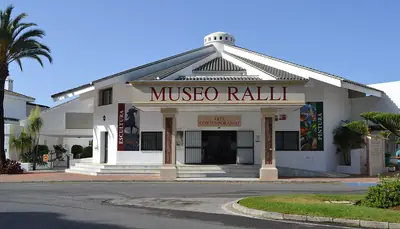
The Museo Ralli is a distinctive stop for modern and contemporary art. It is the only Ralli Museum in Europe and one of five Ralli Museums in the world. Founded by Harry and Martine Recanati, it opened in Marbella in 2000.
Its collection brings together Latin American and European art, with a particularly strong emphasis on surrealism. The museum has ten exhibition rooms and houses one of the most important collections of Latin American art in Europe.
King Abdelaziz Mosque
The King Abdelaziz Mosque, also known as the Marbella Mosque, is a contemporary building inspired by Arab traditions. Completed in 1981, it was financed by the government of Saudi Arabia and designed by the Córdoba architect Juan Mora.
The complex can accommodate more than 800 people and includes gardens, a library and housing for the imam. Its design is an example of contemporary Andalusian architecture with Arabic inspiration.
King Fahd Mosque
In the Las Lomas del Marbella Club development, the King Fahd Mosque is a private place of worship beside King Fahd’s palace. Built for the exclusive use of the Saudi royal family, it was designed by Francisco Rambla Bardier and completed in 1985.
The main building is a 559-square-metre cube accompanied by a 14.6-metre-high tower. Cream-coloured marble, pointed horseshoe arches and small battlements give the exterior a restrained appearance influenced by Ottoman mosque traditions.
El Ángel Botanical Garden
Beyond Marbella, in the El Ángel neighbourhood of Nueva Andalucía, the El Ángel Botanical Garden offers a peaceful setting. Its history reaches back to the nineteenth century, and many of its trees date from the garden’s original period. Their size reflects the time they have had to grow.
Auditorio de Marbella
The Auditorio de Marbella is an open-air theatre. Its outdoor setting gives the venue a distinctive connection with its surroundings and makes it one of the city’s unusual cultural landmarks.
Marbella on the Costa del Sol
Marbella forms part of the Costa del Sol, the sunny Mediterranean coastline of Andalusia in southern Spain. The region is generally understood to extend from Tarifa in the west to Nerja in the east, covering about 150 kilometres of coast.
Tourism began to develop in the 1920s, while international tourism expanded strongly in the 1950s. The coastline includes beaches, spas, fifteen marinas, nine theme parks and a notable concentration of golf courses. Málaga is its main urban centre, while Marbella, Estepona, Mijas, Torremolinos and Benalmádena are among its other destinations.
For more ideas across the region, explore Andalusia, or compare Marbella with nearby Málaga, Nerja and Ronda.
Explore Marbella with Neywo
Turn your visit into a Marbella self-guided walking tour with Neywo. The app has one walking route: a 2.27-kilometre walk lasting about 90 minutes, with 11 narrated stops. It includes Auditorio de Marbella, Plaza de la Victoria, Casa del Corregidor, Ermita de Santiago, Plaza General Chinchilla, Iglesia de la Encarnación, Museo del Grabado Español Contemporáneo, Plaza Castillo, Castillo de Marbella, Ermita del Santo Cristo de la Vera Cruz and Cortijo de Miraflores.
Neywo works at your own pace. Each story plays as you reach the place, so you can explore without a group and without a schedule. Download the free audio guide for Marbella and discover the Old Town, its orange-tree squares, ruined fortress and historic chapels while you walk.
Places with an audio guide in Marbella
8 places in Marbella with a Neywo audio guide. Each one starts telling its story as you reach it.
Self-guided tours in Marbella
1 tour in Marbella, free in the Neywo app. Each stop tells its story as you reach it.
- Walk
Marbella's Old Town: Orange Trees, a Ruined Alcazaba and Hidden Hermitages
Behind the glitz of the Costa del Sol lies a whitewashed medieval quarter. Start by the open-air auditorium, cross the old squares to Plaza de los Naranjos, where a Renaissance fountain, a 1552 corregidor's house and the city's oldest chapel stand side by side. Wind up through lanes of churches and a former charity hospital to the ruined Moorish castle, the hilltop Barrio Alto and a farmstead from 1706.
Auditorio de Marbella · Plaza de la Victoria, Marbella · Casa del Corregidor · Ermita de Santiago · Plaza General Chinchilla, Marbella · Iglesia de la Encarnación …
Open this tour: Marbella's Old Town: Orange Trees, a Ruined Alcazaba and Hidden Hermitages
Walk Marbella with Neywo
Neywo turns Marbella into a self-guided audio tour. Stories arrive as you reach the place they belong to, and the route reshapes when you wander off it.

