What to See in Sanlúcar de Barrameda, Spain: Free Audio Guide
Things to Do in Sanlúcar de Barrameda: Historic Palaces, Churches and Coastal Fortresses
Sanlúcar de Barrameda is a historic Andalusian city in Cádiz Province, known for its palaces, convents, churches and defensive landmarks. Its heritage is especially concentrated in the historic centre and Barrio Alto, where a short walk reveals the influence of the Medina Sidonia family, religious orders and the city’s former coastal defences. Neywo offers a free audio guide for Sanlúcar de Barrameda with 17 narrated places.
What to See in Sanlúcar de Barrameda
The best way to explore Sanlúcar is to move through its historic centre, taking in the buildings that form part of the city’s historic and artistic heritage.
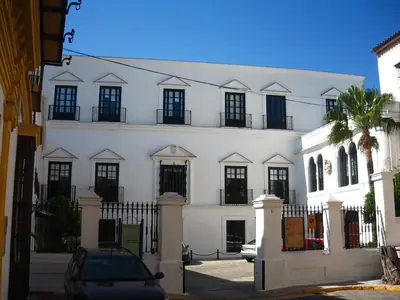
Medina Sidonia Ducal Palace
The Medina Sidonia Ducal Palace, or Palacio Ducal de Medina Sidonia, is one of the buildings that defines Sanlúcar de Barrameda. It forms part of the city’s Historic and Artistic Ensemble, designated in 1973. The palace and Las Covachas were declared Historic and Artistic Monuments in 1978. Today, the building houses the Casa Medina Sidonia Foundation, continuing its cultural role in the city.
Las Covachas de Sanlúcar de Barrameda
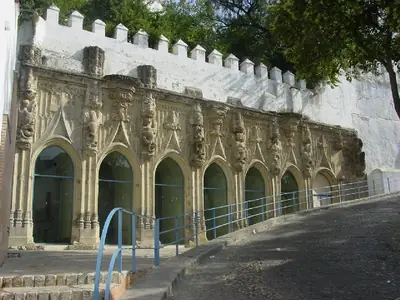
Attached to the palace on the Cuesta de Belén, Las Covachas are also known as the Tiendas de las Sierpes. This Gothic merchants’ market is one of Sanlúcar’s most distinctive landmarks. It forms part of the city’s protected historic and artistic heritage and was declared a Site of Cultural Interest in 2007.
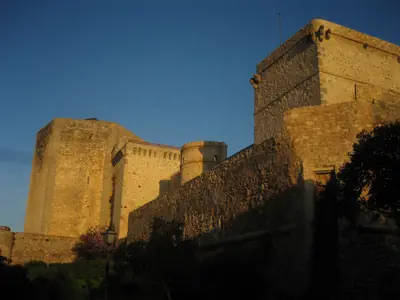
Castillo de Santiago
Castillo de Santiago is one of Sanlúcar’s principal historic monuments. The castle was declared a historic-artistic monument in 1972 and is protected as a monument of cultural interest. Its presence adds a defensive dimension to the city’s otherwise strongly palatial and religious historic centre.
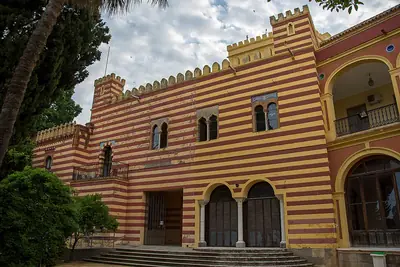
Palacio de Orleans-Borbón
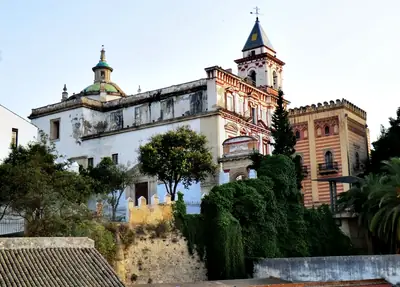
The Palacio de Orleans-Borbón was built in the nineteenth century as a summer residence for Antonio de Orleans and María Luisa Fernanda de Borbón, the Duke and Duchess of Montpensier. It now houses Sanlúcar de Barrameda’s town hall.
The palace is particularly unusual because several pre-existing structures were brought together beneath a single exterior. As a result, the building does not follow one symmetrical axis. Its façade combines Neo-Mudéjar elements with Italian Classicism, while the interior reflects a variety of historicist styles, including Rococo, Chinoiserie, Egyptian and English influences.
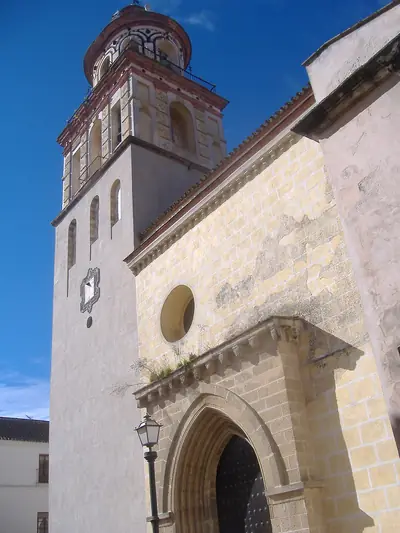
Iglesia de Nuestra Señora de la O
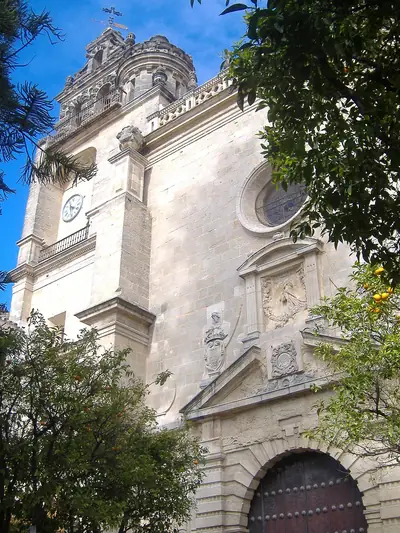
The Iglesia de Nuestra Señora de la O is Sanlúcar’s principal church and the main temple of the parish of the same name. It was declared a National Historic-Artistic Monument in 1931 and has formed part of the city’s historic and artistic ensemble since 1973.
Iglesia Convento de Madre de Dios
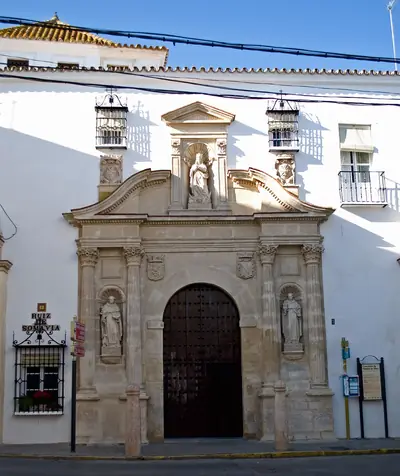
This historic convent belongs to Sanlúcar’s convent-city heritage and remains home to a community of Dominican nuns. The Dominican community arrived in Sanlúcar in 1480 with the support of Enrique Pérez de Guzmán y Meneses, Second Duke of Medina Sidonia, and his wife, Leonor de Rivera y Mendoza.
The building seen today dates mainly from the end of the sixteenth century. It later became a place of retreat for Leonor de Sotomayor y Zúñiga, Countess of Niebla, and her granddaughter, Leonor de Guzmán. Their connection with the House of Medina Sidonia brought renewed support and led to a major reform of the convent.
Santo Domingo de Guzmán Church
The Santo Domingo de Guzmán Church, or Iglesia de Santo Domingo, was part of a former Dominican convent. The monastery was founded in the first half of the sixteenth century by Alonso Pérez de Guzmán y Zúñiga, Fifth Duke of Medina Sidonia, and his wife, Ana de Aragón.
The church was built between 1558 and 1570 at the expense of Leonor de Sotomayor y Zúñiga, Countess of Niebla. The authorship of the original plans remains disputed: some historians associate them with Hernán Ruiz the Second, while others name Francisco Rodríguez Cumplido. Francisco Corona and Cristóbal de Rojas also took part in the construction. In the early twentieth century, the former convent church became a parish church.
Iglesia de Nuestra Señora de los Desamparados
The Iglesia de Nuestra Señora de los Desamparados is closely connected with the Hermandad de la Santa Caridad. This brotherhood cared for the sick, buried the poor and those who had been executed, and arranged masses for them. It moved permanently to this site in 1672.
The present church was built in 1732 with adjoining accommodation. It is Baroque in style and contains wooden Rococo altars. Its religious imagery includes San Roque, San Sebastián and San Francisco de Paula, the city’s three co-patrons, chosen as protectors during the Black Death.
Convento de Regina Coeli
Popularly known as the Regina Convent, the Convento de Regina Coeli is a female monastery of the Poor Clares. It forms part of Sanlúcar’s historic and artistic ensemble and its distinctive convent-city heritage.
Basilica of Our Lady of Charity
The Basilica of Our Lady of Charity, or Basílica Menor de Nuestra Señora de la Caridad, is the sanctuary of Our Lady of Charity Crowned, Sanlúcar de Barrameda’s patron saint. The image was proclaimed patron of the city and of all the states of the House of Medina Sidonia in 1618.
The image was canonically crowned in 1965, and Pope John Paul the Second proclaimed her the city’s canonical patron saint in 2002. The sanctuary became a minor basilica in 1997. It also preserves a collection of relics, including reliquaries associated with Saint Ursula and the Eleven Thousand Virgins.
Other historic churches
Several other churches add to Sanlúcar’s religious heritage. The Iglesia de Nuestra Señora de la Merced is also known as the Auditorio de la Merced or the former Iglesia de la Merced. The Church of Nuestra Señora del Carmen is a seventeenth-century Baroque building. The city also has the Iglesia de Nuestra Señora de la O and the historic convent churches included in its protected convent-city ensemble.
Coastal fortresses and historic memory
The Fuerte de San Salvador, also known as the Baluarte de San Salvador, is a seventeenth-century coastal fort. It was declared a monument of cultural interest on 25 June 1985.
The Fuerte Espíritu Santo once stood on a promontory extending into the sea, protecting Sanlúcar and the entrance to the Guadalquivir. Its defensive history began with a watchtower built in 1507 on the orders of Juan Alonso Pérez de Guzmán, Third Duke of Medina Sidonia. A bastion was added in 1587, followed by a larger castle in 1634. The fortress was renovated in 1770, captured by French troops in 1810 and demolished in 1813.
The Monumento a las Víctimas de la Guerra Civil y el Franquismo en Sanlúcar de Barrameda commemorates the victims of the Civil War and Francoism. It is also known as the Monument to Those Shot During the Civil War.
Plan a Sanlúcar de Barrameda Self-Guided Walking Tour with Neywo
Neywo’s free audio guide lets you explore Sanlúcar de Barrameda independently, with narration available in 11 languages. It includes two walking tours and one bus route:
- Dukes, Palaces and the Upper Town: a 1.68 km walk lasting 106 minutes, with 12 narrated stops.
- The City of Convents: a 1.7 km walk lasting 73 minutes, with 8 narrated stops.
- Line 4: Around the Barrio Alto: a 4.3 km bus route lasting 18 minutes, with 6 narrated stops.
The app tells the story of each place as you reach it, at your own pace, with no group and no schedule. Download Neywo and explore Sanlúcar de Barrameda through its palaces, churches, convents and fortresses.
Sanlúcar is part of Andalusia, in Spain. For more ideas in the region, you can also discover Seville, Ronda or Medina Sidonia.
Places with an audio guide in Sanlúcar de Barrameda
8 places in Sanlúcar de Barrameda with a Neywo audio guide. Each one starts telling its story as you reach it.
Self-guided tours in Sanlúcar de Barrameda
3 tours in Sanlúcar de Barrameda, free in the Neywo app. Each stop tells its story as you reach it.
- Bus ride
Line 4: Around the Barrio Alto
Urban bus line 4 (Sanlúcar Avanza) loops through the upper town and runs past the Castillo de Santiago. Ride it to pass two convents, the castle, the parish church of Nuestra Señora de la O and the old Rota gate and the Baroque Carmen church without climbing the hill on foot.
Iglesia Convento de Madre de Dios · Convento de Regina Coeli · Castillo de Santiago · Iglesia de Nuestra Señora de la O · Puerta de Rota · Church of Nuestra Señora del Carmen
Open this tour: Line 4: Around the Barrio Alto - Walk
Dukes, Palaces and the Upper Town
Climb from the old Rota gate to the hilltop Barrio Alto, where the Dukes of Medina Sidonia ruled the mouth of the Guadalquivir. You pass the patron saint's basilica, a Montpensier summer palace turned town hall, the Gothic market arcade of Las Covachas, the ducal palace and the castle, then drop through the convent streets that gave Sanlúcar the name City of Convents.
Puerta de Rota · Basilica of Our Lady of Charity · Palacio de Orleans-Borbón · Iglesia de Nuestra Señora de la Merced · Las Covachas de Sanlúcar de Barrameda · Medina Sidonia Ducal Palace …
Open this tour: Dukes, Palaces and the Upper Town - Walk
The City of Convents
Sanlúcar grew up around the monasteries its ducal patrons founded in the sixteenth and seventeenth centuries. Follow them from the Dominican church of Santo Domingo through the Poor Clares of Regina Coeli, the brotherhood church of the Desamparados and the Dominican nuns of Madre de Dios to the Baroque Carmen church, then climb past the Merced and La O churches to the castle.
Santo Domingo de Guzmán church · Convento de Regina Coeli · Iglesia de Nuestra Señora de los Desamparados · Iglesia Convento de Madre de Dios · Church of Nuestra Señora del Carmen · Iglesia de Nuestra Señora de la Merced …
Open this tour: The City of Convents
Walk Sanlúcar de Barrameda with Neywo
Neywo turns Sanlúcar de Barrameda into a self-guided audio tour. Stories arrive as you reach the place they belong to, and the route reshapes when you wander off it.

