Karlsruhe, Germany: Self-Guided Walking Tour
Things to Do in Karlsruhe: Palaces, Art and the Fan-Shaped City
Karlsruhe is a planned city in Baden-Württemberg, Germany, known for its fan-shaped streets radiating from Karlsruhe Palace. Its museums, historic churches, gardens and distinctive architecture make it a rewarding destination for culture, history and relaxed urban walks. Neywo offers a free audio guide for Karlsruhe with 119 narrated places.
What to See in Karlsruhe
Karlsruhe Palace and the Badisches Landesmuseum
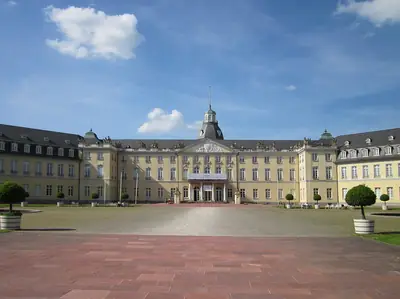
Karlsruhe Palace is the starting point for understanding the city. Built from 1715 for Margrave Charles III William of Baden-Durlach, the Baroque complex became the residence of the Margraves and later Grand Dukes of Baden until 1918. Its three wings, Garden Hall, Marble Hall and Court Chapel reflect its former courtly role.
The streets of Karlsruhe extend outward from the palace in a distinctive fan-shaped pattern. Inside the building, the Badisches Landesmuseum presents more than 50,000 years of international cultural history and has used the palace as its main home since 1921.
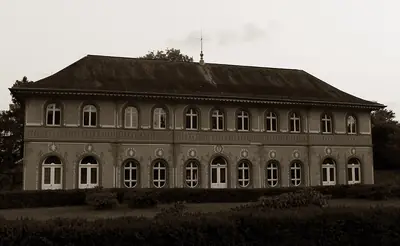
Fasanenschlösschen
In Karlsruhe’s Fasanengarten, the Fasanenschlösschen is a Chinese-style tea house at the centre of a small architectural ensemble. Two matching pavilions face it across an elongated oval square, creating a carefully balanced garden setting.
The building was created in 1764 and 1765. It was first used to raise pheasants, then transformed into a small château around 1773 when the palace garden was redesigned as an English landscape garden.
Orangerie and Botanical Garden
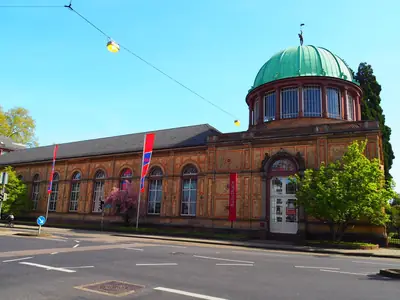
Beside Karlsruhe’s Botanical Garden stands the Orangerie, a historic building closely connected with art, culture and the surrounding garden. It was originally designed to shelter plants during winter and to provide a setting for social gatherings and events.
Today, the Orangerie is an exhibition space for the Staatliche Kunsthalle Karlsruhe, giving the former garden building a continuing cultural role.
Karlsruhe Art Museum
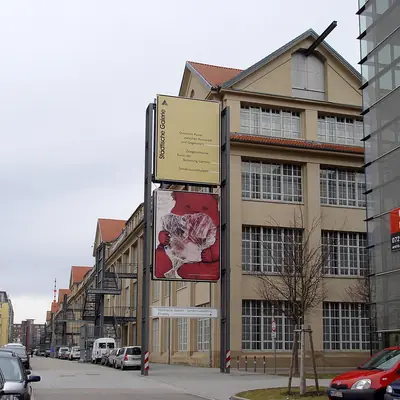
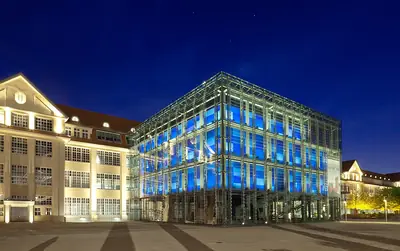
The Karlsruhe Art Museum, also known as the Kunstmuseum Karlsruhe, occupies the inner courtyard of Hallenbau A on Lorenzstraße, a former industrial building and monument dating from 1915. Since 1997, it has served as Karlsruhe’s museum for modern and contemporary art.
Its collection spans from Romanticism to the present and includes around 20,000 works, including painting, sculpture, installations, media art, graphic art and photography. The museum also holds the Ferdinand Siegel Collection, with more than 1,800 examples of European printmaking from the fifteenth to the nineteenth century, as well as the Garnatz private collection on permanent loan, comprising around 700 works.
ZKM Center for Art and Media Karlsruhe
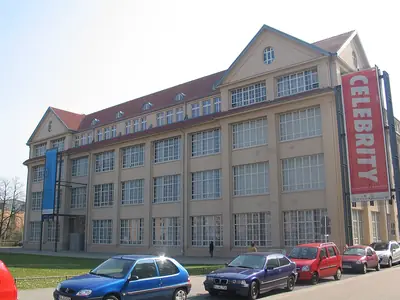
The ZKM Center for Art and Media Karlsruhe brings art, science and new technologies together inside a protected former industrial building that once served as a munitions factory. The centre has occupied the building since 1997.
Its facilities include exhibition spaces, the Hertz Lab research platform, a media library and a library. Research, production, events, archives and collections operate alongside one another, while exhibitions and thematic events explore media, digitization and globalization. The ZKM was founded in 1989 by the City of Karlsruhe and the state of Baden-Württemberg.
Museum für Neue Kunst Karlsruhe
The Museum für Neue Kunst Karlsruhe, also known as ZKM Lichthof 1 and 2, was once devoted to modern and contemporary art as part of the ZKM. It began in 1999, emerging from the Museum für Gegenwartskunst, and was formally dissolved in 2017 when its collections were combined with those of other ZKM institutions.
Across 7,000 square metres of exhibition space, the former museum presented works from several private collections, including those of Friedrich Erwin Rentschler, Anna and Dieter Grässlin, Siegfried Weishaupt and Christian Boros.
Karlsruhe Zoo
Karlsruhe Zoo, or the Zoological City Garden, combines landscaped green spaces with animal enclosures in one historic destination. The site covers around 22 hectares, with about nine hectares devoted to the zoo itself. It also includes Tierpark Oberwald, an outer area southeast of the city extending over 16 hectares.
Opened in 1865, Karlsruhe Zoo is one of the oldest zoological gardens in Germany. The entire Zoological City Garden is protected as a historic monument, and its garden and zoo remain a single enclosed site.
Hereditary Grand Ducal Palace
On Kriegsstraße, the Hereditary Grand Ducal Palace combines a former royal residence with a contemporary institutional role. Built between 1891 and 1897 for Hereditary Grand Duke Friedrich II and Hilda of Nassau, it was designed by Josef Durm in the Neo-Baroque style.
The building has been the seat of Germany’s Federal Court of Justice since October 1950. Its glass dome and mansard roof, destroyed during the Second World War, were rebuilt in 2012.
Lutherkirche and St. Bernhard
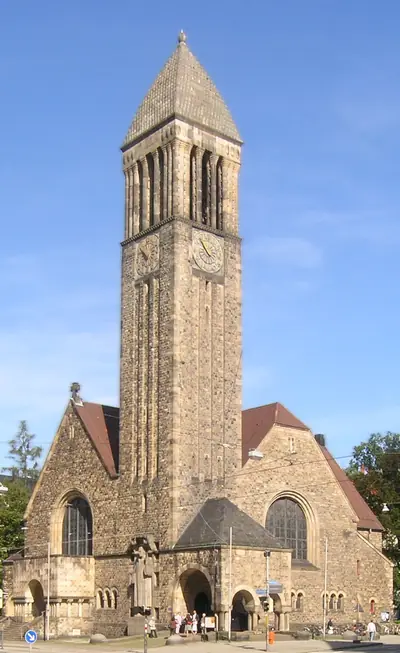
Karlsruhe’s Oststadt is home to two notable churches. The Protestant Lutherkirche was built between 1905 and 1907 to plans by Curjel and Moser. Its historical and architectural importance has earned it protection as a cultural monument of special significance.
Nearby, St. Bernhard, or the Bernharduskirche, marks Durlacher Tor and the eastern end of Kaiserstrasse. This Neo-Gothic Roman Catholic branch church has an 86-metre tower, the tallest church tower in Karlsruhe.
Schloss Augustenburg in Grötzingen
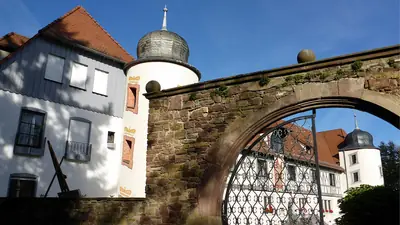
In the Karlsruhe district of Grötzingen, Schloss Augustenburg was a former residence of the Margraves of Baden-Durlach. Its history reaches from a medieval predecessor building to a princely residence, an artists’ meeting place and a site awaiting a new future.
The predecessor was constructed in the tenth century and later became a prebend house. Markgrave Christoph the First of Baden acquired it and developed it into a princely residence. In the sixteenth century, Karl the Second of Baden-Durlach enlarged it into a castle, adding semicircular towers and western wings.
Karlsruhe’s Churches and Historic Centre
The Kleine Kirche, or Little Church, is one of Karlsruhe’s oldest church buildings and stands near Marktplatz along Kaiserstraße, the city’s main shopping street. The Protestant Town Church is another important Protestant landmark in the centre and belongs to Citykirche Karlsruhe.
Other places to include in a wider exploration are Unsere Liebe Frau in Karlsruhe and the Evangelische Kirche Zum Guten Hirten in Karlsruhe-Rintheim. Each adds to the city’s varied religious and neighbourhood architecture.
Explore Karlsruhe with a Self-Guided Audio Tour
Download Neywo and explore Karlsruhe independently with seven walking tours and one bike route. Together, they cover routes from 1.91 to 4.05 km and from 23 to 120 minutes, with between four and eleven narrated stops.
The walks include palace gardens and art, Weinbrenner’s Karlsruhe, the old residence town of Durlach, the route from the ZKM to Stephanplatz, the Fasanengarten and the east of the city, the Festival Hall and zoo, and Grötzingen. The bike route runs from Kaiserallee to Lutherkirche and covers 4.6 km in 23 minutes with six stops.
Neywo’s stories are available in 11 languages. The app tells the story of each place as you reach it, at your own pace, with no group and no schedule. Download the free audio guide and discover Karlsruhe one stop at a time.
Karlsruhe is part of Baden-Württemberg in Germany. When planning a wider journey through the region, you can also compare it with Heidelberg, Stuttgart or Freiburg.
Places with an audio guide in Karlsruhe
8 places in Karlsruhe with a Neywo audio guide. Each one starts telling its story as you reach it.
Self-guided tours in Karlsruhe
8 tours in Karlsruhe, free in the Neywo app. Each stop tells its story as you reach it.
- Bike ride
Karlsruhe by Bike: Kaiserallee to the Lutherkirche
Ride the city's cycle network across the fan: from the Leibdragoner monument on Kaiserallee past the Federal Court of Justice and the state theatre, through Kronenplatz to the 13 Winds art stop at Durlacher Tor and the Art Nouveau Lutherkirche.
Leibdragonerdenkmal · Hereditary Grand Ducal Palace · Badisches Staatstheater Karlsruhe · Kronenplatz · Die dreizehn Winde (Die Luft) · Lutherkirche
Open this tour: Karlsruhe by Bike: Kaiserallee to the Lutherkirche - Walk
Palace, Gardens and Art in the Fan City
Karlsruhe grew outward from its baroque palace in a fan of streets. Start at Weinbrenner's garden temple, walk through the palace, the botanical garden and the Orangerie, past the Federal Constitutional Court and the Kunsthalle, then to two grand villas, one now the Federal Court of Justice and the other a city museum.
Weinbrenner-Tempel · Johann-Peter-Hebel-Denkmal · Schlossturm Karlsruhe · Karlsruhe Palace · Federal Constitutional Court · Botanischer Garten Karlsruhe …
Open this tour: Palace, Gardens and Art in the Fan City - Walk
Weinbrenner's Karlsruhe: Pyramid, Squares and Stage
Walk the classical heart of the planned city. See the monument to Grand Duke Karl Friedrich, the red pyramid that marks the founder's tomb, the market square and the Little Church. Then pass the synagogue and the state theatre to the library and natural history museum on Friedrichsplatz.
Denkmal Karl Friedrich von Baden · Karlsruhe Pyramid · Ludwigsbrunnen · Protestant Town Church · Kleine Kirche (Karlsruhe) · Karlsruhe Synagogue …
Open this tour: Weinbrenner's Karlsruhe: Pyramid, Squares and Stage - Walk
Durlach: The Old Residence Town
Before Karlsruhe, the margraves of Baden ruled from Durlach. Ride the funicular or climb up to the Turmberg for the view, then walk down to the Karlsburg castle, the Baroque town church and Durlach's last surviving city gate.
Turmberg · Karlsburg Castle · Train-Denkmal · Town Church Durlach · Gefallenen-Denkmal für die Toten des Krieges von 1870/71 · St. Peter und Paul …
Open this tour: Durlach: The Old Residence Town - Walk
From the ZKM to Stephanplatz
Start in a former munitions factory that is now Karlsruhe's centre for art and media, then walk east through the planned city: the neo-gothic Friedenskirche, the Karlstor, the site of Weinbrenner's garden palace and St. Stephan, ending at two of the city's best-loved squares with their fountains.
ZKM Center for Art and Media Karlsruhe · Karlsruhe Art Museum · Friedenskirche · Karlstor · Amalienschlösschen · St. Stephan (Karlsruhe) …
Open this tour: From the ZKM to Stephanplatz - Walk
The Fasanengarten and the East
Walk from the old stadium grandstand to the Chinese-style Pheasant Palace, then on to the grand ducal burial chapel and the Main Cemetery, one of Germany's oldest municipal park cemeteries. Close the loop at Durlacher Tor with its 86-metre church tower.
Lutherkirche · St. Bernhard · Die dreizehn Winde (Die Luft) · Altes Stadion Karlsruhe · Fasanenschlösschen · Grabkapelle …
Open this tour: The Fasanengarten and the East - Walk
Festival Hall, Fountain and Zoo
A south-side walk: the bronze Hygieia Fountain in front of the Vierordtbad, the Festplatz with its congress halls, one of Germany's oldest zoos, the transport museum where Karl Drais's bicycles are shown, and a Renaissance palace that now houses the music university.
Hygieia-Brunnen · Festplatz · Karlsruhe Zoo · Verkehrsmuseum Karlsruhe · Schloss Gottesaue
Open this tour: Festival Hall, Fountain and Zoo - Walk
Grötzingen: The Margraves' Village
A village inside the city: the castle where Karlsruhe's founder grew up, a half-timbered town hall from 1668, the village church and a street that still remembers its lost synagogue.
Schloss Augustenburg · Rathaus Grötzingen · Evangelische Kirche Grötzingen · Synagoge Grötzingen (Karlsruhe)
Open this tour: Grötzingen: The Margraves' Village
Walk Karlsruhe with Neywo
Neywo turns Karlsruhe into a self-guided audio tour. Stories arrive as you reach the place they belong to, and the route reshapes when you wander off it.

