What to See in Lipari, Italy: Free Audio Guide
Things to Do in Lipari: Historic Churches, Archaeology and Volcanic Landscapes
Looking for things to do in Lipari? The largest of the Aeolian Islands combines a volcanic setting with historic churches, an ancient acropolis and an archaeological museum overlooking the town. It is a rewarding place to explore on foot, especially if you want to experience the island’s history alongside the distinctive landscapes of the Aeolian archipelago. Neywo offers a free audio guide for Lipari with 33 narrated places.
Lipari belongs to Sicily, in southern Italy, and forms part of the Aeolian Islands, also known as the Lipari Islands. This volcanic archipelago lies in the southern Tyrrhenian Sea, north of Sicily, and has been listed as a UNESCO World Heritage site since 2000.
What to see in Lipari
Castello di Lipari and the Cittadella
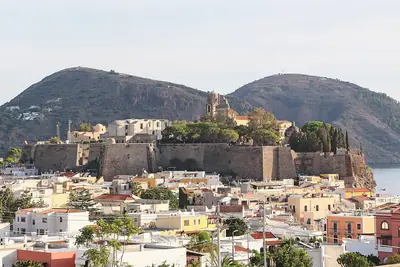
The Castello di Lipari stands on the summit of the town’s acropolis and is one of the island’s defining landmarks. The wider Cittadella brings together several of Lipari’s most important historic and religious sites, making it a natural starting point for discovering the island’s past.
Within the Rocca del Castello are churches including Chiesa dell’Immacolata, also known as the Church of Maria Santissima Immacolata, and Madonna delle Grazie, or Chiesa di Maria Santissima delle Grazie. The Church of the Virgin of Sorrows, also called Chiesa di Maria Santissima Addolorata, stands nearby along the main route through the acropolis, beside the original Sant’Andrea quarter.
Museo Archeologico Regionale Eoliano
The Museo Archeologico Regionale Eoliano occupies part of the Castello complex. Its setting is one of the museum’s most distinctive features: the collection is housed within the historic complex that dominates Lipari and the island.
For visitors interested in the long history of the Aeolian Islands, the museum provides an essential stop within the Cittadella. It is also one of the narrated places on a Lipari self-guided walking tour.
Lipari Cathedral
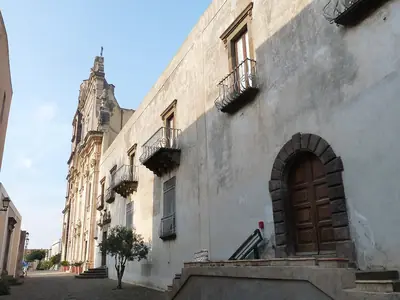
At the centre of the Cittadella stands Lipari Cathedral, or the Concattedrale di San Bartolomeo. It is the island’s principal place of worship and its largest and oldest church.
The cathedral’s main façade faces northwest, towards the staircase descending to the lower part of the city. Its position makes the building an important link between the historic acropolis and Lipari below.
Benedectine monastery and Church of Saint Anthony of Padua
The Benedectine monastery is part of the Church of Saint Anthony of Padua. It is one of the religious buildings included among Lipari’s places to visit, adding another layer to the historic setting around the Cittadella.
Chiesa dei Cappuccini
The Chiesa dei Cappuccini forms part of the town cemetery and preserves the remains of an early Capuchin friary. It is also known as the Chiesa dell’Assunta, or Church of the Assumption of the Blessed Virgin Mary.
The church and the surviving convent remains belong to the same historic complex, recalling the presence of the Order of Friars Minor Capuchin in Lipari.
Chiesa delle Anime del Purgatorio
At the centre of the Purgatorio peninsula pier, the Chiesa delle Anime del Purgatorio faces Piazza Ugo di Santonofrio in Marina Corta. Its position makes it a notable landmark in this part of Lipari and a useful stop when exploring the town’s waterfront areas.
Chiesa del Santissimo Nome di Maria in Pirrera
In the district of Pirrera, the Church of the Most Holy Name of Mary is one of Lipari’s notable rural churches. It was founded in 1589 at the request of Bishop Martino D’Acugna and later enlarged and completed in 1908 under Canon Giovanni Paino.
The church is known for its richly decorated interior, including elaborate stucco covered with gold leaf and a prominent cornice. Eight statues represent figures and devotions including the Most Holy Name of Mary, Saint John the Baptist, Saint Bartholomew, Our Lady of Sorrows, the Sacred Heart of Jesus, Our Lady of Pompeii, Saint Anthony of Padua and Saint Agnes.
A crypt beneath the floor was used to bury people from the district at the beginning of the last century. It remained in use until the cemetery was built in 1936.
San Cristoforo in Canneto
In Canneto, San Cristoforo is also known as the Basilica romana minore di San Cristoforo. It is the principal place of worship in this part of Lipari and offers another perspective on the island’s religious heritage beyond the central Cittadella.
Discover the Aeolian Islands and Lipari’s volcanic setting
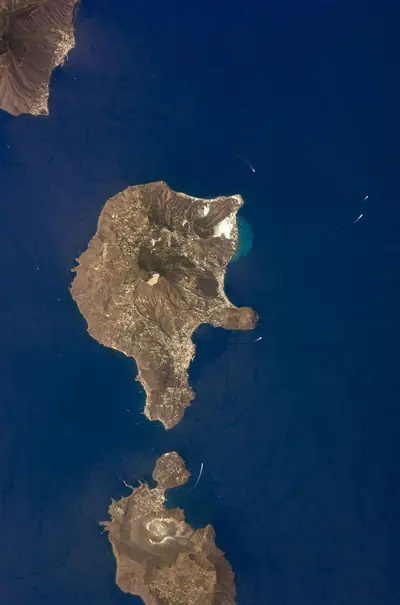
The Aeolian Islands are a volcanic archipelago whose geological character remains visible today. Stromboli and Vulcano are active volcanoes, while other parts of the islands show signs of secondary volcanic activity.
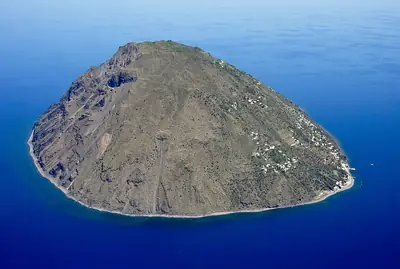
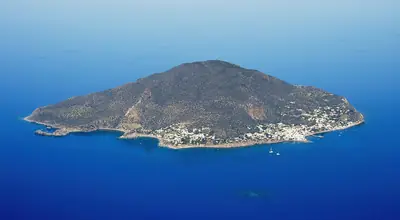
The archipelago includes islands with very different landscapes and identities. Alicudi is the westernmost of the seven islands, with a nearly circular shape and hilly terrain. Panarea is the smallest and lowest island in the archipelago and is considered the oldest. Filicudi, known in antiquity as Phoenicusa, belongs administratively to the municipality of Lipari and includes settlements such as Filicudi Porto and Pecorini a Mare.
Monte Pilato is one of Lipari’s prominent natural features. Its summit reaches 464 metres above sea level, and the mountain rises about 120 metres above the surrounding terrain. Its base measures roughly 1.2 kilometres across, while the town of Lipari lies about 4.1 kilometres to the south.
Together, these places show why Lipari is more than a historic town visit. Its churches and archaeological sites sit within a volcanic island landscape shaped by forces that are still active across the Aeolian archipelago.
Explore Lipari with a free audio guide
Neywo’s free audio guide makes it easy to explore Lipari independently. The app has one walking tour in the city:
- From Marina Corta to the Rock of Lipari: a 2.97-kilometre walk lasting 105 minutes, with 12 narrated stops.
The route includes Chiesa dei Cappuccini, Sant’Antonio di Padova, Chiesa delle Anime del Purgatorio, San Bartolomeo extra moenia, Saint Peters Church, Nostra Signora del Rosario, Castello di Lipari, Chiesa dell’Immacolata, Chiesa di Santa Caterina d’Alessandria, Lipari Cathedral, Museo Archeologico Regionale Eoliano and Madonna delle Grazie.
Download Neywo and explore Lipari at your own pace. The app tells the story of each place as you reach it, with no group and no schedule. Narration is available in 11 languages, so you can follow the route independently while discovering the historic centre and the Rock of Lipari.
Places with an audio guide in Lipari
8 places in Lipari with a Neywo audio guide. Each one starts telling its story as you reach it.

Self-guided tours in Lipari
1 tour in Lipari, free in the Neywo app. Each stop tells its story as you reach it.
- Walk
From Marina Corta to the Rock of Lipari
Leave the harbour churches of Marina Corta and climb the stairs to the Castello, the acropolis where Lipari has lived for six thousand years. Chapels, the cathedral of Saint Bartholomew and the archaeological museum of the Aeolian Islands wait on the rock.
Chiesa dei Cappuccini · Sant'Antonio di Padova · Chiesa delle Anime del Purgatorio · San Bartolomeo extra moenia · Saint Peters Church · Nostra Signora del Rosario …
Open this tour: From Marina Corta to the Rock of Lipari
Walk Lipari with Neywo
Neywo turns Lipari into a self-guided audio tour. Stories arrive as you reach the place they belong to, and the route reshapes when you wander off it.

