Visiting Pienza, Italy: Top Sights on Foot
Things to do in Pienza, Italy: what to see in the Renaissance town
Pienza is a historic town in Tuscany, Italy, known for its concentrated Renaissance architecture and position in the Val d’Orcia. Its central square, churches, museums and surrounding countryside make it a rewarding place to explore on foot. Neywo offers a free audio guide for Pienza with 23 narrated places, available in 11 languages.
What to see in Pienza
Piazza Pio II and the Renaissance center
Piazza Pio II is the architectural heart of Pienza. The square brings together the cathedral, Palazzo Piccolomini, Palazzo Vescovile and Palazzo Comunale in a remarkably harmonious Renaissance setting. It is also the starting point for discovering the town along Corso Rossellino and the surrounding historic streets.
Pienza was formerly known as Corsignano. Its transformation began when Enea Silvio Piccolomini, born in the village, became Pope Pius II. The town was later renamed Pienza in his honor; the name means “city of Pio.”
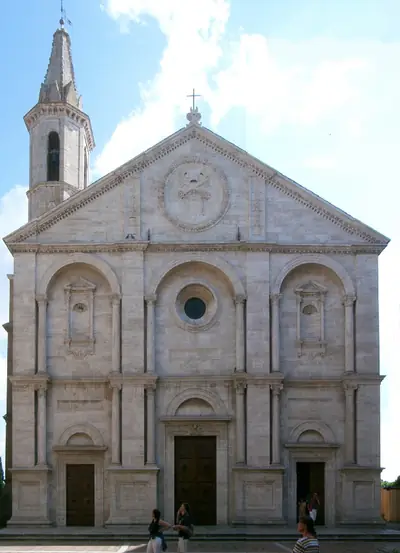
Pienza Cathedral
The Cattedrale dell’Assunta, also called the Duomo di Pienza or Concattedrale di Santa Maria Assunta, stands beside Palazzo Piccolomini in the center of town. Dedicated to the Assumption of the Virgin Mary, it is Pienza’s principal place of worship.
The cathedral became the seat of the Diocese of Pienza in 1462. It later belonged to the Diocese of Chiusi and Pienza, and since 1986 it has been a co-cathedral of the Diocese of Montepulciano, Chiusi, and Pienza. The building is also recognized as an Italian national monument.
Palazzo Piccolomini
A few steps from the cathedral, Palazzo Piccolomini is one of Pienza’s defining landmarks. Construction began in 1459, following a design by Bernardo Rossellino, and was commissioned by Pope Pius II.
The palace, also known as the Museo del Palazzo Piccolomini, brings together the history of Pienza and the architecture of its Renaissance transformation. Its position beside the cathedral makes it an essential stop when exploring Piazza Pio II.
Palazzo Vescovile and the Museo Diocesano d’Arte Sacra
The Museo Diocesano d’Arte Sacra occupies the historic Vescovile Palace on Piazza Pio II. The museum began as the Cathedral Museum in 1901, when it was established by Canon Giovan Battista Mannucci in the Palazzo dei Canonici beside the cathedral. The present museum opened in the Episcopal Palace in 1998.
The palace stands opposite Palazzo Piccolomini, with its entrance on Corso Rossellino. Its façade has a tall portal and two levels of windows with Guelf crosses. At the corner facing Corso Rossellino, the coat of arms of the Borgia family is also visible.
Palazzo Comunale
Palazzo Comunale, also known as the Palazzo Pubblico, stands directly opposite Pienza’s cathedral. Its façade faces Corso Rossellino, while one side extends along Via Marconi.
The building was once the residence of the Priors, the officials who governed Pienza. Together with the cathedral and the other buildings around Piazza Pio II, it forms part of the town’s distinctive Renaissance composition.
San Francesco
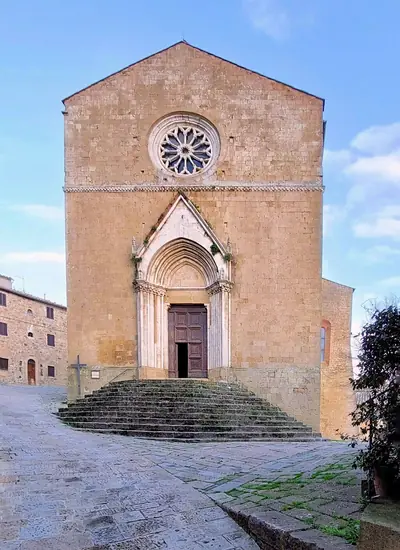
San Francesco is a Gothic church on Corso Rossellino in Pienza’s historic center. It was founded in the thirteenth century by Franciscans from the monastery of Corsignano.
The church has a rustic, unfinished exterior that contrasts with the artistic richness once found inside. Several fourteenth-century frescoes survive, including scenes from the life of Saint Francis attributed to Cristofano di Bindoccio and Meo di Pero. The interior also contains an altarpiece from the school of Duccio Boninsegna, a Madonna attributed to Luca Signorelli, and paintings by Matteo Balducci and Ugolino Lorenzetti.
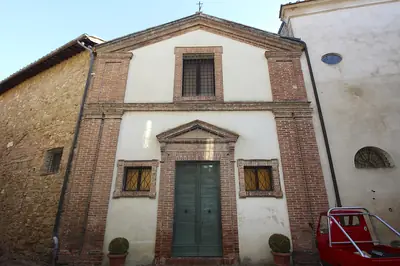
Chiesa della Misericordia
The Chiesa della Misericordia is another historic religious building in the center of Pienza. Its location makes it easy to include in a walk through the town’s main architectural and cultural landmarks.
Museo Archeologico e della Città di Pienza and San Carlo
The Museo Archeologico e della Città di Pienza explores the archaeological and urban history of the town. The same stop also includes San Carlo, a church associated with the Conservatorio di San Carlo.
The Conservatorio began in the seventeenth century and expanded over the following centuries. Today, it is organized as the Fondazione Conservatorio San Carlo Borromeo di Pienza, which owns several properties in Pienza.
Churches and historic sites around Pienza
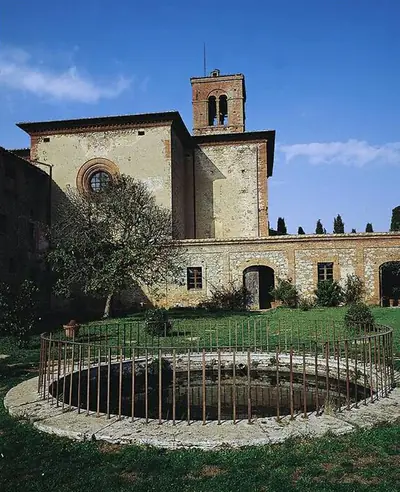
Sant’Anna in Camprena
Sant’Anna in Camprena is a former Olivetan monastic complex in Pienza’s territory. The monastery now serves as an agriturismo, while the attached church remains consecrated. The site offers a glimpse of the religious history beyond the town center.
San Pietro in Campo
San Pietro in Campo, also known as the Abbey of San Pietro in Campo, stands in the locality of the same name. Originally an abbey, it is now the Church of the Ascension of Jesus.
Pieve dei Santi Leonardo e Cristoforo in Monticchiello
The Pieve dei Santi Leonardo e Cristoforo is a church in Monticchiello, a hamlet of Pienza. It is located near Tepotratos, Scene del Teatro Popolare Tradizionale Toscano, another point of interest in the hamlet.
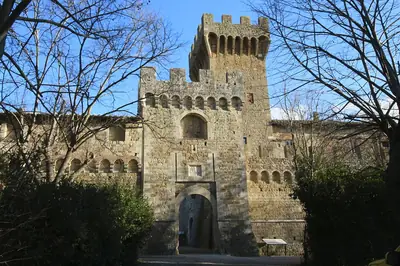
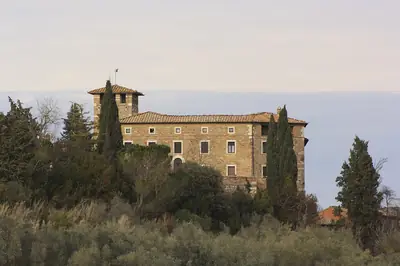
Castle of Spedaletto
In the rural surroundings of Pienza, the Castle of Spedaletto is a fortified architectural complex in the locality of the same name, along Provincial Road 53. It is also known as Agriturismo Castello di Spedaletto.
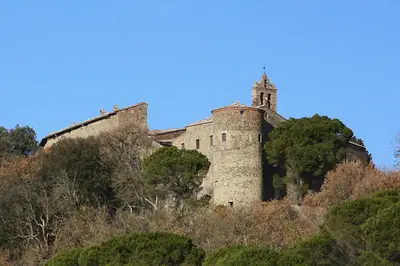
Castle of Cosona
The Castle of Cosona, or Castello di Cosona, is another fortified complex in the countryside around Pienza. It stands in the locality of the same name along Provincial Road 71.
Castelluccio
Castelluccio is a castle set on a hill in the surrounding countryside, about ten kilometres from both Pienza and Chianciano Terme. It was formerly known as Castelluccio dei Bifolchi, a name connected with its first owners, the Bifolchi family.
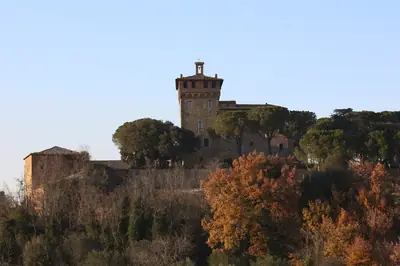
Palazzo Massanini
Palazzo Massanini, also known as Palazzo Massaini, is an architectural complex on a hillside within the territory of Pienza. It adds another historic site to the rural landscape around the town.
Quercia delle Checche
The Quercia delle Checche, or Oak of the Magpies, is a monumental rovere oak in the Val d’Orcia, in the area known as Le Checche. The tree is estimated to be almost 300 years old. It rises 19 metres high, has a trunk measuring about 4.90 metres around, and a crown more than 34 metres across.
Its name comes from the Tuscan word cecca, or checca, meaning magpie. In June 2017, the oak received recognition from MiBACT as Italy’s first green monument.
Explore Pienza with a self-guided audio tour
For a Pienza self-guided walking tour, download Neywo and explore the town without joining a group or following a schedule. The app’s walk, “Pienza, the Pope’s Ideal City,” covers 1.65 kilometres in about 67 minutes and includes eight narrated stops: Pieve dei Santi Vito e Modesto a Corsignano, Santa Caterina, San Francesco, Museo Diocesano di Pienza, Palazzo Piccolomini, Palazzo Comunale, Chiesa della Misericordia and Museo Archeologico e della Città di Pienza.
Neywo has one walking tour in Pienza. Each story plays as you reach the place, at your own pace, with no group and no schedule. The app’s free audio guide covers 23 narrated places in the city, with narration available in 11 languages.
Pienza is part of Tuscany, in Italy. It can also be combined with visits to nearby Tuscan cities such as Montepulciano and Siena.
Places with an audio guide in Pienza
8 places in Pienza with a Neywo audio guide. Each one starts telling its story as you reach it.
Self-guided tours in Pienza
1 tour in Pienza, free in the Neywo app. Each stop tells its story as you reach it.
- Walk
Pienza, the Pope's Ideal City
In 1459 Pope Pius II set out to rebuild his birthplace as a Renaissance dream town, and the result is now a UNESCO World Heritage Site. Walk from the Romanesque church where he was baptised, through Corso Rossellino and Piazza Pio II, past the Piccolomini palace, the Borgia-linked bishop's palace and the town hall.
Pieve dei Santi Vito e Modesto a Corsignano · Santa Caterina · San Francesco · Museo Diocesano di Pienza · Palazzo Piccolomini · Palazzo Comunale …
Open this tour: Pienza, the Pope's Ideal City
Walk Pienza with Neywo
Neywo turns Pienza into a self-guided audio tour. Stories arrive as you reach the place they belong to, and the route reshapes when you wander off it.

