Syracuse, Italy: Self-Guided Walking Tour
Things to Do in Syracuse, Sicily
The best things to do in Syracuse include exploring the historic island of Ortigia, seeing ancient Greek and Roman sites, and discovering museums and churches shaped by the city’s long history. From the Greek Theatre and Cathedral of Syracuse to Castello Maniace and the maritime collections of the Marina, Syracuse brings together archaeology, Baroque architecture and coastal life. Neywo offers a free audio guide for Syracuse with 65 narrated places.
What to See in Syracuse
Cathedral of Syracuse and Piazza Duomo
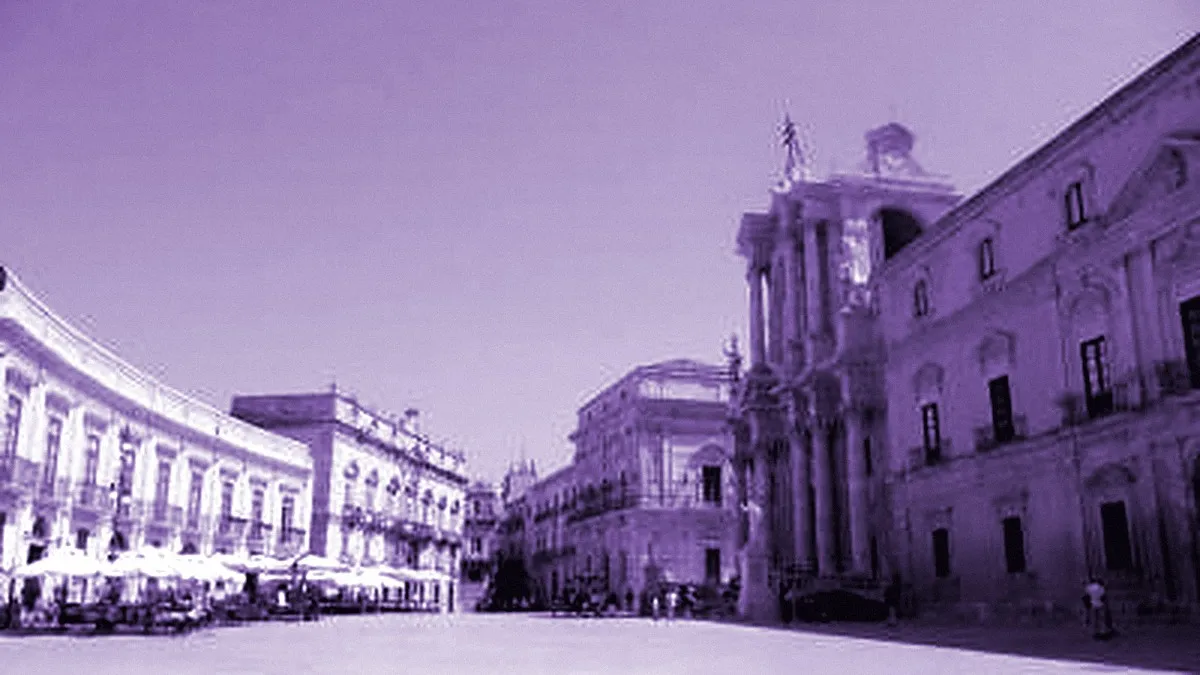
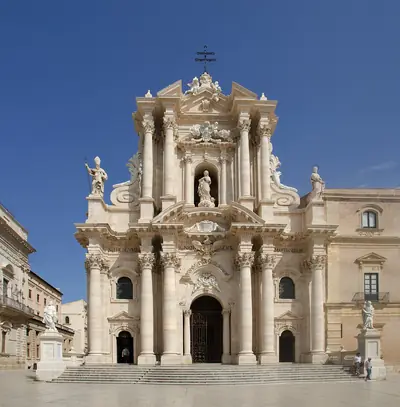
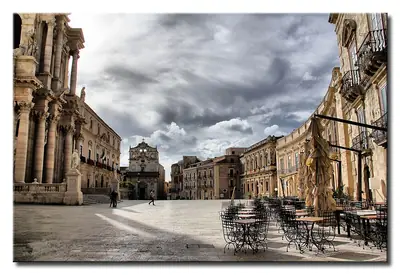
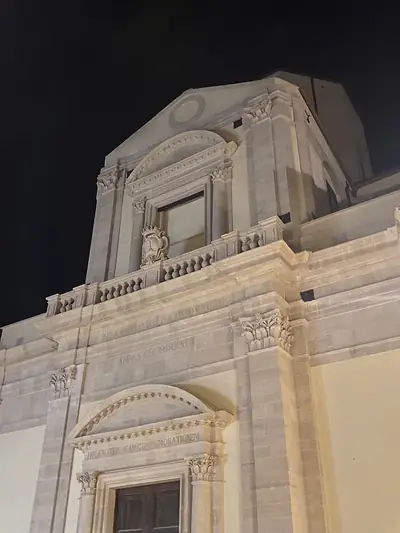
Begin in Piazza Duomo, the heart of Ortigia and one of the most important places to visit in Syracuse. The square occupies the island’s highest point, while the Cathedral of Syracuse rises from the site of the ancient Athenaion, a Greek temple dedicated to Athena.
The cathedral preserves several historical layers in one building. Original Doric columns from the fifth-century BC temple are incorporated into its walls, while the interior also contains Norman masonry and later Baroque decoration. Its present façade was reconstructed by Andrea Palma between 1728 and 1753 after the earthquake of 1693.
Piazza Duomo also conceals a very different side of the city. Beneath the square, the Ipogeo is an underground passage carved into the limestone. It once served as a quarry, cistern and shelter, and a section connects the piazza with the Foro Italico and the old sea walls of the Marina.
Santa Lucia alla Badia
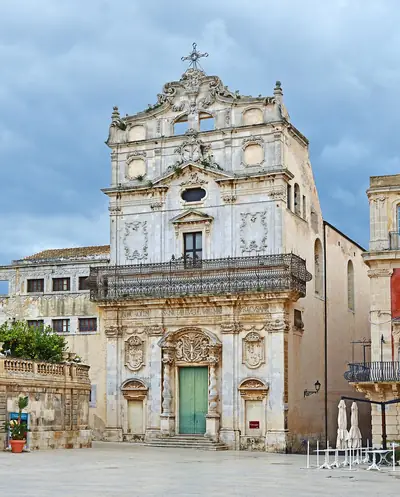
On the southern side of Piazza Duomo, Santa Lucia alla Badia is a Baroque church dedicated to Saint Lucy, Syracuse’s patron saint. Its façade features pilasters, a curved pediment and a statue of the saint holding the traditional symbols of her martyrdom.
The church was formerly connected to a Benedictine monastery. After being deconsecrated, it became an exhibition space, while the former monastery hosts cultural events and special functions.
Diana Fountain in Piazza Archimede
Piazza Archimede is home to the Diana Fountain, completed in 1907 from a design by Giulio Moschetti, with sculptural collaboration from his son Mario. The reinforced-concrete fountain places Diana, goddess of the hunt and protector of Ortigia, at the center of a dramatic mythological scene.
Arethusa appears at the moment of her transformation into a spring, while Alpheus looks on. The fountain was commissioned after the piazza was created in 1878.
Castello Maniace
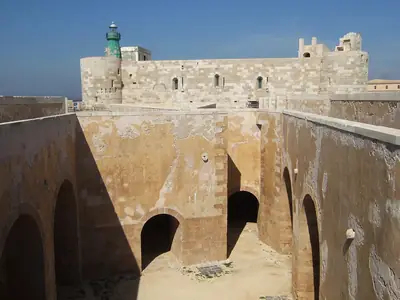
At the southern tip of Ortigia, Castello Maniace stands at sea level beside the entrance to Syracuse’s great harbor. The fortress takes its name from George Maniakes, the Byzantine general who recaptured Syracuse from Arab rule in 1038, although the castle itself was built between 1232 and 1240 on the orders of Emperor Frederick II.
Its design is a square fortress with four corner towers, constructed from local limestone. The main portal is especially notable for its carved marble decoration and the imperial eagle of the Hohenstaufen dynasty. Its position on the narrow promontory allowed it to control vessels entering the Porto Grande.
Giudecca and San Filippo Apostolo
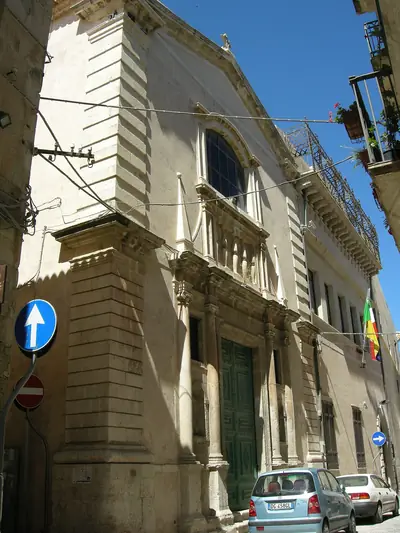
The Church of San Filippo Apostolo stands in the Giudecca quarter, the historic Jewish quarter of Ortigia. Built in 1743, it reflects the later religious and architectural history of this part of the island.
The neighborhood is also associated with the Piccolo Teatro dei Pupi, a traditional Sicilian puppet theatre housed within the Museo dei Pupi. Nearby, the Museo Aretuseo dei Pupi presents artistic and theatrical material connected with the opera dei pupi tradition.
Palazzo Bellomo and San Benedetto
The Palazzo Bellomo Regional Gallery has been an art museum since 1948. Its collection includes Antonello da Messina’s Annunciation, painted in 1474, as well as sarcophagi belonging to Giovanni Çabastida and Giovanni Cardenas, governors of the Camera Reginale.
A short distance away, the Church of San Benedetto occupies the former center of a Benedictine monastic complex. It now serves as the Romanian Orthodox parish of Saint Paul the Apostle and Saint Lucy, showing how Syracuse’s historic religious buildings continue to serve different communities.
The Papyrus Museum and Museo del Mare
The Papyrus Museum Corrado Basile is housed in the former convent of Sant’Agostino on Via Nizza. It offers another way to explore the cultural history of Ortigia.
At the Marina, the Museo del Mare of Syracuse, also called Sirmuma, focuses on the city’s maritime tradition. Its collection includes about 200 maritime tools from the Syracuse shipyard, along with models of vessels built by local ship carpenters. The museum also reconstructs the ship-carpentry process from initial design to finished boat.
Smaller Historic Churches
Syracuse rewards visitors who look beyond its major monuments. San Nicolò dei Cordari is one of the city’s earliest churches, dating to the early centuries of Christianity in Syracuse. San Pietro al Carmine adds another historic religious landmark to this part of the city.
Near Piazza San Giuseppe, the Baroque Chiesa di San Giuseppe stands across from the Church of San Domenico. Together, these smaller churches help reveal the architectural variety of Ortigia’s streets.
Neapolis Archaeological Park
The Neapolis Archaeological Park contains some of the most important ancient sites in Syracuse. Its Greek Theatre occupies the southern slope of the Temenite Hill and overlooks the modern city. First built in the fifth century BC, it was rebuilt in the third century BC and later renovated during the Roman period.
The park also includes the Roman amphitheatre of Syracuse, the altar of Hieron, the Ear of Dionysius, the Grotta del Ninfeo and the Via dei Sepolcri. San Nicolò dei Cordari and the Tomba di Archimede are also included among the places explored on the Neapolis route.
Castello Eurialo
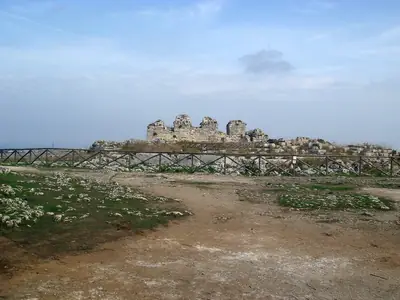
Near Belvedere, west of modern Syracuse, Castello Eurialo occupies the highest point of the Epipolae plateau, about 120 metres above sea level and roughly 7 kilometres northwest of the city. It formed a key part of the ancient Greek city’s fortifications.
The fortress is notable for its scale and for preserving one of Antiquity’s most ambitious fortification projects. Its name derives from the ancient Greek Euryalos, formed from words meaning “broad” and “threshing floor.”
Museo Archeologico Regionale Paolo Orsi
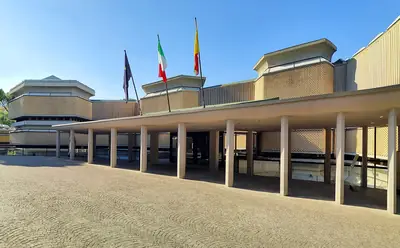
The Museo Archeologico Regionale Paolo Orsi is one of Europe’s principal archaeological museums and among the continent’s largest by exhibition area. Its building dates from 1961, and the collection is arranged in seven sectors with additional outdoor displays.
The museum holds tens of thousands of archaeological finds, most from sites in the province of Syracuse, alongside material from the territories of Gela and Agrigento. The breadth of the collections makes it worth allowing time for a thorough visit.
Explore Syracuse with a Self-Guided Audio Tour
A Syracuse self-guided walking tour lets you explore the city independently while still hearing the story behind each place. Neywo has five walking tours and one bus route in Syracuse, covering 65 narrated places in total. The app’s narration is available in 11 languages.
The walks include:
- Piazza Duomo: 0.61 km, 72 minutes and 10 stops, including the Ipogeo, the Cathedral of Syracuse and the Diana Fountain.
- Castello Maniace and the Old Jewish Quarter: 1.79 km, 92 minutes and 12 stops, including Castello Maniace, the Museo dei Pupi, the Papyrus Museum and San Filippo Apostolo.
- Apollo, Archimedes and the Spirduta Quarter: 1.05 km, 55 minutes and 8 stops, including the Museo Leonardo da Vinci e Archimede and the Museo del Mare.
- Neapolis Archaeological Park: 1.87 km, 67 minutes and 8 stops, including the Roman amphitheatre, the altar of Hieron, the Greek Theatre and the Ear of Dionysius.
- From the Seashore to the Catacombs: 3.33 km, 88 minutes and 8 stops, including the Latomia dei Cappuccini, the Museo Archeologico Regionale Paolo Orsi and San Giovanni Evangelista.
There is also one bus route around Ortigia, covering 2.7 km in 12 minutes with seven narrated stops. Neywo tells the story of each place as you reach it, at your own pace, with no group and no schedule.
Download Neywo and Explore Syracuse
Download Neywo to discover Syracuse with a free audio guide that accompanies you through Ortigia, the archaeological park, the waterfront and the city’s museums. Choose a walk or the bus route, follow the route at your own pace and listen as each story begins when you arrive.
Syracuse is an excellent starting point for exploring Sicily, from the Baroque towns of the southeast to destinations such as Taormina, Ragusa and Scicli.
Places with an audio guide in Syracuse
8 places in Syracuse with a Neywo audio guide. Each one starts telling its story as you reach it.
Self-guided tours in Syracuse
6 tours in Syracuse, free in the Neywo app. Each stop tells its story as you reach it.
- Bus ride
Line 110: Around Ortigia by Bus
The Periplo Ortigia circular loops around the island's coast. Ride it from the Marina and the sea museum past Piazza Duomo and the waterfront churches to the Papyrus Museum, a cheap way to see Ortigia's harbour edge.
Porta Urbica · Museo del mare · Palazzo Borgia Impellizzeri · Spirito Santo · Gesù e Maria · Papyrus Museum (Syracuse) …
Open this tour: Line 110: Around Ortigia by Bus - Walk
A Greek Temple Inside the Cathedral: Piazza Duomo
Ortygia's main square packs 2,500 years into a few hundred metres. See a cathedral built inside a Greek temple, the unfinished Ionic temple of Artemis, a hidden underground passage, and finish at the theatrical Diana Fountain with the myth of Arethusa.
Palazzo Borgia Impellizzeri · Ex Museo archeologico di Siracusa · Ipogeo · Archbishop's Palace · Cathedral of Syracuse · Temple of Artemis in Syracuse …
Open this tour: A Greek Temple Inside the Cathedral: Piazza Duomo - Walk
Emperor's Castle, Puppets and the Old Jewish Quarter
Begin at the sea-level fortress Frederick II built at the tip of Ortygia, then climb into the lanes of the Giudecca. You will find an Antonello da Messina masterpiece, a UNESCO-listed puppet tradition and a church built over a fourth-century basilica.
Castello Maniace · Spirito Santo · Gesù e Maria · Palazzo Bellomo Museum · Museo dei pupi · Chiesa di San Giovannello …
Open this tour: Emperor's Castle, Puppets and the Old Jewish Quarter - Walk
Apollo, Archimedes and the Spirduta Quarter
Explore the quieter north end of Ortygia, from a Baroque church beside the ruins of Sicily's oldest Doric temple to the medieval Spirduta lanes. Along the way see a Gothic palace on Piazza Archimede and a museum of Syracuse's ship carpenters.
Porta Urbica · Chiesa di San Paolo Apostolo · San Tommaso · Museo Leonardo da Vinci e Archimede · Palazzo Gargallo del Carmine · Palazzo Montalto …
Open this tour: Apollo, Archimedes and the Spirduta Quarter - Walk
Neapolis: Theatre, Altar and the Ear of Dionysius
Walk through the Neapolis Archaeological Park, the great showground of ancient Syracuse. See a Roman amphitheatre that held twenty thousand people, the largest altar of antiquity, the oldest theatre of the Western world and the echoing cave Caravaggio named the Ear of Dionysius.
Tomba di Archimede · Roman amphitheatre of Syracuse · Altar of Hieron · San Nicolò dei cordari · Via dei Sepolcri · Greek Theatre of Syracuse …
Open this tour: Neapolis: Theatre, Altar and the Ear of Dionysius - Walk
From the Seashore to the Catacombs: Mainland Syracuse
Leave Ortygia for the quarter where Saint Lucy died. See the largest of Syracuse's quarries, the sanctuary built over her tomb, the ruined shipyard of Dionysius, the weeping-Madonna cone and the catacombs beneath San Giovanni.
Monumento ai Caduti italiani d'Africa · Latomia dei Cappuccini · Santa Lucia al Sepolcro sanctuary · Greek Dockyard · Terme di Dafne · Madonna delle Lacrime Sanctuary …
Open this tour: From the Seashore to the Catacombs: Mainland Syracuse
Walk Syracuse with Neywo
Neywo turns Syracuse into a self-guided audio tour. Stories arrive as you reach the place they belong to, and the route reshapes when you wander off it.

