Visiting Siena, Italy: Top Sights on Foot
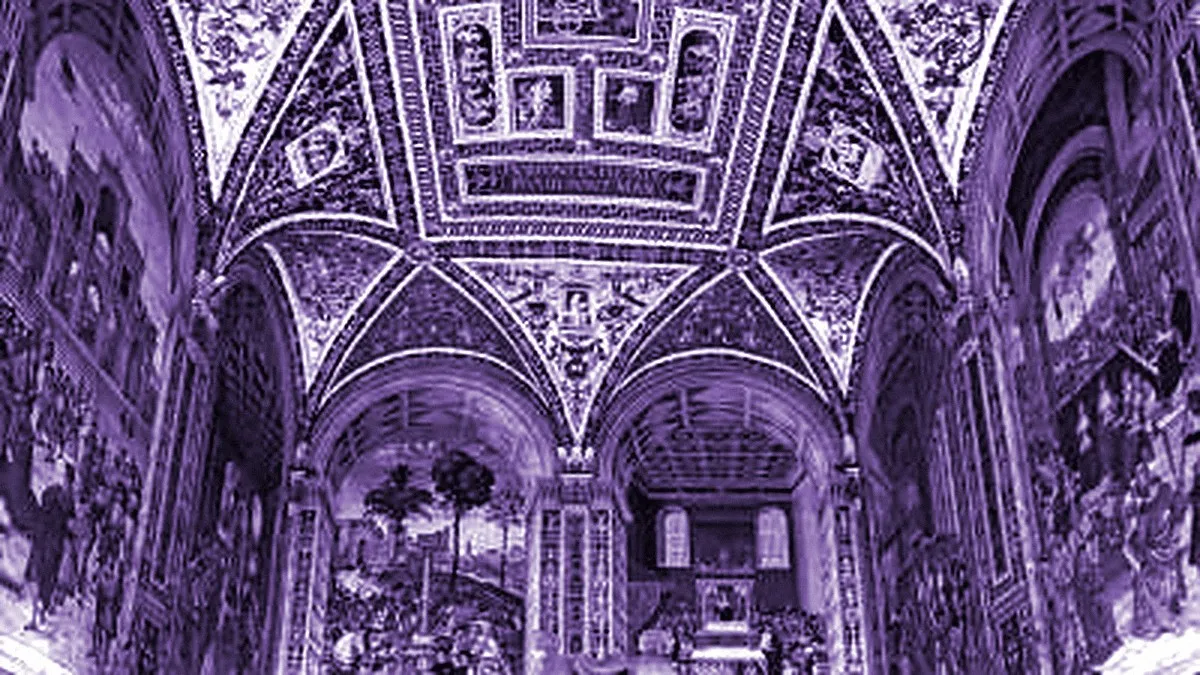
Things to Do in Siena: What to See in the Medieval City
Siena is a historic Tuscan city known for its medieval streets, Gothic architecture, artistic treasures and enduring contrada traditions. From the extraordinary Piazza del Campo to the striped marble of Siena Cathedral, its compact centre offers some of the most memorable things to do in Siena. Neywo has a free audio guide for Siena with 224 narrated places, available in 11 languages.
Part of Tuscany and the wider heritage of Italy, Siena is best explored slowly. Its streets lead from grand civic buildings to quiet churches, museums and neighbourhood landmarks, revealing how art, religion and communal life shaped the city.
What to see in Siena
Piazza del Campo
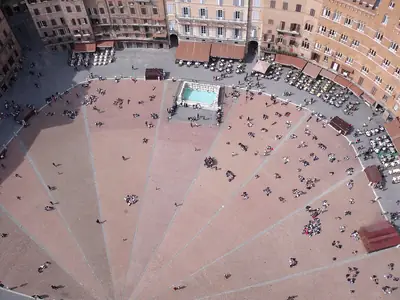
Begin in Piazza del Campo, Siena’s main square and one of its defining spaces. Its shell-shaped plan follows a gentle slope, with elegant medieval buildings surrounding the square and the Palazzo Pubblico and Torre del Mangia forming its civic centre.
The paving is particularly distinctive. Red brick laid in 1349 is divided by eight bands of white travertine into nine sections. These lines recall the Council of Nine, which governed Siena from 1287 to 1355. The square is part of Siena’s UNESCO World Heritage historic centre, recognised for its preserved medieval planning and architectural coherence.
Palazzo Pubblico
At the lower end of Piazza del Campo stands Palazzo Pubblico, Siena’s historic town hall. Commissioned by the Council of Nine, construction began in 1297 and continued into the early fourteenth century. The building’s gently curved façade follows the shape of the square, combining pale stone on the lower level with warm red brick above.
Its triforate windows, divided into three arches by slender columns, are characteristic of Sienese Gothic architecture. The façade also displays the balzana, Siena’s black-and-white civic emblem. The palace still houses the city administration and the Museo Civico, whose painted rooms preserve important works by artists including Ambrogio Lorenzetti, Simone Martini and Duccio.
Siena Cathedral
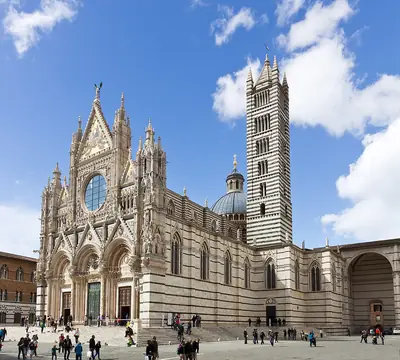
Siena Cathedral, also called the Duomo di Siena or Cathedral of Santa Maria Assunta, has been central to Sienese identity since construction began in the early thirteenth century. Built between 1215 and 1263 on the site of an earlier church, it has a Latin-cross plan, a transept, a dome and a bell tower.
Its alternating bands of white and greenish-black marble reflect Siena’s symbolic colours, traditionally associated with the black and white horses of the city’s legendary founders, Senius and Aschius. Before entering, look closely at the west façade, where deep arches, coloured marble columns, golden mosaics and sculptures create an exceptionally rich exterior. The original sculptures are kept in the Cathedral Treasures Museum, while copies occupy their places on the façade.
Battistero di San Giovanni
Below the final spans of the cathedral’s choir, a staircase leads down to the Baptistery of Saint John in Piazza San Giovanni. Built between 1316 and 1325 by Camaino di Crescentino, the baptistery has an unfinished Gothic façade but an interior filled with Gothic and Renaissance art.
Its central baptismal font was made between 1417 and 1431 from bronze, marble and vitreous enamel. The six relief panels depict episodes from the life of Saint John the Baptist, while the surrounding figures represent virtues such as Faith, Hope, Justice, Charity, Providence and Fortitude. Two of the bronze angels were made by Donatello.
Complesso Museale Santa Maria della Scala
Opposite the cathedral, Santa Maria della Scala occupies an ancient hospital complex in Piazza del Duomo. Its museums connect the history of the building with the archaeology of the surrounding province.
The National Archaeological Museum of Siena is housed within the complex. Its collection brings together archaeological finds uncovered during excavations in the province of Siena, offering another perspective on the layers of local history beneath the city’s medieval appearance.
Basilica of San Francesco
In Piazza San Francesco, the Basilica of San Francesco presents a vast Gothic form created through centuries of enlargement. The church was first erected between about 1228 and 1255 in the Romanesque style, then greatly expanded during the fourteenth and fifteenth centuries.
Its broad nave and transept follow an Egyptian Cross plan. The relatively sober appearance of the interior reflects later changes, including damage caused by a fire in 1655 and a restoration between 1885 and 1892 that removed many Baroque altars. The basilica still contains fourteenth-century tombs, large frescoes and works by Italian artists, including the Coronation of the Virgin by Sassetta and Sano di Pietro and a Nativity by Il Sodoma.
Palazzo Salimbeni and Piazza Salimbeni
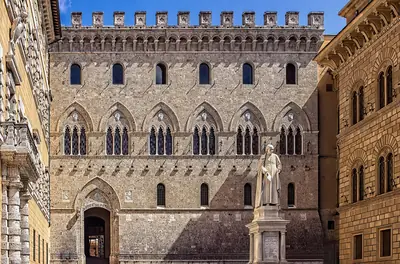
Palazzo Salimbeni is one of Siena’s most recognisable urban palaces. The Gothic building is now the headquarters of Banca Monte dei Paschi di Siena, founded in 1472 and described in the source as the oldest bank still in operation.
The palace began as a fortress on the site of a twelfth-century structure and was the residence of the Salimbeni mercantile family until their expulsion from Siena in 1419. Giuseppe Partini transformed it in 1879, giving it a Neo-Gothic character while preserving elements such as the battlements and arches of the earlier building.
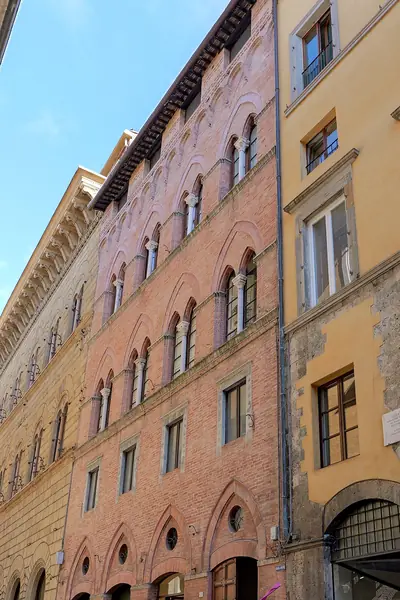
Nearby, Palazzo Cinughi de’ Pazzi offers a contrasting glimpse of fourteenth-century Gothic Siena. Its three-storey brick façade has Sienese arches at ground level and paired windows divided by small marble columns. The building contains private homes and can be viewed from outside only.
San Cristoforo and Piazza Tolomei
Piazza Tolomei is named after the Palazzo Tolomei, the ancient noble residence facing San Cristoforo. The small church is one of Siena’s oldest and once served as the meeting place of the Great Council, known as the Council of the Bell, between the twelfth and thirteenth centuries.
Repeated alterations have left visible layers of history. An earthquake in 1798 damaged the building and reduced its height, while later work added a brick façade, columns, cloisters and statues. Its setting makes the piazza a concise introduction to Siena’s civic and religious history.
San Martino and Santa Maria dei Servi
San Martino stands on Via del Porrione and gave its name to the Terzo di San Martino. In the early medieval period, it was the most important church in this part of the city. Beside it are the Logge del Papa, Renaissance loggias commissioned by Pope Pius II Piccolomini and erected in 1462.
On the hill overlooking Valdimontone, Santa Maria dei Servi—also known as the Basilica of San Clemente in Santa Maria dei Servi—has an unfinished thirteenth-century façade and a Renaissance-style interior. The church began on the site of the older Church of San Clemente and was reconstructed several times before its consecration in 1533.
Fortezza Medicea
Near the San Prospero district and the Artemio Franchi stadium, Fortezza Medicea recalls the period of Florentine control over Siena. Also known as the Fort of Santa Barbara, it was built between 1561 and 1563 on the orders of Cosimo I de’ Medici after the Florentine conquest.
The fortress was originally laid out in an L shape and later redesigned as a square by the military engineer Baldassarre Lanci. Its four corners are marked by substantial brick ramparts. Three display the Medici coat of arms above a lion’s head; the south-facing corner shows only the lion’s head.
Contrade traditions
Siena’s neighbourhood identity can be explored at the Museo della Contrada della Chiocciola, dedicated to the Contrada della Chiocciola. The contrade are an essential part of the city’s communal life and are closely associated with the Palio, Siena’s historic horse race.
Their museums preserve the identity of individual districts, offering a more local perspective than the city’s monumental churches and palaces.
Castello di Belcaro
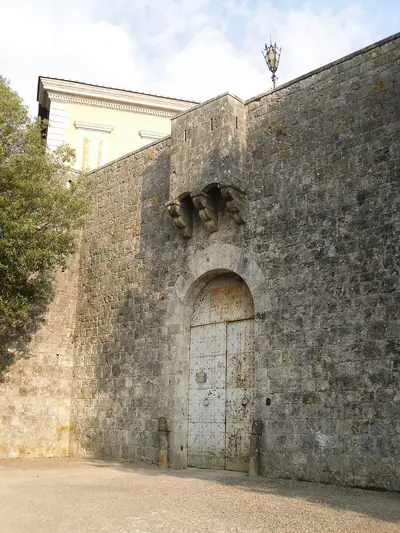
Beyond Porta San Marco, near Costafabbri, Castello di Belcaro stands on a hill along Strada di Terrenzano e Belcaro. Today it is known as a Renaissance villa built on the site of a castle that once belonged to the Republic of Siena. The complex adds a fortified landmark to the city’s surroundings, about five and a half kilometres southwest of Porta San Marco.
Explore Siena with a self-guided audio tour
A Siena self-guided walking tour lets you explore the city without joining a group or following a fixed timetable. Neywo’s app tells the story of each place as you reach it, at your own pace, with no group and no schedule.
The Siena audio guide includes six walking tours and one bus route:
- Il Campo and the Nine: the medieval heart of Siena — 1.74 km, 99 minutes and 12 narrated stops.
- Marble, frescoes and a cathedral that was never finished — 1.08 km, 93 minutes and 12 narrated stops.
- In the footsteps of Saint Catherine — 2.37 km, 96 minutes and 12 narrated stops.
- Contrade and the Palio: Siena’s seventeen villages — 3.02 km, 88 minutes and 9 narrated stops.
- Via del Porrione: archives, synagogue and the Pope’s Lodge — 1.49 km, 86 minutes and 12 narrated stops.
- Science and gardens south of the Campo: botanic garden, natural history and the Carmine — 1.47 km, 66 minutes and 9 narrated stops.
- Bus 525 along Siena’s medieval gates — 7.9 km, 34 minutes and 11 narrated stops.
Download Neywo and explore Siena independently, letting the app narrate its squares, churches, palaces, museums and contrade as you arrive. When you have seen the city, continue through Tuscany with San Gimignano, Pienza or Montepulciano.
Places with an audio guide in Siena
8 places in Siena with a Neywo audio guide. Each one starts telling its story as you reach it.
Self-guided tours in Siena
7 tours in Siena, free in the Neywo app. Each stop tells its story as you reach it.
- Bus ride
Bus 525 along Siena's medieval gates
Siena's urban line 525 runs outside the old centre along the great medieval walls. Ride from the castle-like Palazzo dei Diavoli past Santa Petronilla, the Portugal Column, La Lizza and Palazzo Zondadari to Fontegiusta, Porta Camollia, Porta Ovile, Porta dei Pispini and Porta Romana, the gates through which pilgrims and armies once came in.
Palazzo dei Diavoli · Santa Petronilla · Colonna del Portogallo · La Lizza · Palazzo Zondadari · Santa Maria in Portico a Fontegiusta …
Open this tour: Bus 525 along Siena's medieval gates - Walk
Il Campo and the Nine: the medieval heart of Siena
Start on the shell-shaped Piazza del Campo, where the Palazzo Pubblico and its tower still run the city. Then follow the old banking streets past the palaces of the Tolomei and Salimbeni families to the Franciscan basilica. Medieval power, money and faith within a few hundred metres. The route runs from the Campo and the terrace behind the Palazzo Pubblico through the banking palaces of Piazza Salimbeni to the Renaissance Bandini-Piccolomini palace and the basilica of San Francesco.
Piazza del Campo · Palazzo Pubblico · Piazza del Mercato · Palazzo Sansedoni, Siena · Loggia della Mercanzia · Palazzo Tolomei …
Open this tour: Il Campo and the Nine: the medieval heart of Siena - Walk
Marble, frescoes and a cathedral that was never finished
Siena's sacred hill: the striped Duomo with its inlaid floor, the baptistery font by Donatello and Ghiberti, Duccio's Maestà in the cathedral museum, and the old pilgrims' hospital of Santa Maria della Scala opposite. Finish among the gold-ground masters in the Pinacoteca.
Santa Maria della Scala · Archbishop's Palace · Siena Cathedral · Battistero di San Giovanni · Museo dell'Opera Metropolitana del Duomo · Palazzo Bindi Sergardi …
Open this tour: Marble, frescoes and a cathedral that was never finished - Walk
In the footsteps of Saint Catherine
Follow Siena's patron saint from the fountain where she was known as the saint of Branda, through the house where she was born, to the basilica that keeps her head. End at the Medici fortress and the gardens of La Lizza, with a view back to the city.
Fontebranda · Porta di Fontebranda · Basilica of San Domenico · Santuario di Santa Caterina · Stanze della Memoria · Palazzo Zondadari …
Open this tour: In the footsteps of Saint Catherine - Walk
Contrade and the Palio: Siena's seventeen villages
Siena is divided into contrade, neighbourhoods with their own flags, saints, churches and museums, and they race twice a year on the Campo. Begin with the Palio itself, then walk through the quarters of the Owl, the Unicorn, the Tower, the Wave, the Tortoise and the Forest.
Museo della Contrada del Drago · Museo della Contrada della Selva · Museo della Contrada della Tartuca · MOND - Museo della Contrada Capitana dell'Onda · Palio of Siena · Museo della Contrada Priora della Civetta …
Open this tour: Contrade and the Palio: Siena's seventeen villages - Walk
Via del Porrione: archives, synagogue and the Pope's Lodge
A walk through the old university and merchant streets east of the Campo. See the university's historic archive, the State Archives in Palazzo Piccolomini, the hidden synagogue, Pius II's Renaissance Loggia and the confraternity oratory on Via del Porrione, then cross to Baroque San Giorgio, Santo Spirito and the contrada oratory of San Gaetano, ending at the basilica of the Servi.
Palazzo Rinuccini · San Vigilio · Archivio e percorso storico dell'università di Siena · Archivio di Stato · Siena synagogue · Palazzo Placidi …
Open this tour: Via del Porrione: archives, synagogue and the Pope's Lodge - Walk
Science and gardens south of the Campo: botanic garden, natural history and the Carmine
A quiet southern loop for curious visitors: the Fisiocritici natural history museum, the university botanic garden, the Prato di Sant'Agostino, the Carmine and the earth sciences museum, with a Renaissance palace or two on the way.
Sant'Agostino · Prato di Sant'Agostino · Museo di storia naturale dell'Accademia dei Fisiocritici · Museo di Strumentaria Medica · Orto Botanico dell'Università di Siena · Palazzo Venturi Gallerani, Siena …
Open this tour: Science and gardens south of the Campo: botanic garden, natural history and the Carmine
Walk Siena with Neywo
Neywo turns Siena into a self-guided audio tour. Stories arrive as you reach the place they belong to, and the route reshapes when you wander off it.

