Visiting Vila Real, Portugal: Top Sights on Foot
Things to do in Vila Real: historic churches, monuments and Roman heritage
Looking for things to do in Vila Real? This northern Portuguese city combines a historic old quarter with remarkable religious buildings, old pillories, medieval bridges and archaeological sites in the surrounding countryside. It is also a rewarding base for discovering the cultural landscape of the Vila Real district. Neywo has a free audio guide for Vila Real with 29 narrated places.
What to see in Vila Real
Mateus Palace
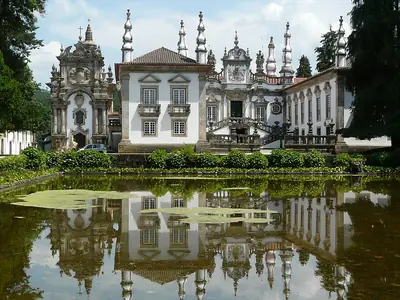
Just outside Vila Real, in the parish of Mateus, Mateus Palace is one of northern Portugal’s best-known estates. Also called Solar de Mateus or Casa de Mateus, the palace was built around 1743 in the Baroque style. Its design is attributed to the Italian architect Nicolau Nasoni, and the building has been a National Monument since 1910.
The estate includes the main house, gardens, a winery and an 18th-century Baroque chapel. Inside, the library holds around 6,000 volumes, including an illustrated 1816 edition of Luís de Camões’s Lusíadas. The rooms contain furniture, carpets, ceramics, vestments and other objects connected with the estate’s history.
Cathedral of Vila Real
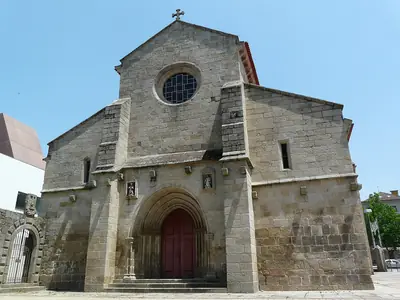
The Cathedral of Vila Real, also known as the Church of São Domingos, is the finest example of Gothic architecture in the Trás-os-Montes region. It has been a National Monument since 1926.
The building began as a Dominican convent. King John I donated the land to the Dominican community in 1421 and 1422, and construction started in 1424. Later restorations added the current Baroque bell tower and chapel. After religious orders were dissolved in Portugal in 1834, the monastery became a barracks. A fire in 1837 destroyed much of the convent interior and part of the church.
The former parish church became the cathedral of the newly created Diocese of Vila Real in the 20th century. It is one of the essential stops on a visit to the city’s historic center.
Casa de Diogo Cão
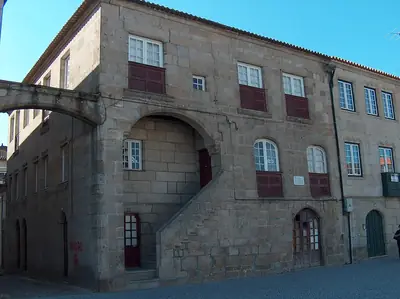
In Vila Real’s old quarter, Casa de Diogo Cão is traditionally regarded as the birthplace of Diogo Cão, the 15th-century Portuguese navigator associated with the Age of Discovery. The house dates from the second half of the 15th century, making it a rare surviving building from the period in which Diogo Cão undertook his voyages along the African coast.
Its modest appearance is part of its appeal: the building offers a direct connection between Vila Real’s streets and Portugal’s maritime history.
Igreja de São Paulo and Galeria Espaço D’Artes
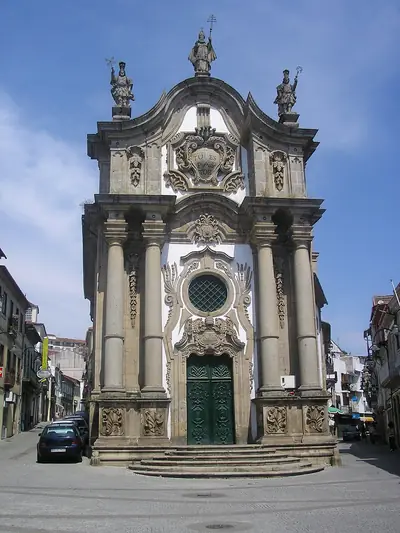
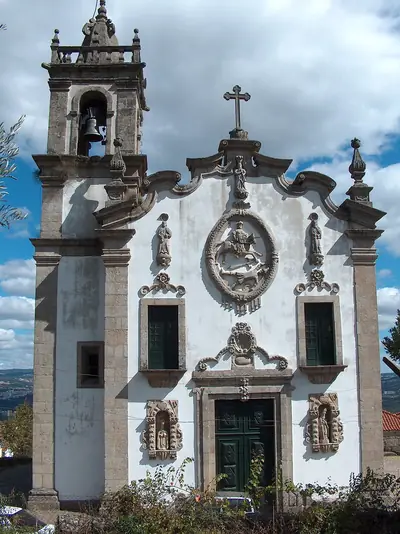
The Igreja de São Paulo is also known as Capela Nova or Igreja dos Clérigos. Its richly decorated Baroque façade features two imposing Tuscan columns around the entrance portico, a relief entablature and a concave pediment topped by sculptures of Saint Peter and two angels.
Construction began in 1639, and the church is attributed to Nicolau Nasoni. It has been classified as a Property of Public Interest since 2006. Beside the church, the Galeria Espaço D’Artes brings contemporary art into this historic setting.
Pelourinho de Vila Real
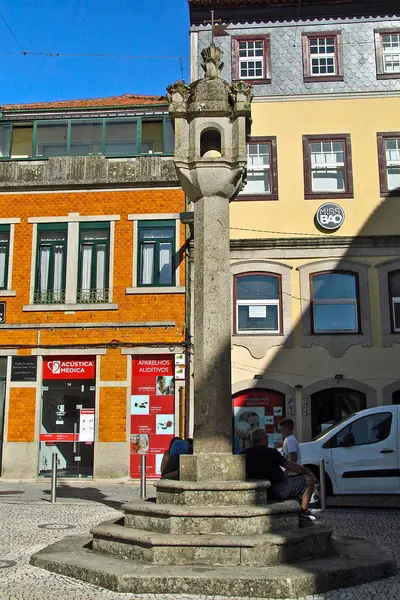
The Pelourinho de Vila Real stands at Largo do Pelourinho. The original pillory was raised in 1515, when King Dom Manuel granted Vila Real a new royal charter. Most of the monument visible today is a reconstruction, although the octagonal column is from the 16th century.
The pillory has changed location several times, moving along Rua da Praça and later to the square in front of the town hall before reaching its present setting. Its four-sided, cage-like top gives the monument a distinctive silhouette.
Ponte de Piscais
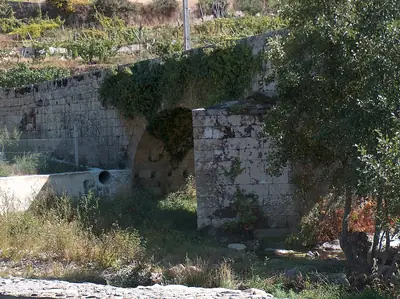
North of Vila Real, in the parish of Mouçós, the medieval Ponte de Piscais crosses the Rio Corgo. It once formed part of an important route between Bragança and the Entre Douro e Minho region over the Serra do Marão.
The bridge underwent a major intervention during the Philippine Dynasty, shaping much of the structure that survives today. It is a worthwhile stop for visitors interested in the old routes that connected northern Portugal.
Capela de Nossa Senhora do Loreto
The Capela de Nossa Senhora do Loreto is a small cultural heritage monument with several names. It is also known as Capela de Nossa Senhora do Loreto de Guiães and Capela dos Taveira Pimentel, reflecting the families and traditions linked to its history.
Igreja de Mondrões
In the parish of Mondrões, the Igreja de Mondrões is also known as the Igreja de São Tiago. The church belongs to the municipality of Vila Real and adds another historic religious site to the city’s wider cultural landscape.
Igreja de Nossa Senhora de Guadalupe, Mouçós
The Igreja de Nossa Senhora de Guadalupe stands in the village of Ponte, in the parish of Mouçós. This small Gothic church was built in the 15th century on the initiative of D. Pedro de Castro, then abbot of Mouçós.
Inside, two tombstones in the nave date from the 16th and 17th centuries. They are among the church’s most notable historic details.
Igreja Paroquial de Vila Marim
Also known as the Igreja de Santa Marinha de Vila Marim, this parish church is recognized as a cultural heritage monument in Vila Real. It is a useful stop for anyone exploring the religious and architectural history of the municipality beyond the central streets.
Capela de Arroios
The Capela de Arroios is another small heritage monument in the Vila Real area. It is also called Capela de Santo António, Capela de Santo António de Arroios and Capela de Nossa Senhora das Dores de Arroios.
The pillories of Galegos and Lordelo
The Pelourinho de Galegos stands at Largo do Pelourinho and is believed to date from the early 16th century, around the time King D. Manuel granted Galegos its charter. Its granite structure includes a circular base, a single-piece shaft and a cube-shaped capital decorated with X-shaped carvings. It was classified as a Property of Public Interest in 1933.
The Pelourinho de Lordelo is also associated with an early 16th-century charter, granted to Lordelo by King Manuel I. Its three granite steps support an octagonal shaft, topped by a capital formed by two overlapping pyramids.
Capela de São Brás
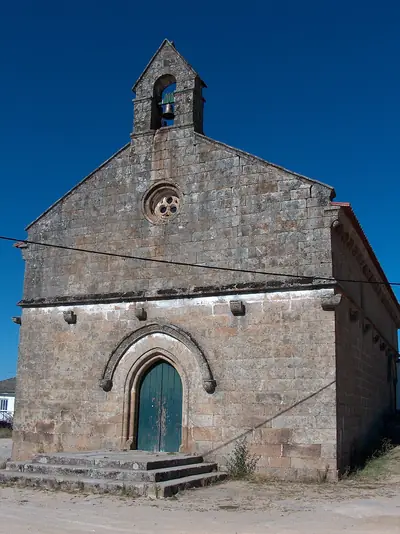
The Capela de São Brás is a small chapel in Vila Real that was declared a National Monument on June 16, 1910. It also contains the tomb of Teixeira de Macedo, giving the building an additional historical connection.
Santuário de Panóias
A few kilometres outside Vila Real, in Vale de Nogueiras, the Santuário de Panóias—also known as Fragas de Panóias—is one of Portugal’s most unusual Roman sites. This rock-cut sanctuary dates from the late 2nd or early 3rd century and has been a National Monument since 1910.
The sanctuary is spread across three granite outcrops. Their flattened surfaces contain carved depressions, while inscriptions on the rocks explain the rituals associated with the site. Four inscriptions survive on the vertical face of the first rock, including one written in both Greek and Latin. The combination of carved granite and surviving inscriptions makes Panóias an especially important archaeological stop near Vila Real.
Explore Vila Real with Neywo
A Vila Real self-guided walking tour is an easy way to explore the old quarter while the app tells the story of each place as you reach it. Neywo offers one walking tour of 2.35 km, lasting 98 minutes, with 9 narrated stops. The route includes the Museu do Som e da Imagem, Capela do Calvário, Igreja de São Pedro, Igreja de São Paulo, Casa do Arco, Pelourinho de Vila Real, Cathedral of Vila Real, Casa de Diogo Cão and Capela de São Brás.
There is also one bus route through Vila Real’s Old Town: 10.2 km, 44 minutes and 4 narrated stops. It connects the Museu do Som e da Imagem, Capela do Calvário, Cathedral of Vila Real and Igreja de São Pedro.
Download the free Vila Real audio guide and explore at your own pace. Each story plays as you reach the place, with no group and no schedule. Narration is available in 11 languages. If you are continuing through Portugal, you can also discover other destinations such as Lamego and Viseu.
Places with an audio guide in Vila Real
8 places in Vila Real with a Neywo audio guide. Each one starts telling its story as you reach it.
Self-guided tours in Vila Real
2 tours in Vila Real, free in the Neywo app. Each stop tells its story as you reach it.
- Bus ride
Linha 2 through Vila Real's Old Town
The Urbanos de Vila Real line 2 links the Museum of Sound and Image with the blue-tiled Calvário chapel, the church of São Pedro and the Gothic cathedral. Ride it on weekdays to cover the old town's main sights without climbing the hills on foot.
Museu do Som e da Imagem · Capela do Calvário · Cathedral of Vila Real · Igreja de São Pedro (Vila Real)
Open this tour: Linha 2 through Vila Real's Old Town - Walk
Vila Real's Old Quarter: Navigators, Marquises and Blue Tiles
Walk the old town of Vila Real in Trás-os-Montes, from the modern theatre and sound museum up to a blue-tiled chapel with a garden viewpoint, then down through Baroque churches, the palace of the Marquises of Vila Real, the 1515 pillory and the Gothic cathedral of the Dominicans. It ends at the house believed to be navigator Diogo Cão's birthplace and the national-monument chapel of São Brás.
Museu do Som e da Imagem · Capela do Calvário · Igreja de São Pedro (Vila Real) · Igreja de São Paulo (Vila Real) · Casa do Arco · Pelourinho de Vila Real …
Open this tour: Vila Real's Old Quarter: Navigators, Marquises and Blue Tiles
Walk Vila Real with Neywo
Neywo turns Vila Real into a self-guided audio tour. Stories arrive as you reach the place they belong to, and the route reshapes when you wander off it.

