Setúbal, Portugal: Self-Guided Walking Tour
Things to Do in Setúbal: Historic Churches, Forts and Azeitão Palaces
Setúbal is a Portuguese city where medieval streets, Renaissance landmarks and military fortifications meet the Sado estuary and the Arrábida landscape. The best things to do in Setúbal include exploring its historic centre, discovering nearby palaces in Azeitão and visiting hilltop forts with views towards the river and Atlantic Ocean. Neywo has a free audio guide for Setúbal with 39 narrated places.
What to See in Setúbal
Convent of Jesus and its Manueline church
The Convent of Jesus is one of Setúbal’s principal historic landmarks and now houses the Museum of Setúbal. Founded in 1489 by Justa Rodrigues Pereira, it includes the convent church, cloister and surrounding buildings with Manueline features. The complex later housed Setúbal Hospital until 1959 before becoming a museum; the museum opened in 1961.
The Church of the Monastery of Jesus is an especially important part of the complex. Designed in 1494 by Diogo Boitaca, it is one of the earliest examples of Manueline architecture. Inside, Arrábida breccia appears in the distinctive twisted columns, arches and windows. Spiralling ribs mark the vaults above, giving the church a particularly memorable interior.
Our Lady of Grace Cathedral
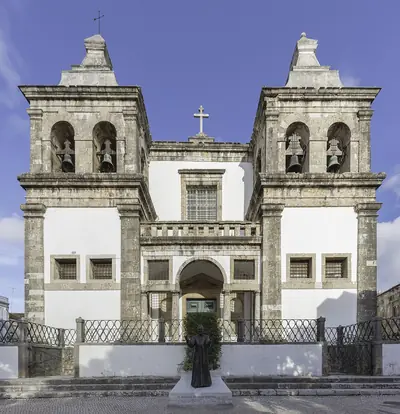
Our Lady of Grace Cathedral, also known as Santa Maria da Graça Church or Sé de Setúbal, stands in the heart of the city’s original medieval town. The church was founded in the thirteenth century, when Setúbal’s religious and administrative centre developed around it.
The present building is a High Renaissance reconstruction with an imposing Mannerist façade. Inside, look for frescoed columns, carved woodwork and tiles from the seventeenth and eighteenth centuries.
Igreja de São Julião and Praça de Bocage
At Praça de Bocage, Igreja de São Julião is the main church of Setúbal. This eighteenth-century building is also one of the city’s National Monuments, having held that classification since 1910. Its position on the square makes it a useful landmark during an exploration of the historic centre.
The square is one of the stops on Neywo’s Setúbal self-guided walking tour, where the app narrates the city’s landmarks as you reach them.
Marquess of Pombal Square and the Pillory
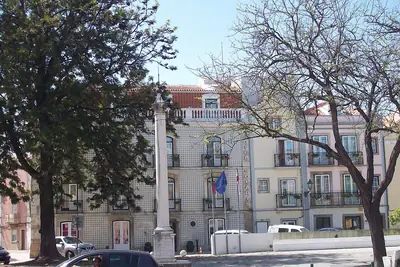
Marquess of Pombal Square, formerly known as São Pedro Square, contains one of Setúbal’s most distinctive historic details: the Pillory of Setúbal. The white-marble column has a Corinthian-style capital and has been classified as a National Monument since 1910.
Its simple vertical form contrasts with the surrounding urban setting, but its official recognition reflects the importance of the square’s heritage.
Baluarte de Nossa Senhora da Conceição
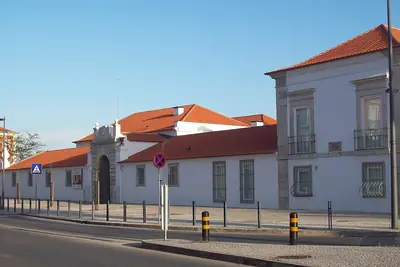
The Baluarte de Nossa Senhora da Conceição, also known as the Quartel do Baluarte de Nossa Senhora da Conceição or Quartel do 11, is one of Setúbal’s most important surviving military landmarks. Built in the mid-eighteenth century, it is also regarded as an important example of late seventeenth-century military architecture.
The bastion is described as the most significant surviving remnant of Setúbal’s seventeenth-century walls, making it an essential stop for anyone interested in the city’s defensive history.
Castelo de São Filipe
High above Setúbal, Castelo de São Filipe looks across the city, the mouth of the Sado River and the Atlantic Ocean. Construction began in 1582 on the orders of Philip the Second of Spain, also known as Philip the First of Portugal, who personally witnessed the laying of the foundation stone. The fortress was completed in 1600 and has been recognised as a national monument since 1933.
Its elevated position explains the strategic importance of the site. The fort remains closely connected to the city below, the river mouth and the ocean beyond.
Forte de São Luís Gonzaga
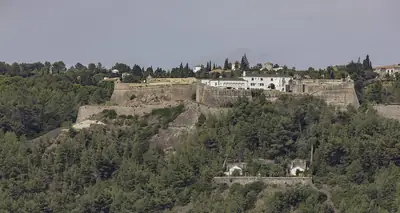
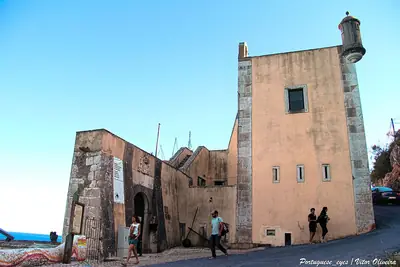
Forte de São Luís Gonzaga, also known as Forte Velho or Castelo Velho, stands on a hill opposite Setúbal. From its position, it commands views over the right bank of the Sado River estuary and towards the Atlantic Ocean.
Together with Castelo de São Filipe, it forms part of the group of hill forts that reveal how Setúbal’s landscape was used for defence and observation.
Palaces and Historic Villages Around Setúbal
Quinta da Bacalhoa
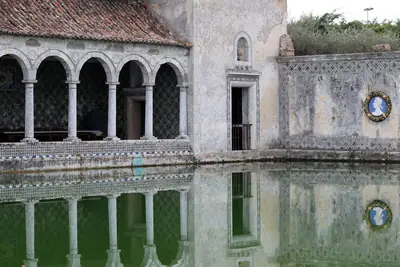
In the village of Vila Fresca de Azeitão, Quinta da Bacalhoa includes the celebrated Bacalhoa Palace, also known as the Palace of the Albuquerques. The estate was formerly associated with the Portuguese Royal House and has been classified as a National Monument since 1910.
It remains one of the notable historic properties connected with Azeitão, in the municipality of Setúbal.
Palácio dos Duques de Aveiro
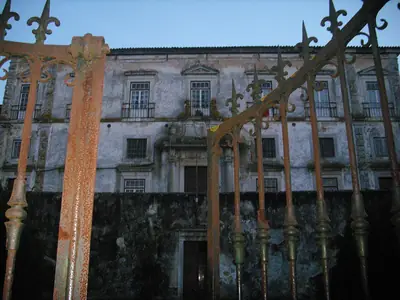
In Vila Nogueira de Azeitão, the Palácio dos Duques de Aveiro, or Paço dos Duques de Aveiro, is a Renaissance landmark commissioned by Jorge de Lancastre. It was built between 1521 and 1537 in the Classical Renaissance style and was classified as a Property of Public Interest in 1977.
Palácio da Quinta das Torres
Between Vila Fresca and Vila Nogueira de Azeitão, the Palácio da Quinta das Torres forms the centre of one of the country’s most distinguished Renaissance architectural ensembles. The complex dates from around 1560 and has been classified as a Property of Public Interest since 1996.
Pillory of Vila Nogueira de Azeitão
The Pillory of Vila Nogueira de Azeitão is notable for the iron armillary sphere at its top. Standing in the present-day parish of Azeitão, it has been classified as a Property of Public Interest since 1933.
These Azeitão landmarks make the area a rewarding extension to a visit focused on Setúbal’s historic centre, bringing together palaces, village monuments and Renaissance architecture.
Forts, Estuary Landscapes and the Arrábida Area
Mourisca Tide Mill
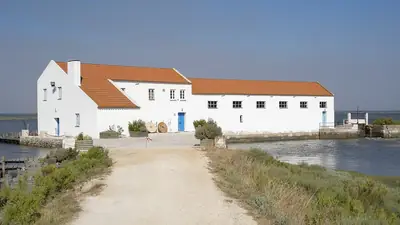
The Mourisca Tide Mill, or Moinho de Maré da Mourisca, stands in the Sado River estuary among marshland, salt pans and former rice fields. Its setting shows how closely the mill was connected to the tidal landscape.
A stone inscription inside the mill bears the date 1601, placing its original construction at least as far back as the beginning of the seventeenth century.
Forte de Santa Maria da Arrábida
Southwest of Portinho da Arrábida, at the southern foothills of the Arrábida mountain range, Forte de Santa Maria da Arrábida is also known as Forte de Nossa Senhora da Arrábida, Forte da Arrábida or Forte do Portinho da Arrábida.
The fort formed part of a chain of eighteenth-century coastal fortifications built during the Portuguese Restoration War. This defensive chain extended along the coast from Setúbal towards Forte de São Domingos da Baralha, near Cape Espichel.
Nossa Senhora dos Anjos de Brancanes
Nossa Senhora dos Anjos de Brancanes, also known as the Convent of Brancanes, is a former convent and seminary. Founded in 1682 by Friar António das Chagas, it was created to train missionaries inspired by the Franciscan friars known as the missionaries of the Convent of Varatojo.
The building adds another layer to Setúbal’s religious history, alongside the Convent of Jesus and the city’s historic churches.
Explore Setúbal with Neywo
Download Neywo and explore Setúbal with five walking tours and one bus route. The walks range from 2.54 to 3.74 km and from 76 to 108 minutes, with between 4 and 12 narrated stops. The 5.2 km bus route lasts 22 minutes and has 5 stops.
The tours cover Setúbal’s historic heart, its Manueline heritage, the palaces and villages of Azeitão, the Arrábida area and the city’s hill forts. Each story plays as you reach the place, at your own pace, with no group and no schedule. Narration is available in 11 languages.
Places with an audio guide in Setúbal
8 places in Setúbal with a Neywo audio guide. Each one starts telling its story as you reach it.
Self-guided tours in Setúbal
6 tours in Setúbal, free in the Neywo app. Each stop tells its story as you reach it.
- Bus ride
Bus 4404: Setúbal's Circular Ride Past Roman Ruins and Old Walls
The city's Alsa Todi circular line 4404 runs from Terminal da Várzea through the historic centre. Ride past the Cruzeiro of Largo de Jesus, the Anunciada church, the Roman salting factory, the old city walls and the São João Baptista convent.
Cruzeiro de Setúbal · Igreja Paroquial da Anunciada · Fábrica romana de salga · Muralhas, torres, portas, cortinas e baluartes do Centro Histórico de Setúbal · Igreja e claustro do antigo Convento de São João Baptista
Open this tour: Bus 4404: Setúbal's Circular Ride Past Roman Ruins and Old Walls - Walk
Setúbal's Historic Heart: Roman Garum to Bocage's Birthplace
Walk Setúbal's old centre from the Anunciada church and the 18th-century Feu Guião palace to the poet Bocage's birth house. See the 1697 fountain, the marble pillory, São Julião church, the remains of a Roman fish-salting factory with fourteen tanks, the cathedral and the last bastion of the city walls.
Igreja Paroquial da Anunciada · Praça Machado dos Santos · Palácio Feu Guião · Pillory of Setúbal · Chafariz da Praça Teófilo Braga · Glorieta a Luísa Todi …
Open this tour: Setúbal's Historic Heart: Roman Garum to Bocage's Birthplace - Walk
Manueline Setúbal: The Convent of Jesus and Beyond
Start at the Convent of Jesus, one of the earliest Manueline buildings in Portugal, where the Treaty of Tordesillas was ratified in 1494. See its twisted stone columns and the cross in Largo de Jesus, then follow the old aqueduct and the São João Baptista cloister through the São Francisco convent and São Sebastião church quarter to the Carlos Relvas bullring.
Convent of Jesus · Church of the Monastery of Jesus of Setúbal · Cruzeiro de Setúbal · Setúbal Aqueduct · Igreja e claustro do antigo Convento de São João Baptista · Antigo Convento de São Francisco …
Open this tour: Manueline Setúbal: The Convent of Jesus and Beyond - Walk
Azeitão: Palaces, Tiles and Wine Country
A trip to Azeitão, the village district of Setúbal known for Renaissance palaces and wine estates. See the Dukes of Aveiro palace, a pillory topped with an iron armillary sphere, Quinta das Torres from 1560, a church covered in blue, white and yellow tiles and the Quinta da Bacalhoa.
Palácio da Quinta das Torres · Palácio dos Duques de Aveiro (Vila Nogueira de Azeitão) · Pillory of Vila Nogueira de Azeitão · Church of São Lourenço · Igreja Paroquial de São Simão de Azeitão · Quinta da Bacalhoa
Open this tour: Azeitão: Palaces, Tiles and Wine Country - Walk
Arrábida: Convent, Fort and the Highest Peak
Leave the city for the Arrábida Natural Park, where the mountains drop to the sea. Visit the sixteenth-century Franciscan convent facing the water, the eighteenth-century fort that now holds the oceanographic museum, the Portinho viewpoint and the 483-metre Formosinho peak. A scenic, hillier walk.
Forte de Santa Maria da Arrábida · Miradouro do Portinho da Arrábida · Convento de Santa Maria da Arrábida · Formosinho
Open this tour: Arrábida: Convent, Fort and the Highest Peak - Walk
Setúbal's Hill Forts: From São Luís Gonzaga to Albarquel
Climb out of the old centre to the fortifications that guarded the Sado estuary. Start at the Anunciada church, visit the hilltop Forte Velho, the São Filipe castle begun in 1582 under Philip II of Spain and the bastioned fort above Albarquel beach, with views over the river mouth and the Atlantic.
Igreja Paroquial da Anunciada · Forte de São Luís Gonzaga · Castelo de São Filipe · Forte de Albarquel
Open this tour: Setúbal's Hill Forts: From São Luís Gonzaga to Albarquel
Walk Setúbal with Neywo
Neywo turns Setúbal into a self-guided audio tour. Stories arrive as you reach the place they belong to, and the route reshapes when you wander off it.

