Things to Do in Viseu, Portugal: Walking Guide
Things to Do in Viseu: What to See in Portugal’s Historic Centre
Looking for things to do in Viseu? This city in central Portugal brings together a cathedral hill, medieval walls, museums, churches, archaeological sites and the Dão wine heritage of the surrounding region. Its historic centre is compact and rewarding to explore on foot, while the wider city reveals a much older landscape shaped by prehistoric settlements and ancient fortifications. Neywo has a free audio guide for Viseu with 23 narrated places.
What to See in Viseu
Viseu Cathedral and the Cathedral Hill
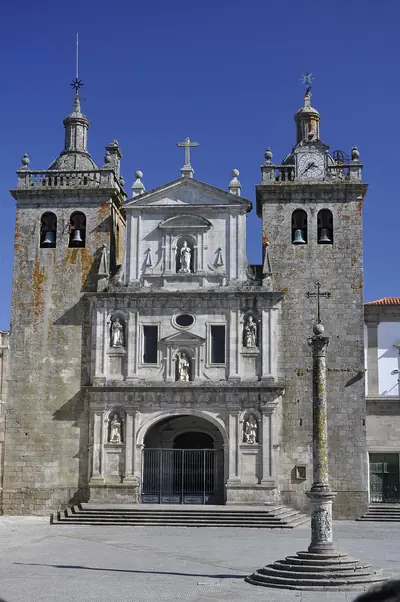
Viseu Cathedral, or Sé de Viseu, is one of the city’s defining landmarks and the seat of the Diocese of Viseu. It has been classified as a National Monument since 1910.
The cathedral’s history began in the twelfth century, when Bishop Odório promoted the construction of a Romanesque building during the reign of King Afonso Henriques. Only a few elements of that first cathedral survive, including a late-twelfth-century carved capital and a south-side portal from the following century, now leading into the cloister.
The building you see today reflects several periods of construction, from Romanesque and late Gothic to Renaissance and Baroque. It is also known as the Parish Church of Santa Maria and the Church of Our Lady of the Assumption.
Grão Vasco National Museum
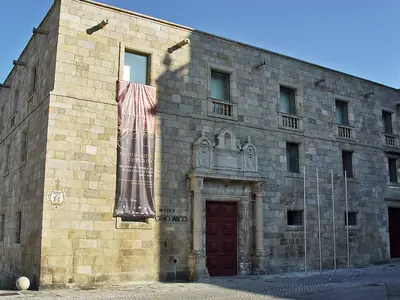
Beside the cathedral, the Grão Vasco National Museum occupies the former Paço dos Bispos, the sixteenth-century Bishops’ Palace. Founded in 1916 by Francisco de Almeida Moreira, it takes its name from Vasco Fernandes, better known as Grão Vasco, the leading figure of the Viseu school of painting.
The collection includes works by Grão Vasco and his contemporaries, notable for their naturalism and detailed landscape backgrounds. The paintings also reveal a Flemish influence in their treatment of light.
The third floor contains major works that once formed part of a cathedral altarpiece, including a monumental Saint Peter, an Adoration of the Magi and 14 panels depicting the life of Christ.
Museu de Arte Sacra
The Museum of Sacred Art is located within the cathedral complex. Its collection includes liturgical objects, devotional relics, altarpiece images, paintings, vestments, books and furniture connected with the religious life of the region.
Among its highlights are two thirteenth-century treasure chests from the Limoges school, table silver and a gilded-silver chalice decorated with rock-crystal pendants. A silver shrine shaped like an arm holds a relic of Saint Theotonius, a bishop of Viseu.
Igreja da Misericórdia de Viseu
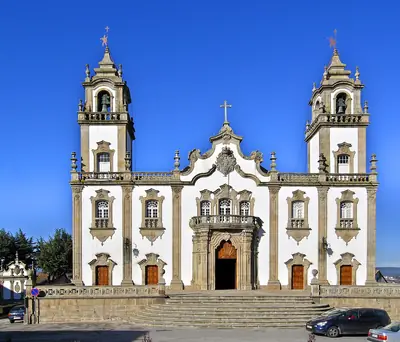
Standing directly opposite the cathedral, the Igreja da Misericórdia is an essential stop on the cathedral hill. Its façade is a fine example of Rococo architecture from the second half of the eighteenth century, giving the church a distinctive appearance among the surrounding historic buildings.
The Medieval Walls of Viseu
The Muralhas de Viseu once formed an oval-shaped medieval fortification with an irregular layout. Built in the fifteenth century, the walls had seven gates, although only two remain today.
The surviving gates have broken arches and niches above them that once held statues of the patron saints believed to protect each entrance. Even where the masonry is no longer visible, the historic perimeter can still be traced through the pattern of the city streets.
Museu Almeida Moreira
On Rua Soar de Cima, the Museu Almeida Moreira occupies Casa do Soar de Cima, the former residence of Captain Francisco António de Almeida Moreira, who lived from 1873 to 1939. The house was designed by the Portuguese architect Raul Lino.
Inside, Almeida Moreira’s collection includes paintings, furniture, porcelain, sculpture and his personal library. The museum preserves the results of his passion for art and culture, later donated to the public museum-library.
Church of Santo António
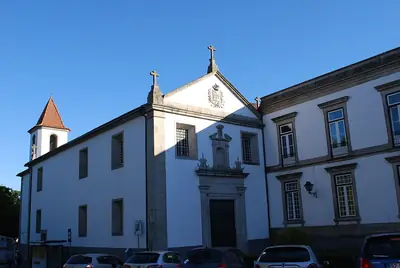
The Church of Santo António, also known as the Church of Santo Bento, stands at Largo Mouzinho de Albuquerque. It once belonged to a convent of Benedictine nuns and dates from the seventeenth and eighteenth centuries. The church has been classified as a Property of Public Interest since 1993.
Church of São Miguel do Fetal
The Church of São Miguel do Fetal, also called the Chapel of São Miguel do Fetal, is a modest place of worship on Rua Simões Dias. Dating from the first half of the eighteenth century, it adds a quieter chapter to Viseu’s religious heritage.
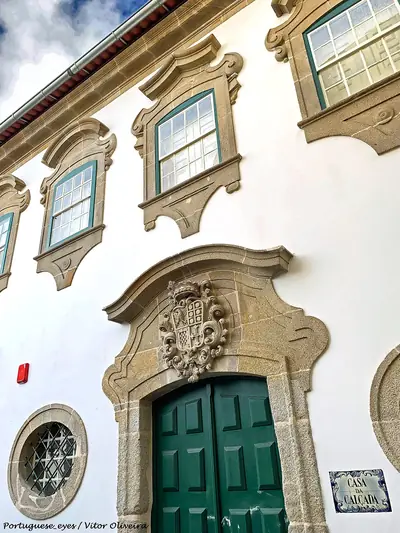
Casa da Calçada
Casa da Calçada is a cultural heritage monument in Viseu, also known as the Museu Keil do Amaral. Its name and heritage status make it part of the city’s wider cultural landscape beyond the cathedral complex.
Solar do Vinho do Dão
The Solar do Vinho do Dão occupies an estate that was once the Episcopal Palace of Fontelo. The complex includes a portico, adjoining buildings and gardens, and now serves as a home for Dão wine.
Its peaceful, stately setting reflects the history of the former bishops’ residence while connecting Viseu with the wine culture of the surrounding region.
Ancient Sites Around Viseu
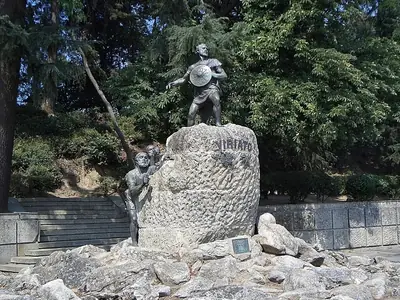
Cava do Viriato
North of the city, the Cava de Viriato is a fortress built from rammed earth and surrounded by a defensive ditch. It has been recognized as a national monument since 1910 and is one of the most notable ancient sites in the area.
Castro de Santa Luzia
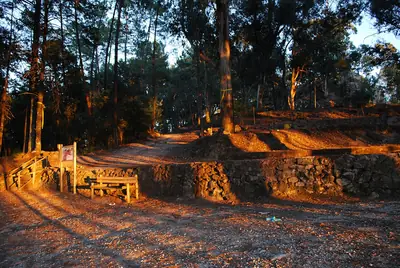
The Castro de Santa Luzia is a fortified settlement set in the hills of Viseu. Its remains include traces of ancient walls and structures that once formed a hilltop community, offering a glimpse into the lives of people who lived in the region long before the modern city developed.
Anta de Mamaltar do Vale de Fachas
The Anta de Mamaltar do Vale de Fachas is a cultural heritage monument and a prehistoric site in Viseu. It provides another connection with the region’s ancient past.
Anta do Repilau
Also known locally as Lapa do Repilau, the Anta do Repilau is another cultural heritage monument among Viseu’s archaeological sites.
Quartz Museum
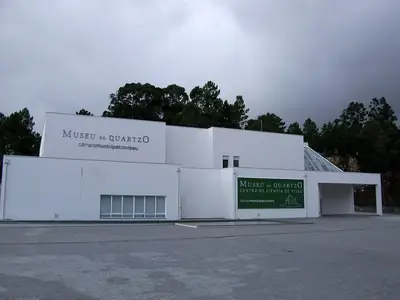
On Monte de Santa Luzia, shared by the parishes of Abraveses and Campo, the Quartz Museum is also known as the Galopim de Carvalho Interpretation Center. It is the first museum in the world dedicated entirely to a single mineral: quartz.
The museum was built inside a crater created by quartz mining. The Portuguese Electric Furnace Company abandoned the site in 1986; construction began in 2006, and the museum opened on the last day of April 2012.
Its interactive focus is supported by a science centre, exhibition halls, an auditorium and a library. The site combines the story of quartz with the physical landscape left by its extraction.
Explore Viseu with a Self-Guided Audio Tour
A Viseu self-guided walking tour is an easy way to connect the city’s museums, churches and historic streets without joining a group. With Neywo, each story plays as you reach the place, at your own pace, with no group and no schedule. Narration is available in 11 languages.
Neywo offers two walking tours and one bus route in Viseu:
- Viseu: Grão Vasco’s Cathedral Hill — a 2.06 km walk lasting 101 minutes, with 12 narrated stops.
- Viseu: Fontelo, the Theatre and the Cava of Viriato — a 1.89 km walk lasting 47 minutes, with four narrated stops.
- Viseu Circuito Urbano C1: the city-centre loop — a 3.2 km bus route lasting 14 minutes, with four narrated stops.
Together, the routes cover the cathedral hill, the Grão Vasco National Museum, the medieval walls, Fontelo, the Cava do Viriato and several of Viseu’s historic churches. They offer the flexibility of a free walking tour in Viseu while letting you decide when to start, pause or continue.
Download Neywo for Viseu
Download Neywo and explore Viseu with a free audio guide that tells the story of each place as you arrive. Choose between two walks or the city-centre bus route, follow the city at your own pace, and discover its cathedral, museums, churches and archaeological heritage without a group or a schedule.
If you are continuing through Portugal, Viseu also makes a useful starting point for discovering the country’s historic cities and regional landscapes.
Places with an audio guide in Viseu
8 places in Viseu with a Neywo audio guide. Each one starts telling its story as you reach it.
Self-guided tours in Viseu
3 tours in Viseu, free in the Neywo app. Each stop tells its story as you reach it.
- Bus ride
Viseu Circuito Urbano C1: the city-centre loop
C1 is Viseu's free central minibus loop run by MUV. It links the riverside Conceição church with the Benedictine church of Santo António, the baroque Seminário Maior and the Third Order church by the Rossio. A cheap way to see the old town's churches without climbing the hills.
Church of Nossa Senhora da Conceição da Ribeira · Igreja de Santo António do antigo Convento das freiras Beneditinas · Church of Seminário Maior · Church of Ordem Terceira de São Francisco
Open this tour: Viseu Circuito Urbano C1: the city-centre loop - Walk
Viseu: Grão Vasco's Cathedral Hill
Walk west across the old town of Viseu, the city of Portugal's great Renaissance painter Grão Vasco. You pass baroque churches and a Benedictine convent, then the granite cathedral and the museums of the former Bishops' Palace. Medieval walls, the Third Order church by the park, the Carmo church and the baroque seminary close the route.
Church of São Miguel do Fetal · Igreja de Santo António do antigo Convento das freiras Beneditinas · Casa da Calçada · Grão Vasco National Museum · Viseu Cathedral · Museu de Arte Sacra …
Open this tour: Viseu: Grão Vasco's Cathedral Hill - Walk
Viseu: Fontelo, the Theatre and the Cava of Viriato
A quieter side of Viseu: the former Episcopal Palace of Fontelo, now home of Dão wine, then the Teatro Viriato, the riverside church by the Pavia and, to the north, the great rammed-earth fortress known as the Cava de Viriato.
Solar do Vinho do Dão, pórtico, edifícios anexos e jardins, antigo Paço Episcopal · Teatro Viriato · Church of Nossa Senhora da Conceição da Ribeira · Cava do Viriato
Open this tour: Viseu: Fontelo, the Theatre and the Cava of Viriato
Walk Viseu with Neywo
Neywo turns Viseu into a self-guided audio tour. Stories arrive as you reach the place they belong to, and the route reshapes when you wander off it.

