What to See in Rothenburg, Germany: Free Audio Guide
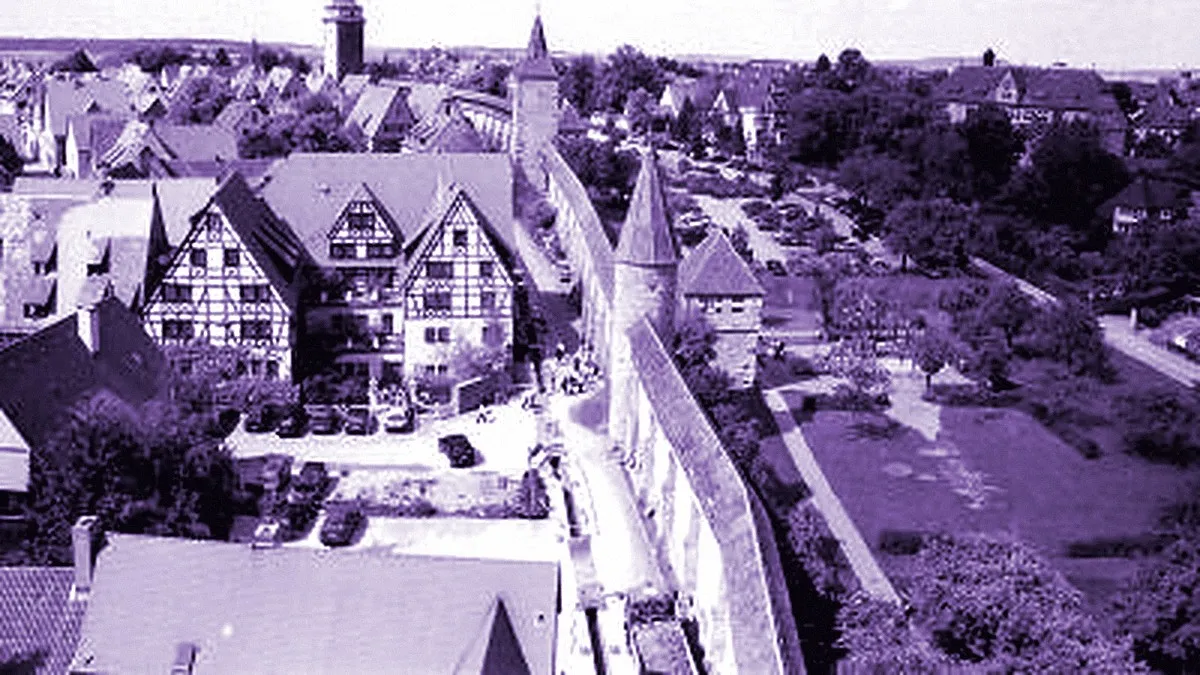
Things to do in Rothenburg: what to see in the medieval town
The best things to do in Rothenburg include exploring its historic churches, market square, museums, city walls, gates and the Tauber valley. Rothenburg’s preserved buildings and layered history make it a rewarding place to discover on foot, especially with a self-guided route through the old town. Neywo offers a free audio guide for Rothenburg with 41 narrated places.
Rothenburg is in Bavaria, in southern Germany. Its landmarks range from medieval churches and defensive towers to museums devoted to crafts, Christmas traditions, and the history of crime and justice.
What to see in Rothenburg
The most memorable way to explore Rothenburg is to move through its streets and discover the landmarks in sequence. These are some of the places that reveal the town’s religious, civic and everyday history.
St. James’s Church
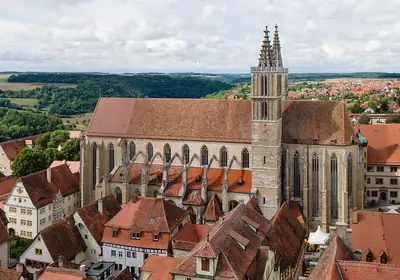
St. James’s Church, also known as St. Jakob, is one of Rothenburg’s most important historic landmarks. Its restrained Gothic exterior has two towers of slightly different heights: the south tower is 55.2 metres high, while the north tower reaches 57.7 metres.
Construction took place over a long period, from 1311 to 1484, and the church was consecrated in 1485. Inside, the eastern choir contains tracery windows with paintings dating from 1350 and around 1400. The church’s best-known work is the Holy Blood Altarpiece, carved by Tilman Riemenschneider of Würzburg between 1499 and 1505.
Franciscan Abbey
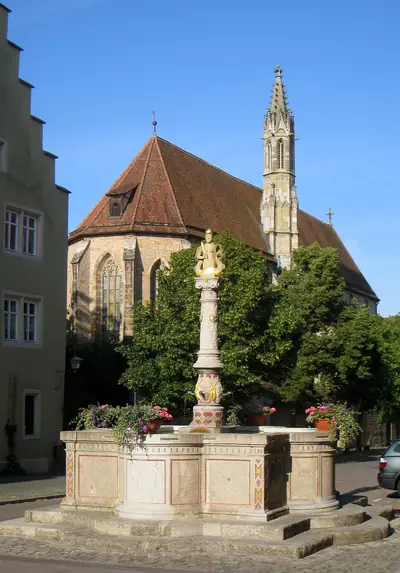
The Franciscan Church, or Franziskanerkirche, is regarded as the oldest church in Rothenburg. The monastery was established in 1281, and construction of the church began in 1282. Its choir was consecrated in 1309, followed by a second consecration in 1333.
The former monastery church is now an Evangelical Lutheran parish church. Its spacious interior combines a long, high choir with ribbed vaulting and a three-nave basilica with a flat ceiling. A rood screen and several important works of art remain inside.
Heilig-Geist-Spital
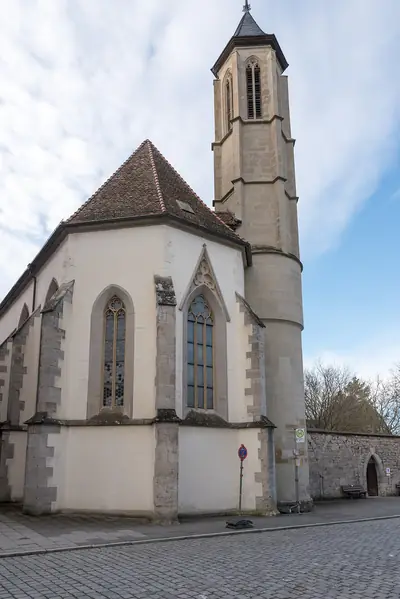
The Heilig-Geist-Spital, also called the Spitalkirche, is a distinctive historic church in Rothenburg. It was formerly a hospital church and is now the listed Protestant Lutheran Church of the Holy Spirit.
The church is part of the town’s southern historic landscape, close to the Spital Gate and the routes leading down towards the Tauber valley.
St. Wolfgang and the Schäfertanzmuseum
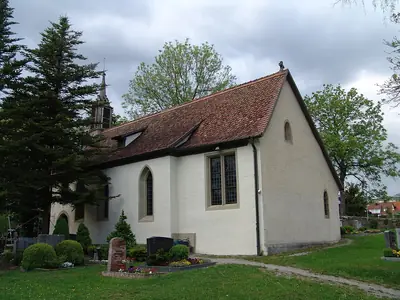
Near Klingentor, St. Wolfgang is closely integrated into Rothenburg’s fortifications. Also known as the Shepherds’ Church, it was built between 1475 and 1493 by the Brotherhood of Shepherds, reflecting the importance of sheep raising and the wool trade to medieval Rothenburg.
Its thick walls, loopholes, casemates and parapet give the building the appearance of a small fortress. Inside, three late Gothic altars date from around 1500. The high altar includes wooden figures of Saints Sebastian, Roch and Wolfgang, as well as scenes from the legend of Saint Wolfgang.
Marktplatz and the Councilmen’s Tavern
Marktplatz is a natural place to pause and take in Rothenburg’s historic centre. One of its most distinctive buildings is the Ratstrinkstube, known in English as the Councilmen’s Inn or City Council Tavern.
The inn was once reserved for councilmen. Its gable displays three clocks and the coat of arms of the imperial city. The largest clock dates from 1683, while the sundial below it is decorated with the signs of the zodiac and dates from 1768. From ten in the morning until ten at night, the building’s shutters open every hour to reveal an animated scene recalling a dramatic event from Rothenburg’s history.
Rothenburg’s historic museums
Several museums offer different ways to understand the town.
The Medieval Crime and Justice Museum is housed in the former Johanniter Commandery. Its collection explores law, punishment and justice across Europe over more than a thousand years. The museum has occupied its present address in Burggasse since 1977 and grew from a private collection.
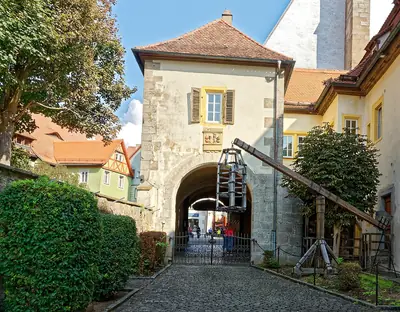
The nearby St. Johannis church was built between 1390 and 1410. This former monastery church is now the Roman Catholic parish church of Saint Johannis. Its three-nave hall church has a steep gabled roof, a hexagonal turret with an onion dome, and stone statues of John the Baptist and Saint Christopher on the north wall.
The RothenburgMuseum occupies the rooms of the former Dominican nuns’ monastery. Formerly known as the Reichsstadtmuseum, it brings together collections covering Rothenburg’s history and artistic heritage.
The Grafikmuseum im Dürerhaus focuses on graphic art. Nearby, the Weißer Turm, or White Tower, adds another historic feature to the walk.
German Christmas Museum
The German Christmas Museum traces German Christmas traditions from the Middle Ages to around 1950. Its displays cover about 250 square metres and include ornaments, decorations, toys and other festive objects.
The collection shows the variety of materials used in German Christmas craftsmanship, including glass, cotton, wool, paper, wax, metal and Dresden cardboard. Exhibits focus on Santa Clauses, Christmas angels, nutcrackers, tree stands, paper Nativity scenes, lamps, Advent calendars and Erzgebirge pyramids.
One display contains 5,000 Christmas tree ornaments from a private Austrian collection. The museum also presents a large private collection of nutcrackers.
Traditional crafts at Alter Keller 8
At Alter Keller 8, the Old Rothenburg Craftsman’s House offers a glimpse into the working life of traditional artisans. The building functions both as a museum and as a working space, with coopers, weavers, cobblers and potters using traditional tools and techniques.
Rooms on the ground floor and in the attic present different crafts, making the visit more hands-on than a collection of objects alone.
Gates, towers and the city walls
Rothenburg’s fortifications are central to any visit. The city walls, towers and gates show how the town was defended while also offering a different view of its rooftops and surrounding landscape.
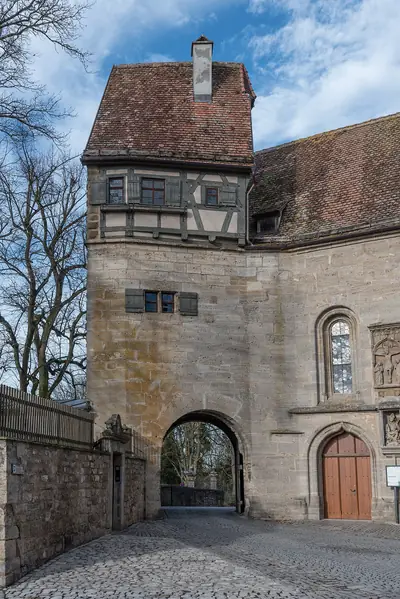
The routes include the Röder Gate, Galgentor, the Powder Tower, Klingentor, Burgtor, Siebersturm, Spitaltorturm and the Weißer Turm. Walking sections of the walls connects many of the town’s main landmarks and gives the historic centre a clear sense of its enclosed medieval structure.
Down to the Tauber Valley
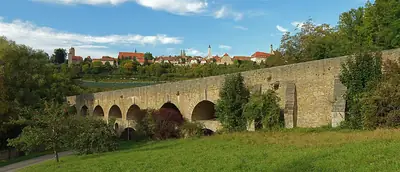
The walk below the old town reveals another side of Rothenburg. The Tauber Bridge, known locally as the Doppelbrücke or Double Bridge, spans the Tauber valley west of the town centre. It carries the Tauber Valley Way and the local connecting road to Leuzenbronn, with a four-metre-wide roadway alongside a one-metre-wide footpath.
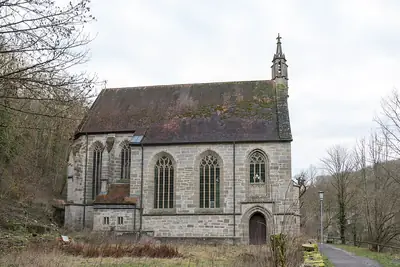
Other points along the route include Unserer Lieben Frau zu Kobolzell, also called the Kobolzeller Kirche, and Toppler Castle. The descent contrasts with the dense historic centre by opening the view towards the valley landscape.
A Rothenburg self-guided walking tour with Neywo
Neywo has three walking tours in Rothenburg, with a total of 26 tour stops:
- The Imperial City: From Rödertor to Burgtor — 2.18 km, 110 minutes and 11 stops.
- Plönlein, Craftsmen and the Southern Gates — 1.45 km, 81 minutes and 9 stops.
- Down to the Tauber: Double Bridge and Toppler Castle — 1.86 km, 66 minutes and 6 stops.
The app tells the story of each place as you reach it, at your own pace, with no group and no schedule. Download Neywo to explore Rothenburg with a free audio guide and discover its churches, museums, fortifications and Tauber valley routes independently. Narration is available in 11 languages.
Places with an audio guide in Rothenburg
8 places in Rothenburg with a Neywo audio guide. Each one starts telling its story as you reach it.
Self-guided tours in Rothenburg
3 tours in Rothenburg, free in the Neywo app. Each stop tells its story as you reach it.
- Walk
The Imperial City: From Rödertor to Burgtor
Cross the walled town of Rothenburg from east to west. Pass the gate towers, the Market Square where a mayor once drained three and a quarter litres of wine to save the town, the Gothic church with Riemenschneider's Holy Blood altar, the fortress-like Shepherds' Church at the Klingentor, and end at the Burgtor above the Tauber valley.
Steinbrücke Rödertor 2 a in Rothenburg ob der Tauber · Weißer Turm · Tourismus Service Rothenburg ob der Tauber · Historiengewölbe und Staatsverlies · German Christmas Museum · St. James's Church …
Open this tour: The Imperial City: From Rödertor to Burgtor - Walk
Plönlein, Craftsmen and the Southern Gates
The southern half of Rothenburg: a church of the Knights of St John, the old brewery and the craftsmen's houses where coopers, weavers and potters still work, the famous fork at Plönlein under the Siebersturm, and the hospital church and the figure-eight Spital Bastion, whose Latin inscription wishes peace to all who enter.
Johannisbrunnen · St. Johannis · Altes Brauhaus · Alt-Rothenburger Handwerkerhaus · Alter Keller 8 · Siebersturm …
Open this tour: Plönlein, Craftsmen and the Southern Gates - Walk
Down to the Tauber: Double Bridge and Toppler Castle
Leave the walls and drop into the Tauber valley: the 1516 horse mill, the Kobolzell pilgrimage church, the Double Bridge, a medieval stone cross and the Eselsbrücke, ending at the half-timbered Toppler Castle that mayor Heinrich Toppler built as his summer retreat.
Mühlacker 5 · Unserer Lieben Frau zu Kobolzell · Tauber Bridge, Rothenburg ob der Tauber · Steinkreuz · Eselsbrücke · Toppler Castle
Open this tour: Down to the Tauber: Double Bridge and Toppler Castle
Walk Rothenburg with Neywo
Neywo turns Rothenburg into a self-guided audio tour. Stories arrive as you reach the place they belong to, and the route reshapes when you wander off it.


More in Bavaria
Elsewhere in Germany
- FrankfurtHesse
- IdsteinHesse
- Rüdesheim am RheinHesse
- BinzMecklenburg-Western Pomerania
- RostockMecklenburg-Western Pomerania
- SchwerinMecklenburg-Western Pomerania
- AachenNorth Rhine-Westphalia
- AnholtNorth Rhine-Westphalia
- BonnNorth Rhine-Westphalia
- CologneNorth Rhine-Westphalia
- DuisburgNorth Rhine-Westphalia
- DüsseldorfNorth Rhine-Westphalia