Things to Do in Bayreuth, Germany: Walking Guide
Things to Do in Bayreuth: Wagner, Baroque Theatres and Historic Palaces
Bayreuth is a Bavarian city shaped by margravial ambition, Baroque architecture and its close connection with Richard Wagner. The most important things to do in Bayreuth include visiting the Margravial Opera House, exploring Wagner’s former home and festival theatre, and discovering the palaces, churches and museums around the city. Neywo offers a free audio guide for Bayreuth with 50 narrated places.
What to See in Bayreuth
Margravial Opera House
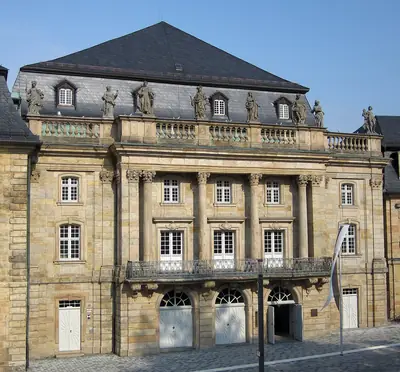
The Margravial Opera House is one of Europe’s most remarkable historic theatres. Commissioned by Margravine Wilhelmine of Bayreuth and designed by the Italian theatre architect Giuseppe Galli Bibiena, it was built between 1745 and 1750 for the wedding of Wilhelmine’s daughter, Elisabeth Frederick Sophie.
Its auditorium retains its original Baroque interior, including tiered loges, elaborate stucco decoration and illusionistic ceiling paintings. The theatre seats about five hundred people and is one of only two pre-French Revolution theatres in Europe to survive in such condition, alongside the Teatro Olimpico in Vicenza.
Bayreuth Festival Theatre
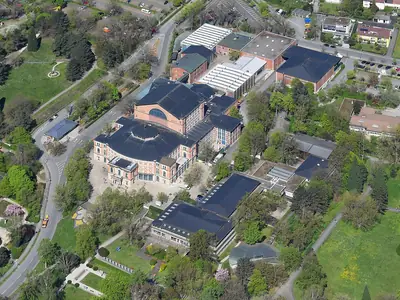
Richard Wagner’s Bayreuth Festival Theatre stands on the Green Hill north of the city. Wagner built it specifically for performances of his own operas and music dramas. The building was designed by Wagner and constructed by the architect Otto Brückwald between 1872 and 1875.
The theatre was inaugurated in 1876 with the first complete performance of the Ring cycle. Its most distinctive feature is the covered orchestra pit, sunk beneath the stage so that the sound rises and blends with the voices before reaching the audience. The Bayreuth Festival takes place every summer, with thirty performances devoted entirely to Wagner’s operas and music dramas.
Wahnfried
Wahnfried was Richard Wagner’s private villa and home during the final decade of his life. It stands beside the Hofgarten and was designed by the Berlin architect Wilhelm Neumann. Construction took place between 1872 and 1874, with financial support from King Ludwig II of Bavaria.
Wagner moved into the villa with his wife Cosima, the daughter of Franz Liszt, and their children on 28 April 1874. He completed Götterdämmerung, the final opera of the Ring cycle, there in November 1874, and later completed Parsifal at the house in January 1882. The name Wahnfried combines the German words for delusion or madness and peace.
Altes Schloss Bayreuth
The Old Palace stands in the centre of Bayreuth and was once the principal residence of the Margraves of Brandenburg-Bayreuth. The building visible today began in 1603, when Margrave Christian commissioned architect Michael Mebart to create a three-wing Renaissance complex around a courtyard.
The palace’s former princely rooms now have a very different function: since 1954, the building has housed the local tax office.
Schlosskirche
The Schlosskirche, or Palace Church, belongs to the ensemble of the Old Palace. This light and airy hall church was built in the Bayreuth Rococo style between 1753 and 1758. Margrave Friedrich III and Wilhelmine commissioned it as their Lutheran court and burial church.
The court architect Joseph Saint-Pierre created the architecture, while Giovanni Battista Pedrozzi designed the delicate ceiling stucco. In 1813, the church became Catholic and was rededicated as the parish church of Our Lady.
Ordenskirche St. Georgen
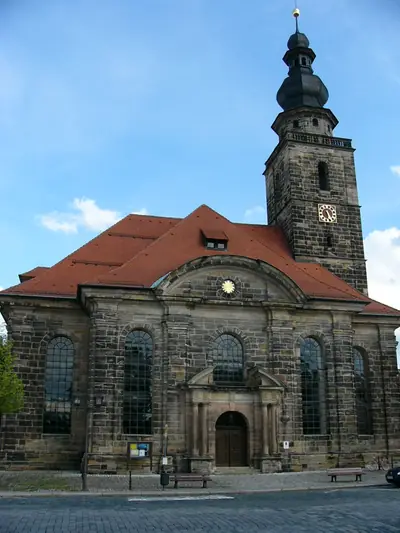
The Ordenskirche St. Georgen is the visual centre of the Sankt Georgen district. It was consecrated as the Sophienkirche, a name referring both to Hagia Sophia and to Sophia, the wife of Margrave George William. Its second name comes from the Ordre de la Sincérité and later the Order of the Red Eagle, whose church it became.
George William laid the foundation stone in 1705. Stone from twenty different quarries was used in its construction, and the church was consecrated on 23 April 1711, the feast day of Saint George.
The Eremitage
The Eremitage is a historic park complex east of Bayreuth’s Sankt Johannis district. Its architectural centre is formed by the Old Château and the New Palace.
The Old Château is one of two historic palaces in the park. The Neues Schloss, or New Palace, is especially striking for its exterior walls, decorated with stones, crystals and pieces of glass arranged in a shimmering mosaic. Together, the two palaces form the main architectural ensemble of the Eremitage.
Franz Liszt Museum
The Franz Liszt Museum occupies the house where Franz Liszt spent his final days. The museum opened in 1993 and presents the life and work of Liszt, who was a pianist, conductor and influential nineteenth-century composer.
Deutsches Freimaurer-Museum
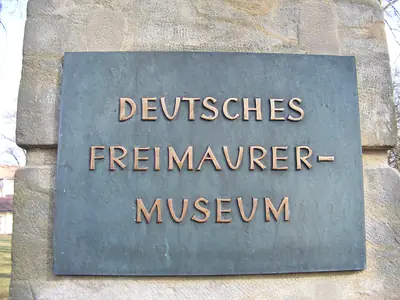
The German Masonic Museum is housed in a protected cultural heritage building. Its collection includes lodge badges, ritual objects and tracing boards, documenting the intellectual history and development of Freemasonry in Germany.
The museum also contains the largest Masonic library in the German-speaking world, making it an important resource for understanding the movement’s ideas, symbols and influence.
Iwalewahaus
Iwalewahaus is a research institute and gallery belonging to the University of Bayreuth. Founded in 1981, it holds more than twelve thousand works of contemporary African art, including paintings, sculptures, photographs, videos and installations.
Its programme extends beyond visual art to contemporary culture, media and music. Exhibitions change over time, and the institute can also host concerts, film screenings, lectures and readings. The name Iwalewahaus comes from Yoruba and roughly means “house of character” or “house of essence”.
Lateinschule and other museums
The Lateinschule, also known as the Historisches Museum, is housed in a protected cultural heritage monument and presents Bayreuth’s history. The city also has museums dedicated to its literary and cultural figures, including the Jean Paul Museum building and the Rollwenzelei museum, also known as the Jean-Paul-Stube.
For a broader look at the city’s artistic identity, Bayreuth can be paired with other destinations in Bavaria, including Bamberg and Nuremberg.
Explore Bayreuth with a Self-Guided Audio Tour
A Bayreuth self-guided walking tour lets you explore the city without joining a group or following a fixed timetable. Neywo has three walking tours and one bus route in Bayreuth:
- Margravine Wilhelmine’s Court: a 2.19 km walk lasting 119 minutes, with 11 narrated stops.
- Wagner, Liszt and the Green Hill: a 3.27 km walk lasting 111 minutes, with 8 narrated stops.
- The Eremitage, a Margravine’s Garden Retreat: a 3.15 km walk lasting 92 minutes, with 7 narrated stops.
- Bus 311: Palace Quarter by City Bus: a 2.9 km route lasting 12 minutes, with 4 narrated stops.
The free Bayreuth audio guide includes 50 narrated places, and narration is available in 11 languages. Each story plays as you reach the place, at your own pace, with no group and no schedule. Download Neywo and explore Bayreuth while the app tells the story of each theatre, palace, church and museum as you arrive.
Places with an audio guide in Bayreuth
8 places in Bayreuth with a Neywo audio guide. Each one starts telling its story as you reach it.
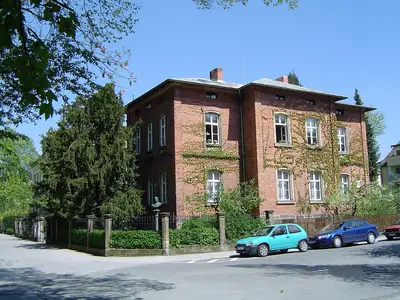
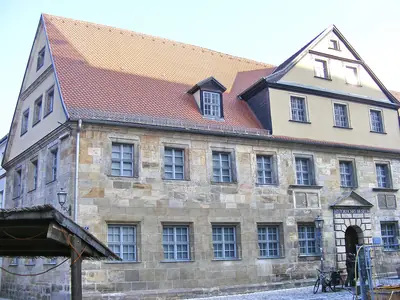
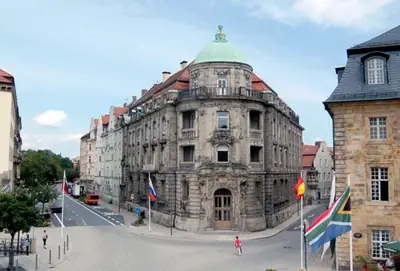
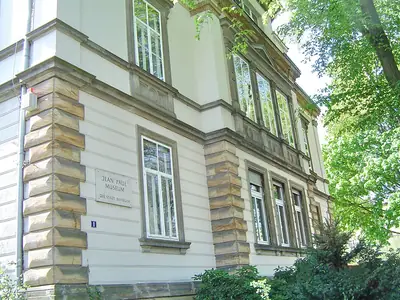
Self-guided tours in Bayreuth
4 tours in Bayreuth, free in the Neywo app. Each stop tells its story as you reach it.
- Bus ride
Bus 311: Palace Quarter by City Bus
A regular Stadtwerke Bayreuth city bus that runs from the central bus station through the old centre. Ride it past the Four Trophies garden sculpture and the Old Palace, then on to the Masonic museum and the house where Liszt died.
Gartenskulptur · Altes Schloss Bayreuth · Deutsches Freimaurer-Museum · Franz Liszt Museum
Open this tour: Bus 311: Palace Quarter by City Bus - Walk
Margravine Wilhelmine's Court
Bayreuth became a Rococo capital under Margravine Wilhelmine, sister of Frederick the Great. This walk links the Renaissance Old Palace, the palace church where she is buried, the new residence built after the 1753 fire, and the Baroque opera house UNESCO listed in 2012, with a poet's monument and a few museums on the way.
Denkmal · Neues Schloss Bayreuth · Urwelt-Museum Oberfranken · Lateinschule · Kunstmuseum Bayreuth · Spitalkirche …
Open this tour: Margravine Wilhelmine's Court - Walk
Wagner, Liszt and the Green Hill
Follow the composers' footsteps north through Bayreuth. Start at the Masonic museum, pass the house where Franz Liszt died and the Jean Paul museum, then climb past Prometheus to the Festival Theatre that Wagner built for his own operas on the Green Hill.
Deutsches Freimaurer-Museum · Franz Liszt Museum · Jean Paul Museum building · Christuskirche · Prometheus · Bayreuth Festival Theatre …
Open this tour: Wagner, Liszt and the Green Hill - Walk
The Eremitage, a Margravine's Garden Retreat
Wilhelmine's private hermitage grew into a Rococo landscape park east of town. Pass Jean Paul's old writing cottage and a margravial barn on the way, then visit the old palace, the New Palace with its walls of glittering stones and glass, the ruin and grotto theatre and the old water tower.
Rollwenzelei museum · Scheune · Eremitage · Old château of the Eremitage in Bayreuth · Neues Schloss (Eremitage) · Ruin and Grotto Theatre …
Open this tour: The Eremitage, a Margravine's Garden Retreat
Walk Bayreuth with Neywo
Neywo turns Bayreuth into a self-guided audio tour. Stories arrive as you reach the place they belong to, and the route reshapes when you wander off it.


More in Bavaria
Elsewhere in Germany
- FrankfurtHesse
- IdsteinHesse
- Rüdesheim am RheinHesse
- BinzMecklenburg-Western Pomerania
- RostockMecklenburg-Western Pomerania
- SchwerinMecklenburg-Western Pomerania
- AachenNorth Rhine-Westphalia
- AnholtNorth Rhine-Westphalia
- BonnNorth Rhine-Westphalia
- CologneNorth Rhine-Westphalia
- DuisburgNorth Rhine-Westphalia
- DüsseldorfNorth Rhine-Westphalia